

Are you studying healthcare or already working in the field, but feeling unsure about your future in Nepal? Many people worry if their hard work will actually lead to a stable career here, or if the local opportunities are just a dead end.
You do not need to worry. The truth is, the healthcare sector is expanding fast. Whether in private hospitals, local clinics, diagnostic centres, NGOs, INGOs, or public health programs, the demand for skilled workers is huge. The scope for both clinical and non-clinical roles is growing every single day right here in our country.
In this guide, we will clear up your confusion and explain the true scope of health-related jobs in Nepal. We will cover the best roles to target, the exact qualifications you need, realistic salary ranges, and how to grow your career right here at home.
In this blog
What is the Scope of Health-Related Jobs in Nepal?
The scope of health-related jobs in Nepal extends far beyond working in a hospital ward. The field is actually divided into two main areas: clinical and non-clinical careers.
Clinical jobs are what we usually picture first: doctors, nurses, and lab workers who treat patients directly. However, non-clinical jobs are just as important and offer amazing career paths. These roles include managing public health projects, doing medical research, and running community health education programs.
Right now, the demand for both types of workers is very high. You can find great job opportunities spread across large private hospitals, government clinics, NGO public health projects, and rural community programs. Whether you want to care for patients face-to-face or work behind the scenes to improve local health systems, the career options in Nepal are growing fast.
Why is the Scope of Health-Related Jobs in Nepal Growing?
The scope of health-related jobs in Nepal is growing because the country is rapidly building new medical facilities and launching more public health programs. People are paying much more attention to their well-being today, which means medical services are needed everywhere. Because of this high demand, both private hospitals and social organizations are actively looking to hire skilled health workers right now.
1. Expansion of Hospitals, Clinics, and Diagnostic Centres
Many new private hospitals, local clinics, and testing labs are opening up across cities and villages in Nepal. This rapid growth creates a huge demand for medical staff to treat patients and run these new health centers every day.
2. More Project-Based Hiring in NGO and INGO Health Programs
International and local organizations are launching many new health projects to improve rural healthcare and hygiene. These programs constantly need dedicated field workers, project managers, and health educators to run their campaigns successfully.
3. Strong Need for Health Professionals
There is a massive shortage of trained professionals like nurses, health assistants, lab technicians, and public health officers in the country. As the medical system expands, hospitals and development projects are always hiring these experts to care for people and keep everything working smoothly.
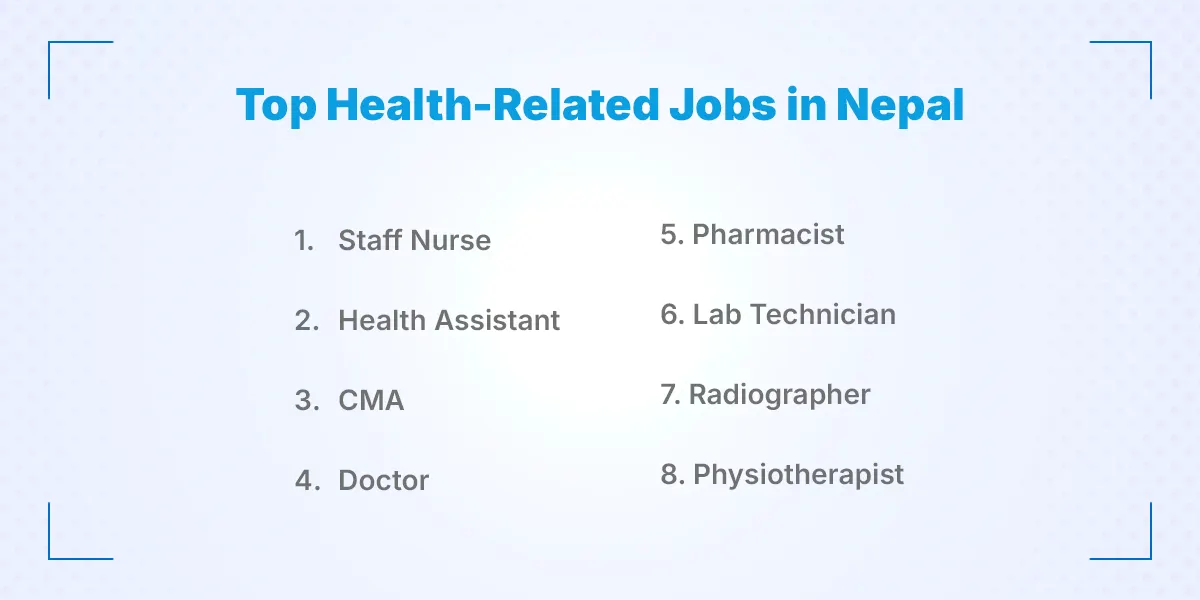
Top Health-Related Jobs in Nepal
If you are looking for a career in health, Nepal offers many different paths. These jobs are generally divided into clinical roles (working directly with patients) and non-clinical roles (working on health programs and management).
1. Clinical Jobs
These roles focus on treating patients and managing medical care in hospitals or clinics.
- Staff Nurse: These professionals provide daily care for patients in hospitals and are the backbone of the nursing sector.
- Health Assistant (HA): HAs provide essential medical services and primary healthcare, especially in rural health posts and clinics.
- CMA (Community Medicine Assistant): CMAs help with basic medical treatments and are vital for healthcare delivery in local communities.
- Doctor: Whether a general practitioner or a specialist, doctors diagnose illnesses and lead medical teams in hospitals.
- Pharmacist: They manage medicines, advise on dosages, and work in hospital pharmacies or private medical stores.
- Lab Technician: These experts test blood and other samples in diagnostic centers to help doctors identify diseases.
- Radiographer: They operate X-ray and imaging machines to help see what is happening inside a patient’s body.
- Physiotherapist: These specialists help patients recover from injuries and improve their physical movement through exercise.
2. Non-Clinical and Public Health Jobs
These roles focus on planning, managing, and teaching health programs to help large groups of people.
- Public Health Officer: They design and manage health campaigns and community programs to prevent diseases.
- Health Educator: These workers teach communities about hygiene, nutrition, and how to stay healthy.
- Community Health Worker: They act as a bridge between the local people and the healthcare system, often working in the field.
- Monitoring and Evaluation (M&E) Staff: M&E staff track the progress of health projects to make sure they are actually helping people.
- Research Assistant: They collect data and conduct studies to find better ways to solve health problems in Nepal.
- Field Medical Officer: These professionals travel to different areas to oversee medical services and public health activities.
- Project Coordinator: They manage the budget, staff, and daily operations of health projects for NGOs and INGOs.
Which Health-Related Jobs Have Better Scope in Nepal?
The jobs with the best scope in Nepal are nursing, public health, and diagnostic roles because these fields have the highest number of vacancies in both the government and private sectors. While every health role is important, these specific areas are growing the fastest due to new hospital builds and international funding for health projects.
- Nursing Jobs: This is the most in-demand field. Nurses are needed in every single hospital, nursing home, and clinic, and there are many opportunities for those who want to work in specialized care or move into teaching.
- Public Health Jobs: With many NGOs and INGOs operating in Nepal, public health professionals are in high demand to manage projects, conduct research, and lead health awareness campaigns.
- Hospital Administration Jobs: As hospitals become larger and more professional, they need skilled managers to handle budgets, staff, and daily operations.
- Diagnostic and Lab Jobs: Since doctors now rely heavily on testing, there is a huge need for lab technicians and radiographers to run modern diagnostic equipment.
- NGO and INGO Health Jobs: These organizations offer some of the most stable and well-paying roles for health workers, especially for those willing to work on specific health issues like maternal care or nutrition.
- Community and Outreach Health Jobs: There is a constant need for workers who can travel to rural areas to provide basic care and education to people who cannot reach big hospitals.|
- Specialized Technical Roles: Jobs that require specific council registration (like the Nepal Medical Council or Nursing Council) or deep field experience often have less competition and better long-term career growth.
What Qualifications are Needed for Health-Related Jobs in Nepal?
To get a health-related job in Nepal, you need a formal medical degree or diploma and a license from the official professional council. These documents prove you have the right training and legal permission to provide healthcare services to the public. Depending on the role, you might also need specific years of experience or extra technical skills to get hired by top hospitals or NGOs.
1. Educational Qualifications Required for Health Jobs in Nepal
The type of degree you need depends entirely on the level of the job you want to do. For middle-level roles like Staff Nurses or Lab Technicians, a three-year Diploma (PCL) after finishing SEE is the standard requirement. If you want to become a Doctor or a Senior Public Health Officer, you must complete a four or five-year Bachelor’s degree, like MBBS or BPH. Some lower-level assistant roles only require a one-year or 18-month certificate course from a CTEVT-recognized college. Always make sure your college is properly affiliated with a university so your degree is valid for jobs.
2. Required Licenses and Professional Certifications
Having a degree is not enough because you cannot legally work without passing a licensing exam. Doctors must register with the Nepal Medical Council, while nurses need a license from the Nepal Nursing Council to practice. Other health professionals, like pharmacists and health assistants, must register with the Nepal Health Professional Council. Employers will always check your license number and its expiry date before giving you an appointment letter. Passing these exams is the most important step after you finish your college studies.
3. Experience and Internship Requirements
Most hospitals and organizations prefer hiring people who have already spent time working in a real medical setting. Almost all medical courses include a mandatory internship period where you practice your skills under the supervision of experts. For senior roles or NGO jobs, employers often ask for two to five years of work experience in a specific field. Even if you are a fresher, doing volunteer work or short-term training can help you stand out. Having proof of past work helps show that you are ready to handle the responsibilities of the job.
4. Skills Needed for Healthcare Professionals
Beyond your books and degrees, you need practical skills to be successful in the health sector. You must be good at communicating clearly with patients and their families, especially during stressful times. Basic computer skills like using MS Word and Excel are now necessary for writing medical reports and keeping records. Since many health jobs involve working in teams, you need to be a good team player and stay calm under pressure. Being able to speak local languages or having good English for writing reports is also a big plus.
5. Government vs Private Sector Requirements
Getting a government job (Lok Sewa) is different from getting a job in a private hospital or an NGO. For government roles, you must pass a very competitive written exam and an interview conducted by the Public Service Commission. Private hospitals usually focus more on your practical skills, your interview performance, and your past work history. Many NGOs and INGOs also look for people who are willing to travel to rural areas and have experience in community development. While both sectors require the same basic licenses, the way they choose candidates is quite different.
Where to Find Health-Related Jobs in Nepal?
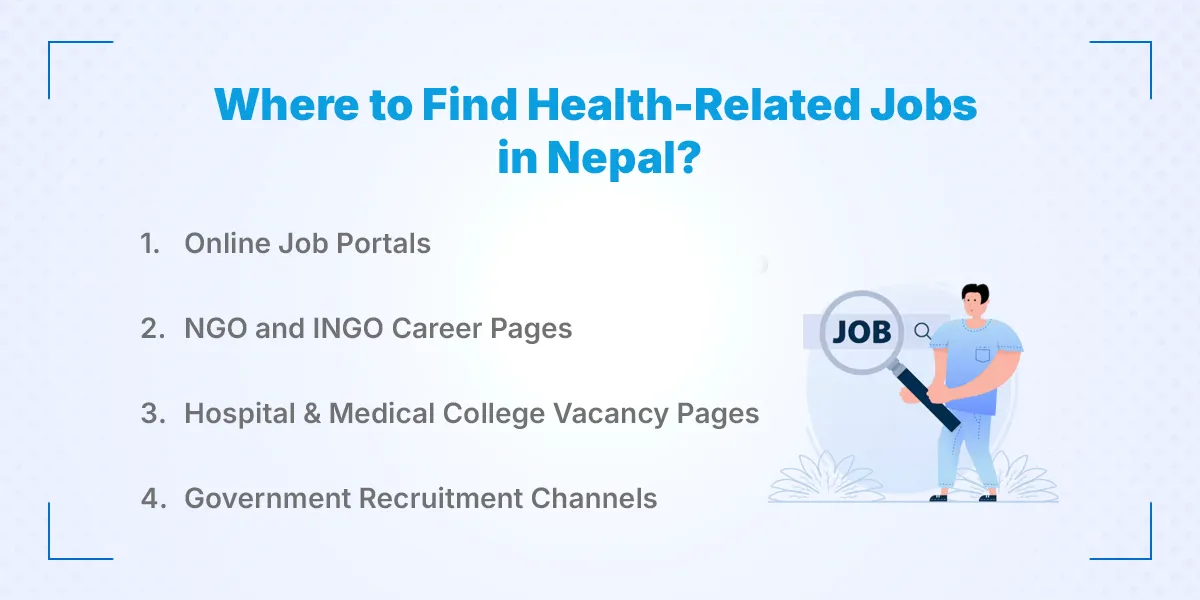
You can find the best health-related jobs in Nepal by checking online job portals like Kumari Jonb, NGO career pages, and the official websites of major hospitals. Most employers now post their vacancies digitally to reach a wider range of skilled professionals across the country. By monitoring these specific channels daily, you can ensure that you never miss a deadline for a role that matches your qualifications.
1. Online Job Portals
Online job portals are the most popular way to search for healthcare vacancies today. Websites like Kumari Job and other local platforms allow you to filter roles by your specific medical field and location. You can create a personal profile, upload your medical license and CV, and apply for multiple positions with just one click. These sites often send you email alerts when a new job in your field is posted, which saves you a lot of time.
2. NGO and INGO Career Pages
If you are looking for public health or project-based roles, you should visit the "Career" or "Work with Us" sections of major NGO websites. Organizations like Save the Children, FHI 360, and various UN agencies frequently post openings for health officers and research assistants. NGO INGO jobs are often advertised directly on their own sites before they appear anywhere else. It is also helpful to follow their social media pages to get instant updates on new field projects and hiring calls.
3. Hospital and Medical College Vacancy Pages
Most large private hospitals and medical colleges in Nepal, such as Dhulikhel Hospital or Kathmandu Medical College, have their own dedicated vacancy sections. They regularly hire staff nurses, lab technicians, and doctors to keep up with their growing patient numbers. You should make a list of the top hospitals in your area and check their websites at least once a week. Sometimes, these institutions also post "walk-in interview" notices on their notice boards or official Facebook pages.
4. Government Recruitment Channels
To get a permanent government job, you must follow the updates from the Public Service Commission (Lok Sewa Aayog). They release annual calendars and specific vacancy notices for various levels of health workers in government hospitals and health posts. You can find these announcements in national newspapers like Gorkhapatra or on the official PSC website. Local municipalities (Gaupalika and Nagarpalika) also hire health staff on a contract basis, so checking local government portals is a great strategy.
How to Get Health-Related Jobs in Nepal?
To get a health-related job in Nepal, you need to complete your medical studies, get your professional license, and apply through reliable job sites. Following a clear plan helps you move from being a student to a working professional without getting confused. By taking the right steps at the right time, you can find a stable position in a hospital or an NGO much faster.
1. Complete Health Education
The first step is to finish your degree or diploma from a college recognized by the Nepal government. Whether it is a nursing course, a lab technician diploma, or a public health degree, you must study hard and pass your final exams. After you graduate, you must immediately apply for and pass the licensing exam from your professional council. You cannot legally work in any health role in Nepal without this official license number. Make sure all your certificates and marksheets are ready and organized in a folder.
2. Build a Strong CV
Your CV is the first thing an employer sees, so it must look professional and clear. Include your full name, contact details, and your specific medical license number right at the top. List your educational background, your internship details, and any special technical skills you have, like operating medical machines. Use simple bullet points to describe your responsibilities during your training or past jobs. A clean, one-page CV is often better than a long one that is hard to read.
3. Gain Practical Experience
In the health sector, what you can do with your hands is often more important than what you know from books. Try to get as much practice as possible during your internship or by volunteering at local health camps. If you are a fresher, even a few months of unpaid work in a busy clinic can teach you how to handle real patients. Employers always prefer candidates who have already spent time in a hospital environment. Mentioning your specific hands-on experience will give you a big advantage over other applicants.
4. Search Jobs on Trusted Platforms
Instead of looking everywhere, focus on reliable websites and newspapers to find real job openings. Online portals like Kumari Job are great because they have dedicated sections for healthcare and NGO vacancies. You should also regularly check the Facebook pages and websites of big hospitals and international organizations. Many small clinics still post their needs in national newspapers or on their own office notice boards. Setting up job alerts on your phone can help you be the first person to apply when a new role opens up.
5. Apply and Prepare for Interviews
When you find a job you like, send your CV and a short cover letter before the deadline. If you get called for an interview, dress professionally and arrive a few minutes early to show you are serious. Be ready to answer questions about your medical knowledge and how you would handle difficult patient situations. You might also have to take a written test or a practical exam, depending on the hospital’s rules. Stay confident, speak clearly, and don't forget to follow up after the interview to show your interest.
Salary of Health-Related Jobs in Nepal
The salary for health-related jobs in Nepal typically ranges from NPR 20,000 to NPR 70,000 per month for most mid-level clinical and public health roles. While entry-level positions in small private clinics may start lower, working for the government or international NGOs (INGOs) can push monthly earnings well above NPR 100,000 for experienced professionals. Your total pay depends heavily on your specific medical license, your years of service, and whether you work in a city or a rural field office.
1. Salary Range for Clinical Roles
Clinical workers who provide direct patient care usually see their pay increase as they gain more specialized experience. For example, a Staff Nurse or Health Assistant (HA) in a private hospital typically starts between NPR 25,000 and NPR 35,000, but this can grow to NPR 60,000 or more in senior positions. Specialized roles like Lab Technicians and Radiographers often earn similar amounts, while Medical Officers (Doctors) start at a higher bracket, usually beginning around NPR 50,000 to NPR 80,000 in the private sector. In many cases, clinical staff also earn extra income through overtime pay and night shift allowances.
2. Salary for Public Health and NGO Jobs
Jobs in the development sector, including NGOs and INGOs, are known for offering some of the highest salaries in Nepal’s health field. An entry-level Public Health Officer or Program Assistant can expect to earn between NPR 35,000 and NPR 60,000. As you move into management roles like Project Coordinator or M&E Officer, salaries often jump to between NPR 70,000 and NPR 150,000. These organizations also provide great benefits, such as field travel allowances, comprehensive health insurance, and communication stipends, making the total "take-home" package very attractive.
3. Government Health Service Pay Scale
If you secure a permanent government job through the Public Service Commission (Lok Sewa), your salary is fixed based on your "level" or "rank." For example, a 5th Level Health Assistant or Staff Nurse has a basic salary of approximately NPR 36,000, but with various allowances (bhatta), the total monthly pay often reaches NPR 45,000 to NPR 55,000. Higher-level officers, such as 7th or 8th Level Medical Officers, earn a basic pay of over NPR 50,000, with total earnings often exceeding NPR 70,000 after adding remote area and dearness allowances. While the starting pay might be lower than some INGOs, government jobs offer the best long-term security and pension benefits.
4. Factors That Increase Your Earnings
Several key factors can help you move into a higher salary bracket much faster in Nepal. First, having a Bachelor’s or Master’s degree (like BPH or MPH) instead of just a diploma usually leads to an immediate jump in pay. Second, your location matters; working in remote districts often comes with "Remote Area Allowances" that can add thousands of rupees to your monthly check. Finally, having specific technical certifications or being registered with high-level councils makes you more valuable to employers. Staying with one organization for several years also helps, as many hospitals and NGOs offer annual salary increments based on your performance.
Conclusion
The scope of health-related jobs in Nepal is currently at an all-time high, offering a secure and rewarding future for anyone with the right medical training. Whether you are a nurse, a lab technician, or a public health professional, the demand for your skills is growing faster than ever across both private hospitals and international NGOs. You no longer need to look abroad to build a successful career; the modern healthcare system in our own country provides competitive salaries and clear paths for promotion.
By getting your professional license and staying updated on the latest vacancies, you can secure a stable position that truly makes a difference. The health sector remains one of the most reliable career choices in Nepal today.
Frequently Asked Questions
Submit your comments

Get Our App On



How to Register a Personal PAN Card in Nepal: Online & Offline Methods
VIEW DETAILS
What Is the Average JavaScript Developer Salary in Nepal?
VIEW DETAILS
Salary Tax Slab 2083/84 in Nepal: Latest Tax Rates & Calculation
VIEW DETAILS
What Is the Average Java Developer Salary in Nepal?
VIEW DETAILS


Loading Comments...