

Ever wondered why some schools and companies in Nepal are smoothly running digital classes and training programs while others still struggle with scattered files, manual tracking, and endless confusion? The difference usually comes down to one thing: the right Learning Management System. A good LMS quietly organizes everything in the background, like a well-trained assistant who never forgets a task.
In this blog on the Top 5 Best LMS in Nepal, we will explore the most reliable LMS platforms used in Nepal, including both local and international options. You will learn what makes each system different, their key features, and who they are best suited for. By the end, you will have a clear idea of which LMS fits your business, school, or training needs without second-guessing.
In this blog
What is a Learning Management System (LMS)?
Learning Management System (LMS) is a software platform used to create, manage, deliver, and track educational or training programs in a centralized digital space. It helps schools, businesses, and institutions organize learning materials and monitor learner progress efficiently. Instead of handling training manually, everything is managed through one system. This makes learning more structured, accessible, and easy to evaluate. It is essentially the backbone of modern digital learning environments.
What Does an LMS Platform Do?
- Creates and delivers courses: Allows instructors to build structured learning content like videos, PDFs, and quizzes
- Manages learners and users: Helps assign roles, enroll users, and organize training groups easily
- Tracks learning progress: Monitors completion status, performance, and engagement in real time
- Automates training tasks: Handles enrollment, reminders, grading, and certification automatically
- Provides learning analytics: Generates reports to evaluate training effectiveness and learner performance
- Supports centralized learning: Keeps all content, communication, and assessments in one place for easy access
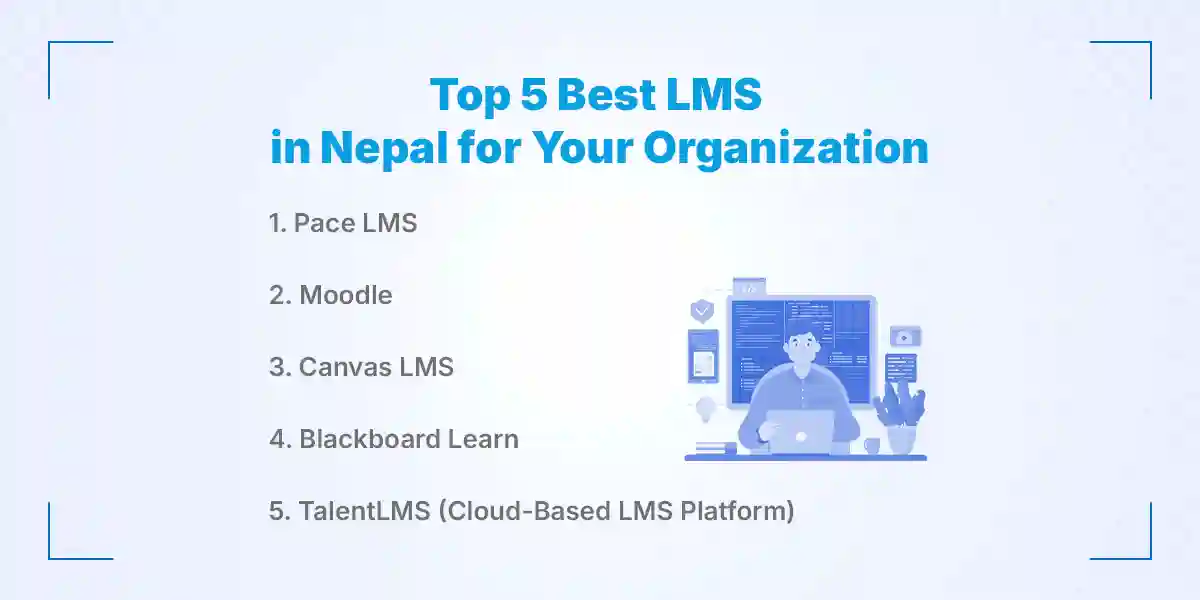
Top 5 Best LMS in Nepal for Your Organization
Choosing the right LMS in Nepal depends on usability, scalability, features, and whether you need a local or international solution. Some platforms are built for academic institutions, while others focus on corporate training and enterprise-level learning. Below are the top 5 LMS platforms widely used and trusted globally and in Nepal, including a strong local option and leading international systems. These tools help manage courses, track learning, and improve training efficiency in a structured way.
1. Pace LMS
Pace LMS is a Nepal-based learning management system designed specifically for schools, colleges, and businesses in the local market. It focuses on simplifying digital learning with easy course management, user tracking, and automation tools. Unlike many complex global platforms, it is built with simplicity and local usability in mind. It helps organizations transition from manual training systems to a fully digital learning environment.
Features
- Course creation and structured learning paths
- User and role management for students and trainers
- Automated exams, quizzes, and certification system
- Progress tracking and performance monitoring
- Centralized dashboard for learning activities
- Mobile-friendly learning access
Pros
- Designed for Nepalese education and business needs
- Easy-to-use interface for beginners
- Strong focus on practical training workflows
- Affordable compared to global enterprise tools
- Supports structured digital transformation
Cons
- Limited global integrations compared to enterprise LMS
- Smaller ecosystem compared to international platforms
- Fewer third-party plugins
2. Moodle
Moodle is one of the most popular open-source LMS platforms globally and is widely used by schools, colleges, and universities. It is highly customizable and allows institutions to build fully personalized learning environments. Because it is open-source, organizations can modify it based on their needs, making it flexible but slightly technical to manage.
Features
- Open-source course management system
- Customizable learning modules and plugins
- Assessment, quizzes, and grading tools
- Discussion forums and collaboration features
- Multi-language support
- Detailed reporting and analytics tools
Pros
- Free and open-source platform
- Highly flexible and customizable
- Strong global community support
- Suitable for academic institutions
Cons
- Requires technical setup and maintenance
- Interface is not very modern
- Needs hosting and technical expertise
3. Canvas LMS
Canvas LMS is a modern cloud-based learning platform widely used in universities and educational institutions. It is known for its clean interface and strong collaboration tools. Canvas supports both online and blended learning environments, making it highly popular in modern education systems.
Features
- Course creation and content management
- Mobile-friendly learning access
- Built-in communication and messaging tools
- Assignment and grading system
- Real-time analytics and reporting
- Integration with educational tools
Pros
- Very user-friendly interface
- Strong collaboration and communication tools
- Reliable cloud-based performance
- Widely used in higher education
Cons
- Expensive for large-scale use
- Limited customization compared to open-source LMS
- Advanced features require paid plans
4. Blackboard Learn
Blackboard Learn is a long-established enterprise LMS widely used in universities and large institutions. It focuses on structured academic learning, assessment tools, and institutional-level management. It is powerful but can feel complex for beginners.
Features
- Course and academic management system
- Advanced assessment and grading tools
- Virtual classroom and collaboration tools
- Mobile learning support
- Integration with student systems
- Detailed analytics and reporting
Pros
- Strong reputation in higher education
- Powerful academic tools
- Scalable for large institutions
- Secure and stable platform
Cons
- Expensive compared to other LMS tools
- Complex interface for new users
- Requires training for full use
5. TalentLMS
TalentLMS is a cloud-based LMS designed for businesses and corporate training. It is known for its simplicity and quick setup, making it ideal for companies that want fast deployment. It supports training, onboarding, and employee development programs efficiently.
Features
- Cloud-based course management system
- Built-in quizzes and assessments
- Gamification (badges, points, leaderboards)
- Automation for training workflows
- Mobile learning support
- Reporting and analytics dashboard
Pros
- Very easy to set up and use
- Ideal for corporate training
- Strong gamification features
- Scalable for growing teams
Cons
- Limited deep customization
- Advanced features require higher plans
- Not ideal for complex academic systems
Comparison of the Top 5 Best LMS in Nepal
Choosing the right LMS becomes easier when you compare key factors like features, usability, pricing, scalability, and target use cases side by side. Each platform serves a different type of organization; some are best for schools, some for enterprises, and others for flexible or budget-friendly learning setups. The table below gives a clear overview of how the top LMS platforms used in Nepal compare in real-world scenarios.
| Criteria | Pace LMS | Moodle | Canvas LMS | Blackboard Learn | TalentLMS |
|---|---|---|---|---|---|
| Type | Local LMS (Nepal) | Open-source LMS | Cloud-based LMS | Enterprise LMS | Cloud-based LMS |
| Best For | Schools, colleges, businesses in Nepal | Universities, institutions, developers | Schools & higher education | Large universities & enterprises | Corporate training & SMBs |
| Ease of Use | Very easy, beginner-friendly | Moderate, technical setup needed | Very user-friendly | Complex interface | Very easy to use |
| Customization | Moderate, localized features | Very high (open-source plugins) | Moderate | High but restricted | Limited customization |
| Cost | Affordable (local pricing) | Free (hosting costs apply) | Paid subscription | Expensive enterprise pricing | Subscription-based |
| Mobile Support | Yes | Yes | Excellent mobile apps | Strong mobile support | Yes |
| Key Strength | Nepal-focused simplicity | Highly flexible & customizable | Modern UI & integrations | Powerful enterprise features | Fast setup & corporate training |
| Weakness | Smaller ecosystem | Requires technical expertise | Expensive for large use | Complex and costly | Limited advanced customization |
Why Do Businesses and Institutions in Nepal Need an LMS System?
Businesses and institutions in Nepal need an LMS system because it helps them manage training and education in a more organized, efficient, and digital way. Instead of relying on manual teaching methods or scattered resources, an LMS centralizes everything into one platform. This improves learning quality, saves time, and reduces operational costs. It also supports scalable and flexible learning for students and employees.
- Centralized learning management: Keeps all courses, materials, and learners in one platform
- Improved training efficiency: Reduces manual work and speeds up the learning process
- Cost-effective solution: Minimizes expenses on physical training and printed materials
- Better tracking and reporting: Monitors learner progress and performance in real time
- Supports remote learning: Enables access from anywhere, ideal for modern hybrid systems
- Scalable for growth: Easily supports an increasing number of users and training programs
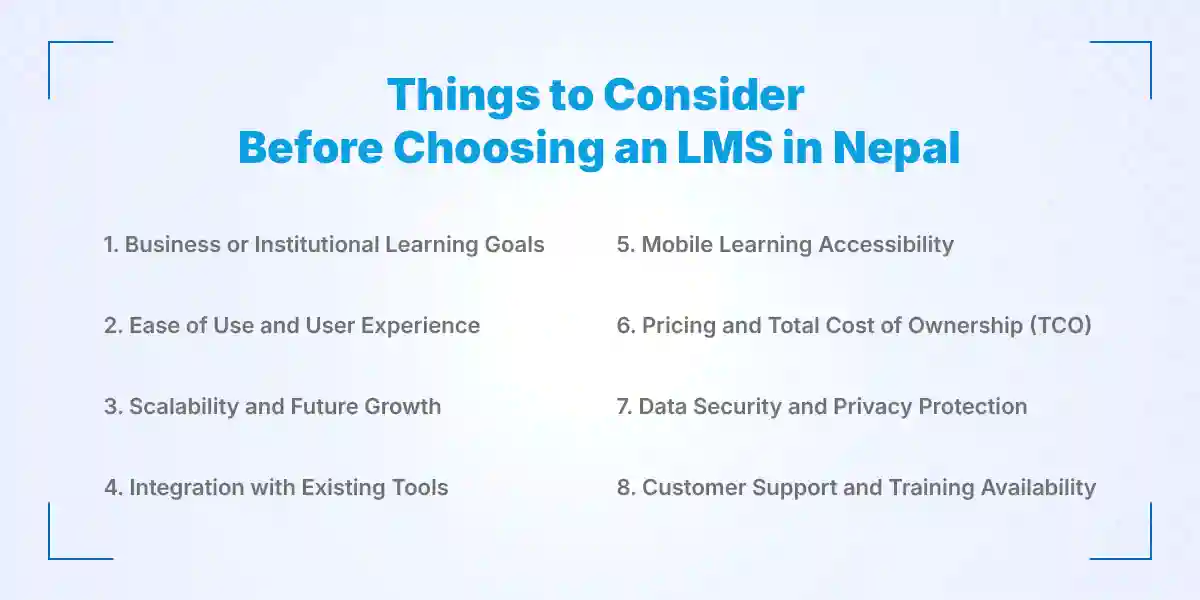
Things to Consider Before Choosing an LMS in Nepal
Choosing the right LMS in Nepal is not just about picking a popular platform, but about finding one that truly matches your organization’s learning needs and long-term goals. Different systems offer different strengths, so understanding key factors like usability, cost, and scalability is important. A well-chosen LMS can improve training efficiency and user satisfaction significantly. On the other hand, the wrong choice can lead to poor adoption and wasted investment.
1. Business or Institutional Learning Goals
Before selecting an LMS, clearly define what you want to achieve through it. Schools, colleges, and businesses all have different training objectives and requirements. Some may focus on academic learning while others prioritize employee training. Aligning LMS features with these goals ensures better results. It also helps avoid unnecessary features that are not useful. A clear goal makes selection much easier and more effective.
2. Ease of Use and User Experience
Good LMS should be simple and easy to navigate for both learners and administrators. If the system is complicated, users may avoid using it regularly. A clean interface improves engagement and reduces training time. User experience plays a major role in adoption rates. The easier it is to use, the more effective it becomes. Always prioritize simplicity and clarity in design.
3. Scalability and Future Growth
Your LMS should be able to grow as your organization expands. It must handle more users, courses, and data without performance issues. Scalable systems save you from switching platforms later. This is especially important for growing schools and businesses in Nepal. A flexible LMS supports long-term digital transformation. It ensures smooth growth without technical limitations.
4. Integration with Existing Tools
LMS should work smoothly with your existing systems like HR software, CRM, or communication tools. Good integration reduces manual work and improves workflow efficiency. It also ensures data consistency across platforms. Without integration, processes can become slow and repetitive. A connected system improves productivity. Always check compatibility before final selection.
5. Mobile Learning Accessibility
Mobile accessibility is essential in today’s learning environment. A good LMS should work smoothly on smartphones and tablets. This allows learners to access courses anytime and anywhere. It increases participation and flexibility in learning. Mobile-friendly systems are especially useful for remote or busy users. Accessibility ensures no learner is left behind.
6. Pricing and Total Cost of Ownership (TCO)
When choosing an LMS, consider not just the initial price but the total long-term cost. This includes setup, maintenance, upgrades, and support fees. Some platforms may look cheap initially but become expensive over time. A clear understanding of TCO helps in better budgeting. Always balance cost with features and performance. A smart investment saves money in the long run.
7. Data Security and Privacy Protection
LMS platforms handle sensitive student and employee data, so security is very important. The system should offer encryption, secure login, and data protection measures. It must also comply with privacy standards. Strong security builds trust among users. Without it, organizations risk data breaches and loss of credibility. Always choose a secure and reliable platform.
8. Customer Support and Training Availability
Good customer support ensures smooth LMS implementation and usage. Organizations may need help during setup or troubleshooting issues. Training resources also help users understand the system better. Quick and reliable support improves user satisfaction. It reduces downtime and technical difficulties. Strong support is a key factor in long-term success.
How to Successfully Implement an LMS in Your Organization in Nepal?
You can successfully implement an LMS in your organization in Nepal by planning clearly, selecting the right platform, and ensuring proper training for users. The process starts with understanding your learning needs and aligning them with LMS features. Proper setup and staff readiness are also crucial for smooth adoption. When done correctly, an LMS improves training efficiency and long-term learning outcomes.
- Define clear objectives: Identify what you want to achieve through the LMS
- Choose the right LMS platform: Select based on features, usability, and scalability
- Plan proper implementation: Set timelines, workflows, and setup processes carefully
- Train users effectively: Ensure learners and staff understand how to use the system
- Migrate data properly: Transfer existing records without errors or data loss
- Monitor and improve continuously: Track performance and optimize the system over time
Which is the Best LMS in Nepal?
Pace LMS is the best LMS in Nepal because it is designed specifically for Nepalese schools, colleges, and businesses with a focus on simplicity, affordability, and practical learning needs. It provides all essential LMS features like course management, user tracking, automation, and reporting in one easy-to-use system. Unlike complex international platforms, it is tailored for local users, making adoption much easier. It also supports smooth digital transformation for institutions moving from traditional to online learning systems.
Conclusion
Choosing the right LMS in Nepal is no longer just an option, it has become a practical need for schools, colleges, and businesses that want to modernize learning and training. From course management and automation to analytics and mobile access, LMS platforms bring everything into one organized system. You can explore more software options at Explore more softwares to understand different tools available in the market. They reduce manual work, improve learning efficiency, and make training more structured and measurable. Whether it is a local solution or a global platform, the right choice depends on your goals and scalability needs.
As Nepal continues to move toward digital transformation in education and corporate training, LMS systems will play a key role in shaping the future of learning. The best LMS is the one that fits your organization’s needs, is easy to use, and supports long-term growth. With proper implementation, it can significantly improve productivity and learning outcomes. Explore more software solutions from Kumari Job.
Frequently Asked Questions
Submit your comments

Get Our App On



How to Register a Personal PAN Card in Nepal: Online & Offline Methods
VIEW DETAILS
What Is the Average JavaScript Developer Salary in Nepal?
VIEW DETAILS
Salary Tax Slab 2083/84 in Nepal: Latest Tax Rates & Calculation
VIEW DETAILS
What Is the Average Java Developer Salary in Nepal?
VIEW DETAILS


Loading Comments...