


A candidate can have a polished CV and strong front-desk instincts, and still stumble the moment a hiring manager asks, "How do you handle an angry customer standing in front of you?" That single moment of hesitation is often the difference between a job offer and a rejection email, because receptionist roles are evaluated on live communication skill, not just paper qualifications.
This guide covers the most common receptionist interview questions for 2026, including questions for freshers, front-desk and customer service scenarios, the skills interviewers screen for, and a clear preparation plan. By the end, candidates will know exactly what to expect in the interview room and how to answer with the confidence that gets offers extended.
In this blog
What Are the Most Common Receptionist Interview Questions?
The most common receptionist interview questions test communication style, composure under pressure, and basic professionalism, since these are the traits a receptionist uses every single hour on the job. Interviewers ask a mix of general and role-specific questions because a receptionist is often the first person a client or visitor interacts with, making first impressions part of the actual job description. The questions below appear across nearly every receptionist interview, regardless of industry.
- Tell me about yourself.
- Why do you want to become a receptionist?
- Why should we hire you?
- What are your strengths and weaknesses?
- What do you know about our company?
- How do you handle pressure?
- What are your salary expectations?
Candidates should answer "Tell me about yourself" as a short professional summary, covering relevant experience, communication or software skills, and a specific reason for applying, all within about 90 seconds.
Receptionist Interview Questions for Freshers
Fresher receptionist questions focus on readiness and attitude rather than years of experience, since most entry-level candidates have not worked a front desk before. Interviewers ask these questions to judge how quickly a new hire can pick up office systems and handle unpredictable visitor situations. A fresher candidate should treat these questions as a chance to show transferable skills from school, internships, or part-time work.
- Why do you want to work as a receptionist?
- Why should we hire you as a fresher?
- What skills can you bring to this role?
- How would you handle a busy reception desk?
- How would you deal with a difficult visitor?
Freshers should point to specific experience with people-facing tasks, such as customer service shifts, event coordination, or volunteer work, since interviewers accept this kind of experience as reasonable proof of readiness.
Front Desk and Customer Service Interview Questions
1. How do you greet visitors professionally?
- Smile and make eye contact right away
- Use a simple greeting: "Good morning, how can I help you?"
- Confirm their name and purpose of visit
- Direct them to a seat or the right person
2. How do you handle an angry customer?
- Stay calm, don't get defensive
- Let them finish speaking first
- Acknowledge their frustration
- Offer a solution or involve a manager if needed
3. How do you manage multiple visitors?
- Acknowledge everyone immediately, even briefly
- Handle urgent requests first
- Use a visitor log to track order
- Keep everyone informed if there's a wait
4. How do you handle phone calls?
- Answer within 2–3 rings
- Greet with company name
- Take clear notes or messages
- Transfer calls or arrange callbacks promptly
5. How do you prioritize your tasks?
- Separate urgent tasks from routine ones
- Keep a simple checklist
- Handle time-sensitive requests first
- Stay flexible as new tasks come in
What Skills Are Required for a Receptionist Job?
Interview panels are not only listening to answers; they are screening for a specific skill set that predicts on-the-job performance. The skills evaluated most consistently across receptionist interviews include:
- Communication skills
- Customer service
- Computer skills
- Time management
- Organization
- Problem-solving
- Professionalism
- Multitasking
Candidates should work two or three of these skills into their answers using specific examples, since naming a skill without evidence carries far less weight than describing a real situation where that skill mattered.
How to Prepare for a Receptionist Interview?
To prepare for a receptionist interview, research the company, practice common and situational interview questions, prepare a concise self-introduction, improve your communication skills, review your CV, and dress professionally to make a strong first impression.
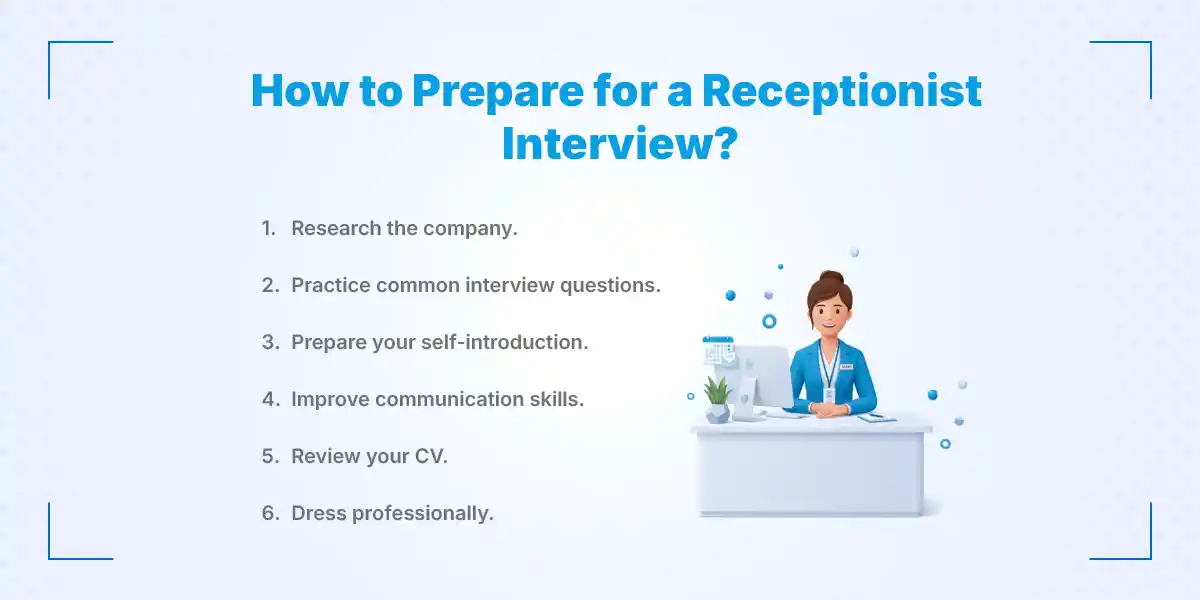
1. Research the Company
Learn about the company, its services, workplace culture, and the receptionist role before the interview.
2. Practice Common Interview Questions
Prepare clear and confident answers to common receptionist and customer-service interview questions.
3. Prepare Your Self-Introduction
Create a short introduction that highlights your education, experience, communication skills, and relevant strengths.
4. Improve Communication Skills
Practice speaking clearly, politely, and confidently because communication is essential for receptionist roles.
5. Review Your CV
Review your CV carefully and prepare to explain your qualifications, previous experience, and key skills.
6. Dress Professionally
Wear clean, formal, and professional clothing to create a positive first impression during the interview.
Conclusion
Receptionist interview success depends on preparation, communication, and professionalism rather than memorized answers. Candidates who research the company, practice common and situational receptionist interview questions, and present themselves confidently can make a stronger impression during the interview.
If you are looking for receptionist jobs in Nepal, KumariJob is a useful platform to explore current receptionist and front-desk vacancies from companies across Nepal. Browse the latest receptionist job openings on KumariJob and apply for positions that match your skills and experience.
Frequently Asked Questions
Submit your comments

Get Our App On


SEO Training for Freshers in Nepal: Skills, Career & Job Opportunities
VIEW DETAILS
SEO Training vs. Self-Learning: Which Is Right for You?
VIEW DETAILS
How to Choose Between Two Job Offers
VIEW DETAILS
Digital Marketing Training Interview Questions and Answers for Freshers
VIEW DETAILS


Loading Comments...