


Getting ready for a customer service job interview without knowing what the interviewer may ask can make even a qualified candidate nervous. You may have strong communication skills, but questions about angry customers, complaints, teamwork, pressure, and problem-solving can be difficult to answer without preparation.
The right preparation helps you organize your thoughts and respond professionally instead of memorizing scripted answers. This guide covers common customer service interview questions, fresher questions, situational scenarios, essential skills, preparation strategies, and practical tips for finding customer service jobs in Nepal.
In this blog
What Are the Most Common Customer Service Interview Questions?
The most common customer service interview questions assess communication, empathy, problem-solving, patience, teamwork, and the ability to handle difficult customers. Employers want to know whether you can understand customer needs and provide helpful solutions while representing the company professionally. Your answers should demonstrate how you would respond to realistic workplace situations.
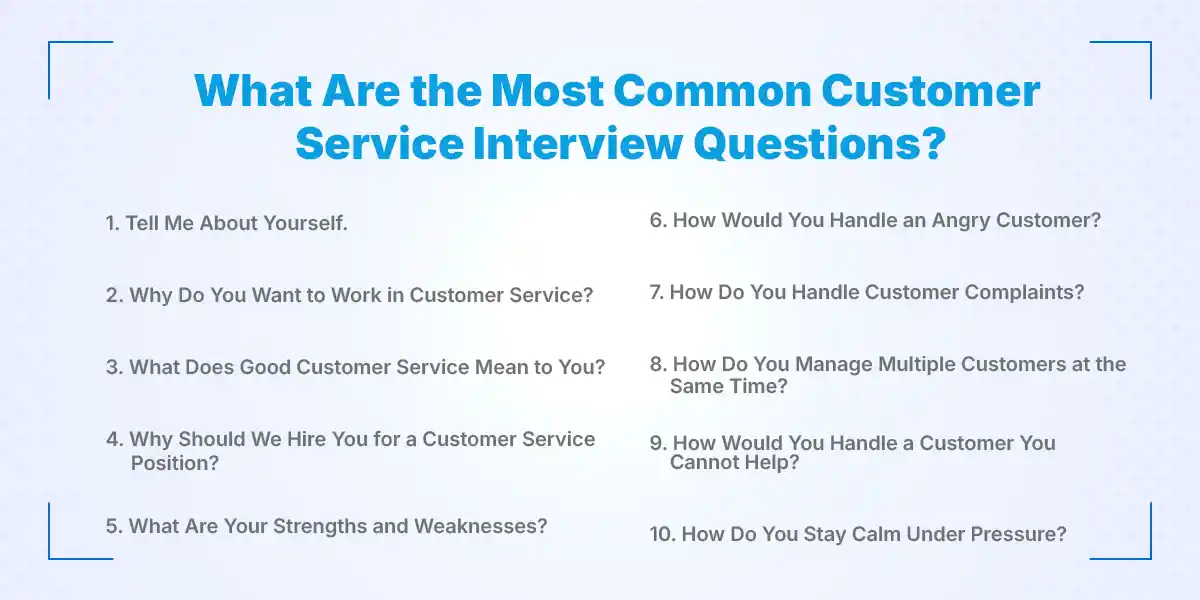
1. Tell Me About Yourself
Start with a brief introduction covering your education, relevant experience, communication skills, and career interests. Connect your background to customer service rather than sharing unrelated personal information. If you are a fresher, mention academic projects, volunteer work, internships, or experiences where you interacted with people. Keep your response clear and professional so the interviewer can easily understand your suitability for the position.
2. Why Do You Want to Work in Customer Service?
Explain that you enjoy communicating with people, understanding their concerns, and helping them find solutions. Give a specific example that shows your interest in customer interaction or problem-solving. Avoid saying that you simply want the job because you need employment. Show that you understand customer service requires patience, responsibility, product knowledge, and professional communication.
3. What Does Good Customer Service Mean to You?
Good customer service means understanding the customer's concern, communicating clearly, and providing an appropriate solution. A strong answer should show that you value listening and empathy rather than focusing only on completing transactions. Explain that customers should feel respected even when their request cannot be fulfilled exactly as they expect. You can also mention following company policies while still looking for helpful solutions.
4. Why Should We Hire You for a Customer Service Position?
You should highlight communication, patience, problem-solving, adaptability, and your willingness to learn. Connect these skills directly to the responsibilities listed in the job description. If you have previous experience, provide a short example of how you helped customers or solved a problem. Freshers can focus on transferable skills developed through education, teamwork, internships, or other experiences.
5. What Are Your Strengths and Weaknesses?
Choose strengths that relate directly to customer service, such as active listening, patience, communication, organization, or problem-solving. For a weakness, choose something genuine that does not make you unsuitable for the role and explain how you are improving it. Avoid presenting a common strength as a fake weakness, such as saying you are “too hardworking.” The strongest answers show self-awareness and a practical improvement plan.
6. How Would You Handle an Angry Customer?
First, remain calm and listen carefully without interrupting the customer. Acknowledge the customer's frustration, clarify the problem, and explain what solution or next step you can provide. Never respond emotionally or argue with the customer, even if you believe they are wrong. If the issue requires authority you do not have, follow the company's escalation process.
7. How Do You Handle Customer Complaints?
Start by listening to the complete complaint and confirming that you understand the customer's concern. Apologize when appropriate, investigate the issue, and provide a solution that follows company policy. Explain the next steps clearly so the customer knows what will happen after the conversation. Document or escalate the complaint when necessary, so the issue can be tracked and resolved properly.
8. How Do You Manage Multiple Customers at the Same Time?
Prioritize customers based on urgency, impact, and the company's service procedures. Communicate realistic waiting times rather than leaving customers uncertain about when they will receive assistance. Use available systems or notes to organize requests and avoid forgetting important details. Good time management allows you to handle multiple customers without sacrificing accuracy or professionalism.
9. How Would You Handle a Customer You Cannot Help?
Explain honestly what you can and cannot do instead of making promises you cannot keep. Look for an alternative solution, provide accurate information, or connect the customer with the appropriate team. Explain the reason for the limitation in a polite and easy-to-understand way. The goal is to leave the customer with a clear next step rather than simply saying that nothing can be done.
10. How Do You Stay Calm Under Pressure?
I would stay focused on the immediate customer need, listen carefully, and handle one problem at a time. Taking a moment to organize the situation can prevent an emotional response and reduce mistakes. I would also follow established procedures instead of improvising when pressure increases. After a difficult interaction, reviewing what happened can help improve future responses.
Customer Service Interview Questions for Freshers
Freshers should prepare for questions that test their communication skills, attitude, ability to learn, and approach to customer problems. Employers do not always expect extensive customer service experience from entry-level candidates, but they do expect professionalism and a willingness to learn. You can use examples from college, internships, volunteer activities, group projects, or part-time work to demonstrate transferable skills.
1. Why Should We Hire You as a Fresher?
As a fresher, focus on your communication skills, positive attitude, willingness to learn, and ability to work with different people. Explain how your education or previous activities helped you develop responsibility and teamwork. Give an example of a situation where you solved a problem or helped someone. Make it clear that you are prepared to learn the company's products, systems, and customer service procedures.
2. What Skills Make You Suitable for Customer Service?
Important skills include communication, active listening, empathy, patience, problem-solving, time management, and teamwork. Choose three or four skills that genuinely describe you and connect each one to customer service work. For example, active listening helps you understand the customer's actual concern before offering a solution. Avoid listing skills without explaining how you would use them in the workplace.
3. How Would You Handle a Customer With No Previous Support Experience?
I would focus on listening carefully, understanding the customer's problem, and using available company resources to find the correct solution. I would not guess if I did not know the answer because incorrect information can create a larger customer problem. Instead, I would ask a supervisor or experienced colleague when necessary. This approach shows that I can provide responsible service while learning the support process.
4. How Would You Respond If You Did Not Know the Answer to a Customer's Question?
I would acknowledge that I need to verify the information rather than provide an uncertain answer. I would check the company's knowledge base, available resources, or ask the appropriate team for guidance. I would then return to the customer with accurate information as quickly as possible. This demonstrates honesty, responsibility, and a commitment to providing correct support.
5. How Do You Learn New Products or Services?
I would study the product information, frequently asked questions, internal documentation, and customer support procedures. I would practice using the product when possible so I can understand common customer problems from a user's perspective. I would also ask experienced team members questions when I encounter unfamiliar situations. Regular practice and feedback would help me build product knowledge quickly.
Situational Customer Service Interview Questions
Situational questions ask you to explain how you would respond to realistic customer problems. They help interviewers evaluate your judgment, communication, emotional control, and ability to follow company procedures. When answering these questions, explain the action you would take, why you would take it, and how you would reach an appropriate outcome.
1. What Would You Do If a Customer Started Shouting at You?
I would remain calm and allow the customer to explain the problem without responding aggressively. I would acknowledge their frustration and ask focused questions to understand what caused the issue. Once I understand the situation, I would explain the available solution or escalation process clearly. If the customer became abusive or threatened staff, I would follow the company's safety and escalation procedures.
2. How Would You Handle a Customer Who Demands a Refund?
I would first understand why the customer wants the refund and check the company's refund policy. I would explain the available options clearly rather than promising a refund before confirming eligibility. If the request meets the policy, I would guide the customer through the process. If it does not, I would politely explain the reason and offer any permitted alternative.
3. What Would You Do If You Made a Mistake With a Customer?
I would acknowledge the mistake instead of blaming another person or hiding the error. I would inform the appropriate person, correct the problem as quickly as possible, and communicate honestly with the customer. After resolving the issue, I would identify what caused the mistake and take steps to prevent it from happening again. Taking responsibility demonstrates professionalism and helps build customer trust.
4. How Would You Handle Two Customers Who Need Help at the Same Time?
I would quickly assess which request requires immediate attention and communicate with both customers about the expected waiting time. I would handle urgent issues first while ensuring the second customer knows they have not been forgotten. If the workload becomes too high, I would request assistance from another team member when appropriate. Clear communication and prioritization can prevent customers from feeling ignored.
5. What Would You Do If a Customer Asked for Something Against Company Policy?
I would explain politely that I cannot provide the requested action because it conflicts with company policy. I would avoid simply rejecting the customer and instead look for an alternative that the policy allows. If the situation requires a supervisor's approval, I would escalate it through the correct channel. This approach protects the company while still showing the customer that I am trying to help.
Customer Service Skills Interviewers Look For
Employers generally look for a combination of communication ability, emotional intelligence, problem-solving, and reliability in customer service candidates.
- Communication: Explain information clearly and professionally.
- Active listening: Understand the customer's actual concern before responding.
- Empathy: Recognize the customer's feelings without taking complaints personally.
- Patience: Remain professional during repetitive or difficult interactions.
- Problem-solving: Identify practical solutions instead of simply describing problems.
- Product knowledge: Understand the company's products, services, and policies.
- Conflict resolution: Handle disagreements calmly and professionally.
- Time management: Manage multiple customer requests efficiently.
- Teamwork: Work with colleagues and other departments to resolve issues.
- Adaptability: Learn new products, tools, processes, and customer needs.
Customer Service Interview Questions About Communication Skills
Strong communication is central to customer service because customers need clear information and respectful interactions. Interviewers may test whether you can simplify complex information, listen carefully, and maintain a professional tone during difficult conversations.
Common communication-focused questions include:
- How do you communicate with difficult customers?
- How do you explain complicated information simply?
- How do you make customers feel heard?
- How do you handle communication misunderstandings?
- How do you maintain a professional tone?
When answering, focus on practical behavior rather than saying only that you have “good communication skills.” Give short examples that demonstrate listening, clarification, empathy, and clear explanations.
How Can You Prepare for Customer Service Interview Questions?
Freshers and experienced candidates can prepare by researching the employer, practicing common questions, reviewing the job description, and developing examples of how they would handle realistic customer situations. Preparation helps you answer naturally while showing that you understand the responsibilities of the role. The goal is to build a flexible framework for your answers rather than memorize a script.
- Research the company and its products or services: Learn what the company offers, who its customers are, and what type of support they may need.
- Review the job description carefully: Identify required skills, responsibilities, software, communication channels, and experience.
- Practice common customer service questions: Prepare answers for motivation, strengths, weaknesses, customer complaints, teamwork, and pressure.
- Prepare examples of handling problems or conflicts: Use real experiences from work, education, internships, or daily situations.
- Improve communication and active listening skills: Practice speaking clearly and responding directly to questions without unnecessary details.
- Practice answering situational questions: Think through scenarios involving angry customers, refunds, delays, mistakes, and policy restrictions.
- Prepare questions to ask the interviewer: Ask about training, team structure, performance expectations, or typical customer interactions.
- Take mock interviews: Practice with someone else or record yourself to identify problems with clarity, confidence, and body language.
Customer Service Interview Preparation Checklist
Before attending your interview, make sure you have prepared the following:
- Updated resume
- Company research
- Job description review
- Communication practice
- Common interview questions
- Situational examples
- Professional interview attire
- Mock interview practice
- Questions to ask the interviewer
- Knowledge of the company's products or services
Where to Find Customer Service Jobs in Nepal
You can find customer service jobs in Nepal through online job portals such as KumariJob, where you can search for roles such as Customer Service Representative, Customer Support Executive, Call Center Agent, Customer Care Representative, and Client Service Executive.
Conclusion
The strongest customer service candidates do more than give polite answers; they show that they can listen, understand the real problem, remain calm, and take responsible action. Whether you are a fresher or an experienced applicant, focus on demonstrating these behaviors through clear examples rather than memorizing standard interview responses.
Your preparation should ultimately help you become more comfortable handling real customer situations, because interviewers are looking for evidence that you can transfer your communication and problem-solving skills to the workplace. KumariJob can help you explore customer service vacancies and find relevant job opportunities in Nepal
Frequently Asked Questions
Submit your comments

Get Our App On



SEO Training for Freshers in Nepal: Skills, Career & Job Opportunities
VIEW DETAILS
SEO Training vs. Self-Learning: Which Is Right for You?
VIEW DETAILS
How to Choose Between Two Job Offers
VIEW DETAILS
Digital Marketing Training Interview Questions and Answers for Freshers
VIEW DETAILS


Loading Comments...