



Nepal is not only a mountainous country, but it is also a world tourism destination. Tourism is one of the most powerful sectors of the national economy, with Everest expeditions, Lumbini pilgrimage, and Pokhara sunsets. All the successful tour packages, easy airport transfers, and scheduled trekking programs would not take place without professionals in the field of travel and tourism who are trained to do that. A Bachelor of Travel and Tourism Management (BTTM) is a Degree that allows one to work with travel as a serious, structured career.
This blog will provide a detailed discussion of the BTTM scope in Nepal, covering both career and employment opportunities, as well as salary expectations and future development prospects. Are you a +2 graduate with BTTM in mind or just an observer of the tourism industry? This guide will dissect everything there is to know about the industry demand, potential earnings, and the various travel jobs in Nepal awaiting you in the booming travel industry.
In this blog
What Is BTTM?
BTTM (Bachelor of Travel and Tourism Management) is an undergraduate degree program focused on travel operations, tourism development, airline services, tour management, and hospitality fundamentals. It prepares students with practical and managerial skills needed to work in travel agencies, airlines, trekking companies, hotels, and tourism organizations.
The program has combined classroom training with field exposure, which includes tourism marketing, tourism ticketing, tour planning, customer service, aviation management and sustainable tourism. Concisely, BTTM educates students on how to make their travel experiences professionally oriented, including making a ticket reservation and international tour packages.
Who Should Study It?
- Students who are passionate about travel, tourism, and exploring new cultures.
- +2 graduates (any stream) who want a career in travel agencies, airlines, or tourism companies.
- Individuals interested in becoming tour managers, travel consultants, or aviation staff.
- Students who prefer a practical, field-oriented management degree over purely theoretical programs.
- Those who want career opportunities in Nepal’s growing tourism and adventure sector.
- Aspiring entrepreneurs planning to start their own travel agency or trekking company.
- Students aiming for international career opportunities in cruise lines, airlines, or global tourism firms.
BTTM Scope in Nepal
The bttm scope in Nepal is growing with the fast-growing tourism industry in the country. The demand for trained travel and tourism professionals in Nepal is on the increase as the country keeps receiving trekkers, pilgrims, adventure seekers, and cultural tourists. There are no more opportunities in the tour guiding alone, as airlines and trekking companies, or digital travel platforms. The industry also has a variety of positions, stable income prospects, and global exposure to BTTM graduates.
1. Growing Tourism Industry in Nepal
Tourism is a thriving sector of the Nepalese economy that has been of great help in the employment sector and the GDP. The international attractions such as Everest, Annapurna, Lumbini, and Chitwan are drawing thousands of tourists, and thus, there is an ever-growing demand for competent tourism managers. Seasonal tourism has been transformed into an annual round-trip business. Due to the infrastructure enhancement and the increase in international arrivals, the BTTM graduates are stepping into a not-shrinking and scaling industry where it is increasingly possible to get hospitality jobs in Nepal across five-star hotels, international travel agencies, and the growing aviation sector.
2. Expansion of Travel Agencies and Tour Operators
The number of travel agencies and trekking companies in Nepal is increasing, particularly in cities such as Kathmandu and Pokhara. Between tailor-made tours abroad and adventure trekking tours, companies require trained experts who have the knowledge of itinerary planning, ticketing, and dealing with clients. BTTM graduates are ideal employees in the business of tour coordination, operations management, and travel consultancy. Competition is on the increase, but so are the opportunities.
3. Opportunities in Aviation and Airline Services
Another potential aviation industry in the bttm diversification in Nepal. As there are more domestic and international flights, there is a need for ticketing officers, ground staff, customer service agents, and reservation executives in airports and airlines. BTTM students learn about airline operations and travel systems, and they apply to work in the field of aviation. This sector is still opening new doors as air travel is getting more accessible.
4. Digital Growth in Tourism and Online Travel Platforms
Tourism is no longer about physical offices and reservations done through booklets; it is shifting to online. The industry is being transformed by digital travel platforms, online ticketing systems, and social media marketing. The online agencies and travel startups require individuals with knowledge about tourism and online tools. With the changing market, BTTM graduates who embrace technology and online booking systems have a high competitive edge in the market.
Career Opportunities After BTTM in Nepal
Completing a BTTM degree doesn’t mean you’re limited to one desk job with a world map on the wall. The bttm scope in Nepal opens doors across travel agencies, trekking companies, airlines, events, and even government tourism offices. It’s a field where your office could be an airport terminal one day and a mountain trail the next. For graduates who enjoy movement, people, and planning, this career path is anything but boring.
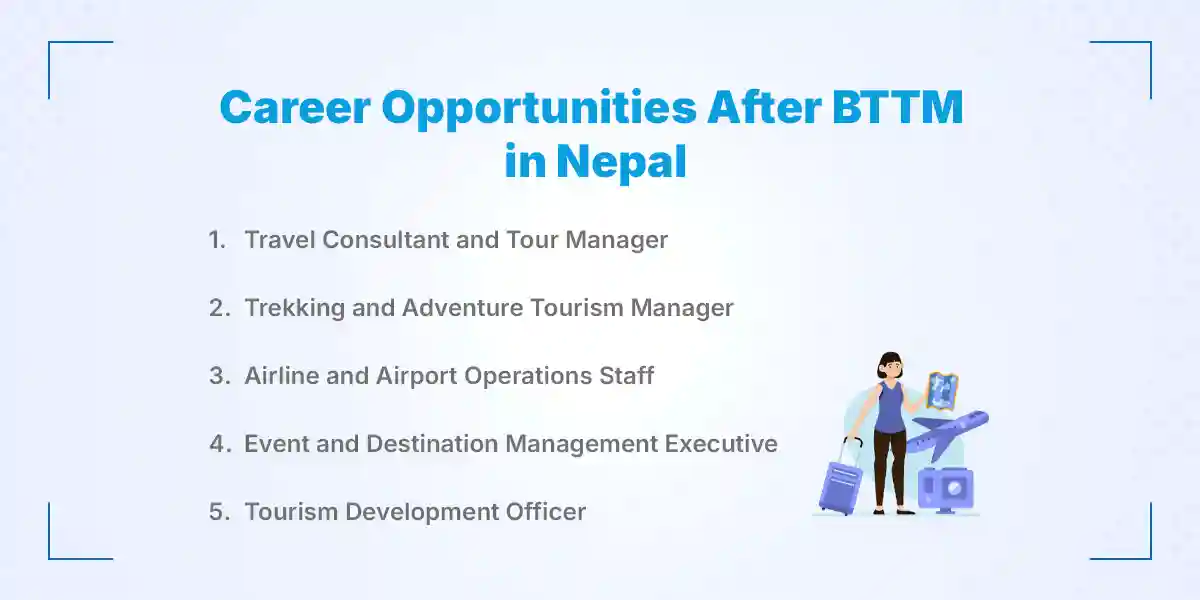
1. Travel Consultant and Tour Manager
The orchestrators of hassle-free holidays are travel consultants. They create itineraries, do bookings, deal with visas, and even correct last-minute travel glitches, before the client is even aware of it. Tour managers, in their turn, organize groups and make everything go on time. Imagine them as the producers of a traveling film, making all the flight arrangements, hotels, guides, and experiences work together to make the trip go off without any hitches.
2. Trekking and Adventure Tourism Manager
In adventure tourism, such as in Nepal, adventure tourism is not a niche; it is mainstream. Trekking managers and adventure managers organize mountain climbing, rafting, jungle safari, and peak climbing. They deal with logistics, safety planning, permits, and communication with clients. It is a job that combines adrenaline, part administration, part organizer, part risk administrator, part storytelling of the Himalayas.
3. Airline and Airport Operations Staff
Airlines and airports need professionals who understand ticketing systems, customer service, baggage handling coordination, and ground operations. BTTM graduates often work as reservation officers, check-in staff, or customer service agents. It’s a fast-paced environment where precision matters, because when flights move by the minute, there’s no room for guesswork.
4. Event and Destination Management Executive
Destination weddings, corporate tours, international conferences, someone has to plan them. Event and destination executives coordinate venues, travel logistics, accommodation, and guest experiences. It’s like being the architect of an experience, building something temporary yet unforgettable. For those who thrive under deadlines and enjoy creative coordination, this role offers both pressure and excitement.
5. Tourism Development Officer
For graduates interested in policy and development, working as a tourism development officer is another promising path. These professionals collaborate with local governments and tourism boards to promote destinations, improve infrastructure, and develop sustainable tourism plans. It’s less about selling a tour and more about shaping the future of Nepal’s tourism landscape — one strategy at a time.
Salary of BTTM Graduates in Nepal
Let’s talk numbers, because passion is important, but paychecks matter too. When discussing the bttm scope in Nepal, average salary in Nepal, and expectations are a big part of the conversation. Earnings in the travel and tourism sector depend on experience, skills, networking, and sometimes even the season. The good news? The growth curve is real. As you move from handling bookings to managing operations, your income tends to climb alongside your responsibilities.
1. Entry-Level Salary
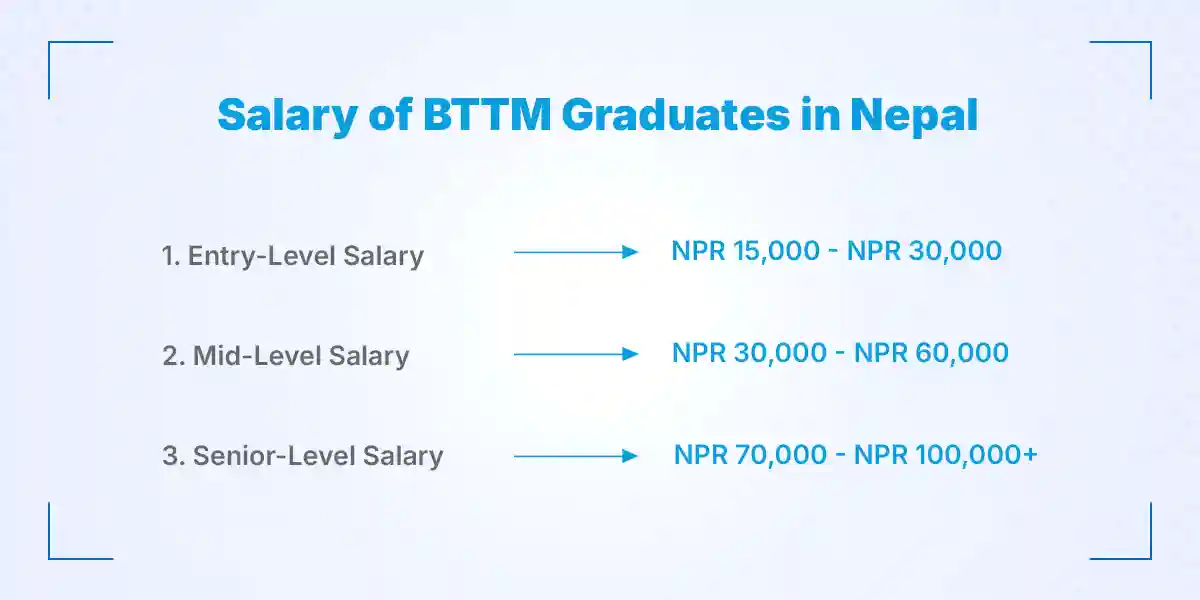
Fresh BTTM graduates typically start with salaries ranging between NPR 15,000 to NPR 30,000 per month. Entry-level roles include ticketing officer, travel consultant assistant, airport ground staff, or junior tour coordinator. At this stage, you’re learning the ropes, understanding systems, handling clients, and gaining practical exposure. It may not feel like a jackpot yet, but think of it as paid training for bigger roles ahead.
2. Mid-Level Salary
With 3-5 years of experience, salaries can rise to NPR 30,000 to NPR 60,000 per month. Professionals at this level often work as tour managers, senior travel consultants, operations supervisors, or airline executives. Responsibilities increase, and so does accountability. You’re no longer just booking tickets; you’re managing teams, solving complex issues, and keeping clients happy. Experience becomes your currency, and it starts paying better.
3. Senior-Level Salary
At senior levels, professionals can earn NPR 70,000 to NPR 100,000 or more per month, especially in managerial or director roles. Positions such as travel agency manager, tourism operations head, or aviation department supervisor fall into this category. At this stage, you’re steering the ship rather than rowing it. The higher salary reflects leadership skills, industry expertise, and years of experience in Nepal’s competitive tourism market.
Skills Required to Succeed in the BTTM Field
A BTTM degree gives you the map, but IT skills are what help you navigate the terrain. In Nepal’s tourism industry, success isn’t just about knowing destinations, it’s about knowing people. The field demands flexibility, confidence, and the ability to think on your feet when plans suddenly change. If tourism were a stage, these skills would be your backstage crew, making sure the show runs smoothly.
1. Communication and Customer Service Skills
In tourism, communication is everything. You’re dealing with clients from different backgrounds, moods, and time zones, sometimes all before lunch. Clear explanations, polite conversations, and quick responses can turn a confused traveler into a loyal customer. Customer service here is less about scripted lines and more about genuine problem-solving. A calm tone during a flight delay can work magic. Strong interpersonal skills also help in coordinating teams and managing group tours efficiently.
2. Cultural Awareness and Language Proficiency
Nepal attracts visitors from around the world, and understanding cultural differences is a quiet superpower. Knowing basic greetings in different languages or respecting cultural sensitivities can build trust instantly. Language skills, especially English and possibly other foreign languages, can open more doors than you think. In tourism, speaking someone’s language is like offering them a familiar cup of tea in a foreign land. Cultural awareness also helps in designing experiences that resonate with diverse travelers.
3. Sales, Marketing, and Negotiation Skills
Tourism is not just about guiding people; it’s also about convincing them. Whether you’re selling a trekking package or negotiating hotel rates, persuasion plays a role. Marketing skills help you promote destinations creatively, while negotiation skills ensure you strike deals that benefit both clients and companies. It’s a delicate dance, balancing value and profit without stepping on anyone’s toes. These skills also help in upselling services and creating attractive travel packages.
4. Crisis Management and Problem-Solving Abilities
Flights get canceled. Weather changes. Permits get delayed. Tourism has its fair share of surprises. The real test is how you respond when things don’t go according to plan. Strong problem-solving skills help you stay calm under pressure and find quick solutions. Think of it as being the firefighter of the travel world, putting out small flames before they become big problems. These skills also improve customer satisfaction and strengthen your professional reputation.
5. Digital Booking and Travel Software Skills
Today’s tourism industry runs on technology. From ticketing systems to online booking platforms and CRM software, digital skills are essential. Knowing how to use reservation systems, manage online inquiries, and track bookings efficiently can make you stand out. In a world where travel decisions are made with a click, being tech-savvy isn’t optional, it’s part of the job description. Mastery of digital tools also allows for smoother team coordination and better client communication.
Where Can BTTM Graduates Work in Nepal?
BTTM graduates have a wide playground to explore in Nepal’s booming tourism sector. From mountains to airports, hotels to event halls, the career opportunities are diverse and dynamic. Essentially, if tourism were a game board, BTTM grads get to move across multiple squares, each offering different challenges, learning, and rewards. Here’s where your degree can take you.
1. Travel and Trekking Agencies
Travel and trekking agencies are the heartbeat of Nepal’s tourism. Graduates can work as tour coordinators, travel consultants, or trekking guides, managing itineraries, client bookings, and adventure logistics. You’re the person turning travel dreams into real-life experiences. It’s a role where organization meets adventure, one day you’re in an office planning a trek, the next, coordinating a group at the base of Annapurna. Strong networking and negotiation skills also help in building client trust and repeat business.
2. Airlines and Airport Authorities
Airports and airlines aren’t just about planes, they’re mini-universes of coordination. BTTM grads can work as check-in executives, ticketing officers, customer service staff, or reservation agents. Your role is to ensure passengers get from A to B without a hitch, all while maintaining a calm and friendly demeanor. Think of it as being the conductor of a flying orchestra, ensuring every note lands perfectly. Attention to detail and problem-solving skills also make your work shine in high-pressure situations.
3. Hotels and Hospitality Groups
Hotels and resorts offer a playground for service-oriented graduates. Positions like front office executive, operations assistant, or guest relations officer put you at the center of hospitality management. You’re the face clients interact with, the one making sure check-ins, reservations, and special requests run smoothly. It’s part customer service, part management, and all about making someone feel at home, even when they’re miles away from it. Strong teamwork and multitasking abilities also set top performers apart.
4. Government Tourism Departments
Working in government tourism departments allows graduates to shape the bigger picture of Nepal’s travel industry. Roles include tourism development officer, policy assistant, or destination planner. Here, your work impacts entire communities and regions, from trekking permits to festival promotions. Think of it as steering the ship rather than rowing, you help set the direction for tourism growth nationwide. Analytical and planning skills also help in implementing effective tourism strategies.
5. Event Management and Destination Companies
Event management and destination companies need organized, creative minds to plan festivals, corporate events, weddings, and destination tours. BTTM graduates coordinate logistics, vendors, and guest experiences. This is where multitasking meets imagination, one day organizing a Himalayan trek for corporate clients, the next planning a cultural festival that draws international visitors. Strong communication and leadership skills ensure events run smoothly and leave lasting impressions.
Why Is BTTM Scope in Nepal Increasing?
The bttm scope in Nepal is increasing because Nepal’s tourism industry is rapidly evolving, offering more jobs, better career growth, and higher demand for skilled professionals. Adventure tourism, hospitality expansion, and global travel trends are creating a fertile ground for BTTM graduates. The industry isn’t just surviving, it’s thriving, and trained professionals are at the center of this growth.
1. Rise in Adventure and Eco-Tourism
Nepal’s mountains, rivers, and forests are attracting adventure seekers and eco-conscious travelers from across the globe. Trekking, rafting, paragliding, and eco-tourism experiences are booming. This surge creates demand for qualified BTTM graduates who can manage tours, ensure safety, and design sustainable experiences. It’s a sector where passion for nature meets professional skills, making every day exciting. Additionally, adventure tourism encourages graduates to innovate travel packages and niche experiences.
2. Infrastructure Development
Improved roads, better airport facilities, and new hotels and resorts are reshaping Nepal’s tourism landscape. With modern infrastructure, more tourists can travel comfortably, and tourism services can expand. BTTM graduates benefit from this development, taking roles in hotel management, travel coordination, and logistics planning. Essentially, better infrastructure means more jobs and smoother operations for tourism professionals. Enhanced facilities also allow graduates to manage larger groups and international events efficiently.
3. Growth of International Travel Demand
Nepal is increasingly on the radar of global travelers seeking unique cultural and adventure experiences. International travel demand is rising steadily, increasing the need for professionals who can communicate across languages, handle global clients, and manage travel experiences efficiently. For BTTM graduates, this translates to opportunities not only locally but also for international collaborations and cross-border projects. It also motivates graduates to gain global certifications and exposure to compete effectively.
4. Expansion of Hospitality and Tourism Investment
Investments in luxury hotels, resorts, eco-lodges, and tourism ventures are increasing across Nepal. This expansion drives the need for skilled professionals in management, operations, and customer service. BTTM graduates are ideal candidates to oversee these investments, ensuring high-quality services and smooth operations. In short, more investment equals more opportunities for career growth in the sector. It also opens doors for entrepreneurial graduates to start their own tourism-related ventures.
Is BTTM a Good Career Choice in Nepal?
Yes, BTTM is a promising career choice in Nepal because the tourism and travel industry is growing steadily, offering both stable employment and long-term career growth. Graduates can explore a variety of roles, gain international exposure, and even start their own businesses. With the right skills and dedication, BTTM opens doors to a dynamic and rewarding career path.
Here’s why BTTM is a strong career option:
- Long-term growth potential: The tourism industry in Nepal is expanding rapidly, creating increasing demand for trained professionals.
- Entrepreneurship opportunities: Graduates can start travel agencies, trekking companies, or niche tourism ventures, combining passion with business.
- Diverse career paths: From hotels and airlines to event management and government tourism offices, roles are varied and engaging.
- Comparison with BHM and other management degrees: BTTM offers specialized knowledge in tourism and travel, giving graduates a competitive edge in the hospitality and travel sector.
- International exposure: Opportunities exist to work with global tour operators or collaborate on cross-border tourism projects.
- Future of tourism careers in Nepal: Sustainable tourism, eco-tourism, and adventure travel trends suggest strong demand for professionals in the coming years.
How to Build a Successful Career After BTTM?
To build a successful career after BTTM, graduates need a mix of practical experience, professional networking, and specialized skills. The tourism industry in Nepal rewards those who are proactive, adaptable, and willing to learn on the job. By combining internships, certifications, and strategic specialization, you can move from entry-level roles to leadership positions or even entrepreneurship. It’s about turning your degree into real-world impact.
1. Internships and Field Experience
Internships in Nepal are the bridge between classroom learning and real-world practice. Working with travel agencies, hotels, trekking companies, or airlines allows BTTM graduates to understand operational workflows, client handling, and industry standards. Field experience helps you build confidence, develop problem-solving skills, and gain hands-on exposure to different tourism segments. It’s often the first step toward securing a full-time position.
2. Networking with Travel and Tourism Professionals
Networking can be just as important as knowledge in the tourism sector. Connecting with industry professionals through seminars, conferences, and online platforms opens doors to mentorship, job opportunities, and collaborations. Building relationships helps you stay updated on trends, gain insider insights, and increase your chances of landing competitive roles. Think of it as creating a map where every contact is a potential waypoint to your next career move.
3. International Certifications and IATA Training
Certifications such as IATA (International Air Transport Association) or tourism management diplomas add credibility to your resume. They demonstrate specialized knowledge in travel operations, airline management, or tourism marketing. These credentials make you more competitive for top-tier jobs in Nepal and abroad, signaling that you’re serious about professionalism and career growth. Extra certifications also give you an edge in client-facing roles.
4. Specialization in Adventure, Aviation, or Tourism Marketing
Choosing a niche can set you apart in a crowded field. Specializing in adventure tourism, airline management, or tourism marketing allows you to develop expertise that employers highly value. It also lets you tailor your career path toward roles that match your interests, whether leading mountain expeditions, managing airline operations, or crafting compelling travel campaigns. A focused skill set often leads to faster promotions and higher pay.
Conclusion
The BTTM scope in jobs in Nepal is promising, offering a dynamic mix of career opportunities, competitive salaries, and long-term growth. From travel agencies and trekking companies to airlines, hotels, and government tourism departments, graduates have multiple avenues to explore. With Nepal’s tourism industry expanding steadily, there’s increasing demand for professionals who can combine management knowledge with practical skills. The key to success lies in gaining hands-on experience, building strong networks, and continuously upgrading your skills through certifications and specialization.
For aspiring BTTM graduates, the journey can be both exciting and rewarding. By staying adaptable, embracing international exposure, and pursuing niches like adventure tourism or tourism marketing, you can carve a niche for yourself. Ultimately, BTTM is not just a degree; it’s a gateway to shaping Nepal’s tourism landscape while building a fulfilling career.
Frequently Asked Questions
Submit your comments

Get Our App On



SEO Training for Freshers in Nepal: Skills, Career & Job Opportunities
VIEW DETAILS
SEO Training vs. Self-Learning: Which Is Right for You?
VIEW DETAILS
How to Choose Between Two Job Offers
VIEW DETAILS
Digital Marketing Training Interview Questions and Answers for Freshers
VIEW DETAILS


Loading Comments...