



The demand for Laghubitta vacancies in Nepal has grown significantly as microfinance institutions continue expanding their services across rural and urban communities. Many fresh graduates and experienced finance professionals now choose Laghubitta jobs because they offer stable employment, career growth, practical banking experience, and opportunities to work directly in Nepal’s developing financial sector.
Compared to traditional banking jobs, Laghubitta careers often provide faster entry-level opportunities and hands-on experience in customer service, loan management, and financial operations.
Nepal’s microfinance industry plays an important role in improving financial inclusion by providing loans and savings services to small businesses, farmers, and low-income communities. As more laghubitta companies open new branches across the country, the demand for positions such as Junior Assistant, Loan Officer, Relationship Officer, and Branch Manager continues to increase.
In this guide, you will learn how to find genuine laghubitta vacancies in Nepal, where companies publish job openings, and what steps you can take to improve your chances of getting selected.
In this blog
What Is a Laghubitta in Nepal?
A laghubitta in Nepal is a microfinance institution that provides small loans, savings services, and basic financial support to low-income people, small business owners, farmers, and rural communities. These institutions help people who cannot easily access services from commercial banks and play an important role in improving financial inclusion in Nepal. Laghubitta companies support Nepal’s economy by helping people start small businesses, farming activities, and self-employment work. As the microfinance sector grows, the demand for jobs in Laghubitta institutions is also increasing across the country.
There are many jobs available in Laghubitta companies, including Junior Assistant, Trainee Assistant, Loan Officer, Relationship Officer, Field Staff, Branch Manager, and Internal Auditor. Some jobs are office-based, while others require field visits and customer interaction. The main difference between banking and Laghubitta careers is the work environment and target customers. Commercial banks mainly focus on urban banking services, while Laghubitta institutions work closely with rural communities and small borrowers.
Why Choose a Career in a Laghubitta Company?
A career in a laghubitta company is a good choice for people who want stable jobs, career growth, and experience in Nepal’s financial sector. Many microfinance institutions offer opportunities for fresh graduates, making it easier to start a career without prior banking experience. Employees can begin with entry-level positions and later move into higher roles through training and work performance.
Working in a laghubitta company also helps employees gain practical experience in customer service, loan management, field operations, and financial services. Many institutions provide training programs, travel allowances, bonuses, and other employee benefits. These jobs are especially valuable for candidates who want long-term growth in banking, finance, and microfinance careers in Nepal.
How to Find a Laghubitta Vacancy in Nepal?
Laghubitta vacancies in Nepal can be found through online job portals, official microfinance websites, newspapers, social media groups, and professional networking. Regularly checking these sources increases your chances of finding new openings quickly. Many microfinance institutions announce vacancies for positions like Junior Assistant, Assistant, and Trainee Assistant throughout the year. Staying updated and applying early can improve your chances of getting selected.
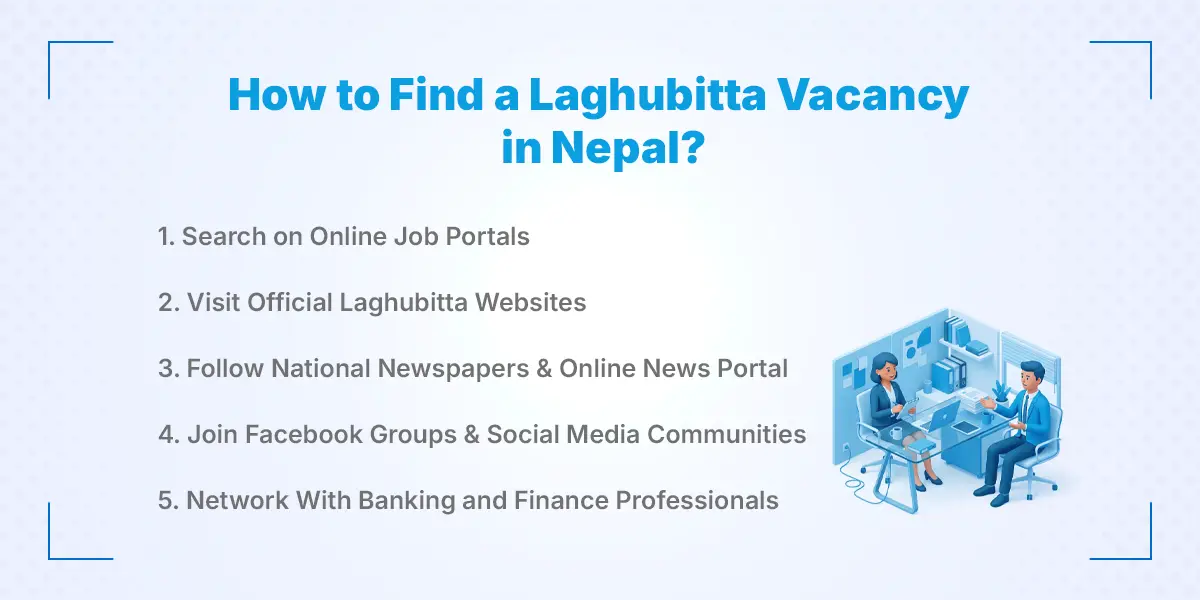
1. Search on Online Job Portals
Online job portals are one of the easiest ways to find Laghubitta vacancies in Nepal. Websites like Kumari Job regularly publish banking and microfinance jobs. You can search using keywords such as “Laghubitta Vacancy” or “Microfinance Jobs.” Creating a job alert can also help you receive vacancy updates quickly.
2. Visit Official Laghubitta Websites
Many microfinance institutions publish vacancies directly on their official websites. Visiting these websites regularly helps you find genuine and updated job opportunities. Institutions often post notices for trainee, assistant, and officer-level positions. Checking the career section weekly can help you avoid missing deadlines.
3. Follow National Newspapers and Online News Portal
National newspapers and online news portals are common sources for banking and finance job advertisements. Newspapers like Kantipur and The Himalayan Times frequently publish vacancy notices. Many organizations still prefer newspaper advertisements for official recruitment announcements. Reading the vacancy section regularly can help you stay informed.
4. Join Facebook Groups and Social Media Communities
Facebook groups and social media communities often share the latest Laghubitta vacancy updates. Many job seekers and recruiters post banking and finance openings daily. LinkedIn is also useful for following microfinance institutions and professional recruiters. Joining active groups can help you get vacancy information faster.
5. Network With Banking and Finance Professionals
Networking with banking and finance professionals can help you learn about upcoming vacancies early. Friends, seniors, and colleagues working in financial institutions may share valuable job information and referrals. Attending career events and connecting on LinkedIn can expand your professional network. Strong networking can improve your chances of finding better career opportunities in the Laghubitta sector.
Eligibility Criteria for Laghubitta Jobs in Nepal
The eligibility criteria for Laghubitta jobs in Nepal usually depend on the position and the company’s requirements. Most entry-level vacancies require candidates to have completed +2, a Bachelor’s degree, or equivalent education from a recognized institution. Some positions may also require a valid driving license, especially for field-based roles.
Many laghubitta companies prefer candidates with basic computer knowledge, communication skills, and the ability to work in both office and field environments. Fresh graduates can apply for junior positions, while senior roles such as Branch Manager or Internal Auditor often require previous banking or microfinance experience. Age limits may also apply depending on the vacancy announcement and company policy.
Popular Positions Available in Laghubitta Companies
Laghubitta companies in Nepal offer various job positions for fresh graduates and experienced professionals. Common roles include Junior Assistant, Trainee Assistant, Loan Officer, Branch Manager, Relationship Officer, Field Staff, and Internal Auditor. These jobs involve customer service, loan management, field operations, branch supervision, and financial reporting.
Many of these positions provide good career growth opportunities in Nepal’s banking and microfinance sector. Entry-level employees can gain practical experience and later move into senior management roles through training and work performance.

1. Junior Assistant
Junior Assistant is one of the most common entry-level positions in Laghubitta companies in Nepal. Employees in this role usually handle customer service, account-related support, document management, and daily office operations. This position is suitable for fresh graduates who want to start a career in the banking and microfinance sector.
2. Trainee Assistant
Trainee Assistant is a beginner-level position where candidates receive training on banking and microfinance operations. Employees learn about customer handling, financial transactions, office procedures, and field activities during the training period. Many laghubitta companies hire freshers through trainee programs before offering permanent positions.
3. Loan Officer
A Loan Officer is responsible for loan processing, customer verification, field visits, and loan collection activities. Employees in this role work closely with customers and help them understand loan services and repayment processes. This position requires good communication skills and the ability to work in both office and field environments.
4. Branch Manager
Branch Managers supervise the overall operations of a laghubitta branch. Their responsibilities include managing employees, monitoring financial performance, achieving business targets, and maintaining customer relationships. This position usually requires previous experience in banking or microfinance management.
5. Relationship Officer
Relationship Officers focus on building and maintaining strong relationships with customers. They promote financial products, handle client communication, and support customer service activities. This role is important for increasing customer satisfaction and expanding the company’s client network.
6. Field Staff
Field Staff members work directly in local communities and rural areas to support customers and manage field operations. Their duties often include collecting loan payments, conducting customer visits, and helping clients with financial services. This role requires travel and strong communication abilities.
7. Internal Auditor
Internal Auditors are responsible for checking financial records, monitoring company policies, and reducing financial risks within the institution. They review branch activities, identify errors, and help maintain transparency in financial operations. This position is mainly suitable for candidates with finance, accounting, or auditing experience.
Skills Needed to Get a Laghubitta Vacancy in Nepal
Candidates applying for Laghubitta jobs in Nepal should have basic financial knowledge, good communication skills, and the ability to work in both office and field environments. Skills such as report writing, teamwork, customer handling, and basic computer knowledge are important for most microfinance positions. Knowledge of MS Word, Excel, and general banking operations can also improve the chances of getting selected.
1. Financial Literacy
Basic financial literacy is important for getting a job at Laghubitta in Nepal. Candidates should understand simple banking concepts such as loans, savings, interest rates, and financial transactions. Having basic knowledge of microfinance operations helps employees perform daily tasks more effectively and increases their chances of getting selected.
2. Customer Communication
Good communication skills are necessary for working in Laghubitta companies because employees interact with customers regularly. Staff members need to explain financial services, answer customer questions, and maintain professional relationships with clients. Strong communication also helps employees handle fieldwork and teamwork more confidently.
3. Report Writing and Documentation
Laghubitta employees often prepare reports, maintain customer records, and handle official documents. Candidates should know how to organize information clearly and maintain accurate financial records. Proper documentation skills are important for office work, audits, and loan processing activities.
4. Fieldwork and Teamwork Abilities
Many laghubitta jobs require employees to work in both office and field environments. Staff members may need to visit customers, collect loan payments, and support rural communities. Teamwork skills are also important because employees regularly coordinate with branch staff and management teams.
5. Basic Computer and MS Office Skills
Basic computer knowledge is essential for most laghubitta vacancies in Nepal. Candidates should know how to use MS Word, Excel, email, and internet applications for daily office tasks and reporting. Good computer skills help employees manage records, prepare documents, and work more efficiently in modern financial institutions.
Documents Required for Laghubitta Job Application
Candidates applying for a Laghubitta vacancy in Nepal usually need to submit an updated CV or resume, a citizenship copy, academic certificates, passport-size photographs, and experience certificates if available. These documents help employers verify the applicant’s identity, educational qualifications, skills, and work experience during the recruitment process.
1. Updated CV or Resume
An updated CV or resume is one of the most important documents required for a Laghubitta job application in Nepal. Your resume should include personal details, educational qualifications, work experience, skills, and contact information. A clear and professional CV helps employers understand your background and increases your chances of getting shortlisted.
2. Citizenship Copy
Most laghubitta companies ask applicants to submit a photocopy of their Nepali citizenship card for identity verification. This document confirms your nationality and eligibility to work in Nepal. Candidates should make sure the citizenship copy is clear and readable before submitting the application.
3. Academic Certificates
Applicants must provide academic certificates such as SEE, +2, Bachelor’s degree certificates, mark sheets, and transcripts according to the job requirements. These documents help employers verify educational qualifications and academic performance. Some positions may also require additional training or finance-related certifications.
4. Passport-Size Photographs
Recent passport-size photographs are commonly required during the laghubitta job application process. These photos are used for application forms, employee records, and official company documentation. Candidates should use professional and recent photographs while applying.
5. Experience Certificates
Experience certificates are important for candidates applying for senior or experienced positions in Laghubitta institutions. These documents show previous work experience, internships, or training completed in banking, finance, or microfinance sectors. Even fresh graduates can attach internship certificates to strengthen their applications.
How to Prepare for a Laghubitta Interview?
Candidates should prepare for a Laghubitta interview by learning basic banking and microfinance concepts, practicing common interview questions, and improving communication skills. Researching the company, understanding its services, and maintaining confidence during the interview can also increase the chances of getting selected for the job.
1. Understand Basic Banking and Microfinance Concepts
Candidates should understand basic banking and microfinance concepts before attending a Laghubitta interview in Nepal. You should learn about loans, savings, interest rates, customer service, and basic financial operations. Having knowledge of how microfinance institutions work helps candidates answer interview questions more confidently and professionally.
2. Practice Common Interview Questions
Practicing common interview questions can improve your confidence and communication during the interview process. Employers often ask about your educational background, work experience, strengths, weaknesses, and reasons for applying for the job. Preparing clear and simple answers helps candidates perform better during the interview.
3. Improve Communication and Confidence
Good communication skills are important for Laghubitta jobs because employees regularly interact with customers and team members. Candidates should practice speaking clearly, maintaining eye contact, and answering questions confidently. Professional behavior and positive communication create a strong impression during the interview.
4. Learn About the Company Before Applying
Researching the Laghubitta company before the interview helps candidates understand the organization and its services. Applicants should learn about the company’s branch network, financial services, and work environment. Employers usually prefer candidates who show interest and basic knowledge about the institution.
Salary and Career Growth in the Nepalese Laghubitta Sector
The salary in Nepalese laghubitta companies usually depends on the position, experience, and company size. Entry-level employees such as Junior Assistants and Trainee Assistants commonly earn around NPR 18,000 to NPR 35,000 per month, along with allowances and bonuses. With experience and good performance, employees can receive promotions to senior roles such as Loan Officer, Branch Manager, or regional management positions, creating strong long-term career opportunities in Nepal’s banking and microfinance sector.
1. Entry-Level Salary Expectations
Entry-level salaries in Nepalese laghubitta companies usually range from NPR 18,000 to NPR 35,000 per month, depending on the position, company, and location. Fresh graduates hired as Junior Assistants or Trainee Assistants may also receive travel allowances, food allowances, and festival bonuses in addition to their basic salary. Candidates with previous banking or finance experience can often negotiate higher salaries.
2. Promotions and Career Progression
Laghubitta companies provide strong career growth opportunities for employees with good performance and experience. Many staff members start from entry-level positions and later move into roles such as Loan Officer, Relationship Officer, Branch Manager, or regional management positions. Promotions are usually based on work performance, leadership skills, and years of experience.
3. Benefits and Allowances
Besides monthly salaries, many Laghubitta institutions provide additional employee benefits and allowances. Common benefits include travel allowances, fuel expenses, insurance facilities, Dashain bonuses, training programs, and performance-based incentives. These benefits help employees maintain job satisfaction and financial stability.
4. Long-Term Opportunities in Finance and Banking
Working in the laghubitta sector helps employees gain valuable experience in banking, finance, customer service, and field operations. Many professionals later move into commercial banks, development banks, or higher management positions within microfinance companies. As Nepal’s financial sector continues growing, long-term career opportunities in Laghubitta institutions are also increasing.
Common Mistakes to Avoid When Applying for Laghubitta Vacancies
Many candidates make mistakes such as sending incomplete applications, missing deadline dates, using generic CVs, and applying without researching the company. These mistakes can reduce the chances of getting selected even if the candidate is qualified for the position. Preparing proper documents, customizing the resume, and understanding the company before applying can improve the chances of success.
1. Sending Incomplete Applications
Many candidates lose job opportunities because they submit incomplete application forms or forget to attach important documents. Applicants should carefully check whether they have included their CV, citizenship copy, academic certificates, photographs, and other required documents before submitting the application.
2. Ignoring Deadline Dates
Ignoring application deadlines is another common mistake made by job seekers. Most laghubitta companies do not accept applications after the closing date, even if the candidate is qualified for the position. Candidates should regularly check vacancy notices and apply as early as possible to avoid missing opportunities.
3. Using Generic CVs
Using the same CV for every job application can reduce your chances of getting selected. Candidates should customize their resumes according to the position and highlight relevant skills, education, and experience related to banking or microfinance jobs. A professional and targeted CV creates a better impression on employers.
4. Applying Without Researching the Company
Many applicants attend interviews without knowing basic information about the Laghubitta Company. Candidates should research the company’s services, branch network, and work environment before applying. Understanding the organization helps applicants answer interview questions more confidently and shows a genuine interest in the position.
Tips to Increase Your Chances of Getting Selected
Candidates can improve their chances of getting selected for a Laghubitta job by customizing their resume for each vacancy, gaining internship or finance-related experience, and staying updated with daily job announcements. Improving interview performance, communication skills, and basic banking knowledge can also help applicants stand out during the recruitment process.
1. Customize Your Resume for Each Vacancy
Candidates should customize their resume according to the specific Laghubitta vacancy instead of using the same CV for every application. Your resume should highlight relevant education, skills, internships, and finance-related experience that match the job requirements. A targeted CV helps employers quickly understand why you are suitable for the position.
2. Gain Internship or Finance-Related Experience
Internships and finance-related experience can greatly improve your chances of getting selected for a Laghubitta job in Nepal. Even short-term internships in banks, cooperatives, or microfinance institutions help candidates gain practical knowledge and professional skills. Employers usually prefer applicants who already understand basic financial operations and customer handling.
3. Stay Updated With Daily Vacancy Announcements
Job seekers should regularly check online job portals, newspapers, official company websites, and social media pages for the latest laghubitta vacancy updates. Many positions remain open for a limited time, so applying early can increase your chances of selection. Staying updated also helps candidates prepare the required documents before deadlines.
4. Improve Interview and Communication Skills
Good interview performance and communication skills are important for getting selected in Laghubitta companies. Candidates should practice answering common interview questions, improve their confidence, and maintain professional behavior during interviews. Strong communication skills create a positive impression and help candidates perform better in customer-focused roles.
Future Scope of Laghubitta Careers in Nepal
The future scope of Laghubitta careers in Nepal is growing as microfinance institutions continue expanding their services and adopting digital banking systems. The increasing demand for finance professionals, customer service staff, and rural banking employees is creating long-term career opportunities in Nepal’s banking and microfinance sector. Candidates with financial knowledge, communication skills, and computer skills are likely to have better career growth in the future.
1. Digital Banking and Microfinance Trends
The future of laghubitta careers in Nepal is growing as many microfinance institutions are adopting digital banking services and modern financial technology. Companies are now using online systems, mobile banking, and digital payment services to improve customer experience and financial operations. This shift is creating new job opportunities for candidates with computer and digital finance skills.
2. Demand for Finance Professionals
The demand for skilled finance professionals in Nepal’s microfinance sector continues to increase every year. As laghubitta companies expand their branch networks and financial services, they regularly hire employees for customer service, loan management, auditing, and branch operations. Candidates with banking knowledge, communication skills, and finance experience will have better career opportunities in the future.
3. Opportunities in Rural Development Finance
Laghubitta institutions play an important role in rural development by providing financial support to farmers, small businesses, and low-income communities. This creates long-term career opportunities for employees who want to work in community finance and rural banking services. As financial inclusion programs continue growing in Nepal, the need for trained microfinance professionals is also expected to increase.
Conclusion
Finding a laghubitta vacancy in Nepal becomes easier when candidates regularly check online job portals, official company websites, newspapers, and social media job groups. Preparing a professional CV, improving interview skills, and staying updated with daily vacancy announcements can greatly increase the chances of getting selected.
Laghubitta careers offer good opportunities for fresh graduates and finance professionals who want stable jobs and long-term growth in Nepal’s banking and microfinance sector. With proper preparation, networking, and consistency, candidates can build a successful career in the growing microfinance industry.
Frequently Asked Questions
Submit your comments

Get Our App On



SEO Training for Freshers in Nepal: Skills, Career & Job Opportunities
VIEW DETAILS
SEO Training vs. Self-Learning: Which Is Right for You?
VIEW DETAILS
How to Choose Between Two Job Offers
VIEW DETAILS
Digital Marketing Training Interview Questions and Answers for Freshers
VIEW DETAILS


Loading Comments...