



Are you looking for the right talent to grow your business in Nepal but unsure where to start? Hiring the right employees can be challenging when you face skill gaps, requirements, and time pressure. Many employers struggle to reach qualified candidates or manage the hiring process efficiently. This is where structured vacancy announcements and professional hiring services make a real difference.
In this blog, we explain how to hire employees in Nepal using effective vacancy announcement services and recruitment strategies. You will learn about hiring requirements, sourcing methods, and legal compliance. This guide is designed to help businesses make informed decisions and build strong, reliable teams by utilizing professional hiring services in Nepal to simplify the process.
In this blog
Overview of Hiring Employees in Nepal
Hiring employees in Nepal offers businesses a strong opportunity to build reliable and cost-effective teams. The country has a growing workforce with skills across sectors such as IT, finance, hospitality, manufacturing, and customer service. Local hiring also allows employers to benefit from cultural alignment and better workplace communication.
With improved digital recruitment platforms and structured hiring services in Nepal, the entire operation has become more efficient and transparent. Employers can now reach qualified candidates faster while ensuring compliance with employment laws and regulations. These modern strategies effectively improve hiring process outcomes, making recruitment in Nepal a practical choice for both local and international businesses.
Advantages of Hiring Locally
- Access to skilled and experienced candidates across multiple industries.
- Easier compliance with local labor laws and employment regulations.
- Better understanding of the local market and customer behavior.
- Reduced recruitment and onboarding costs compared to foreign hiring.
- Faster hiring process due to local availability of talent.
Requirements for Hiring in Nepal
Hiring employees in Nepal requires employers to follow specific legal and administrative rules. These requirements ensure fair employment practices and protect both employers and workers. Understanding them helps businesses avoid penalties and create a transparent hiring process. Proper compliance also supports long-term workforce stability.
1. Employment Contract and Job Agreement
An employment contract is required to clearly define the terms of employment. It should include job role, salary, working hours, leave policy, and termination conditions. Written agreements help avoid misunderstandings between employers and employees. They also serve as legal proof in case of disputes. A clear contract creates transparency and sets expectations from the start. It helps both parties understand their responsibilities.
2. Compliance With Nepal Labor Laws
Employers must follow Nepal’s labor laws when hiring employees. These laws cover minimum wages, working hours, overtime, and employee rights. Following labor regulations ensures fair treatment of workers. It also protects employers from legal action and fines. Compliance promotes a safe and ethical work environment. It strengthens the employer’s reputation.
3. Taxation and Payroll Registration
Employers are responsible for registering employees for income tax purposes. To stay compliant, payroll systems must include proper tax deductions and timely reporting. Implementing accurate payroll management in Nepal helps avoid tax-related issues while ensuring employees receive correct salary payments. Ultimately, proper registration and management keep businesses compliant with government rules and support smooth financial operations.
4. Social Security Fund and Employee Benefits
Registration with the Social Security Fund is mandatory for eligible employees. Employers must contribute to benefits such as a provident fund, insurance, and medical coverage. These benefits support employee well-being and job satisfaction. Providing benefits also improves retention and trust. It reflects responsible hiring practices. Employees feel more secure at work.
5. Work Permits for Foreign Employees
Foreign employees must have valid work permits before starting employment. Employers are responsible for managing permit and visa approvals. Proper documentation is required from government authorities. Hiring without permits can lead to penalties. Following this process ensures lawful employment of foreign staff. It avoids legal risks for the company.
How to Hire Employees in Nepal: Step-by-Step
To hire employees in Nepal, you must follow a structured recruitment process that ensures you find the right talent efficiently. This includes defining clear job roles, sourcing candidates, screening applications, conducting interviews, and providing proper onboarding. A systematic approach helps save time, reduces hiring errors, and ensures compliance with local labor laws. Utilizing professional recruitment services in Nepal or online vacancy announcements can further simplify the process and improve the quality of your hires.
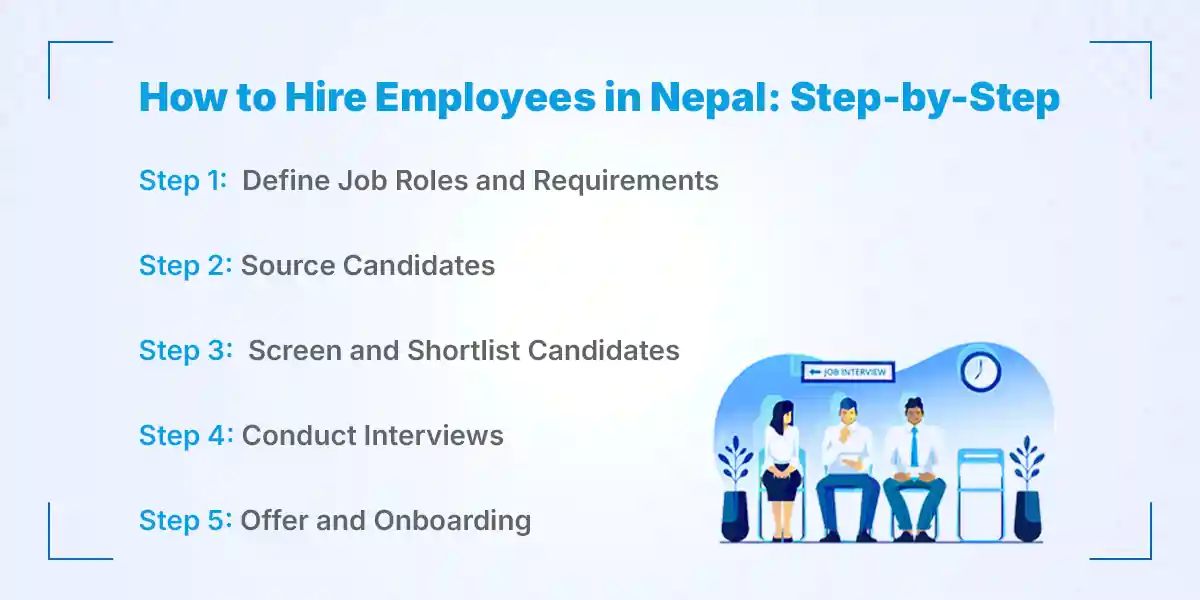
Step 1: Define Job Roles and Requirements
Start by identifying the exact skills, qualifications, and responsibilities needed for the position. Create a clear job description that highlights tasks, experience, and expected outcomes. This clarity ensures that only suitable candidates apply. A well-defined role also helps in evaluating applicants effectively. Including both technical and soft skills is important to match your organizational culture. Updating the job description regularly ensures it stays relevant to business needs.
Step 2: Source Candidates
Once roles are defined, find candidates through trusted platforms like Kumari Job or professional networks. You can also use recruitment agencies for specialized positions. Make sure your vacancy announcement is detailed and clear. Reaching multiple channels increases your chances of attracting the right talent. Active sourcing helps reduce hiring time significantly. Engaging passive candidates can also bring in high-quality talent not actively looking.
Step 3: Screen and Shortlist Candidates
Evaluate resumes, applications, and initial assessments to identify qualified candidates. Look for relevant experience, skills, and achievements. Use consistent criteria to ensure fairness in selection. Shortlisting reduces the pool to manageable numbers for interviews. Proper screening improves hiring efficiency and lowers the risk of mismatched hires. Including a quick reference or background check ensures candidate credibility.
Step 4: Conduct Interviews
Interview shortlisted candidates via phone, video, or in-person sessions. Assess their skills, experience, and cultural fit with your organization. Prepare structured questions to evaluate problem-solving and interpersonal abilities. Include a practical task or test if applicable. Interviews give deeper insight into candidate suitability beyond resumes. Take notes and compare candidates objectively to make the best decision.
Step 5: Offer and Onboarding
Once you select the right candidate, send a formal offer letter with salary and benefits details. Prepare for a smooth onboarding process to integrate them into the organization. Introduce company policies, team members, and tools needed for their role. Effective onboarding increases engagement and reduces early turnover. Clear communication during this stage sets expectations for long-term success. Collect feedback during onboarding to improve the process for future hires.
Hiring Taking Too Long?
Post verified vacancies and reach qualified candidates faster with Kumari Job.
How Hiring Services Solve Recruitment Challenges in Nepal?
Hiring services solve recruitment challenges in Nepal by simplifying the process of finding and hiring the right talent. They help businesses access qualified candidates quickly, save time on administrative tasks, and ensure compliance with labor laws. By partnering with the best recruitment companies in Nepal, businesses can reduce hiring errors, improve efficiency, and focus on core operations. For specialized or hard-to-fill roles, these agencies provide targeted recruitment solutions that match specific skills to your exact job requirements.
1. Access to Pre-Screened Talent
Hiring services provide a pool of candidates who are already screened for skills, experience, and qualifications. This saves time for employers in reviewing unqualified applications. Pre-screened talent ensures higher quality hires and faster recruitment. Many agencies maintain databases of ready-to-hire candidates. This also helps businesses fill positions that require specific expertise efficiently. Additionally, pre-screening often includes soft skills and cultural fit assessment, improving team integration.
2. Time-Saving Recruitment Process
By handling candidate sourcing, screening, and initial assessments, hiring services significantly reduce the time employers spend on recruitment. This allows businesses to focus exclusively on final interviews and selection. These firms follow a structured workflow, including job requirement analysis, candidate mapping, and rigorous vetting—which illustrates exactly how recruitment services work in Nepal to bridge the gap between employers and top-tier talent. By ensuring deadlines are met and vacancies are filled quickly, this systematic approach increases productivity and supports faster growth. Furthermore, agencies manage all interview scheduling and candidate communication, ensuring a professional experience that helps businesses stay competitive in fast-moving markets.
3. Compliance With Labor Laws and Taxation
Hiring services ensure that recruitment practices follow Nepal’s labor laws, taxation rules, and employment regulations. They help manage employment contracts, tax deductions, and statutory benefits. Compliance reduces legal risks for businesses. Agencies guide employers through government documentation and reporting. This ensures a lawful and ethical hiring process for both local and foreign employees. Following compliance procedures also builds credibility and trust with potential hires.
4. Cost-Effective Hiring by Reducing Errors and Turnover
By providing qualified candidates and reducing hiring mistakes, these services save costs associated with rehiring or training unsuitable employees. Effective recruitment minimizes turnover. It also prevents wasted resources on lengthy recruitment cycles. Businesses save both time and money while improving employee retention. Cost-effective hiring supports long-term financial planning and workforce stability. Additionally, using hiring services often reduces recruitment advertising costs.
5. Specialized Recruitment for Niche Roles
For positions requiring specific skills or expertise, hiring services target candidates who match the job requirements. This includes IT, finance, or managerial roles. Specialized recruitment reduces the struggle of finding niche talent. Agencies have networks and tools to locate hard-to-find candidates. Employers can fill challenging roles efficiently without compromising on quality. These services also provide market insights to help set competitive compensation and benefits for niche positions.
Which Companies Provide the Best Employee Hiring Services in Nepal?
Kumari Job provides the best employee hiring services in Nepal by offering a reliable platform for businesses to post vacancy announcements and connect with qualified candidates. As a trusted online portal, it streamlines the recruitment process, making it easier for employers to find skilled employees across multiple industries. Businesses can quickly reach a wide audience, ensuring that their job postings are seen by the right candidates. It also helps startups and SMEs compete for top talent alongside larger organizations.
The platform maintains a large pool of pre-screened candidates, saving employers time in shortlisting and initial screening. It also offers easy job posting and application tracking, allowing businesses to monitor applications, communicate with candidates, and manage the hiring process efficiently. By leveraging Kumari Job’s services, employers can reduce hiring time, ensure compliance, and hire employees in Nepal effectively and reliably. Additionally, the portal provides insights into market trends and candidate expectations to improve recruitment strategies.
Common Challenges When Hiring Employees in Nepal
Hiring employees in Nepal can be rewarding, but businesses often face several challenges during the recruitment process. Limited access to specialized talent, employee retention, and legal compliance are common hurdles. Managing documentation and ensuring adherence to labor laws can also be time-consuming. Understanding these challenges helps employers plan better and adopt effective strategies for successful recruitment.
1. Limited Talent in Niche Roles
Finding candidates with specialized skills can be difficult in Nepal, especially for IT, finance, or managerial roles. The talent pool for niche positions is smaller, which may lead to longer recruitment cycles. Employers often need to invest in targeted sourcing or use professional hiring services. Partnering with recruitment platforms like Kumari Job can help locate skilled candidates faster. Focusing on skill development programs internally can also address this gap over time.
2. Retention and Employee Engagement
Retaining talented employees is a challenge for many companies in Nepal. High turnover can disrupt operations and increase recruitment costs. Lack of engagement, unclear growth paths, or better opportunities elsewhere often lead employees to leave. Implementing employee development programs, clear career progression, and recognition initiatives can improve retention. Engagement also strengthens loyalty and productivity, ensuring a stable workforce.
3. Compliance and Documentation
Employers must adhere to labor laws, tax regulations, and social security requirements. Proper documentation is essential for contracts, work permits, and payroll. Non-compliance can lead to fines or legal disputes. Managing all administrative tasks can be time-consuming for small businesses. Using professional hiring services or HR platforms simplifies compliance and ensures a smooth, legal hiring process.
Get Professional HR Support Today!
Best Practices for Hiring Employees in Nepal
Hiring employees in Nepal becomes more successful when businesses follow proven best practices. Clear planning, competitive compensation, and structured onboarding help attract and retain talent. To reach the widest pool of qualified candidates, utilizing a strategic recruitment advertisement in Nepal is essential for building brand visibility. Continuous development ensures employees grow with the company, boosting productivity and engagement. Implementing these practices makes recruitment efficient and builds a strong, motivated workforce.
1. Clear Job Descriptions and Expectations
Creating detailed job descriptions helps candidates understand their roles, responsibilities, and required skills. It reduces confusion and attracts the right talent. Clear expectations also improve performance and accountability once employees are hired. Including required qualifications, soft skills, and reporting structures ensures candidates know what to expect. Regularly updating job descriptions keeps them relevant to changing business needs.
2. Competitive Salary and Benefits
Offering competitive salaries and benefits is essential to attract skilled employees in Nepal. Benefits can include health coverage, bonuses, and leave policies. Competitive compensation improves retention and motivates employees. Researching industry standards ensures the company remains attractive to top talent. Clear communication about salary structures also sets expectations and builds trust with candidates.
3. Effective Onboarding Programs
Structured onboarding helps new hires integrate smoothly into the organization. It introduces company policies, team members, and workflow processes. Effective onboarding increases engagement, reduces turnover, and helps employees become productive faster. Including mentorship or buddy programs can further support adaptation. A good onboarding experience sets a positive tone for long-term employment.
4. Continuous Employee Development
Providing learning and growth opportunities keeps employees motivated and enhances skills. Training programs, workshops, and career development plans encourage long-term engagement. Continuous development also helps the company adapt to market changes by upgrading employee capabilities. Recognizing achievements and providing feedback strengthens loyalty. Development initiatives make employees feel valued and invested in the company’s success.
Conclusion
Hiring employees in Nepal requires a structured and strategic approach to attract and retain the right talent. By following best practices, such as defining clear job roles, using reliable recruitment services like Kumari Job, ensuring legal compliance, and offering competitive benefits, businesses can build strong and productive teams. Understanding local hiring requirements, sourcing methods, and onboarding processes helps companies save time and avoid costly mistakes.
Structured hiring also ensures compliance with labor laws and promotes employee satisfaction, engagement, and retention. Adopting these practices allows businesses to grow efficiently, fill key positions with skilled professionals, and achieve long-term success in the Nepalese market.
Explore more services from Kumari Job to hire the right employees in Nepal efficiently. Our platform helps you connect with skilled talent quickly and reliably.
Frequently Asked Questions
Submit your comments

Get Our App On



SEO Training for Freshers in Nepal: Skills, Career & Job Opportunities
VIEW DETAILS
SEO Training vs. Self-Learning: Which Is Right for You?
VIEW DETAILS
How to Choose Between Two Job Offers
VIEW DETAILS
Digital Marketing Training Interview Questions and Answers for Freshers
VIEW DETAILS


Loading Comments...