



Do you feel like your hiring takes too long, brings the wrong candidates, or creates repeated vacancies in your company? Many employers in Nepal face the same struggle because the steps inside their hiring system are unclear or inconsistent. Slow screening, weak job descriptions, and rushed decisions often lead to mismatched employees who leave too soon, causing more cost, more stress, and more disruption in daily operations.
In this blog, you’ll learn how the hiring process works, how to improve each stage, how recruitment services strengthen your results, and why choosing the right partner makes hiring faster, easier, and more accurate. This guide explains the hiring process in simple steps so employers can reduce workload, improve selection quality, and build a stronger workforce.
In this blog
What Is the Hiring Process?
The hiring process is the step-by-step method companies use to identify, attract, evaluate, and select the right candidates for a job. Its main objective is to fill vacancies with qualified people who match the role, the company culture, and long-term goals. A clear hiring process helps employers reduce mistakes, maintain consistency, and improve overall workforce quality.
Key Stages of the Hiring Process
• Workforce planning to define role needs
• Job description creation with duties and required skills
• Job posting and sourcing through portals and networks
• Screening and shortlisting based on set criteria
• Interview rounds to assess skills and behavior
• Selection and job offer after final evaluation
• Onboarding to integrate the new employee into the company
Why a Clear Hiring Process Matters?
A structured hiring process reduces bad hiring decisions because each stage follows defined checks, making selection more accurate. It improves candidate experience by keeping communication smooth and professional, which also strengthens employer branding. Companies save time and cost as the process filters unsuitable applicants early, preventing long screening cycles. A clear system also supports company growth by ensuring the right people join at the right time, allowing teams to operate efficiently and reach business goals without repeated hiring disruptions.
Common Hiring Challenges Faced by Nepali Employers
Many employers in Nepal face recurring hiring difficulties that slow down recruitment and affect workforce quality. High applicant numbers, unclear requirements, and manual screening create delays that weaken hiring outcomes. Unstructured interviews and inconsistent evaluation methods further increase the chances of selecting mismatched candidates. These issues lead to repeated vacancies, higher turnover, and longer time-to-hire across industries.
1. High Application Volume
Large numbers of applicants make it difficult for HR teams to review profiles quickly. Many candidates apply without matching the requirements, increasing screening time. Employers often miss suitable candidates because unstructured systems fail to filter applications effectively. Without a screening strategy, the workload grows, and hiring becomes slower, especially during peak hiring seasons.
2. Unclear Job Descriptions
Vague responsibilities and missing skill requirements cause confusion among applicants. When job descriptions do not outline duties, experience level, or expected outcomes, unqualified candidates apply in large numbers. This creates extra screening effort and increases the risk of selecting someone who mismatches the role. Clear descriptions help attract the right talent from the start and set realistic expectations early.
3. Slow Screening
Manual resume checks and unorganized criteria slow down the entire hiring cycle. Delays often push good candidates to accept offers elsewhere, especially in competitive markets. Without automated filtering or defined shortlisting rules, teams struggle to identify suitable applicants on time. Faster screening improves hiring speed and quality while reducing overall HR workload.
4. Bias in Selection
Personal preferences or assumptions can influence interview decisions when evaluation criteria are not standardized. Bias reduces fairness and may cause companies to overlook skilled candidates. This also increases the risk of hiring employees who may not perform well. A structured scoring system helps maintain objectivity and ensures equal opportunity for all applicants.
5. Lack of Structured Interviews
Unplanned interviews with random questions make it difficult to compare candidates. Different interviewers often judge applicants using different standards, causing inconsistent results. Without defined questions and scoring, employers may select candidates based on impressions rather than documented performance. Structured interviews create accuracy, consistency, and clear evaluation across all interview stages.
Struggling to Build a Strong Workforce in Your Company?
Let our recruitment specialists help you shortlist, screen, and hire the right talent faster.
6. Delays in Decision-Making
Slow communication between HR, management, and department heads leads to missed hiring opportunities. Delayed approvals leave candidates waiting too long, increasing drop-off rates. Strong applicants often choose competitors who respond faster. Quick decisions help companies secure top talent before they lose interest and allow teams to fill roles without operational gaps.
7. High Turnover
When hiring processes fail to match candidates with the role and company culture, employees leave quickly. High turnover increases recruitment cost, disrupts operations, and lowers team morale. Employers also spend more time training new staff repeatedly. A stronger hiring system reduces turnover by selecting more aligned candidates and improving long-term retention.
How to Improve the Hiring Process in Nepal?
To improve the hiring process, employers must focus on clarity, structure, and consistency across every hiring stage. They need well-defined requirements, organized screening methods, and faster communication to reduce delays. Using multiple hiring channels and incorporating assessments helps identify stronger candidates. A refined process not only improves hiring speed but also ensures better alignment between candidates and job roles, which also guides employers in choosing the right types of recruitment service for their needs.
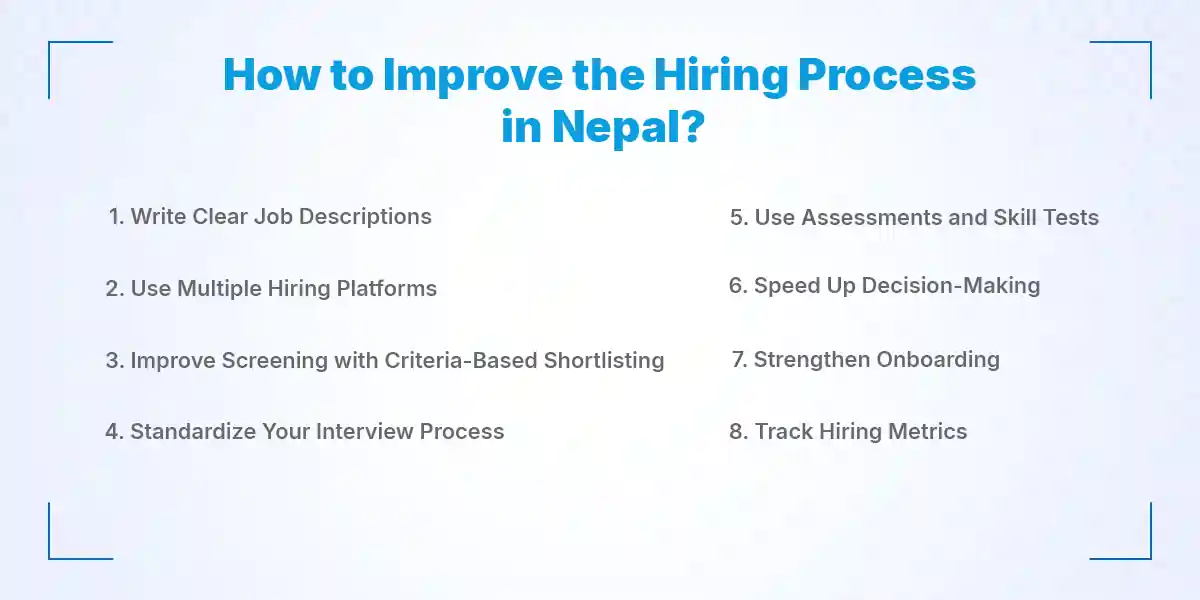
1. Write Clear Job Descriptions
A clear job description sets the foundation for attracting the right applicants. It should outline duties, required skills, educational background, and relevant experience. Including salary range, work shifts, and growth opportunities helps candidates understand expectations before applying. When job descriptions are detailed, employers receive fewer random applications and more targeted profiles, creating a stronger applicant pool from the start.
2. Use Multiple Hiring Platforms for Better Reach
Posting vacancies on different platforms increases visibility and attracts diverse applicants. Job portals help reach active job seekers, while LinkedIn connects employers with skilled professionals. Social media platforms and employee referrals expand the pool further. Using multiple sources maximizes reach and improves the chances of finding qualified candidates, especially for competitive or specialized roles.
3. Improve Screening with Criteria-Based Shortlisting
Screening becomes more effective when employers use defined criteria such as skills, experience level, and behavior indicators. A criteria-based approach filters out mismatched candidates early and reduces manual effort. This method helps identify applicants who match the job requirements closely. It also ensures fairness and consistency in the selection process by removing guesswork and personal bias.
4. Standardize Your Interview Process
A structured interview process ensures all candidates are evaluated on the same standards. Employers should prepare fixed interview questions, scoring rubrics, and evaluation guides. This reduces personal bias and makes comparison easier across candidates. Standardized interviews create accurate assessments and support confident final decisions, leading to stronger hiring outcomes.
5. Use Assessments and Skill Tests
Skill assessments provide deeper insight into a candidate’s actual capabilities. Technical tests, communication evaluations, and aptitude assessments help verify job readiness. These tools reduce guesswork and ensure that selected candidates can perform required tasks. Assessments add an extra layer of quality control to the hiring process and reduce the risk of hiring based on impression alone.
6. Speed Up Decision-Making
Delayed approvals and slow communication cause strong candidates to drop out. Companies should shorten internal decision loops and respond quickly after interviews. Faster communication shows professionalism and keeps candidates engaged. Quick decisions help employers secure the best talent before competitors do, improving overall hiring success.
7. Strengthen Onboarding
Effective onboarding helps new employees adjust quickly and perform well. It should include orientation, training sessions, policy briefings, and clear role explanations. A structured onboarding plan builds confidence and reduces early turnover. When onboarding is smooth, employees integrate faster and stay longer, improving long-term workforce stability.
8. Track Hiring Metrics
Monitoring hiring metrics helps employers understand strengths and weaknesses in their process. Key metrics include time-to-hire, cost-per-hire, source effectiveness, and retention rate. These insights guide improvement and help companies optimize future hiring cycles. Tracking metrics ensures continuous improvement and supports better planning for future recruitment.
How Recruitment Services Improve Your Hiring Process?
Recruitment service improves your hiring process by giving employers access to wider talent pools, structured screening systems, and faster coordination. Expert recruiters handle sourcing, evaluation, and communication, which reduces workload for internal HR teams. This support helps companies avoid mismatched hires and improve overall hiring quality. With professional assistance, employers can fill vacancies quickly and maintain consistency across all hiring stages, highlighting the key benefits of recruitment service.
1. Wider Candidate Reach
Recruitment agencies maintain large talent databases covering freshers, mid-level staff, and experienced professionals across different industries. They use targeted sourcing methods to match specific job requirements, ensuring employers receive relevant applicants instead of random profiles. This reach includes active job seekers and passive candidates who may not apply directly. Access to a broad network increases hiring accuracy and reduces time spent searching for qualified people.
2. Professional Screening and Shortlisting
Agencies follow structured screening methods to filter out unqualified candidates early. They evaluate resumes, verify skills, and match experience levels with the job’s demands. This reduces the employer’s time spent reviewing unsuitable profiles and improves the quality of shortlisted applicants. Professional screening ensures only capable candidates move forward, minimizing hiring risk.
Explore Hiring & Management Tools
3. Structured Interview Coordination
Recruitment services manage interview scheduling, candidate communication, and follow-up. This prevents delays and reduces repetitive tasks for employers. Coordinated interviews ensure that candidates arrive prepared and at the right time. By handling logistics smoothly, agencies help companies focus solely on evaluating candidates rather than managing the process.
4. Faster Hiring Turnaround
Experienced recruiters work continuously to move each hiring stage forward, from sourcing to final selection. Their dedicated effort speeds up shortlisting, communication, and interview management. Faster hiring prevents companies from losing strong candidates to competitors. Quick turnaround also helps fill urgent roles without affecting daily operations.
5. Reduced Hiring Risk
Agencies match candidates based on skills, experience, cultural fit, and long-term potential. This reduces the chance of selecting someone who may leave early or struggle with the role. A more accurate match leads to stronger performance and higher retention. Reduced risk saves employers time, cost, and effort associated with repeated hiring.
6. Cost-Effective for Growing Companies
Recruitment services lower internal HR workload by handling sourcing, screening, and coordination. This reduces operational cost and prevents hiring mistakes that can become expensive. For growing companies with limited HR staff, outsourcing hiring helps maintain quality without stretching resources. Cost-effective recruitment support allows businesses to scale smoothly and confidently.
Which Is the Best Recruitment Service in Nepal?
Kumari Job is among the best recruitment companies in Nepal because it combines experience, speed, and a strong record of successful placements across multiple industries. Employers trust Kumari Job for reliable sourcing, accurate shortlisting, and consistent results that reduce hiring stress. Its structured process ensures companies receive qualified candidates quickly, even for urgent or specialized roles. With a proven system and dedicated team, Kumari Job delivers hiring solutions that support long-term workforce growth.
Why Employers Choose Kumari Job?
Employers choose Kumari Job because it offers a large and diverse talent pool, backed by an expert recruitment team that understands the hiring needs of Nepali companies. The platform attracts candidates from multiple backgrounds, allowing employers to find freshers, mid-level professionals, and experienced specialists in one place. With industry-wise hiring solutions, Kumari Job tailors its approach to sectors like IT, hospitality, retail, banking, education, and manufacturing, ensuring that candidates match both technical requirements and workplace expectations.
Kumari Job also stands out for its fast shortlisting and structured screening system, which reduces delays and delivers qualified candidates quickly. Employers receive continuous support throughout the hiring journey, including interview coordination, communication management, and follow-up. Combined with value-for-money hiring packages, these services help companies reduce recruitment costs, avoid common hiring mistakes, and maintain a smooth hiring process even with limited HR resources.
When Should Companies Use Recruitment Service?
Companies should use a recruitment service when their internal hiring process becomes slow, inconsistent, or difficult to manage. Frequent vacancies, growing workload, or the need for specialized talent often require external support for better results. Recruitment services help
companies maintain speed and quality even when HR resources are limited. Outsourcing hiring ensures employers get accurate shortlisting, strong candidates, and faster placements without added pressure on internal teams.
1. Frequent Vacancies
When a company regularly needs to fill multiple roles, internal HR teams can become overwhelmed. Recruitment services help manage high-volume hiring by sourcing candidates quickly and filtering large applicant pools. This ensures each vacancy receives proper attention and avoids rushed decisions. Outsourcing frequent recruitment needs keeps the hiring cycle organized and consistent.
2. High Turnover
High turnover indicates a mismatch between role expectations and selected candidates. Recruitment agencies analyze job requirements and shortlist applicants who fit both skill needs and company culture. This reduces the chances of early resignations and improves long-term retention. Stable teams help companies save cost and maintain productivity.
3. Expansion or New Branches
Opening new branches or scaling operations requires quick and accurate hiring across multiple roles. Recruitment services provide structured support by sourcing skilled candidates in different locations. This helps companies build complete teams on time and avoid delays during expansion. A coordinated hiring plan ensures smooth business growth.
4. Need for Skilled Professionals
Some roles demand specialized skills or industry experience that are difficult to find through regular job postings. Recruitment agencies use targeted sourcing methods to reach qualified professionals who may not apply directly. Their industry networks help identify strong candidates faster. This ensures employers fill critical positions without long waiting periods.
5. Limited HR Manpower
Small and mid-sized companies often lack dedicated HR staff to manage full recruitment cycles. Recruitment services take over tasks like sourcing, screening, communication, and interview coordination. This reduces pressure on internal teams and improves hiring efficiency. Outsourcing becomes a cost-effective way to maintain quality without increasing HR workload.
Conclusion
Improving the hiring process is essential for companies that want reliable employees, faster recruitment cycles, and better long-term performance. Clear job descriptions, structured screening, standardized interviews, and timely decisions help employers attract the right candidates and reduce hiring mistakes. When these systems work well, companies save time, maintain consistency, and build stronger teams.
Professional recruitment services add even more value by offering wider talent reach, expert evaluation, and faster coordination. They help employers overcome common challenges such as high application volume, skill shortages, and limited HR capacity. With the right support and a refined hiring process, companies in Nepal can hire more confidently, operate smoothly, and create a foundation for sustained growth.
Frequently Asked Questions
Submit your comments

Get Our App On



SEO Training for Freshers in Nepal: Skills, Career & Job Opportunities
VIEW DETAILS
SEO Training vs. Self-Learning: Which Is Right for You?
VIEW DETAILS
How to Choose Between Two Job Offers
VIEW DETAILS
Digital Marketing Training Interview Questions and Answers for Freshers
VIEW DETAILS


Loading Comments...