

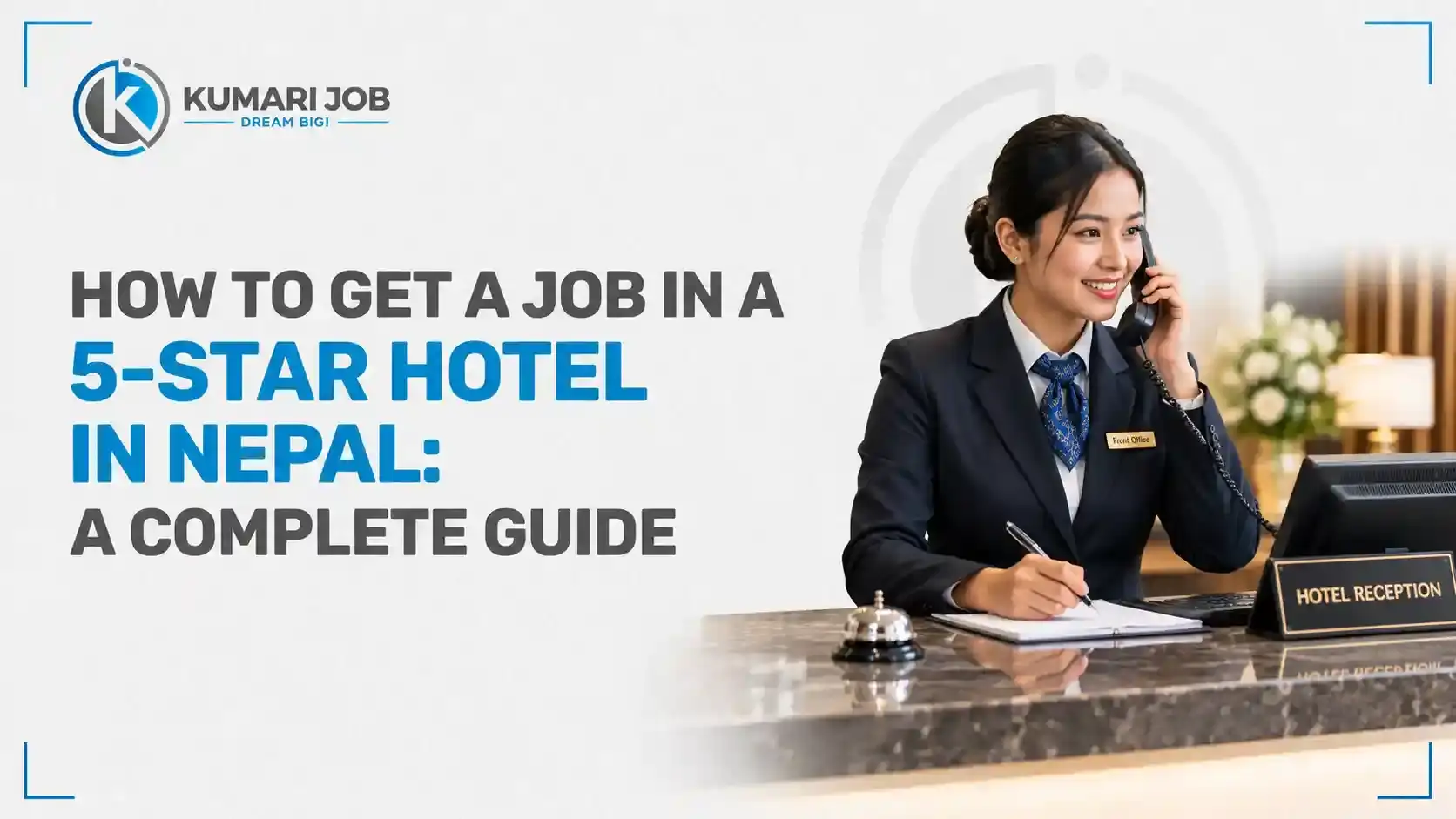

You finish your studies or your first short course, open a hotel’s website, and find no clear way to apply. The vacancy posts you see online ask for experience you do not have, and some of them look suspicious. Many students and job seekers in Nepal face this exact wall on Day 1 of a hospitality job search.
This guide shows how to get a job in a 5-star hotel in Nepal, one step at a time. You will learn which positions exist, what qualifications employers ask for, how freshers can enter, how to build a CV and prepare for interviews, and how to spot genuine vacancies.
In this blog
What Is a 5-Star Hotel Job in Nepal?
A 5-star hotel job in Nepal is a paid position at a luxury hotel, covering front office, food and beverage, housekeeping, kitchen, administrative, or management work under strict service, hygiene, and hospitality standards. Roles range from entry-level trainees to supervisors and department managers. Classifications and requirements vary by property and role, so always read the vacancy notice closely.
- Entry-level roles: Trainees and associates who learn procedures and handle daily guest or operational tasks.
- Supervisory roles: Team leaders who coach staff, check quality, and solve problems on shift.
- Management roles: Department heads who plan operations, manage budgets, and answer for guest satisfaction.
- Core standards: Professional service, guest satisfaction, hygiene, and consistent hospitality practices apply at every level.
What Jobs Are Available in 5-Star Hotels in Nepal?
Five-star hotels in Nepal usually hire across six areas: front office, food and beverage, housekeeping, kitchen, administration and support, and management. Freshers most often start in trainee or associate roles, while supervisory and manager roles usually require proven experience. Not every hotel runs every position, so treat this list as a guide and not a guarantee.
1. Front Office
Front office staff are the first people guests meet, and their work sets the tone for the whole stay. Common roles include receptionist, front desk associate, guest relations officer, and reservation agent. These staff handle check-in, check-out, bookings, and guest requests. Freshers with strong English and a calm manner often qualify for associate or trainee posts.
2. Food and Beverage
Food and beverage teams serve guests in restaurants, bars, and event halls, so service quality shows here quickly. Roles include waiter, restaurant service associate, bartender, and banquet staff. Daily duties cover table setup, taking orders, serving, and clearing in line with hotel standards. Entry-level service roles often suit freshers, while bartending and banquet leadership usually ask for experience.
3. Housekeeping
Housekeeping keeps rooms and public areas clean, safe, and ready, which directly affects guest reviews. Roles include room attendant, housekeeping associate, and laundry staff. Duties cover cleaning, bed-making, restocking supplies, and reporting damage or lost items. Many hotels hire room attendants at the entry level, and the executive housekeeper role comes after years of experience.
4. Kitchen
The kitchen produces every meal, so hygiene and speed matter as much as taste. Roles include commis chef, kitchen helper, bakery assistant, and cook. Duties range from preparing ingredients to cooking assigned dishes under a senior chef. Freshers can enter as helpers or commis, and culinary training improves the odds.
5. Administration and Support
Behind the guest areas, administrative teams keep the hotel running. Roles include HR assistant, accounting assistant, sales and marketing assistant, and IT support. These posts often ask for a bachelor’s degree or relevant technical skills instead of hospitality training. Check the vacancy notice, since requirements change a lot between roles.
6. Management
Management roles lead teams and answer for department results. Examples include front office supervisor, restaurant manager, executive housekeeper, and department manager. Employers usually expect several years of experience, leadership ability, and often a hospitality degree or diploma. Most people reach these posts by moving up from associate and supervisor positions.
What Qualifications Are Required to Work in a 5-Star Hotel in Nepal?
Typical requirements include an education level that matches the role, basic hospitality or department skills, good English communication, and relevant experience for senior posts. Some entry-level roles accept SEE or +2 graduates, while many guest-facing and supervisory roles prefer a hotel management diploma or degree. Formal hospitality qualifications are not mandatory for every position, so the vacancy notice always decides.
- SEE or +2: Accepted for selected entry-level roles such as housekeeping, kitchen helper, or service associate.
- Diploma or degree in hotel management or hospitality: Preferred for front office, food and beverage, and supervisory positions.
- Bachelor’s degree or equivalent: Often required for administrative and management roles such as accounting, HR, or department management.
- Training, internships, and practical experience: These improve employability when you lack formal hospitality education or work history.
- Core abilities: English communication, professional grooming, teamwork, and customer service matter in nearly every role.
How to Get a Job in a 5-Star Hotel in Nepal?
To get a job in a 5-star hotel in Nepal, choose a role that fits your skills, research hotels, check verified vacancies, apply with a tailored CV and cover letter, and prepare well for the interview. Each step builds on the one before it, so skipping research or preparation weakens your application. Follow the employer’s instructions and deadline exactly.
1. Choose a Suitable Hotel Position
Start by matching your education, interests, and strengths to a department, because a focused application beats a general one. Someone who enjoys talking to people may fit front office, while someone who likes hands-on work may prefer housekeeping or the kitchen. Read three or four real vacancy notices for that role to see the exact requirements. Then note any gap, such as a short course, that you can close before applying.
2. Research 5-Star Hotels in Nepal
Knowing the hotel helps you apply with purpose and answer interview questions with confidence. Explore properties in Kathmandu, Pokhara, Chitwan, and other hospitality destinations. Note each hotel’s size, services, and guest profile. A short list of five to ten hotels keeps your search manageable.
3. Check Current Job Vacancies
Vacancies change often, so current information matters more than old posts. Review official hotel career pages, trusted job portals, and verified recruitment announcements. Check the posting date and deadline before you spend time on an application. Confirm the hotel’s identity, because fake notices often copy real hotel names.
4. Prepare a Professional CV
A clear CV helps a recruiter see your fit within seconds. Highlight your education, relevant skills, internships, training, and achievements. Keep it to one or two pages with consistent formatting. Reuse keywords from the vacancy notice where they truthfully describe you.
5. Write a Targeted Cover Letter
A cover letter explains what a CV cannot, which is why you want this role at this hotel. State your interest, name one or two relevant strengths, and show how they help guests or the team. Keep it under one page in a polite, direct tone. Change the hotel and role name each time, since a copied letter is easy to spot.
6. Apply According to the Vacancy Notice
Employers often sort applications by whether candidates followed instructions. Send documents in the requested format, to the stated email or portal, before the deadline. Attach only what the notice asks for, such as a CV, certificates, or a photo. Save a copy of the notice and your submission for later reference.
7. Prepare for the Interview
Interviews test how you speak, think, and treat people as much as what you know. Practise answers about customer service, teamwork, and handling guest complaints. Say them aloud to build clear delivery. Ask a friend to run a mock interview and give honest feedback.
8. Follow Up Professionally
A polite follow-up shows interest without pressure. Wait until the response period the employer stated has passed. Send a short message that thanks them and asks about the status of your application. If you get no reply, keep applying elsewhere.
Which 5-Star Hotels in Nepal Can You Apply To?
Established luxury hotels and hotel groups that applicants commonly research include The Dwarika’s Hotel, Kathmandu Marriott Hotel, Hyatt Regency Kathmandu, Hotel Yak & Yeti, Pokhara Grande, and Soaltee Kathmandu. Classifications and operations can change, so confirm each property’s current status and hiring before you apply. Treat this list as a research starting point, not a promise of vacancies.
- Find the career section: Look for links named “Careers,” “Join Us,” or “Work With Us,” usually in the website footer or main menu.
- Check official social media pages: Hotels sometimes announce openings and walk-in interviews there first.
- Use verified announcements: Trust notices that name the hotel, position, location, deadline, and official contact details.
- Confirm hiring status: Never assume a vacancy exists. If no opening is listed, a polite inquiry to the HR department is reasonable.
Can Freshers Get a Job in a 5-Star Hotel in Nepal?
Yes, freshers can get a job in a 5-star hotel in Nepal by applying for entry-level or trainee roles when they meet the employer’s requirements. Internships, practical training, and transferable skills from college projects, volunteering, or part-time customer work help prove job readiness. Focus on roles that teach you the business instead of applying only for senior posts.
- Common starting roles: Front office trainee, food and beverage service associate, housekeeping associate, kitchen trainee, and guest service assistant.
- Show job readiness: List internships and hospitality training with dates, departments, and duties.
- Highlight transferable skills: Describe how event volunteering, shop work, or class presentations built communication and teamwork.
- Stay realistic: A trainee role at a respected hotel often leads to faster growth than waiting for a senior opening.
What Is the Salary of 5-Star Hotel Staff in Nepal?
Salaries for 5-star hotel staff in Nepal vary by position, department, experience, and employer, so no single figure applies to every worker. Entry-level roles usually pay less than supervisory and managerial roles, and total pay often includes more than the base salary. Published figures change, so check recent vacancy notices and Nepal-based salary sources, and treat any number you find as an estimate.
- Factors that affect pay: Job position and department, education and training, previous experience, hotel policies and employment terms, and location, responsibilities, and seniority.
- Entry-level vs. experienced: Trainees and associates start lower, while experienced staff earn more as responsibility grows.
- Supervisory vs. managerial: Supervisors and managers carry team and budget duties, which usually raises compensation.
- Base salary vs. total compensation: Service charge shares, meals, accommodation, allowances, and other benefits may differ by employer, so ask what the full package includes.
How to Prepare a CV for a 5-Star Hotel Job in Nepal
To prepare a CV for a 5-star hotel job in Nepal, use a clean, professional layout and tailor each section to the advertised role. Recruiters scan quickly, so put the most relevant details first. Freshers can fill gaps with internships, training, and transferable skills.
- Contact information: Include a working phone number and a professional email address.
- Career objective or summary: Write two or three lines that name the role and your strongest relevant skill.
- Education and hospitality training: List degrees, diplomas, and short courses with institution names and years.
- Work experience or internships: Describe duties and results, such as guests served or departments rotated through.
- Skills and language proficiency: Cover communication, customer service, and English or other languages.
- Certificates and achievements: Add food safety training, awards, or recognitions.
- References: Add them only if the employer requests them.
- Tailoring: Adjust the summary and skills for each vacancy, and attach a short, role-specific cover letter.
What Skills Do You Need to Work in a 5-Star Hotel?
To work in a 5-star hotel, you need communication, English proficiency, customer service, teamwork, problem-solving, time management, professional grooming, cultural awareness, and department-specific technical skills. Required skills differ by department, so prioritize the ones named in the vacancy notice. Most of these skills can be built through training and practice, even without prior hotel work.
- Communication and interpersonal skills: Speak politely, listen fully, and read guest needs.
- English and other languages: English is widely expected, and other languages help with international guests.
- Customer service and guest relations: Treat every request as important, even small ones.
- Teamwork and coordination: Hotel departments depend on each other, so clear handovers matter.
- Problem-solving and complaint handling: Stay calm, apologize sincerely, and offer a fix.
- Time management and attention to detail: Small errors, such as a missed request or a smudged glass, are noticed in luxury service.
- Grooming and professional conduct: Neat appearance and respectful behavior are part of the brand.
- Cultural awareness and adaptability: Guests come from many backgrounds, and shifts change quickly.
- Technical skills: Examples include reservation systems for front office and food safety procedures for kitchen and service teams.
How to Prepare for a 5-Star Hotel Job Interview in Nepal?
To prepare for a 5-star hotel job interview in Nepal, research the hotel, review the job description, rehearse real examples, and present yourself professionally on the day. Interviewers want to see good judgment with guests, not memorized speeches. Short, honest answers backed by specific examples usually perform best.
- Research the hotel: Learn its services, brand, and guest experience standards.
- Review the job description: Match each requirement to an example from your experience.
- Practise your introduction: Prepare a 30-second summary covering education, skills, and why you want the role.
- Prepare examples: For complaint questions, describe the situation, what you did, and the result.
- Dress and arrive properly: Wear neat formal clothing and arrive early.
- Communicate well: Speak clearly, answer honestly, and show willingness to learn.
- Ask your own questions: Ask about training, responsibilities, working hours, and career progression.
How Can You Find Genuine 5-Star Hotel Job Vacancies in Nepal?
You can find genuine 5-star hotel job vacancies in Nepal by checking official hotel career pages, established Nepal-based job portals, and verified recruitment announcements. Always confirm the employer’s identity before sharing documents. Legitimate employers do not ask for payment to process an application.
- Official sources: Check hotel career pages and verified social media announcements first.
- Job portals: Search established Nepal-based portals, including KumariJob.
- Useful search terms: “5-star hotel jobs in Kathmandu,” “hotel receptionist vacancy in Nepal,” “hotel management jobs in Nepal,” “hotel jobs for freshers in Nepal,” and “food and beverage jobs in Nepal.”
- Verification checklist: Confirm the employer’s name, job description, location, application deadline, and contact details.
- Record keeping: Track each application’s date, position, and follow-up date in a simple spreadsheet or notebook.
- Job alerts: Set alerts and check new listings regularly, because good vacancies close fast.
What Are the Best Tips for Building a Long-Term Career in the Hotel Industry?
The best way to build a long-term hotel career is to gain practical experience early, keep improving your skills, and move through roles step by step. Hotels often promote people who show reliability, learning ability, and good guest feedback. Patience in the first two years usually pays off in faster growth later.
- Gain experience: Take internships and entry-level positions to learn real operations.
- Improve languages: Build English and other useful language skills.
- Take training: Complete hospitality, food safety, or department-specific courses when relevant.
- Learn procedures: Study hotel operating procedures and guest service standards.
- Seek feedback: Ask supervisors what to improve and act on it.
- Build relationships: Respect colleagues and supervisors, since hotel teams are close and references matter.
- Plan your progression: Aim for the path from trainee to associate, supervisor, and manager.
- Stay open: Moving across departments can build a broader skill set for senior roles.
Conclusion
Hotel hiring rewards candidates who look prepared before they walk in. A focused role choice, a CV matched to the vacancy, and a clear story about how you serve people will set you apart from applicants who send the same document everywhere. Freshers who start in a trainee role and keep learning often reach supervisory positions faster than those who wait for a perfect opening.
Pick one department this week, shortlist three hotels, and send your first tailored application. Explore current hotel and hospitality vacancies on KumariJob and apply for positions that match your qualifications and career goals.
Frequently Asked Questions
Submit your comments

Get Our App On


Can You Get a Hotel Job Without a Hotel Management Degree in Nepal?
VIEW DETAILS
Sales Job Interview Questions and Answers in Nepal
VIEW DETAILS
What Is AI SEO, and How Is It Changing SEO Jobs in Nepal?
VIEW DETAILS
How to Build an SEO Portfolio Without Work Experience
VIEW DETAILS


Loading Comments...