


Curious about how much a veterinarian can earn in Nepal? Veterinary doctors play a key role in caring for pets, livestock, and public health. As the demand for animal healthcare grows, more students and professionals are choosing veterinary science as a long-term career path. Knowing salary expectations helps students and professionals plan their careers and make smarter choices.
This guide breaks down veterinarian salary in Nepal and explains the main factors that influence earnings. Explore the guide till the end and find out what earnings, work settings, and career to expect as a vet doctor in Nepal and how to grow in this field.
In this blog
Who Is a Veterinarian in Nepal?
A veterinarian in Nepal is a trained professional who looks after animal health and well-being. Their work includes treating sick animals, preventing diseases, and advising owners and farmers on proper care. Beyond treating sick pets, veterinarians play a key role in livestock health, food safety, and disease control. As a result, their responsibilities often connect animal care with public health and agriculture.
In terms of the workplace, veterinarians have several options. Many work in private clinics, caring for pets and farm animals on a daily basis. Others are found on farms, in dairy and poultry units, or with NGOs that support animal welfare and rural communities. At the same time, government offices, research institutions, and private companies such as pharmaceutical and animal feed firms also employ veterinarians, offering diverse and growing career paths.
What Is the Salary of a Veterinarian in Nepal?
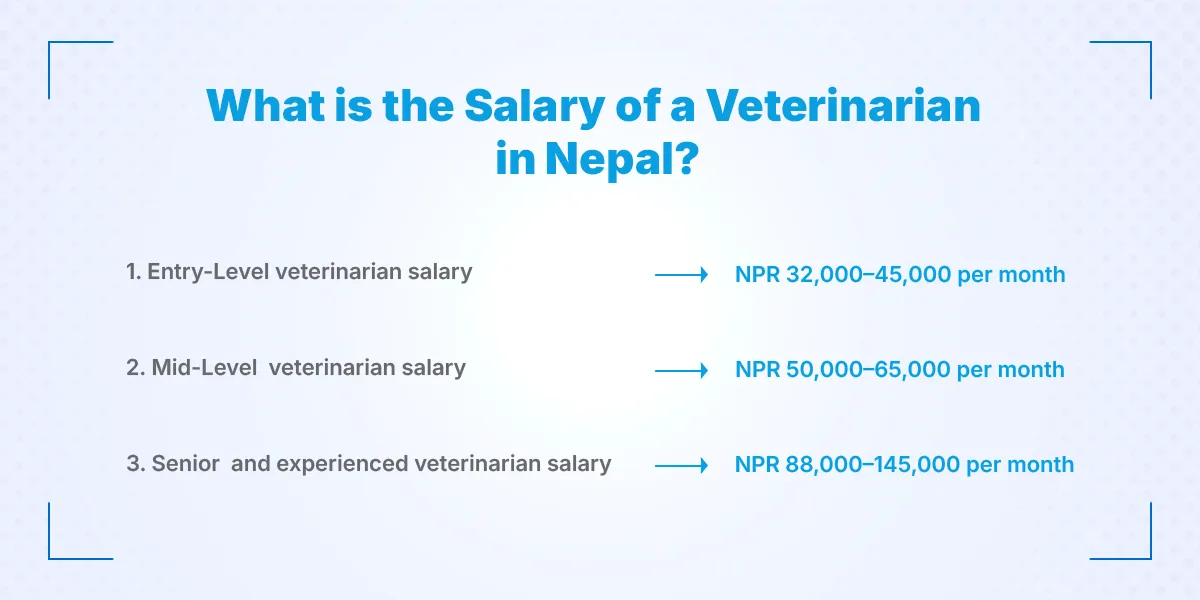
The average salary of a veterinarian in Nepal generally ranges from NPR 32,000 to NPR 145,000 per month, depending on experience, role, and workplace. Entry-level vets earn on the lower end, while experienced professionals in senior roles earn significantly more. To understand this better, let’s break down salaries by career stage.
1. Entry-Level Veterinarian Salary
Entry-level veterinarians in Nepal usually earn between NPR 32,000 and 45,000 per month. At this stage, most vets are fresh graduates who are building practical skills and on-the-job experience. They often work in clinics, farms, or under senior veterinarians. Although the salary starts modest, it improves steadily as skills and confidence grow.
2. Mid-Level Veterinarian Salary
Mid-level veterinarians typically earn around NPR 50,000 to 65,000 per month. By this point, they have a few years of experience and can handle cases more independently. Many also take on added responsibilities, such as supervising juniors or managing clinic operations. As a result, their earning potential becomes more stable and predictable.
3. Senior and Experienced Veterinarian Salary
Senior and experienced veterinarians earn between NPR 88,000 and 145,000 per month in Nepal. These professionals often hold leadership roles, run private practices, or work with large organizations and government bodies. Their income reflects years of expertise, strong decision-making skills, and industry trust. At this level, specialization and reputation play a major role in pushing salaries higher.
Veterinarian Salary by Sector in Nepal
Veterinarian salaries in Nepal vary widely depending on the sector, with each offering different pay, benefits, and growth opportunities. Government vets enjoy structured salaries, allowances, and strong job security, while private clinics offer more variable pay and performance-based incentives. NGOs, INGOs, and academic institutions provide competitive or steady salaries with additional perks, professional exposure, and career growth opportunities. Below, we break down salaries and perks across major sectors.
1. Salary of Government Veterinary Doctor in Nepal
The vets and related animal health roles in Nepal earn a basic government salary range around NPR 45,000–65,000 per month at entry to mid levels. Veterinarians working with the Nepal government in animal health departments, livestock services, or public disease control generally follow the standard public pay scales, which are structured and increment with experience.
On top of the basic pay, government vets typically receive allowances, such as house rent, medical, and retirement benefits, which add to their total compensation. The structured scale and benefits also contribute to strong job security and predictable growth over time. In many government jobs, annual increments and promotions help vets steadily increase their income and career grade.
2. Private Clinics and Hospitals
Vets in private settings in Nepal earn a wide range, roughly NPR 32,000 to NPR 88,000 per month on average. Salaries can vary a lot based on location, client flow, and the clinic’s size. Nevertheless, your salary keeps growing over time. Smaller or rural clinics often start vets at the lower end, while busy city clinics with strong demand can pay closer to the high end. Many private practices also offer performance bonuses, case fees, or profit‑sharing models as part of compensation. This sector may lack the same predictability of government jobs, but vets can earn more with experience, reputation, and client base.
3. NGOs and INGOs
Veterinarians working for NGOs or international NGOs (INGOs) often have competitive pay, with salaries typically above standard private clinic earnings, especially for senior roles tied to project funding. NGO vets usually earn around NPR 60,000–120,000+ per month in Nepal for specialised roles, depending on budget and donor support.
These roles often include extra perks like field allowances, travel support, insurance, and professional development opportunities. NGO and INGO work also exposes vets to community programming, wildlife outreach, and public health initiatives, which can enhance both income and experience.
4. Academic and Research Institutions
Veterinarians working in universities or research institutions, such as lecturers, researchers, or faculty, usually earn steady monthly salaries, often in the range of NPR 50,000–90,000, depending on rank and qualifications.
While the base pay can be lower than top private clinic or NGO salaries, academic roles may include research funding, conference support, and study leave benefits. Career growth comes through promotions, publishing, and higher academic ranks, which can raise total compensation over time.
Vets Salary in Nepal by Employer Types
| Sector | Typical Monthly Salary (NPR) | Notes |
|---|---|---|
| Government Veterinarian | 45,000 – 65,000 | Structured pay + allowances |
| Private Clinic / Hospital | 32,000 – 88,000 | Highly variable with demand |
| NGOs / INGOs | 60,000 – 120,000+ | Competitive + project perks |
| Academic / Research | 50,000 – 90,000 | Stable with growth paths |
Factors That Affect a Vet Doctor’s Salary in Nepal
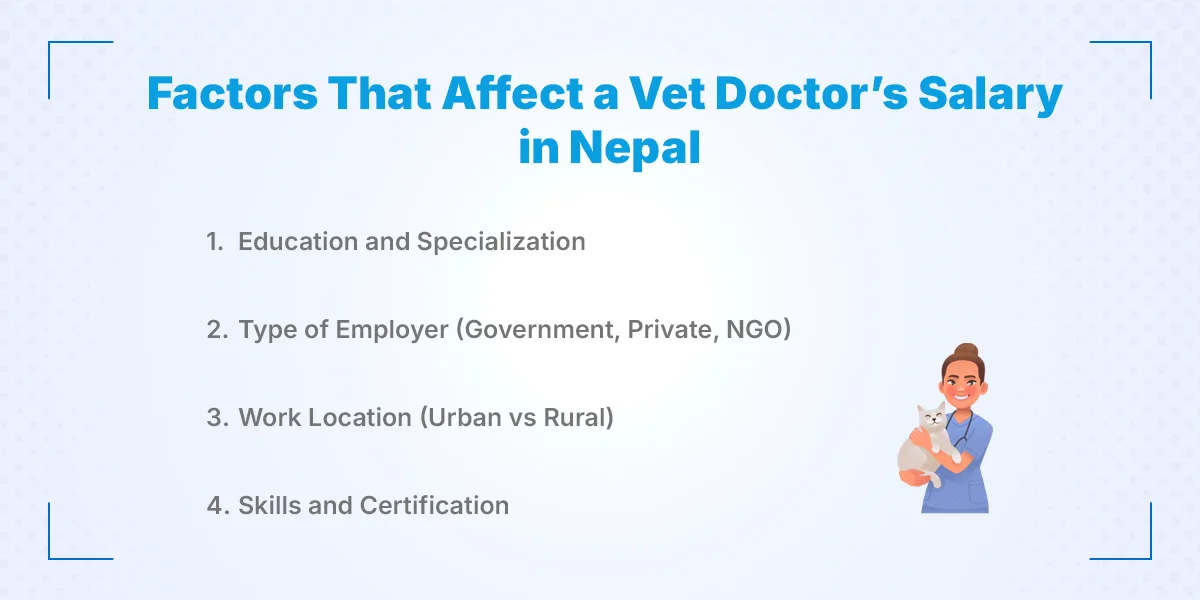
A veterinarian’s salary in Nepal depends on multiple factors such as education, specialization, employer type, location, and additional skills or certifications. These factors influence both starting pay and long-term growth, making some vets earn significantly more than others. Understanding them helps you make smarter career choices and plan for higher earnings.
1. Education and Specialization
The level of education and area of specialization have a direct impact on a vet’s salary. Vets with advanced degrees or specialized training in areas like surgery, livestock management, or wildlife medicine often earn more than general practitioners. Specialization also opens doors to high-paying roles in research, NGOs, and government projects. Investing in education and skill-building early can significantly increase earning potential over time.
2. Type of Employer (Government, Private, NGO)
The organization you work for plays a major role in salary. Government jobs offer stable pay and benefits but may grow slower, while private clinics and hospitals can pay higher salaries with performance-based incentives. NGOs and INGOs often provide competitive salaries along with perks like travel, allowances, and professional exposure. Choosing the right employer can balance income stability, growth, and job satisfaction.
3. Work Location (Urban vs Rural)
Where you work in Nepal affects your earnings and career opportunities. Urban areas like Kathmandu or Pokhara usually offer higher salaries due to greater demand, larger client bases, and more clinics. Rural positions may pay less but often provide valuable hands-on experience and opportunities to work with livestock or community projects. Understanding these trade-offs helps vets align their career goals with financial expectations.
4. Skills and Certification
Additional skills and professional certifications can significantly boost a vet’s salary. Expertise in areas like diagnostic imaging, anesthesia, or herd management makes a vet more valuable to employers. Certifications also signal credibility, opening doors to leadership roles or specialized positions. Continuously upgrading skills ensures both higher pay and stronger career growth in the long term.
Private vs Government Veterinarian Salary in Nepal
Veterinarian salaries in Nepal differ significantly between government and private sectors. Government roles offer steady pay, clear career growth, and strong long-term benefits, making them ideal for job security. Private clinics, on the other hand, can provide higher earnings and faster skill development, but pay and growth are less predictable. The table below summarizes the key differences in salary, workload, career growth, and benefits.
| Factor | Government | Private Clinic |
|---|---|---|
| Salary | NPR 45–65k/month | NPR 32–88k/month + bonuses |
| Workload | Moderate, structured | Often higher, variable hours |
| Career Growth | Clear path, regular increments | Depends on performance & reputation |
| Benefits | Housing, medical, pension | Limited, varies by employer |
| Job Stability | Very high | Moderate |
| Experience | Steady, public health & livestock | Diverse cases, faster skill growth |
Career Growth and Salary Progression for Veterinarians
Veterinarians in Nepal can steadily increase their earnings and responsibilities over time through promotions, specialization, and leadership roles. Understanding how career growth works helps vets plan their professional path and maximize income. Salary progression is not only about experience but also about developing expertise and taking on higher responsibilities.
1. Promotion Opportunities
Promotion opportunities in veterinary careers are often tied to experience, performance, and additional qualifications. In government roles, vets can move from junior positions to senior and supervisory roles with regular increments. Private sector vets may earn promotions through demonstrated skills, client trust, or managing larger clinics. Actively seeking challenging roles and expanding your responsibilities can accelerate career growth and salary increases.
2. Specialization Impact on Income
Specializing in areas like surgery, livestock management, wildlife health, or diagnostics can significantly boost income. Specialized vets are in higher demand, often securing higher-paying roles in clinics, NGOs, and research institutions. Additional certifications or advanced degrees further enhance credibility and earning potential. Choosing a specialization aligned with market needs ensures both career growth and financial rewards.
3. Leadership and Management Roles
Leadership and management positions, such as head veterinarian, clinic manager, or project lead, offer substantial salary increases. These roles require not only technical expertise but also strong organizational and team management skills. In addition to higher pay, leadership roles provide greater influence over operations and decision-making. Pursuing these positions can be a key step in achieving long-term career and financial goals.
Is Veterinary Science a Good Career in Nepal?
Yes, veterinary science is a promising career in Nepal because the demand for skilled veterinarians is steadily growing across pets, livestock, and public health sectors. With increasing awareness of animal welfare, rising livestock production, and expanding private clinics, qualified vets are finding more opportunities than ever. This growth ensures not only consistent employment but also the potential for higher salaries as experience and specialization increase.
Career stability is another strong advantage, especially in government roles, NGOs, and established private practices. Combined with opportunities for specialization, leadership, and professional development, veterinary science offers a clear path for long-term growth, financial rewards, and meaningful work in both urban and rural Nepal.
How to Increase Your Veterinarian Salary in Nepal
You can increase your veterinarian salary in Nepal by building the right skills, gaining certifications, and exploring higher-paying sectors or roles. Focusing on what employers value most can significantly boost your income over time. The strategies below explain practical ways to grow your earnings and career potential.
1. Master High-Value Skills
Focusing on high-demand skills can directly increase your earning potential. Skills like advanced surgery, diagnostic imaging, herd management, and emergency care make you more valuable to clinics, farms, and NGOs. Vets who continuously improve technical and practical skills often get promotions, better client trust, and higher pay. Regularly updating your skillset ensures you stay competitive and in demand.
2. Earn Certifications and Degrees
Professional certifications and higher education can open doors to better-paying positions. Specialized degrees or diplomas in areas like veterinary surgery, animal nutrition, or wildlife medicine increase credibility and market value. Certifications also demonstrate commitment to your career, which employers reward with higher pay or leadership opportunities. Investing in education pays off by boosting both income and career growth.
3. Move to Higher-Paying Roles
Switching to higher-paying sectors or roles can significantly improve your salary. For example, moving from small rural clinics to urban hospitals, NGOs, or government projects can offer better compensation and benefits. Taking on leadership or specialized positions also increases income and career influence. Being strategic about where you work and the roles you take ensures steady salary growth over time.
Job Opportunities for Veterinarians in Nepal
Veterinarians in Nepal have a variety of job opportunities across clinics, farms, research institutions, NGOs, and government bodies. Knowing the common roles and where to find openings in Nepal helps both fresh graduates and experienced vets plan their career path. Below, we break down the key roles and reliable sources for veterinarian jobs.
1. Common Veterinarian Roles
Veterinarians can work in multiple areas depending on their skills and interests. Common roles include clinical veterinarians in pet or livestock clinics, government veterinarians in animal health and livestock departments, research and academic positions in universities, and NGO/INGO roles focusing on animal welfare and community development. Other options include working in animal pharmaceutical companies, animal feed businesses, or as consultants for farms and livestock projects.
2. Where to Find Veterinarian Jobs in Nepal?
You can find veterinarian jobs in Nepal through government portals, private clinic websites, trusted job portals, NGOs/INGOs listings, and professional social media channels. Government and public sector openings are listed on official government portals and departmental websites. Private clinics and hospitals often advertise on local job portals, social media pages, and industry groups. NGOs and INGOs post vacancies on their websites, LinkedIn, social media channels, and widespread job portals like Kumari Job. Keeping an eye on multiple sources ensures you don’t miss opportunities and can apply strategically to roles that match your skills.
Conclusion
In Nepal, veterinarian salaries vary widely depending on experience, specialization, employer type, and work location. Entry-level vets start with modest pay, while mid-level and senior professionals can earn significantly more, especially in government roles, private clinics, NGOs, or academic institutions. Factors like advanced skills, certifications, and leadership roles further boost income and career growth.
For aspiring veterinarians, the outlook is positive. With steady demand across pets, livestock, and public health, there are opportunities for stable jobs, professional development, and higher earnings over time. Focusing on skill-building, specialization, and strategic career choices to secure a rewarding career with both financial and personal satisfaction. With planning and dedication, veterinary science in Nepal offers a strong path for growth, stability, and meaningful work.
Ready to take the next step in your dream career? Explore the latest job openings on Kumari Job and find opportunities that match your skills and ambitions today!
Frequently Asked Questions
Submit your comments

Get Our App On



How to Make a Police Report (Police Clearance Certificate) in Nepal?
VIEW DETAILS
Types of SEO and How They Work: Complete Beginner's Guide
VIEW DETAILS
Government Restricts New Lok Sewa Vacancy Requests 2083/84 — Or Not?
VIEW DETAILS
How to Apply for Tattoo Artist Jobs in Nepal?
VIEW DETAILS


Loading Comments...