


Many digital marketing job ads in Nepal ask for experience, but beginners often struggle to gain it without getting their first job. This creates a frustrating cycle: you need experience to get hired, yet you need a job to gain experience.
A digital marketing portfolio can help you break that cycle. Employers hiring entry-level marketers want to see evidence of practical skills, not just certificates or completed courses. This guide explains how to build a digital marketing portfolio in Nepal from scratch, including what projects to include, which free tools to use, how to present your work honestly, and how to use your portfolio to apply for jobs.
In this blog
Why Do You Need a Digital Marketing Portfolio Without Client Experience?
A digital marketing portfolio helps you demonstrate practical skills even if you have never worked with a client. It gives employers concrete examples of how you approach SEO, social media, content creation, and campaign planning rather than relying only on your CV or course certificates. A portfolio offers three specific benefits:
It Demonstrates Job-Ready Skills: Show that you can conduct keyword research, write SEO-friendly content, create social media posts, or develop a basic campaign plan. These work samples help employers assess your skills before hiring you.
It Helps You Answer Interview Questions: Use your projects to explain why you selected certain keywords, how you planned content, which tools you used, and how you would measure performance. This makes your answers more specific and easier for interviewers to evaluate.
It Shows How You Solve Marketing Problems: Present a sample project for a Nepali business, such as improving a website's content structure or planning a month's social media posts. Explain the problem, your approach, and the expected outcome or actual results if you tested the project.
The goal is not to pretend you have client experience. It is to present honest, well-documented projects that show employers what you can do and how you approach real digital marketing tasks. Beginners can gain practical experience and build these skills by enrolling in a digital marketing training course in Nepal that offers hands-on learning and practical projects.
What Should a Beginner Include in a Digital Marketing Portfolio?
You should include two or three strong projects in your chosen area, such as SEO, social media marketing, content writing, or paid advertising. Add supporting samples, screenshots, and performance data where available to demonstrate your skills and explain your work.
1. SEO and Website Optimization Projects
Include a keyword research sheet, an SEO-optimized blog post, or a before-and-after example of on-page optimization. Explain the target keyword, search intent, changes you made, and the reasons behind them, which you can master through Kumari Job SEO training in Nepal.
2. Social Media Marketing Samples
Show a content calendar, sample posts, captions, and a brief explanation of your content strategy. For a Nepali audience, demonstrate how you adapt content to local language preferences, relevant festivals, and audience interests. If you manage a real social media page, include available reach, engagement, and follower-growth data.
3. Content Writing and Marketing Campaigns
Add blog articles, landing page copy, or a sample marketing campaign brief. For each project, identify the target audience, campaign goal, key message, and chosen marketing channels. Explain how the content supports the goal, such as attracting organic traffic, generating inquiries, or encouraging sign-ups.
4. Google Ads and Paid Advertising Samples
If you have not run paid advertisements, create a sample campaign showing keyword groups, ad copy variations, campaign structure, targeting choices, and a proposed budget. Explain how you would measure performance using metrics such as clicks, conversions, and cost per conversion. Clearly label simulated campaigns as practice projects rather than real advertising results.
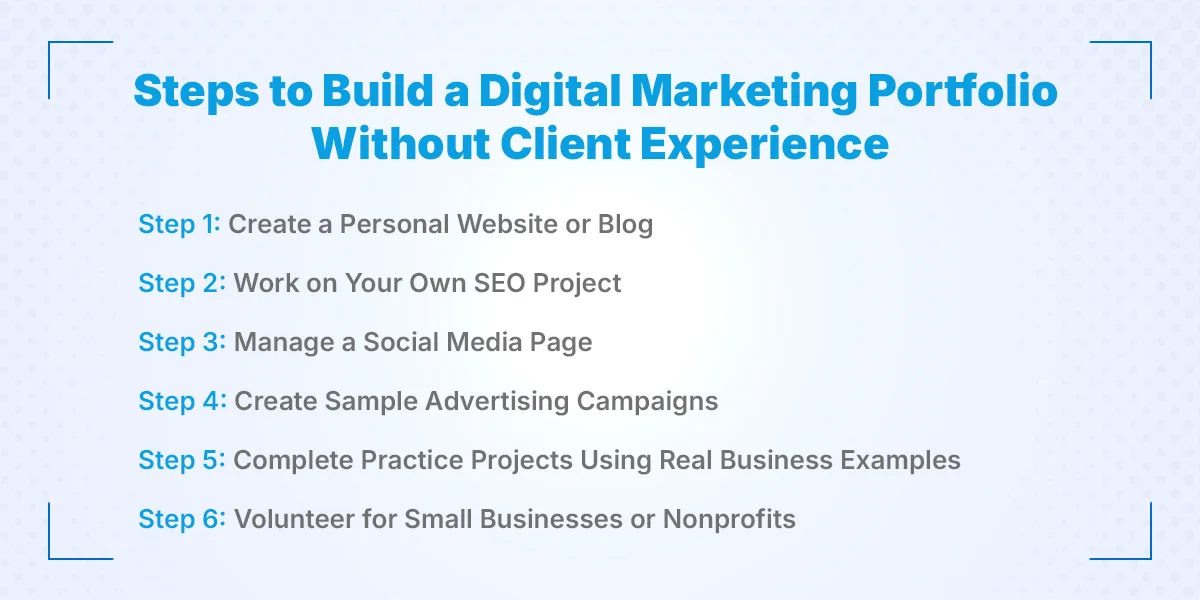
Steps to Build a Digital Marketing Portfolio Without Client Experience
You can build a digital marketing portfolio without client experience by creating personal projects, practicing with real business examples, and volunteering for small organizations. Follow these steps to develop practical skills, create work samples, and demonstrate your abilities to potential employers in Nepal.
Step 1: Create a Personal Website or Blog
Start with a simple website or blog that can serve as both your portfolio and your first SEO project. Choose a topic you know, such as trekking, student life, or career advice, and publish a few useful, well-structured articles. Use a free or low-cost website platform to keep your initial expenses manageable.
Step 2: Work on Your Own SEO Project
Treat your website like a client project by researching keywords, optimizing content, adding internal links, and setting up Google Search Console and Google Analytics 4. Record your starting performance and review clicks, impressions, and other available metrics monthly. Even modest improvements can become useful case studies when you explain your work and results accurately.
Step 3: Manage a Social Media Page
Create a social media page around a specific topic and manage it consistently for two or three months. Develop a content calendar, test different post formats, and track reach, engagement, and follower growth. A page focused on a Nepali audience, such as trekking tips or student life, can demonstrate your ability to plan content and understand audience interests.
Step 4: Create Sample Advertising Campaigns
Develop a mock advertising campaign for a real or fictional business. Include the campaign objective, target audience, proposed budget, ad copy, targeting approach, and performance metrics. Clearly label the project as a simulation rather than a live campaign. If you run a real campaign with a small budget, document the actual results and lessons learned.
Step 5: Complete Practice Projects Using Real Business Examples
Choose a Nepali business and prepare an independent digital marketing audit. Review its website, social media presence, and search visibility, then recommend specific improvements, such as better page titles, clearer content, or a more consistent posting schedule. State clearly that the work is an independent practice project, not paid client work or an official partnership.
Step 6: Volunteer for Small Businesses or Nonprofits
Offer to help a local shop, nonprofit, or community group with social media management. Set clear expectations about the work before starting, and use this experience to transition into marketing and advertising jobs.
Best Free Tools to Build Your Digital Marketing Portfolio
You can build your digital marketing portfolio using free tools such as Google Search Console, Google Analytics 4, Canva, Meta Business Suite, Google Keyword Planner, and ChatGPT. These tools help you research keywords, create content, manage social media, and track project performance without requiring a large budget.
Google Search Console (GSC): Use it to track website clicks, impressions, and search queries for SEO projects.
Google Analytics 4 (GA4): Analyze website traffic and visitor behavior to demonstrate your ability to measure campaign performance.
Canva: Create social media posts, thumbnails, banners, and other visual content to showcase your design skills.
Meta Business Suite: Plan, schedule, and track Facebook and Instagram content to build social media marketing samples.
Google Keyword Planner (GKP): Research keyword ideas and estimated search volumes for SEO and content planning projects. Combine it with Search Console data and Google Autocomplete for Nepali and Romanized Nepali keywords.
ChatGPT: Brainstorm content ideas, develop outlines, and plan marketing campaigns. Review and edit AI-generated output before including it in your portfolio.
How to Present Your Digital Marketing Portfolio
You can present your digital marketing portfolio by choosing an easy-to-share format, organizing your projects into clear sections, explaining your goals and strategies, and including screenshots of your work and measurable results. Clearly label personal, practice, mock, and volunteer projects, then add your portfolio link to your CV and LinkedIn profile so potential employers can easily review your skills.
1. Choose the Right Portfolio Format
Choose an easy-to-share format, such as a personal website, Google Drive folder, Notion page, or PDF presentation. A personal website can demonstrate your SEO and website skills, while a well-organized document is suitable for beginners. Make sure employers can open your portfolio without requesting access.
2. Explain Project Goals, Strategies, and Execution
For each project, explain your goal, target audience, chosen strategy, and the tasks you completed. Mention the tools you used, the results you achieved, and what you learned. This helps employers understand your practical skills and decision-making process.
3. Include Screenshots and Measurable Results
Add screenshots from Google Search Console, GA4, Meta Business Suite, or advertising dashboards to support your work. Include actual figures such as clicks, impressions, reach, or engagement, along with the reporting period. If you do not have performance data, show your completed work and explain how you would measure its success.
4. Clearly Label Personal and Sample Projects
Label each project as personal work, an independent practice project, a mock campaign, or volunteer work. Clearly explain whether it involved a real organization and avoid presenting sample results as actual client achievements. Honest presentation helps employers understand your experience and builds trust.
5. Add Your Portfolio to Your CV and LinkedIn Profile
Place your portfolio link near the top of your CV, alongside your contact details, so recruiters can find it easily. Add the link to your LinkedIn featured section and contact information. Briefly highlight your strongest projects in your profile summary.
Common Digital Marketing Portfolio Mistakes Beginners Should Avoid
You can avoid common digital marketing portfolio mistakes by starting projects early, presenting sample work honestly, explaining your marketing strategies, and focusing on relevant projects. Prioritize quality over quantity and make sure every project demonstrates a practical skill.
Waiting for Client Projects Before Building a Portfolio: Do not wait until you get a job or client to start building your portfolio. Begin with personal websites, practice campaigns, and independent projects, then add client work as you gain experience.
Presenting Sample Work as Real Client Experience: Clearly label mock campaigns and practice projects instead of claiming them as paid client work. Misrepresenting your experience can damage your credibility if an employer checks your claims.
Showing Results Without Explaining the Strategy: Do not rely on screenshots or performance numbers alone. Explain what you did, why you chose that approach, and what you learned so employers can understand your decision-making.
Including Too Many Unrelated Projects: Avoid filling your portfolio with numerous weak or unrelated samples. Focus on two or three strong projects in your main skill area, such as SEO, social media, or content marketing, and add supporting work where relevant.
How to Use Your Portfolio to Get a Digital Marketing Job in Nepal
You can use your digital marketing portfolio to apply for internships and entry-level positions, highlight projects relevant to each job, and demonstrate your skills during interviews. Include your portfolio link in your CV and job applications, and regularly check platforms such as Kumari Job for suitable vacancies.
1. Apply for Internships and Entry-Level Positions
Look for roles such as digital marketing intern, social media executive, content writer, SEO assistant, or marketing assistant. Include your portfolio link in every application and mention a relevant project that matches the job requirements. Internships can help you turn independent practice into professional experience.
2. Customize Your Portfolio for Different Job Roles
Arrange your projects according to the position you are applying for. For an SEO role, highlight keyword research and website optimization, while a social media application should feature your content calendar and page performance. You can also direct hiring managers to specific projects by mentioning them in your application.
3. Prepare to Explain Your Projects in Interviews
Be ready to explain each project by covering its goal, approach, results, and lessons learned. Practise discussing challenges, what did not work, and what you would improve next time. Honest explanations help interviewers understand your practical knowledge and problem-solving skills.
4. Find Digital Marketing Vacancies on the Job Portal
Use a reputable job portal to explore vacancies in digital marketing, SEO, content writing, and social media. Check new listings regularly, apply for suitable positions, and include your portfolio link with a tailored application. You can also follow relevant employers and check their official career pages for additional opportunities.
Conclusion
You do not need client experience to start building a digital marketing portfolio. A personal website, SEO project, managed social media page, mock advertising campaign, and volunteer work can all demonstrate your practical skills to potential employers.
Start with small projects, use free tools, and document each one with its goals, strategy, execution, and results. Clearly label personal and sample work, then include your portfolio link when applying for internships and entry-level jobs in Nepal. Ready to showcase your talent and secure your first role? Explore the latest digital marketing job vacancies in Nepal today and apply with confidence.
Frequently Asked Questions
Submit your comments

Get Our App On



Meta Ads Training Fees in Nepal: Complete Course Fee Guide
VIEW DETAILS
SEO Training for Working Professionals: Skills, Benefits and Career Growth
VIEW DETAILS
How to Become an Office Secretary in Nepal: Skills, Salary, and Requirements
VIEW DETAILS
SEO Training for Small Business Owners: A Beginner's Guide
VIEW DETAILS


Loading Comments...