



Journalism is one of the most respected professions in Nepal, yet many students hesitate to pursue it because they are unsure about the salary, job security, and long-term growth. With the rapid expansion of television channels, FM stations, newspapers, and online news portals, the media industry is growing, but income levels and career progression often remain unclear to aspiring journalists.
In this blog, you will learn how much journalists earn in Nepal at different experience levels, how salaries vary by media platform, what factors affect income, and what career growth opportunities exist. This guide also explores journalism jobs in Nepal to help you understand whether journalism is a financially sustainable and rewarding career choice.
In this blog
Who is a Journalist and What Do They Do?
A journalist is a professional who collects, verifies, and reports news and information to the public through different media platforms. Journalists play a critical role in informing society about current events, public issues, and important developments. Their main responsibility is to gather facts, confirm sources, and present accurate information in a clear and balanced manner. In Nepal, journalists work across newspapers, television channels, radio stations, and online news portals.
They conduct interviews with experts, officials, and the public to gather insights and perspectives. Field reporting is often required, especially for political events, disasters, or investigative stories. Many journalists also perform in-depth research to uncover hidden facts and ensure transparency. Above all, journalists are expected to follow ethical standards, maintain objectivity, and deliver truthful reporting that serves the public interest.
How Much Does a Journalist Earn in Nepal?
A journalist in Nepal typically earns between NPR 20,000 and NPR 1,50,000+ per month, depending on experience, media type, and job role. Entry-level journalists start with lower salaries, mid-level reporters earn moderately higher, while senior journalists and editors receive the highest compensation. Salary can also vary based on city, organization reputation, and specialization in print, TV, radio, or digital media. Understanding these ranges helps aspiring journalists plan their career growth and financial expectations.
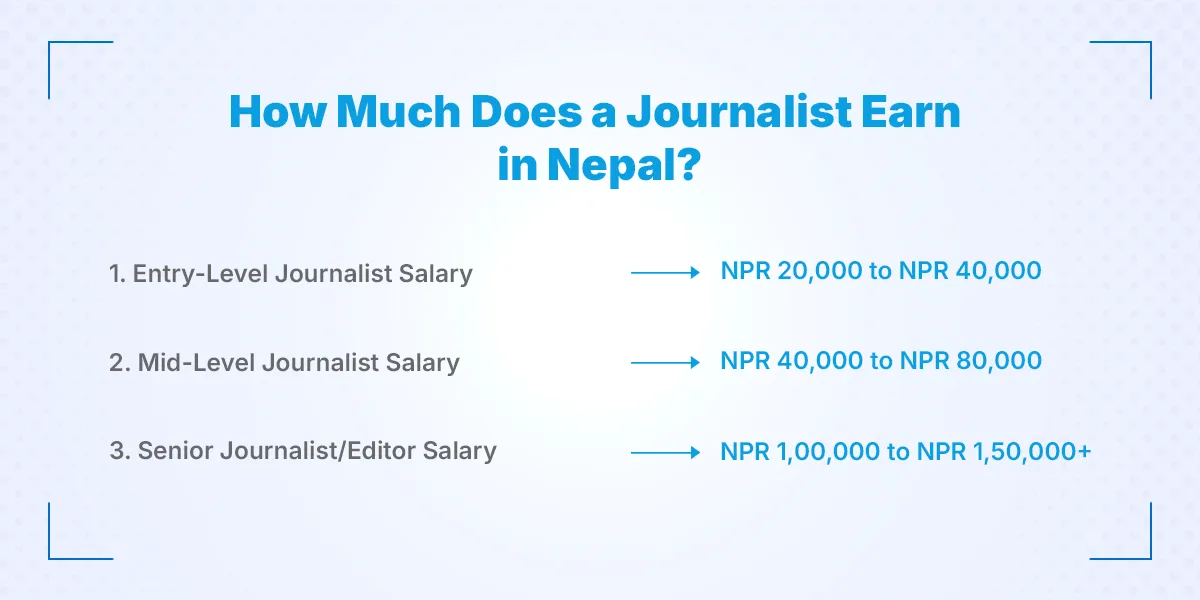
1. Entry-Level Journalist Salary
Entry-level journalists in Nepal usually earn between NPR 20,000 and NPR 40,000 per month. This applies to fresh graduates working in newspapers, online portals, or regional media. They are mostly responsible for basic reporting, fact-checking, and assisting senior reporters. These roles often involve long working hours and field assignments. Early-career journalists can increase their salary by building strong writing and digital media skills.
2. Mid-Level Journalist Salary
Mid-level journalists earn roughly NPR 40,000 to NPR 80,000 per month. These professionals typically have 3–7 years of experience and may handle specialized reporting, editing, or correspondent roles. Their work involves more responsibility, including managing junior reporters and covering high-profile stories. Mid-level journalists often start receiving perks like allowances, bonuses, or travel reimbursements. Networking and skill development play a key role in this salary growth.
3. Senior Journalist / Editor Salary
Senior journalists or editors can earn NPR 1,00,000 to NPR 1,50,000+ per month, particularly in national newspapers, TV channels, or large digital media platforms. They oversee newsrooms, plan content, and make editorial decisions that influence the publication or channel. Leadership, investigative experience, and credibility significantly impact earning potential. Senior journalists may also earn additional income through speaking engagements, column writing, or freelance projects.
Journalist Salary by Media Platform
Journalist salaries in Nepal vary depending on the type of media they work in, such as newspapers, television, online news platforms, or radio. Each platform has its own salary standards, demand levels, and earning potential based on audience reach and revenue. Salaries can differ widely due to media house size, experience level, and economic conditions in the industry.
1. Newspaper Journalist Salary
Newspaper journalists in Nepal typically earn between NPR 20,000 and NPR 60,000 per month, depending on experience and the size of the publication. Entry‑level reporters at small dailies often start around NPR 20,000–30,000, while senior reporters and section editors in major national newspapers can earn up to NPR 50,000–60,000+. Salaries may include field allowances for reporting and travel. Larger newspapers with higher circulation usually pay better than regional or local print outlets. Economic constraints in print media mean salary growth can be slower compared to broadcast or digital. media
2. Television Journalist Salary
Television journalists in Nepal generally earn between NPR 30,000 and NPR 1,20,000 per month, with news anchors and senior reporters on the higher end. Entry‑level TV reporters often start around NPR 30,000–45,000, while experienced correspondents and prime‑time anchors can earn NPR 80,000–1,20,000+ depending on channel reach and rating. News anchors with strong followings may receive additional benefits. Larger national TV channels pay more than regional stations. Salaries often include allowances for field reporting and night shifts.
3. Online / Digital Media Journalist Salary
Online and digital news journalists in Nepal typically earn between NPR 25,000 and NPR 80,000 per month, based on the size of the digital platform and audience engagement. Entry‑level digital reporters may start around NPR 25,000–35,000, while senior multimedia journalists and content strategists can earn NPR 60,000–80,000+. Some digital outlets also offer performance‑based incentives tied to site traffic or video views. Digital journalism roles often involve multi‑tasking, writing, video editing, and social media, which can justify higher pay. Larger portals and media networks tend to offer better compensation than smaller independent sites.
4. Radio Journalist Salary
Radio journalists in Nepal generally earn between NPR 18,000 and NPR 60,000 per month, making radio one of the more modestly paid sectors. Entry‑level FM reporters often start around NPR 18,000–25,000, while senior anchors, show hosts, or content producers at popular FM stations can earn up to NPR 50,000–60,000. Regional stations usually pay lower compared to major city FM channels. Many radio roles require multitasking, reporting, scriptwriting, and live shows, which can influence salary growth over time.
What Factors Affect a Journalist's Salary in Nepal?
A journalist’s salary in Nepal primarily depends on experience, education, media house reputation, specialization, and networking, with each factor influencing starting pay, growth, and benefits.

1. Experience Level
Experience directly affects salary ranges, with entry-level reporters earning less and senior journalists commanding higher pay. Experienced journalists often have more field exposure, a portfolio of published work, and a proven track record, which increases their market value. Many media houses reward loyalty and years of service with higher pay scales and bonuses. Internships and freelance work can also enhance experience, indirectly boosting salary potential. Overall, salary growth is faster for those who consistently build expertise and credibility in reporting.
2. Education and Journalism Degree
A formal degree in journalism, mass communication, or related fields often results in higher starting salaries. Many employers prefer graduates who have studied reporting, media ethics, and digital content creation. Advanced degrees or diplomas in specialized areas like investigative journalism or broadcast journalism can further improve earning potential. Education provides both theoretical knowledge and practical skills that make candidates more competitive. Journalists without formal qualifications may start lower but can catch up through experience and networking.
3. Media House Reputation
The reputation and size of the media house significantly affect pay. National TV channels and large newspapers usually offer higher salaries than regional newspapers or smaller digital portals. Established media houses have more resources to pay competitive wages and provide additional perks like travel allowances or insurance. Working for a reputed outlet also boosts a journalist’s credibility, aiding future career opportunities. Conversely, smaller or start-up platforms may offer lower pay but valuable experience.
4. Specialization
Journalists who specialize in areas like political reporting, finance, or investigative journalism tend to earn more than general reporters. Specialized knowledge allows journalists to handle complex stories and produce high-value content. Expertise in multimedia, data journalism, or digital analytics can also increase demand and pay. Specialized journalists may secure freelance assignments or consultancy roles that supplement their primary income. Employers often reward niche expertise due to its contribution to audience engagement and credibility.
5. Networking and Personal Brand
Strong networking and a recognizable personal brand can significantly boost a journalist’s earnings. Connections with editors, influencers, and industry professionals often lead to better job offers and freelance opportunities. A journalist with an active social media presence or widely recognized by audiences can negotiate higher pay. Networking can also provide access to exclusive assignments or partnerships that enhance income. Building a personal brand adds long-term value beyond formal salaries.
How to Become a Journalist in Nepal
To become a journalist in Nepal, you need a combination of formal education, practical skills, internships, and networking to gain experience, credibility, and opportunities in various media platforms.
1. Complete +2 Education
Completing higher secondary education (+2) is the first requirement, preferably in Humanities, Management, or Social Sciences. This provides a foundational understanding of writing, communication, and current affairs. Schools with media-related courses or debate clubs can help students develop early skills. Strong performance in +2 increases eligibility for competitive journalism programs at the bachelor’s level. It also sets the stage for scholarships or entrance exams for media studies.
2. Bachelor’s Degree in Journalism or Related Field
A bachelor’s degree in Journalism, Mass Communication, or equivalent is highly recommended. These programs teach reporting, editing, media ethics, broadcasting, and digital content production. Specialized courses in investigative journalism, public relations, or multimedia enhance employability. Graduates often gain access to internships and projects with newspapers, TV, or online media. A degree also improves credibility with employers and can influence starting salary levels.
3. Develop Writing and Reporting Skills
Strong writing, storytelling, and reporting skills are critical for aspiring journalists. This includes learning how to draft news articles, conduct interviews, and research effectively. Engaging in blogging, student media, or freelance reporting helps build a practical skillset. Attention to grammar, accuracy, and clarity is essential for credibility. Continually practicing and updating skills according to media trends boosts long-term career growth.
4. Internship in Media Houses
Internships provide hands-on experience and networking opportunities in the media industry. Working with newspapers, TV channels, radio stations, or digital platforms helps students understand daily operations and editorial processes. Interns learn professional standards, deadlines, and reporting ethics in real-world settings. Internships can also lead to full-time job offers after graduation. Multiple internships across different media formats increase versatility and employability.
5. Build Portfolio and Networking Connections
A professional portfolio showcasing published articles, reports, or multimedia work is essential. Networking with editors, senior journalists, and media professionals opens doors to job opportunities. Active participation in journalism workshops, events, and social media channels enhances visibility. Freelance work or collaborations with media outlets strengthen both the portfolio and professional network. A strong personal brand and network can accelerate career advancement and salary growth.
Skills Required to Become a Journalist
A successful journalist in Nepal needs a mix of writing, research, communication, digital, and ethical skills to report accurately, engage audiences, and adapt to evolving media platforms.
1. Strong Writing and Communication Skills
Clear and concise writing is essential for conveying news accurately to the public. Journalists must structure articles, reports, and scripts in a compelling manner. Good communication also includes listening skills for interviews and gathering information. Mastery of grammar, vocabulary, and storytelling techniques improves audience engagement. These skills are fundamental across all media platforms, print, broadcast, and digital.
2. Research and Investigative Ability
Journalists must collect, verify, and analyze information from multiple sources. Strong research skills help uncover facts, confirm accuracy, and detect misinformation. Investigative ability enables journalists to report on sensitive topics and uncover hidden stories. Knowledge of tools, databases, and public records enhances reporting quality. A journalist with strong investigative skills is more likely to earn credibility and higher pay.
3. Confidence in Public Speaking
Television reporters, radio hosts, and live correspondents must speak clearly and confidently. Public speaking skills help during interviews, live coverage, and press conferences. Confidence improves credibility and audience trust. Journalists often need to present information under pressure or to large audiences. Training or practice in speaking engagements can significantly improve performance and career opportunities.
4. Video Reporting and Digital Media Skills
Modern journalism relies heavily on video content, social media, and digital storytelling. Skills in shooting, editing, and publishing videos are essential for TV and online platforms. Understanding digital tools, SEO, and multimedia formats boosts visibility and engagement. Knowledge of live streaming, podcasts, and interactive content is increasingly valuable. Journalists who master digital media have a competitive edge in the job market.
5. Ethical Understanding of Journalism Standards
Adhering to journalism ethics ensures credibility and public trust. Journalists must report objectively, avoid plagiarism, respect privacy, and verify sources. Understanding legal restrictions, defamation laws, and professional codes is crucial. Ethical reporting enhances a journalist’s reputation and long-term career prospects. Employers prioritize journalists who consistently demonstrate integrity and responsibility in their work.
Where to Get Journalist Jobs in Nepal
Journalist jobs in Nepal are available across print, broadcast, digital, and radio platforms, and through dedicated media job portals and internships that can lead to full-time roles.
1. Job Portals (Kumari Job)
Online job portals like Kumari Job list verified journalist vacancies across Nepal. They provide filters for location, media type, and experience level. Job seekers can apply directly and track application status. These portals often include detailed salary ranges and employer reviews. Using portals increases the chances of finding both entry-level and senior journalist roles.
2. National Newspapers
Major newspapers in Nepal, such as Kantipur, The Himalayan Times, and Nagarik, frequently hire reporters, editors, and correspondents. Print media offers structured career growth and specialized reporting beats. Applicants typically need strong writing skills and a journalism degree. Internships in newspapers often lead to permanent roles. Networking with editors and attending media events improves hiring prospects.
3. Television Channels
Television channels like Nepal Television, Kantipur TV, and News24 recruit reporters, anchors, and production staff. TV journalism requires on-camera confidence and technical knowledge of video reporting. Salaries vary by position, with anchors generally earning higher than field reporters. Experience, presentation skills, and credibility play a key role in selection. Freelancing or contract work is also common in TV media.
4. Online News Portals
Digital media platforms like Onlinekhabar, Setopati, and Ratopati are rapidly expanding, offering opportunities for content writers, video reporters, and digital journalists. Online platforms often require familiarity with SEO, social media, and multimedia content creation. Compensation depends on experience, content reach, and audience engagement. Entry-level roles may start with internships or project-based assignments. Strong portfolio and digital presence increase employability.
5. Radio Stations
Radio stations, including FM channels like Radio Nepal, Ujyaalo 90, and Hits FM, hire presenters, reporters, and producers. Radio journalism emphasizes voice clarity, scripting skills, and live reporting ability. Salaries are generally lower than TV or online media but provide hands-on experience in communication. Internships and community radio programs can help build credibility and networks. Specialized programs, such as news or talk shows, often pay higher than general radio positions.
6. Media Job Portals and LinkedIn
Dedicated media job portals and LinkedIn provide listings for full-time, part-time, and freelance journalist roles. Profiles with portfolios, published work, and strong networking connections attract recruiters. Job seekers can apply for niche positions like investigative reporting or editorial roles. These platforms also give insights into salary benchmarks and company reviews. Staying active on professional networks improves visibility and career growth.
7. Internships Leading to Full-Time Roles
Internships in media houses offer practical experience and often serve as a pathway to permanent employment. Many leading newspapers, TV channels, and online platforms recruit interns for reporting, editing, or production roles. Interns gain mentorship, skill development, and industry exposure. Performance during the internship is usually the key factor for full-time offers. Combining internships with networking maximizes the chances of a successful journalism career in Nepal.
Career Growth Opportunities for Journalists in Nepal
Journalists in Nepal have clear career progression depending on experience, skill, and specialization. Typically, one starts as a reporter or junior correspondent, then moves to senior reporter or editor roles in newspapers, TV, or online media. With experience, journalists can transition into news anchor positions, program hosting, or become section editors overseeing specific beats.
Beyond editorial roles, media professionals can advance into management positions such as content manager, newsroom head, or channel/program director. Many also leverage their media expertise to transition into public relations, corporate communications, or digital marketing roles, where strong storytelling and media skills are highly valued.
Is Journalism a Good Career in Nepal?
Yes, journalism is a good career in Nepal for individuals passionate about news, storytelling, and media. It offers opportunities for salary growth, skill development, and career advancement across print, broadcast, and digital platforms.
While entry-level positions can be competitive and work hours irregular, long-term prospects in digital media, media management, and corporate communication make it rewarding. With strong writing, reporting skills, and networking, journalism can be both financially and personally fulfilling.
Conclusion
Journalist salaries in Nepal vary based on experience, media type, and specialization. Professionals who develop strong writing, digital media, and networking skills can access better opportunities and higher pay. Career growth from reporter to editor or moving into media management and corporate communications further enhances earning potential and long-term prospects.
If you’re looking for more job opportunities in journalism, digital marketing, IT Sectors, or media roles, Kumari Job provides thousands of verified listings across Nepal. Explore openings today and take the next step toward building a successful career.
Frequently Asked Questions
Submit your comments

Get Our App On



SEO Training for Freshers in Nepal: Skills, Career & Job Opportunities
VIEW DETAILS
SEO Training vs. Self-Learning: Which Is Right for You?
VIEW DETAILS
How to Choose Between Two Job Offers
VIEW DETAILS
Digital Marketing Training Interview Questions and Answers for Freshers
VIEW DETAILS


Loading Comments...