



Are you thinking about a career in healthcare management but worried whether the salary will be worth it in Nepal? Many students and fresh graduates feel the same, unsure about how much they can really earn after completing BHCM (Bachelor's in Health Care Management). Choosing the right career is tricky when you don’t know what to expect in terms of pay and growth.
In this blog, we will break down the BHCM salary in Nepal, including what freshers earn, how salaries grow with experience, and which job roles pay the most. You will also learn the skills and factors that can help you earn more. By the end, you’ll have a clear idea of your future in healthcare management and how to plan your career smartly.
In this blog
What is the BHCM Course in Nepal?
BHCM stands for Bachelor's in Health Care Management. It is a four-year undergraduate program that combines healthcare knowledge with management and administrative skills. This course is designed for students who want to work in hospitals, clinics, health organizations, or healthcare companies while managing administrative and operational tasks.
The main goal of BHCM is to prepare students for leadership and management roles in the healthcare sector. Graduates can oversee hospital operations, manage staff, coordinate patient services, and ensure smooth administrative functioning in healthcare institutions.
The course focuses on both practical knowledge and theoretical learning. Students also gain hands-on experience through internships in hospitals and clinics, which helps them understand real-world challenges.
Key things you learn in BHCM:
- Healthcare facility and hospital management
- Health policy, administration, and compliance
- Medical records and healthcare data management
- Healthcare finance, budgeting, and resource planning
- Leadership, teamwork, and human resource management
- Patient care quality and service improvement
In Nepal, BHCM is gaining importance because the healthcare sector is growing rapidly. Hospitals and clinics need skilled managers who understand both healthcare operations and administration.
If you want a career that combines healthcare knowledge with management skills, BHCM is an excellent choice. It teaches practical skills while developing leadership, communication, and problem-solving abilities, making graduates highly valuable in the healthcare industry.
What is the Average BHCM Salary in Nepal?
The average BHCM salary in Nepal ranges from NPR 15,000 for freshers to over NPR 1,50,000 for senior managers. This depends on your experience, job role, and the organization you work for. Knowing these ranges helps you plan your career and make smart choices about skill development and growth opportunities.
1. Entry-Level BHCM Salary in Nepal
Fresh BHCM graduates typically earn NPR 15,000 – 30,000 per month. At this stage, most professionals work in administrative or support roles such as Patient Coordinator, Front Office Officer, or Junior Admin Officer. The focus is on learning the basics of healthcare management, gaining hands-on experience, and understanding hospital operations. Entry-level salaries are usually modest, but they provide a solid foundation to build your career. The more you learn and perform at this stage, the faster you can move to higher-paying roles. Even small hospitals or clinics pay slightly lower, while bigger organizations in Kathmandu often pay better.
2. Mid-Level BHCM Salary in Nepal
Professionals with 2–5 years of experience earn around NPR 35,000 – 60,000 per month. Typical roles include Healthcare Operations Supervisor, Medical Records Manager, or Department Coordinator. At this level, you handle more responsibility, such as supervising staff, managing daily hospital operations, and ensuring smooth workflow. Skills like team management, reporting, and hospital software usage become very important. Mid-level positions are also when performance and additional certifications can help increase your salary. Working in larger hospitals or private healthcare organizations usually gives better pay than smaller local clinics.
3. Senior-Level BHCM Salary in Nepal
Senior BHCM professionals, like Hospital Administrators, Clinic Managers, or Department Heads, can earn NPR 80,000 – 1,50,000+ per month, which is a good salary in Nepal. These roles involve leading teams, budgeting, planning resources, and ensuring quality patient care. At this level, experience, leadership ability, and specialized skills significantly affect salary. Senior professionals often make strategic decisions that impact the entire hospital or department. Working in big hospitals, international healthcare centers, or government hospitals in major cities usually brings the highest salaries. Promotions and salary growth are strongly linked to performance, certifications, and proven management ability.
BHCM Job Roles and Their Salary in Nepal
After completing BHCM, there are several career paths you can take in hospitals, clinics, and healthcare organizations. Each role has its own responsibilities and salary range. Knowing these roles helps you plan your career and choose the right path based on your interests and skills. Here, we explain the main BHCM job roles and how much you can earn in Nepal.
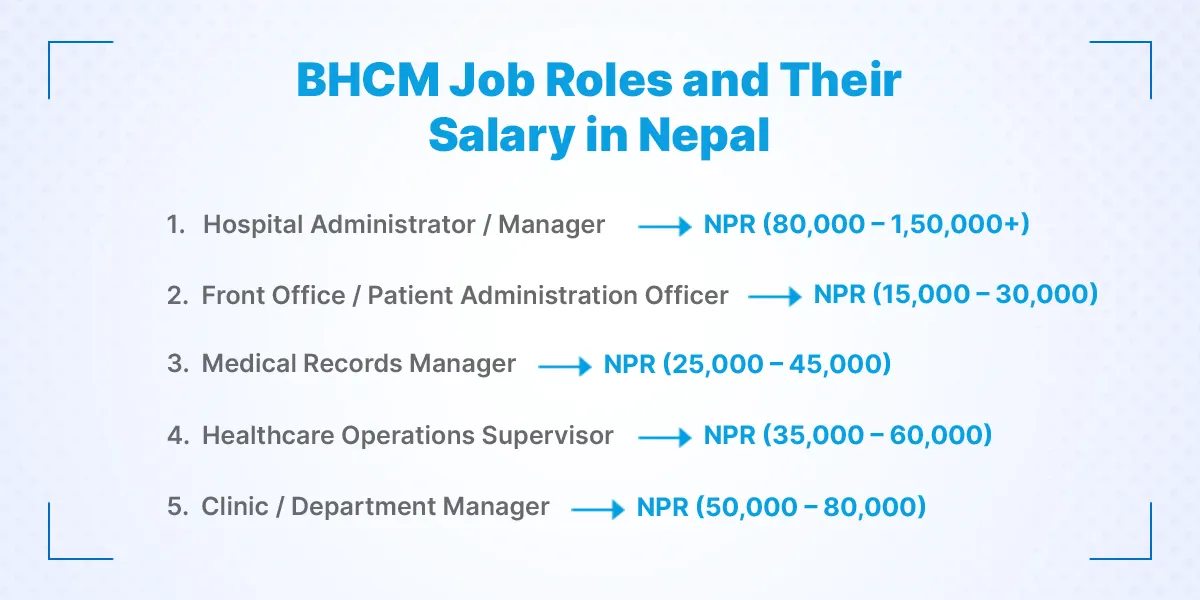
1. Hospital Administrator / Manager
Hospital Administrators or Managers are in charge of running the hospital smoothly. They plan daily operations, manage staff, and make sure patients get proper care. This role also includes budgeting, resource planning, and compliance with health regulations. Hospital Managers are among the highest-paid BHCM professionals in Nepal. The salary usually ranges from NPR 80,000 to 1,50,000+ per month, depending on experience and hospital size. This is a senior-level position that requires strong leadership and management skills.
2. Front Office / Patient Administration Officer
Front Office or Patient Administration Officers handle patient registration, appointments, and hospital records. They are the first point of contact for patients, so communication skills are very important. The front desk jobs also involve scheduling, managing files, and coordinating with different departments. Entry-level salaries usually start from NPR 15,000 to 30,000 per month. This is a good starting point for fresh BHCM graduates. Gaining experience here can help you move to supervisory roles.
3. Medical Records Manager
Medical Records Managers oversee patient records and healthcare data. They make sure files are accurate, updated, and stored properly. This role involves data management, compliance with healthcare regulations, and assisting doctors or departments when needed. Salaries range from NPR 25,000 to 45,000 per month. Attention to detail and computer skills are very important in this job. It is a mid-level role with opportunities for growth into higher administrative positions.
4. Healthcare Operations Supervisor
Healthcare Operations Supervisors manage the daily operations of a hospital or clinic department. They ensure that staff follow procedures, resources are used efficiently, and patients are served well. This role requires coordination between departments and problem-solving skills. Monthly salaries are usually NPR 35,000 to 60,000. This is a mid-level role where experience and leadership skills can increase your earning potential.
5. Clinic / Department Manager
Clinic or Department Managers handle specific hospital departments or small clinics. They manage staff, oversee patient services, and take care of administrative and operational tasks. This role also includes budgeting, planning, and reporting to senior management. Salaries typically range from NPR 50,000 to 80,000 per month. Strong leadership, organization, and decision-making skills are important for this position.
Skills That Can Increase BHCM Salary in Nepal
The skills you learn and apply in healthcare management jobs can directly boost your salary and career growth. The more capable you are in managing hospital operations, staff, and patient services, the higher your pay can be. Here, we explain the key skills that help BHCM graduates earn more in Nepal.
1. Healthcare Operations and Hospital Management Skills
This skill helps you run hospital departments smoothly. It includes planning resources, managing staff, and ensuring efficient daily operations. Professionals who can handle these tasks well are in high demand. Strong hospital management skills show employers you can take responsibility for the facility. Developing this skill can help you get promotions and higher-paying roles.
2. Leadership and Team Management in Healthcare
Being a good leader and managing teams is very important. It means you can guide staff, resolve conflicts, and ensure everyone works together effectively. Hospitals value professionals who can lead teams because it improves patient care and operational efficiency. Strong leadership often leads to supervisory or managerial roles, which come with higher salaries.
3. Medical Records and Data Management Skills
Managing patient records accurately is critical in healthcare. This includes updating medical files, maintaining privacy, and ensuring compliance with regulations. Professionals skilled in medical records are trusted to support doctors and departments. Being good at data management can make you eligible for specialized administrative roles with better pay.
4. Healthcare Software and Technology Skills
Modern hospitals use software for patient records, scheduling, and billing. Being comfortable with hospital software and technology makes you more efficient. Employers prefer candidates who can quickly adapt to digital tools, which can increase your salary.
5. Communication and Patient Service Skills
Clear communication and good patient service are essential. It means you can explain procedures, handle patient queries, and maintain professionalism. Strong communication skills improve patient satisfaction and make you a valuable team member. This skill can also help you move into managerial or senior administrative positions.
Factors Affecting BHCM Salary in Nepal
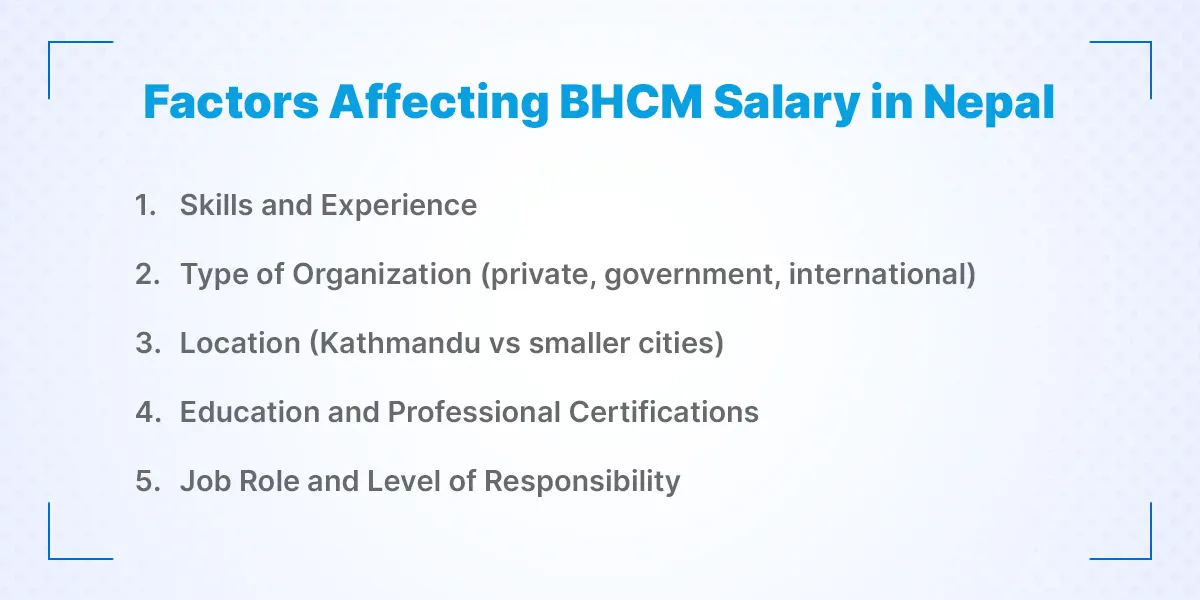
The salary you earn after BHCM in Nepal is not fixed. It depends on several factors, like your experience, the type of organization you work in, and the location. Education, certifications, and the specific role you take also play a big part. Understanding these factors can help you plan your career and increase your earnings.
1. Skills and Experience
Your skills and experience are the most important factors affecting your salary. Professionals with strong healthcare management skills, leadership abilities, and practical experience usually earn more. Experience helps you handle bigger responsibilities and more complex tasks in hospitals or clinics. Employers are willing to pay higher salaries to those who can deliver results and manage teams efficiently. Even entry-level staff can increase their pay by learning more skills on the job.
2. Type of Organization (Private, Government, International)
The type of organization you work for makes a big difference. Working in private hospitals or international healthcare organizations often leads to a better salary than working in the government. Larger organizations may also offer extra benefits like bonuses, insurance, or allowances. Choosing the right organization can significantly affect your overall earnings.
3. Location (Kathmandu vs Smaller Cities)
Salary also depends on where you work. Hospitals in Kathmandu or other major cities usually pay more than those in smaller towns. Big cities have higher living costs and more competitive healthcare sectors. Working in a city can give you a better salary and career growth opportunities.
4. Education and Professional Certifications
Additional education and certifications can boost your salary. Courses in hospital management, health administration, or specialized medical software make you more valuable. Certified professionals are often considered for higher-level roles and better pay. Continuous learning shows your commitment to growth in healthcare management.
5. Job Role and Level of Responsibility
Your specific job role and the responsibility it carries affect your pay. Senior managers or department heads earn more than entry-level administrative staff. Roles with more decision-making, team management, and operational control usually come with higher salaries. Choosing roles with greater responsibility can lead to faster career growth and better income.
Where to Find Jobs After Completing BHCM in Nepal?
After completing BHCM, you can find jobs on online job portals like Kumari Job, recruitment agencies, Facebook groups, or through networking. The key is to use multiple methods and stay consistent in your search. Here, we explain the most effective ways to find jobs after BHCM.
1. Online Job Portals
Online job portals are one of the easiest ways to find BHCM jobs. Websites like Kumari Job list thousands of healthcare jobs. You can apply directly through these portals and also set up alerts for new jobs. This method saves time and gives you access to many opportunities in one place.
2. Recruitment Agencies
Recruitment agencies in Nepal help match candidates with suitable jobs in hospitals, clinics, and healthcare organizations. They often have connections with private hospitals and international healthcare companies. Agencies can also guide you on the application process and salary expectations. Using agencies can increase your chances of landing a good job faster.
3. Direct Application
You can also apply directly to hospitals or clinics. Visit the HR department or the hospital website to check for job openings. Sending your resume and cover letter shows initiative and interest in the organization. This method is effective if you target specific hospitals or healthcare companies.
4. Networking
Networking is a powerful way to find job opportunities. Connect with alumni, professors, and healthcare professionals who can refer you to open positions. Attend seminars, workshops, or conferences to meet people in the industry. A strong network often leads to jobs that are not advertised publicly.
5. Facebook Groups
Facebook groups focused on healthcare jobs in Nepal are becoming popular. You can join groups where hospitals post openings for administrative and management roles. These groups also share tips, updates, and advice for job seekers. Checking them regularly can give you a head start in applying for new positions.
BHCM Scope in Nepal: Career Growth and Promotion Aspects
Completing BHCM opens up many opportunities in the healthcare sector in Nepal. With the right skills and experience, you can start in entry-level roles and gradually move into management positions. The healthcare industry is growing, so there is room for career advancement and salary growth. Here, we explain how your career can progress after BHCM.
Career Path from Entry-Level to Management
Most BHCM graduates start in entry-level positions like Patient Administration Officer, Front Office Officer, or Medical Records Manager. With experience, you can move to mid-level roles such as Healthcare Operations Supervisor or Department Coordinator. Over time, with proven performance, you can reach senior positions like Hospital Administrator, Clinic Manager, or Department Head. Following this path helps you gain more responsibility, higher pay, and leadership experience.
Promotion Opportunities and Salary Hikes
Promotions are usually based on experience, skills, and performance. Employees who show strong leadership, problem-solving, and operational management skills are more likely to get promoted. Each promotion often comes with a salary increase, better benefits, and greater responsibility. Continuous learning and certifications in healthcare management can also speed up career growth and salary hikes.
Specialized Roles and Leadership Positions
BHCM graduates can move into specialized and leadership roles in hospitals, clinics, and healthcare organizations. These include:
- Hospital Finance Manager – managing budgets and financial planning
- Human Resource Manager – handling recruitment and staff management
- Quality Assurance Officer – ensuring patient care standards
- Department Head / Senior Administrator – leading hospital departments and operations
Specialized skills, certifications, and strong experience make you eligible for top managerial roles, which provide both career satisfaction and a higher salary.
Is BHCM a Good Career Choice Based on Salary in Nepal?
BHCM, or Bachelor's in Health Care Management, is becoming a popular choice for students in Nepal. Many hospitals, clinics, and healthcare organizations are expanding, and they need professionals who understand both healthcare and management. This makes BHCM graduates highly valuable in the job market.
One common question is whether the salary and career growth make BHCM a good choice. The answer is yes, but it depends on your skills, experience, and career planning. Fresh graduates may start with modest salaries, but as they gain experience and take on more responsibilities, their pay increases significantly.
Here’s why BHCM is a good career in Nepal:
- Growing demand: Hospitals and healthcare centers are hiring more managers and administrators.
- Salary growth: Entry-level positions start around NPR 15,000 – 30,000, but senior roles can go up to NPR 1,50,000+.
- Career stability: Healthcare is a stable industry with long-term job opportunities.
- Leadership opportunities: BHCM graduates can move into management and senior roles with experience.
- Skill development: You learn both healthcare knowledge and management skills that are useful in many roles.
Overall, if you are interested in healthcare, administration, and leadership, BHCM is a smart choice. It provides a good balance of salary, career growth, and stability. By gaining experience, improving your skills, and possibly adding certifications, you can build a successful and rewarding career in the healthcare sector in Nepal.
Conclusion
BHCM (Bachelor in Health Care Management) is a promising career in Nepal for those who want to combine healthcare knowledge with management skills. The field offers growing job opportunities, stable employment, and a clear path for career advancement. Salaries start modestly for freshers but increase significantly with experience, skills, and responsibility, reaching senior-level roles of NPR 80,000 – 1,50,000+ per month. Key factors like location, organization type, certifications, and practical skills influence earning potential.
BHCM graduates can work in hospitals, clinics, or healthcare organizations in roles ranging from administrative officers to hospital managers. For students interested in leadership, problem-solving, and healthcare management, BHCM provides a rewarding career with financial growth and long-term stability in Nepal.
Frequently Asked Questions
Submit your comments

Get Our App On



SEO Training for Freshers in Nepal: Skills, Career & Job Opportunities
VIEW DETAILS
SEO Training vs. Self-Learning: Which Is Right for You?
VIEW DETAILS
How to Choose Between Two Job Offers
VIEW DETAILS
Digital Marketing Training Interview Questions and Answers for Freshers
VIEW DETAILS


Loading Comments...