



You finally spot a great job opening at WWF Nepal, but the long list of requirements leaves you completely stuck. Most candidates spend days fixing their CVs, only to get rejected because they missed one tiny rule in the instructions.
Landing a job at an INGO takes more than just good qualifications. Their hiring process is incredibly strict. If you ignore their specific format or fail to match the Terms of Reference (ToR), your application goes straight to the trash.
This guide will help you avoid those common mistakes. We will walk you through the exact steps to apply for a WWF Nepal vacancy. From reading the eligibility criteria to sending your final documents, you will know exactly what to do to get selected.
In this blog
What is a WWF Nepal, and What Does it do?
WWF Nepal is the national office of the World Wide Fund for Nature, the world’s largest independent conservation organisation. Formally established in Nepal in 1993, its main mission is to stop the degradation of the country's natural environment. The organisation works to build a future where the people of Nepal can live in perfect harmony with nature and wildlife.
While many people know WWF for its iconic panda logo, its work in Nepal goes far beyond just protecting animals. The organisation partners closely with the Government of Nepal and local communities to manage vast landscapes, from the snowy Himalayas to the tropical Terai plains. They use a "landscape-level" approach, meaning they look at how entire ecosystems, including the humans living in them, can survive and thrive together.
Key areas of WWF Nepal’s work include:
- Wildlife Conservation: Protecting "focal species" like the Bengal Tiger, Greater One-horned Rhino, Snow Leopard, and Red Panda. They use high-tech tools like satellite collaring and camera traps to monitor populations.
- Climate & Energy: Helping local communities adapt to climate change and promoting renewable energy to reduce pollution.
- Forest & Freshwater Management: Restoring degraded forests and protecting Nepal’s water sources (like the Koshi River basin) to ensure clean water for both nature and people.
- Curbing Wildlife Crime: Working with law enforcement and local youth groups to stop poaching and illegal trade of animal parts.
- Sustainable Livelihoods: Supporting community-based tourism and green enterprises so that locals can earn a living without harming the environment.
Types of Vacancies at WWF Nepal
Working at WWF Nepal is a dream for many who love nature and wildlife. Because their work is so broad, they offer many different kinds of roles for people with various skills. Whether you are a student looking for experience or an expert in your field, there is usually a spot for you. Understanding these categories will help you pick the right one for your career goals.
1. Full-Time Professional Staff
These are permanent or long-term roles for people who want a stable career in conservation. You will find jobs like Project Officers, Finance Managers, and Field Coordinators in this category. These positions usually require a specific degree and a few years of working experience. As a full-time staff member, you get a good monthly salary and full employee benefits.
2. Short-Term Consultancy
WWF Nepal often hires experts for specific projects that only last a few months. For example, they might need a researcher to study a specific animal or a photographer to document a forest. These are not permanent jobs, and you usually work as an independent contractor. You must be very skilled in a specific area and be able to work without much supervision.
3. Internships and Volunteering
This is the best entry point for students and fresh graduates who want to learn. Interns help the senior staff with daily tasks while gaining hands-on experience in the NGO world. Most internships last between three and six months and sometimes offer a small stipend for travel. It is a great way to build your CV and see if a conservation career is right for you.
4. Roster-Based Positions
Sometimes, WWF Nepal keeps a "roster" or a list of qualified people they can call whenever a need arises. You apply to be on this list even if there is no immediate job opening. When a new project starts, they look at this list first to find the right person. Being on the roster means you are already pre-approved and have a higher chance of getting hired quickly.
How to Apply for WWF Nepal Vacancy: Step-by-Step
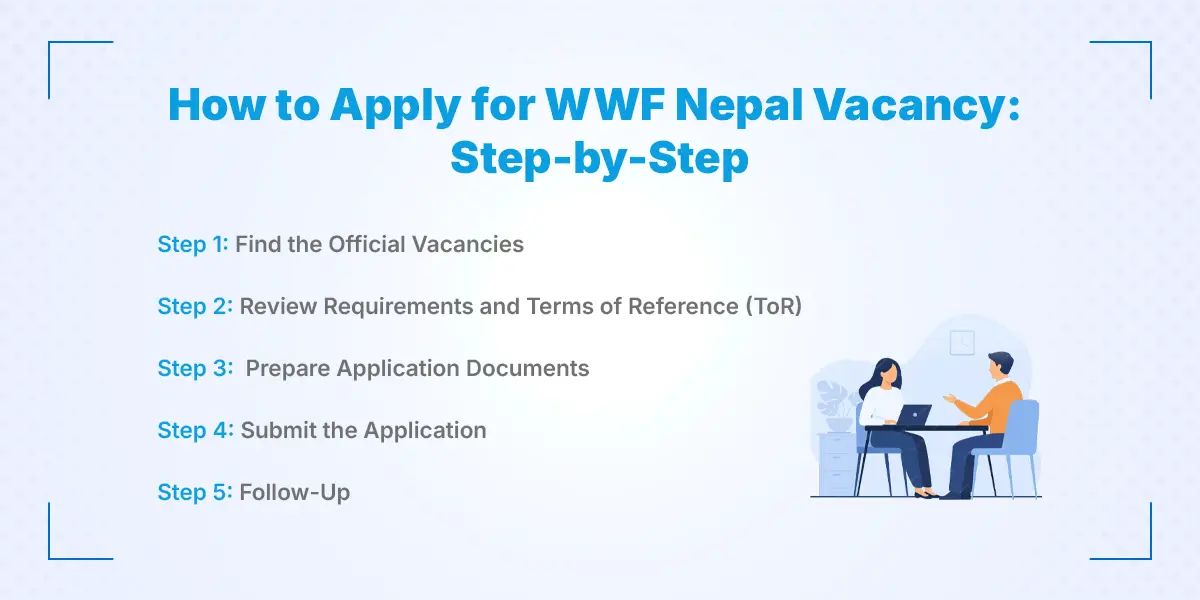
To apply for a WWF Nepal vacancy, you must find the job on their official careers page, prepare your CV and cover letter according to the specific job rules, and submit them through their online portal or email. This process ensures your application reaches the right team and follows the official NGO standards. Following these steps carefully is the only way to make sure your profile is actually seen by the hiring managers.
1. Find the Official Vacancies
The first thing you need to do is look for real job openings so you don't waste time on old or fake posts. You should regularly check the WWF Nepal Careers page, where they list all their current full-time jobs. Sometimes they also post on popular Nepali job sites like Kumari Job to reach more people. It is a good habit to follow their social media pages as well, because they often share new openings there immediately. By checking these official places, you can be sure the vacancy is active and that you are getting the right information.
2. Review Requirements and Terms of Reference (ToR)
Before you start writing your application, you must read the Terms of Reference (ToR) very carefully. This document is like a map that tells you every single duty you will have and exactly what skills the organisation is looking for. It lists the education level you need, how many years of experience are mandatory, and the specific technical skills required for the role. Many people fail because they apply for jobs they aren't qualified for, so checking the ToR saves you a lot of effort. If you don't match the "must-have" criteria, it is better to wait for a different role that fits your background.
3. Prepare Application Documents
Once you know you are a good fit, you need to get your paperwork ready in the way WWF Nepal prefers. Usually, you will need a fresh CV (Resume) and a Cover Letter that explains why you are the best person for this specific conservation job. Make sure your CV highlights your work in NGOs or your passion for the environment, as these are very important to them. Some roles might also ask you to fill out a specific WWF application form or provide copies of your citizenship and certificates. Always save these files in PDF format so the layout stays perfect when the HR team opens them.
4. Submit the Application
Now it is time to send your application, but you must follow the instructions in the job post exactly. Most WWF Nepal jobs now use an online portal like SmartRecruiters, where you click "Apply" and upload your files directly. However, for some consultancy or project roles, they might ask you to email your documents to a specific address like [email protected]. Always double-check the "Subject Line" they ask for in the vacancy notice, as this helps their system sort your email correctly. Never miss the deadline; if the post says 5:00 PM, an application sent at 5:01 PM will likely be ignored.
5. Follow-Up
After you submit everything, the hardest part is waiting for a response. WWF Nepal usually states that "only shortlisted candidates will be contacted," which means if you don't hear back in a few weeks, you likely didn't make the cut this time. You should avoid calling their office to ask about your status, as they strictly mention that telephone inquiries are not allowed. Instead, keep an eye on your email (including the spam folder) for any interview invites or requests for more info. If you aren't selected, don't be discouraged; keep improving your skills and apply again when a better match comes up.
Eligibility Criteria for WWF Nepal Vacancy
To get hired at WWF Nepal, you generally need a degree in a relevant field like Environmental Science or Forestry, at least 2 years of work experience for most roles, and a deep passion for nature conservation. While each job has its own specific rules, being a Nepali citizen with strong communication skills is almost always required. Meeting these basic bars is the first step to making sure the hiring team reviews your application.
1. Education and Knowledge
Most positions at WWF Nepal require at least a Bachelor’s or Master’s degree in fields like Environmental Science, Forestry, or Natural Resource Management. If you are applying for an office role, a degree in Management or Sociology might also work, depending on the job. They look for candidates who understand Nepal’s geography and the environmental challenges our country faces. Having specialised knowledge in things like wildlife research or climate change will give you a big advantage.
2. Work Experience
For most professional roles, WWF Nepal looks for candidates who have at least 2 to 3 years of experience in the NGO or INGO sector. If you are applying for a senior position, like a Project Manager, you might need 5 to 10 years of solid experience in your field. They value people who have worked in "field-based" roles, meaning you have experience travelling to remote parts of Nepal to work with local communities. However, they occasionally offer entry-level positions or internships for fresh graduates just starting out.
3. Technical and Soft Skills
You need to be good with computers, especially basic tools like Microsoft Word, Excel, and PowerPoint, for writing reports and tracking data. Since WWF is an international group, you must be able to speak and write clearly in both English and Nepali. They also look for "soft skills" like being a good team player and being able to handle pressure when deadlines are tight. If you have technical skills like using GIS (mapping software) or data analysis tools, it will make your application stand out even more.
4. Cultural and Physical Readiness
Working for an organisation like WWF often means you won't just be sitting in an office in Kathmandu all day. You must be willing to travel to project sites in the mountains or the Terai plains, sometimes staying in basic conditions for several days. They highly value candidates who respect diverse cultures and can communicate well with people from different ethnic groups. Being physically fit and mentally ready for field travel is a must for almost all conservation and project-based roles.
Where to Find WWF Nepal Vacancy in Nepal?
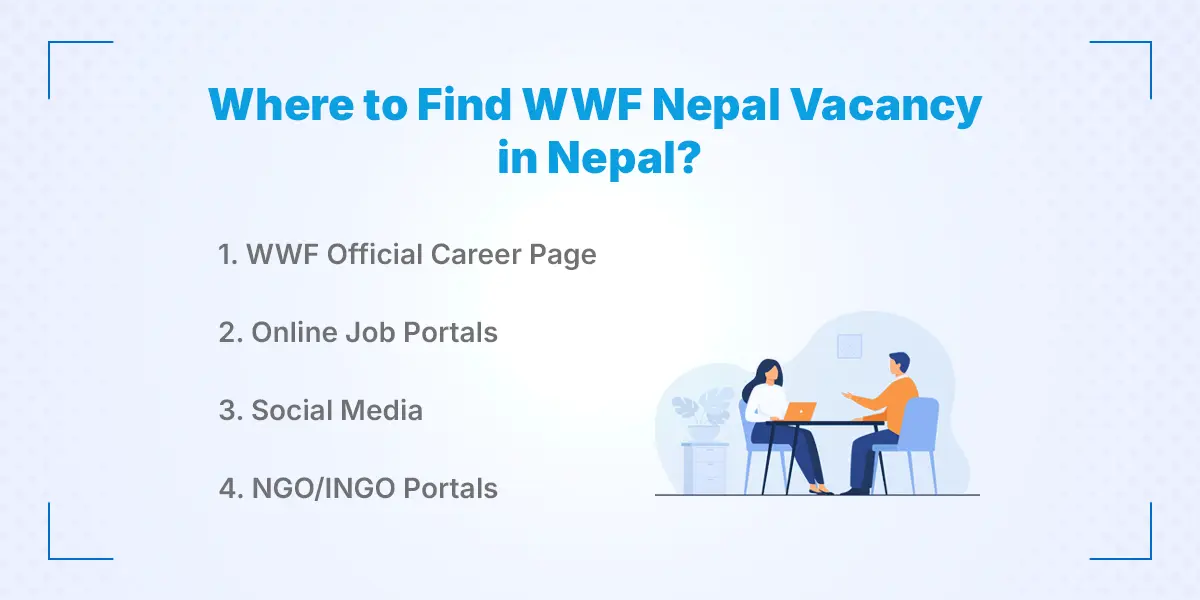
To find the latest WWF Nepal vacancies, you should check their official careers page, use popular Nepali job portals, follow their social media accounts, or browse dedicated NGO vacancy sites. These four sources are the most reliable ways to get real-time updates on new job openings. By keeping an eye on these platforms, you can make sure you never miss a deadline for a position that matches your skills.
1. WWF Official Career Page
The best and most reliable place to find any job opening is the official WWF Nepal website. They have a "Get Involved" section that lists all current vacancies, scholarships, and calls for proposals. For full-time jobs, they usually redirect you to an official portal like SmartRecruiters, where you can see the full job details. Checking here first ensures that you are seeing the most accurate and up-to-date information directly from the source. It is the only place where you can be 100% sure the job post is real and active.
2. Online Job Portals
WWF Nepal often posts its vacancies on major Nepali job websites to reach more people across the country. Websites like Kumari Job are very popular choices where you can find detailed descriptions for roles like Project Officers or Finance Managers. These portals allow you to filter jobs by category, so you can easily find "NGO/INGO" positions. Many of these sites also let you set up email alerts so you get a message the moment a new WWF job is posted. Using these portals is a great way to compare different NGO roles in one place.
3. Social Media
If you use Facebook, LinkedIn, or Twitter (X), following WWF Nepal is a smart move for your career. They frequently share new job announcements, internship opportunities, and even volunteer calls on their official social media pages. This is usually the fastest way to hear about an opening because social media posts go live instantly. Sometimes they even post short videos or graphics that explain what the role is about, which can be very helpful. It also gives you a chance to see the kind of work they do daily, helping you prepare for an interview.
4. NGO/INGO Portals
Since WWF is a major international organisation, its jobs are often listed on specialised portals that only focus on development work. Sites like the Association of International NGOs (AIN) vacancy page or dedicated NGO job boards are excellent resources for serious applicants. These platforms are designed for professionals looking for careers in conservation, human rights, and social work. Because these sites are specific to the NGO/INGO jobs, the job descriptions are often very detailed and include the full Terms of Reference (ToR). Checking these portals regularly helps you stay connected with the wider NGO community in Nepal.
Tips to Get Selected for WWF Nepal Vacancy
Getting a job at WWF Nepal is highly competitive because many people want to work there. To beat the competition, you need to do more than just send a basic application. The hiring team looks for candidates who clearly understand the job and truly care about nature. Here are some simple and proven tips to help your application stand out and get selected.
1. Read the Job Details Carefully
Before you do anything, read the whole job description from top to bottom. WWF Nepal always lists exact skills and rules you must follow to apply. If you miss a small detail, they might reject your application right away. Make sure you actually have the exact education and experience they are asking for before sending anything.
2. Match Your CV to the Job
Never use the exact same CV for every job you apply for. You need to change your CV to highlight the skills WWF Nepal wants for that specific role. If the job is about saving forests, put your forest-related experience at the very top. Keep the design clean, use basic fonts, and always save it as a PDF so it is easy to read.
3. Write a Strong Cover Letter
Your cover letter is your chance to talk directly to the hiring manager. Do not just copy what is already written in your CV. Instead, explain why you love nature and why this specific WWF job excites you. Keep the letter short, clear, and focused on how your skills can help their team succeed.
4. Show Your Passion for Nature
WWF Nepal wants employees who truly care about animals and the environment. If you have done any volunteer work for nature or local clubs, mention it clearly. Talk about your local community work or any green projects you took part in during your studies. Showing real interest in their mission makes you much more memorable than other candidates who just want a regular job.
Career Benefits & Growth Working at WWF Nepal
Working at WWF Nepal is not just a regular job; it is a career where you can make a real difference. They care about their staff just as much as they care about the environment. If you get selected, you will enjoy a friendly office culture and many great rewards. Here is what you can expect when you join their team:
- Good Salary and Benefits: As a top international NGO in Nepal, WWF pays very well. You also get nice extras like travel allowances, health insurance, and secure retirement funds.
- Learning and Growth: You will never stop learning here. WWF regularly sends its staff to different training programs and workshops. This helps you build new skills and move up to higher roles.
- Work-Life Balance: They understand that you have a life outside the office. You get flexible working hours and plenty of paid holidays to rest and spend time with family.
- Travel Opportunities: You will not just sit behind a desk all year. You will travel to beautiful places like Chitwan National Park or the high, snowy mountains to see the real impact of your work.
- Great Team Culture: You will work with smart, passionate people from all over the country. The team is very supportive, and everyone helps each other succeed.
Building a career here means your daily hard work directly helps save Nepal’s precious forests and wildlife. It is a proud feeling that very few jobs can offer. If you want a secure, happy, and meaningful future, this is a perfect place to grow.
Conclusion
Applying for a WWF Nepal vacancy need not be a scary process. The real secret to getting hired is simply paying attention to the small details. Because they receive hundreds of applications, the hiring team only looks at the ones that follow every single rule.
To win the job, you must match your skills exactly to what they ask for in the job post. Never send a basic, copied CV. Take the time to write a real cover letter that shows your true passion for Nepal's wildlife and communities. Keep checking the official platforms, prepare your papers early, and do not rush your application. If you follow these exact steps, you will easily stand out from the crowd and land your dream job in conservation.
Frequently Asked Questions
Submit your comments

Get Our App On



SEO Training for Freshers in Nepal: Skills, Career & Job Opportunities
VIEW DETAILS
SEO Training vs. Self-Learning: Which Is Right for You?
VIEW DETAILS
How to Choose Between Two Job Offers
VIEW DETAILS
Digital Marketing Training Interview Questions and Answers for Freshers
VIEW DETAILS


Loading Comments...