


"How do you open a company in Nepal?" What a great question to ask!
Maybe you have a great business idea, or perhaps you're finally ready to turn your side hustle into something official.
But then comes more questions. Should you register a company or a sole proprietorship? How much money do you need? What documents should you prepare? Which government offices do you need to visit?
It can feel like there's a lot to figure out.
Howsoever, opening a company in Nepal is much simpler than most people think. This guide covers everything you need to know to open a company in Nepal, from planning your business to getting it up and running.
In this blog
Types of Business Structures in Nepal
There are five main business structures in Nepal: Sole Proprietorship, Partnership Firm, Private Limited Company, Public Limited Company, and Non-Profit Company. Each structure has different rules for ownership, liability, registration, and business operations. Understanding these options will help you choose the one that best fits your business goals.
1. Sole Proprietorship
A Sole Proprietorship is owned and managed by one person. It is the simplest business structure and is suitable for small shops, freelancers, and local businesses. However, the owner is personally responsible for all business debts and liabilities.
2. Partnership Firm
A Partnership Firm is owned by two or more people who agree to run a business together. Partners share profits, responsibilities, and losses according to their partnership agreement. It is a suitable option for businesses with multiple founders.
3. Private Limited Company
A Private Limited Company is the most popular choice for startups and growing businesses. It is a separate legal entity that offers limited liability protection and can have between 1 and 101 shareholders.
4. Public Limited Company
A Public Limited Company is designed for large businesses that want to raise capital from the public. It requires at least seven shareholders and must comply with stricter legal and financial regulations.
5. Non-Profit Company
A Non-Profit Company is established for social, educational, charitable, cultural, or public welfare purposes. It cannot distribute profits to its members and must use its income to achieve its stated objectives.
What Should You Do Before Opening a Company in Nepal?: Pre-Planning
Before opening a company in Nepal, you should decide what business you want to start, choose the right business structure, estimate your budget, prepare your documents, and check if your business needs any special licenses. Taking care of these things before registration makes the process faster and helps you avoid unnecessary delays. Here's what you should do before you begin.
1. Decide What Business You Want to Start
Clearly define the products or services your business will offer. A clear business idea will help you choose the right company objectives and plan your operations more effectively.
2. Choose the Right Business Structure
Decide whether a Sole Proprietorship, Partnership Firm, Private Limited Company, Public Limited Company, or Non-Profit Company best suits your business. Your choice will affect ownership, liability, and future growth.
3. Prepare Your Startup Budget
Estimate how much money you'll need for registration, office space, equipment, marketing, licenses, and your initial operating expenses. A realistic budget helps you start your business with confidence.
Need Help Managing Your Growing Business?
Focus on growing your business while Kumari Job takes care of HR, payroll, compliance, and employee management through professional HR outsourcing services.
4. Choose a Unique Business Name
Select a business name that reflects your brand and prepare two or three backup options. This will save time if your preferred name is unavailable during registration.
5. Decide Who Will Own the Company
If you're starting the business with partners, decide each person's ownership percentage, investment, and responsibilities before preparing the registration documents.
6. Arrange a Registered Office Address
Every company must have a registered office address. Whether you work from home or rent an office, make sure the address is accurate and can be verified.
7. Check If Your Business Needs Additional Licenses
Some businesses require approvals from government authorities before they can operate. For example, businesses in banking, education, tourism, healthcare, food, and telecommunications may need additional licenses besides company registration.
How Do You Register a Company in Nepal?
To register a company in Nepal, you need to reserve your company name, prepare and upload the required documents through the CAMIS portal, pay the government registration fee, and download your registration certificate. Most of the process is completed online through the Office of Company Registrar (OCR). Follow these simple steps to complete your company registration.
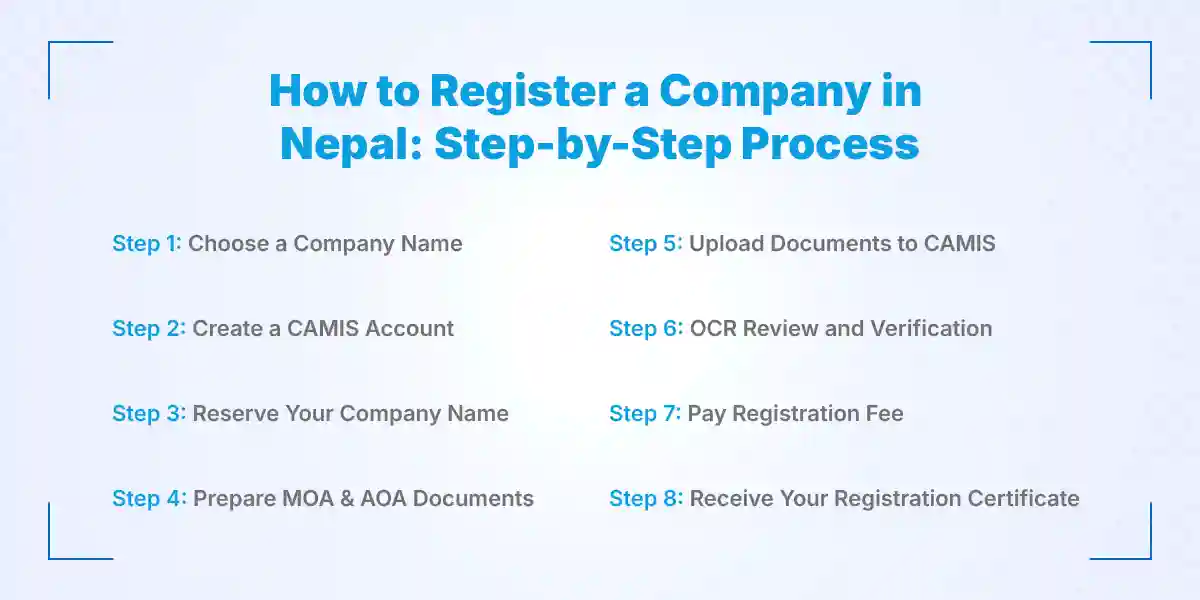
Step 1. Choose and Reserve Your Company Name
Choose a unique business name and submit it through the CAMIS portal in both English and Nepali. If your name is available and follows the OCR guidelines, it will usually be approved within a few working days.
Step 2. Create Your CAMIS Account
Create a user account on the CAMIS portal using your citizenship details, email address, and mobile number. Once your account is verified, you can begin your company registration application.
Step 3. Prepare the Required Documents
Prepare your Memorandum of Association (MoA), Articles of Association (AoA), citizenship copies, passport-sized photos, office address details, and any other required documents. Make sure all documents are complete and signed before uploading them.
Step 4. Upload Documents and Submit Your Application
Log in to CAMIS, complete the online application form, and upload all required documents. Review every detail carefully before submitting your application to the Office of Company Registrar.
Step 5. Wait for OCR Review
The OCR reviews your application to verify your company name, business objectives, shareholder details, and supporting documents. If any corrections are needed, you'll receive comments through the CAMIS portal.
Step 6. Pay the Government Registration Fee
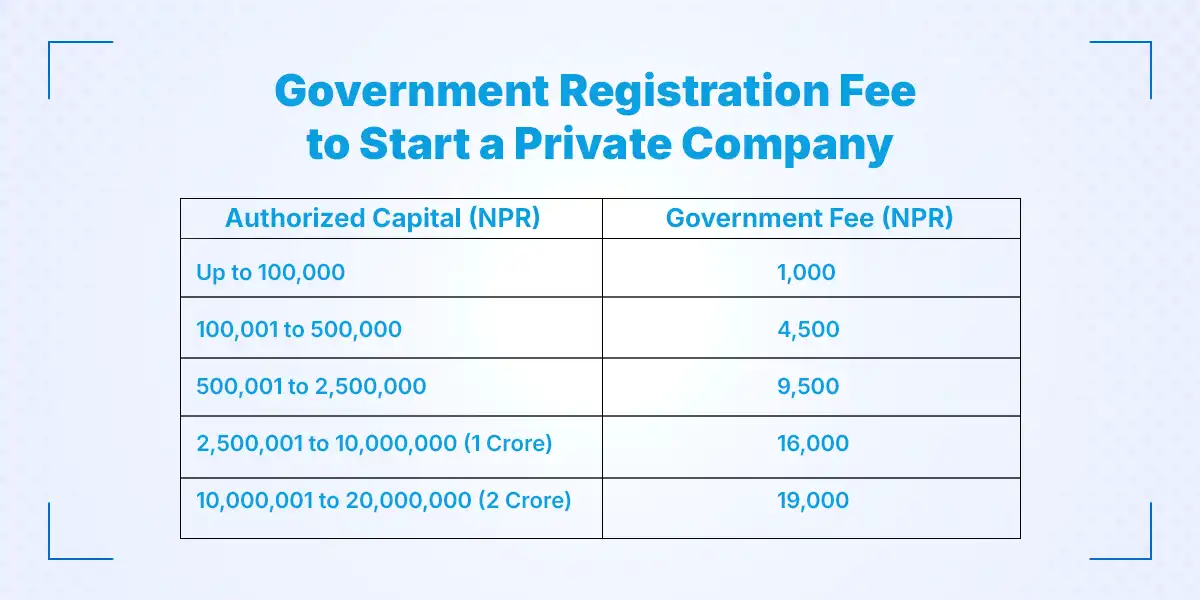
Once your application is approved, you'll receive a payment notice. The registration fee depends on your company's authorized capital and can be paid online through the CAMIS portal.
Step 7. Download Your Company Registration Certificate
After your payment is verified, the Office of Company Registrar issues your digital Company Registration Certificate with a QR code. You can download the certificate directly from the CAMIS portal and begin the remaining setup process for your business.
What Should You Do After Opening a Company in Nepal?
After opening your company, you need to complete a few important steps before you can start operating legally. These include getting a PAN, opening a business bank account, registering with your local Ward office, and obtaining any licenses required for your industry. Completing these tasks will help your business stay compliant and ready for day-to-day operations.
1. Get a PAN (Permanent Account Number)
Apply for a PAN through the Inland Revenue Department (IRD). Every registered company needs a PAN to pay taxes, issue invoices, and carry out financial transactions.
2. Register for VAT (If Required)
VAT registration is mandatory if your business crosses the government's turnover threshold or falls under a category where VAT registration is required. Simply log into the Inland Revenue Department (IRD) Portal. Fill out the VAT registration form, declare your business activities, and upload the necessary documents.
3. Register at Your Local Ward Office
Register your business at the local Ward office where your company is located. Depending on your municipality, you may also need to pay local business taxes and complete other local formalities.
4. Open a Corporate Bank Account
Open a bank account in your company's name using your Company Registration Certificate, PAN, and other required documents. Keeping your business finances separate from your personal finances makes accounting and tax filing much easier.
Planning to Hire Employees?
Simplify employee salaries, payroll processing, statutory deductions, and compliance with Kumari Job's Payroll Management Service.
5. Obtain Any Required Business Licenses
Some industries require additional approvals before they can operate. For example, businesses in tourism, education, healthcare, food, banking, and telecommunications must obtain licenses from the relevant government authorities.
6. Appoint an Auditor
Under the Companies Act, every company must appoint a licensed auditor. The auditor is responsible for reviewing your financial records and preparing your annual audit report.
As your business grows, managing employees, payroll, attendance, and compliance also becomes important. Businesses can simplify these tasks with HRMS software or HR outsourcing services.
7. Set Up Your Business Operations
Once the legal work is complete, you're ready to start running your business. Set up your accounting system, hire employees if needed, and put processes in place to manage payroll, attendance, and compliance from the beginning.
How Much Does It Cost to Open a Company in Nepal?
Opening a company in Nepal usually costs anywhere from NPR 1,000 (government registration fee) to several thousand rupees, depending on your business type, authorized capital, and whether you hire a professional to help with the registration. Besides the government fee, you may also need to budget for office setup, business licenses, company stamps, and other startup expenses. Here's a breakdown of the main costs you should expect.
1. Government Registration Fee
The government registration fee is the primary mandatory cost when registering a company. For a Private Limited Company, the fee starts at NPR 1,000 and increases as your authorized capital increases. Public Limited Companies follow a separate fee schedule, while Non-Profit Companies are charged according to the applicable legal provisions published by the Office of Company Registrar (OCR).
2. Professional Service Fees (Optional)
If you hire a lawyer, consultant, or registration service, you'll also need to pay their service charges. These professionals prepare your MoA, AoA, and other legal documents, helping you avoid mistakes during registration.
3. Office and Business Setup Costs
Depending on your business, you may need to budget for office rent, furniture, equipment, internet, branding, company stamps, and other basic operating expenses before you begin.
4. Business Licenses and Permits
Some industries require additional licenses before they can operate legally. The cost depends on your business type and the government authority issuing the permit.
5. Trademark Registration (Optional)
If you want to protect your business name or logo, you can apply for trademark registration. While optional, it's a good investment if you plan to build a long-term brand.
Common Mistakes to Avoid When Starting a Business in Nepal
When starting a business in Nepal, even small mistakes can lead to delays, extra costs, or legal issues. Many of these problems are easy to avoid if you know what to look out for. Here are some of the most common mistakes new business owners make.
- Choosing business objectives that are too broad or unrelated to your actual activities.
- Setting your authorized capital higher than you currently need.
- Applying with only one company name instead of keeping alternatives ready.
- Submitting incomplete forms or unsigned documents through CAMIS.
- Registering a company with an incorrect or unverifiable office address.
- Starting operations without obtaining the required industry licenses or permits.
- Ignoring annual compliance requirements after the company is registered.
Do You Need a Lawyer to Open a Company in Nepal?
No, you do not need a lawyer to open a company in Nepal. You can complete the company registration process yourself through the CAMIS portal if you prepare the required documents correctly and follow the official guidelines. However, many entrepreneurs choose to hire a lawyer or registration consultant to prepare legal documents such as the MoA and AoA, avoid mistakes, and save time.
Conclusion
Opening a company in Nepal is easier today than ever before. Once you have a clear business idea, choose the right business structure, prepare the required documents, and complete the registration process, you're ready to turn your idea into a real business.
Build your business plan, choose your company name, and begin your journey with confidence. And when your business starts growing, Kumari Job is here to support you with full HR solutions, including recruitment, HR consulting, payroll management, HR outsourcing, and HR management software to help you build and manage a successful team.
Best of luck on your entrepreneurial journey!
Frequently Asked Questions
Submit your comments

Get Our App On



What Does a Digital Marketing Course Syllabus in Nepal Cover?
VIEW DETAILS
How to Find Lab Assistant Jobs in Nepal?
VIEW DETAILS
How to Find One Cinema Vacancy in Nepal
VIEW DETAILS
How to Make a Police Report (Police Clearance Certificate) in Nepal?
VIEW DETAILS


Loading Comments...