


Dreaming of working in the skies instead of staring at a desk clock that moves slower than Kathmandu traffic? If aviation has been calling your name, maybe every time a helicopter flies overhead, then you’ve probably searched for opportunities at Simrik Airlines. However, the real question is this: how to apply so that you do not make mistakes that silently place your CV into the rejection pile? The aviation industry is not only about love but also about accuracy, timing, and which runway to use when taking off.
In this blog, we’ll walk you through everything you need to know about Simrik Airlines vacancy opportunities, from the latest job openings and eligibility criteria to the required documents, salary insights, and the exact step-by-step application process. Think of this as your pre-flight checklist before you hit “submit.” By the end, you’ll not only know how to apply but how to apply smartly for an airlines job in Nepal, the kind of smart that recruiters actually notice in the competitive market.
In this blog
Latest Simrik Airlines Vacancy in Nepal
If you’re actively searching for a Simrik Airlines vacancy, you’re probably refreshing career pages more often than your social media feed. As of now, there are no officially announced openings at Simrik Airlines. Aviation hiring can be a bit like mountain weather in Nepal, calm today, suddenly active tomorrow. The smart move? Stay alert and check trusted platforms like Kumari Job for the latest updates when new vacancies are released.
1. Full-Time, Contract & Internship Roles
In cases where Simrik Air is advertising a vacancy, the advertisement typically gives various categories of vacancies depending on the needs of the operations. Pilots, engineers, and core operations personnel are most likely to be employed full-time. There can arise opportunities in contract positions, either on a project or seasonal basis, particularly in helicopter operations. While not as common as full-time roles, securing an internship in Nepal within the aviation sector can be transformative for management or aviation students. These short-term placements allow you to move from theory to practice, offering vital exposure to high-altitude rescue logistics, fleet maintenance, and ground support operations.
2. Kathmandu Airport & Base Location Vacancies
Most Simrik Airlines vacancy announcements are linked to Tribhuvan International Airport or operational bases within Nepal. Aviation isn’t exactly a “work from home” industry, helicopters need hangars, not home Wi-Fi. Technical staff, ground operations teams, and flight crew are typically stationed near airport facilities. Occasionally, administrative roles may be office-based. Always check the job location carefully before applying, especially if relocation is a factor for you.
Positions Commonly Available at Simrik Airlines
Once a Simrik Airlines vacancy arises, it is not a single job that it is offering, but rather a whole system of jobs that ensure that the aircraft flies safely and in a smooth way. A helicopter company such as Simrik is an airline that is like a well-drilled orchestra. Pilots may be the ones in the limelight, yet there is a team of professionals who make each takeoff perfect. From the cockpit up to the corporate office, every position has its role in ensuring steady operations in the challenging grounds of Nepal.
1. Flight Operations & Pilot Jobs
Here, either aviation dreams become airborne or remain on the ground. The flight operations positions are usually the helicopter pilots, co-pilots, and operations coordinators. The pilots are required to be DGCA-licensed and meet flight-hour requirements, particularly when flying in the mountains of Nepal. It is not only flying but also dealing with unforeseen weather conditions and narrow landing strips with composed nerves. In the meantime, operations coordinators make flight schedules, safety checks, and the flow of communication is clockwork. Much responsibility, much accuracy; there is no autopilot thinking here.
2. Ground Staff & Customer Service Roles
When helicopters control the sky, ground staff control the ground. These are the passenger handling, ticketing, coordination, and airport support services. They usually become the first and the last contact of the travelers, and this implies that communication skills are as important as technical knowledge. In the aviation industry, a single miscommunication may cause turbulence in the air, which is not needed and can be prevented. Provided that you are well organized, a people person, and agile, these positions can be a great way to find entry-level jobs in Nepal and launch a successful airline career.
3. Technical & Helicopter Maintenance Vacancies
Behind every smooth landing is a team of engineers who probably haven’t slept much. Technical roles include Aircraft Maintenance Engineers (AME), avionics technicians, and mechanical specialists. These professionals ensure helicopters meet safety and airworthiness standards at all times. Certifications approved by aviation authorities are usually mandatory. It’s detailed, disciplined work, the kind where a loose bolt isn’t “small,” it’s critical. Precision isn’t optional here; it’s survival.
4. Safety, Security & Compliance Positions
In aviation, safety isn’t a department, it’s a culture. Still, specific roles focus entirely on maintaining safety standards, regulatory compliance, and security procedures. These professionals ensure operations follow national aviation regulations and internal safety policies. From risk assessments to audit preparation, their work often goes unnoticed and that’s actually a good thing. When safety teams do their job well, nothing dramatic happens. And in aviation, “nothing dramatic” is the best headline.
5. Corporate, HR & Administrative Roles
All vacancies at Simrik Air do not imply wearing a headset or a toolkit. The jobs in corporations are finance officers, human resource staff, purchasing personnel, and office executives. These teams handle recruitment, payroll, budgeting, and operational planning. Consider them the engine room in the background, which is not seen by the passengers but is necessary to move. Aviation is a business that seems glamorous on the surface, but it is all spreadsheets, strategy, and sound management decisions on the inside. If you have a background in business or finance, pursuing administration jobs in Nepal within the aviation sector offers a stable and rewarding career path that drives the industry forward.
What Are the Eligibility Criteria for Simrik Airlines Vacancy?
The eligibility criteria for a Simrik Airlines vacancy depend on the position, but generally include specific educational qualifications, relevant experience, required licenses (for technical roles), and medical fitness clearance. In aviation, requirements are not “nice to have” — they are mandatory checklists. Airlines don’t gamble with standards, especially in a country where helicopters often navigate mountains instead of highways. So before applying, it’s important to understand whether you truly meet the baseline criteria.
1. Educational Qualifications Required
The direct answer: Yes, educational qualifications matter, and they vary by role. For pilot positions, a commercial pilot license (CPL) with DGCA approval is mandatory, along with required flight hours. Technical roles require certified aviation engineering qualifications, often with specific aircraft type training. For administrative or corporate roles, a bachelor’s degree in business, finance, or management is usually expected. Ground staff positions may require at least a +2 or a bachelor’s degree, depending on responsibility. Aviation isn’t always about fancy degrees, but the right certification? That’s non-negotiable.
2. Age Requirements (If Applicable)
The short answer: Age limits may apply, especially for entry-level or trainee roles. Some operational roles have minimum age requirements, typically 18 or 21 years, depending on responsibility. For pilot or technical roles, the focus is more on licensing and fitness rather than strict upper age limits. However, medical fitness standards must still be met regardless of age. Think of it this way, aviation cares less about how many birthdays you’ve had and more about whether you’re physically and mentally fit for the skies.
3. Experience vs Fresher Eligibility
The honest answer: It depends on the department. Pilot and maintenance roles usually demand prior experience and verified flight or technical hours. Aviation is not exactly a “learn as you go” industry when safety is involved. However, ground staff, customer service, and some administrative roles may welcome freshers, especially those with strong communication and organizational skills. Internship opportunities, when available, can also serve as entry points. Experience helps, but the right attitude and training can sometimes open the first door.
4. Medical Fitness & Background Verification
The clear answer: Yes, medical fitness and background checks are compulsory for most operational roles. Pilots must hold valid aviation medical certificates approved by authorities. Technical and safety staff may also undergo medical examinations depending on job nature. Additionally, background verification, including citizenship documentation and sometimes police clearance, is part of the process. Aviation operates on trust and safety; there’s no room for uncertainty. Before someone is trusted with passengers or aircraft, the airline needs complete confidence, no shortcuts, no exceptions.
Salary and Benefits at Simrik Airlines
Let’s be honest: passion is beautiful, but salary still pays the bills. The compensation for a Simrik Air vacancy varies depending on the role, experience level, and technical qualifications required. Aviation salaries aren’t random numbers; they reflect responsibility, risk, and expertise. After all, when your workplace is thousands of feet above the ground, or you are managing life-saving rescue logistics, earning a good salary in Nepal is a standard the industry respects.
1. Expected Salary Range by Position
Departmental salaries vary widely. Operational risk and specialized training often make pilots and licensed Aircraft Maintenance Engineers have higher packages. The work of ground staff and administration is typically in the middle range of salaries, with consideration of experience. Starting with lower-level jobs does not necessarily have to be a dull beginning, and a steady rise can be achieved over time. In the airline industry, your salary tends to increase with your qualifications and the hours you have flown; competency improvements and understanding the average pilot salary in Nepal can help you set realistic long-term financial goals as you climb the career ladder.
2. Allowances, Travel Benefits & Insurance
Beyond the base salary, benefits can add meaningful value. Operational staff may receive allowances tied to flight hours, remote operations, or risk-based duties. Some roles may include travel-related perks, especially within the airline’s network. Insurance coverage, particularly for technical and flight crew, is commonly part of the package. These benefits act like the safety harness of employment, not always visible, but reassuring when you need them.
3. Career Growth & Training Opportunities
Growth in aviation is real, but earned. Employees often gain access to skill enhancement programs, safety training, and certification upgrades. For pilots and engineers, additional type ratings or aircraft training can significantly boost career prospects. Internal promotions may be possible for consistent performers. Aviation careers don’t usually skyrocket overnight, they climb steadily, like a well-calculated ascent rather than a reckless takeoff.
How to Apply for Simrik Airlines Vacancy? Step-by-Step
To apply for a Simrik Airlines vacancy, you must follow a structured process, aviation doesn’t appreciate shortcuts. Think of it like a pre-flight checklist: miss one small detail, and your application might never leave the ground. From verifying official announcements to preparing documents and facing interviews, every step matters. The good news? If you stay organized and proactive, the process is straightforward and manageable.
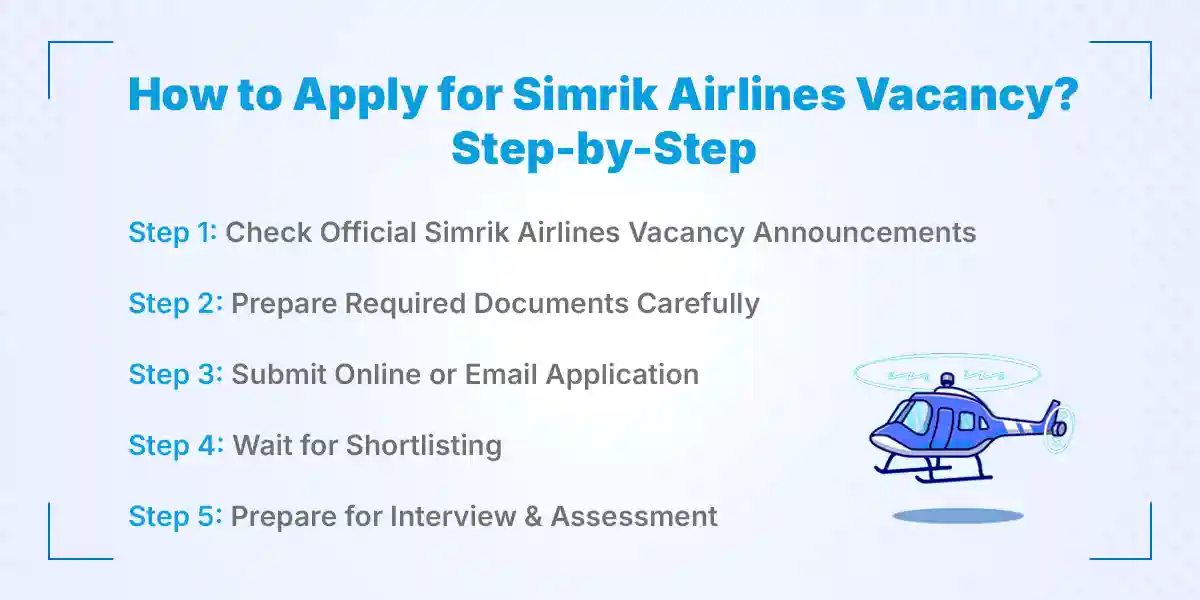
Step 1: Check Official Simrik Airlines Vacancy Announcements
First of all, one does not have to go far to find the needed information. Find a job in Simrik Airlines by checking job websites or some trusted job search sites like Kumari Job. Aviation employment frauds are present, and love should never replace caution. Check the job description, eligibility, and deadline thoroughly and send the application. A five-minute preview would assist you in not applying to a post that you are not fit to hold. It is your weather brief in aviation lingo during the commencement of takeoff.
Step 2: Prepare Required Documents Carefully
Once you confirm eligibility, start organizing your documents. Prepare an updated CV tailored specifically to the aviation role you’re applying for, not the generic one you used everywhere else. Attach copies of academic certificates, licenses, citizenship documents, and experience letters if required. Double-check spellings, dates, and formatting. A sloppy application in aviation is like a loose bolt in a helicopter, small mistake, big impression.
Step 3: Submit Online or Email Application
Follow the exact submission instructions mentioned in the vacancy notice. Some positions may require email applications, while others could have an online submission process. Use a clear subject line if sending via email, such as “Application for [Position Name] – Your Name.” Attach documents in proper format, usually PDF unless specified otherwise. It’s simple, but attention to detail here speaks louder than long cover letters.
Step 4: Wait for Shortlisting
Once it has been submitted, patience is included in the work. The process of shortlisting can be time-consuming based on the number of applicants and the urgency of employment. Never send a follow-up email more than once unless the notice permits it. The process of aviation recruitment tends to be associated with the inside checks and thorough examination. Now that you have done your side of the bargain properly, it is time to wait and not to think every minute.
Step 5: Prepare for Interview & Assessment
If shortlisted, preparation is your runway to success. For technical roles, revise core concepts, safety procedures, and regulatory knowledge. For customer-facing or corporate roles, focus on communication skills and scenario-based questions. Be ready to discuss your experience clearly and confidently. Aviation interviews often test both competence and composure because in this industry, calm under pressure isn’t optional, it’s expected.
Documents Required for Simrik Airlines Job Application
Applying for a Simrik Airlines vacancy isn’t just about enthusiasm, it’s about having the right documents in order. Think of your application like preparing a helicopter for takeoff: every paper, certificate, and license is a crucial bolt that keeps the process running smoothly. Missing even one can delay or derail your chances, so having a complete, organized set is non-negotiable.
1. Updated CV / Aviation Resume
Your CV is your first impression, the cockpit view recruiters see before you even speak. To stand out, you should make CV documents that lead with safety certifications and aircraft type ratings, as these are the top priorities for Nepalese carriers this year. Tailor it specifically for aviation roles, highlighting relevant experience, such as ground handling or emergency response drills, and measurable achievements like "reduced turnaround time by 15%." Avoid generic templates; show that you understand the precise demands of the airline industry. Remember, clarity and precision in your CV can be the wind beneath your wings.
2. Academic Certificates & Transcripts
Education matters, especially for technical and operational roles. Keep copies of your degrees, transcripts, or aviation-related diplomas ready. Recruiters will want to verify your qualifications, so having neatly organized certificates can save you unnecessary turbulence during the application process.
3. Valid Pilot License / Technical Certification
For pilots, co-pilots, or maintenance engineers, valid licenses or certifications are mandatory. DGCA-approved pilot licenses or technical certifications demonstrate that you’re legally and professionally cleared to operate aircraft. Without these, you’re essentially grounded before takeoff.
4. Citizenship or Government ID
Proof of identity and citizenship is a basic yet critical requirement. A passport, citizenship certificate, or government-issued ID ensures that you’re legally eligible to work in Nepal. It’s the airline’s way of checking that you’re cleared for operations on national soil.
5. Experience Letters (If Required)
If you’ve worked in aviation before, include experience letters from previous employers. These verify your skills, responsibilities, and achievements. Think of them as your flight log, a tangible record of your journey and credibility in the skies.
Selection Process at Simrik Airlines
Getting hired for a Simrik Airlines vacancy isn’t just about sending in a CV, it’s a multi-step journey designed to ensure only the most capable candidates take flight. Think of it as a pre-flight inspection: each stage checks a different system, from skills to fitness to reliability. Understanding the selection process can give you a clear roadmap and reduce surprises along the way.
1. Application Screening & Shortlisting
The first step is straightforward but critical. Recruiters review every application to ensure eligibility criteria are met, educational qualifications, experience, licenses, and documents. Applications that don’t check the boxes are filtered out early. Think of it as air traffic control deciding which planes are cleared for takeoff: only the prepared and properly documented get through.
2. Written Test or Technical Assessment
Depending on the role, candidates may face a written test or a technical evaluation. Pilots might be assessed on flight knowledge, engineers on mechanical skills, and ground staff on operational procedures. The test ensures that applicants truly understand their field and can handle job-specific challenges. It’s like a simulator session before you’re allowed in the real cockpit.
3. Interview Rounds (HR + Technical Panel)
Shortlisted candidates are invited for interviews, often split between HR and technical panels. HR evaluates personality, communication, and cultural fit, while technical panels test professional expertise and problem-solving. It is essential to prepare for Interview sessions by researching the airline's specific fleet, practicing the STAR (Situation, Task, Action, Result) method for situational questions, and ensuring your professional grooming is impeccable. Interviewers are looking for both competence and composure, after all, in aviation, staying calm under pressure isn’t optional; it’s survival.
4. Medical Test & Final Appointment Letter
The final hurdle is medical fitness and verification checks. Pilots and operational staff must clear aviation medical exams to ensure they’re physically and mentally fit for the role. Background verification is also conducted. Once cleared, candidates receive the official appointment letter. Consider this the moment when the wheels lift off the runway, your career officially takes flight.
Tips to Get Selected for Simrik Airlines Vacancy
Landing a Simrik Airlines vacancy isn’t just about meeting the minimum criteria, it’s about standing out from the crowd like a helicopter hovering perfectly above a landing pad. A well-prepared candidate shows attention to detail, professionalism, and readiness for the unique challenges of aviation. With a few strategic moves, you can tilt the odds in your favor and make recruiters remember you for all the right reasons.
1. Optimize Your CV for Aviation & Helicopter Roles
Your CV is your boarding pass into the recruitment process. Tailor it to highlight aviation-specific skills, certifications, and relevant experience. Avoid generic formats; emphasize flight hours, technical proficiencies, or operational expertise where applicable. A clear, well-organized CV shows that you understand the demands of the industry and take your application seriously. Think of it as prepping your aircraft for a smooth takeoff, every detail matters.
2. Highlight Safety Compliance & Technical Expertise
Safety is the heartbeat of aviation, and recruiters will notice candidates who demonstrate compliance knowledge and technical mastery. Mention training in safety protocols, maintenance experience, or adherence to DGCA regulations. Even minor details, like knowing emergency procedures or operational checklists, can make a big impression. Essentially, showing that you treat safety like a first-class passenger will set you apart.
3. Improve Communication & Professional Grooming
Airlines are customer-facing industries, so strong communication skills and professional appearance matter, even for technical roles. Clear verbal and written communication, courteous behavior, and polished grooming reflect professionalism and reliability. Consider it the cabin crew’s etiquette applied to all positions, you want recruiters to feel confident that you can represent the airline well.
4. Understand Nepal’s Aviation Regulations
Being aware of local aviation rules and guidelines isn’t just impressive; it’s expected. Familiarity with DGCA regulations, operational standards, and Nepal-specific aviation safety practices demonstrates seriousness and preparedness. Think of it as studying the terrain before a mountain flight, knowing the rules keeps you safe and gives recruiters confidence in your judgment.
Is Simrik Airlines a Good Company to Work For?
Yes, many aviation professionals consider Simrik Airlines a respectable place to work, especially if you’re passionate about helicopter operations in Nepal’s unique landscape. While experiences vary by role, the company is known for its operational focus and opportunities in a niche segment of aviation. Like any airline, it has its ups and downs, but for people who love being where the mountains meet the skies, it often feels like more than just a job.
1. Work Culture & Aviation Environment
Simrik Airlines’ work culture blends professionalism with the everyday realities of aviation life in Nepal. Employees often describe a team-oriented environment where safety and coordination are priorities. Working here is like being in a close-knit crew, every role supports another, especially when the terrain gets challenging. While the pace can be demanding, many staff appreciate the camaraderie and shared mission.
2. Reputation in Nepal’s Helicopter Industry
Simrik Airlines has carved out a solid reputation in Nepal’s helicopter sector, serving tourism, rescue, and charter operations. Within the industry, the company is often seen as a reliable operator that values safety and operational excellence. If you’re building a career in rotorcraft aviation, having Simrik Airlines on your resume can feel like a badge of credibility, a professional feather in your cap.
3. Job Stability & Industry Growth
Aviation careers can feel like turbulence sometimes, but helicopter operators in Nepal have uniquely steady demand thanks to tourism, emergency services, and logistics needs. While broader aviation markets ebb and flow with economic conditions, the specialized nature of helicopter services often offers a level of stability not seen in other sectors. That said, seasonal fluctuations can still affect hiring and operations.
4. Long-Term Aviation Career Prospects
For those committed to aviation, Simrik Airlines can be a solid stepping stone with long-term prospects. Pilots, engineers, and technical staff who grow their skills and certifications may find pathways to advanced roles, whether within the company or across the industry. It’s a bit like mountain flying, the path can be steep, but the views along the way are rewarding for those who stay focused.
Where to Find Simrik Airlines Vacancy Updates?
You can find Simrik Airlines vacancy updates on the airline’s official career page and on trusted online job portals like Kumari Job. Staying updated is crucial, aviation opportunities appear like fleeting mountain mist: visible for a moment, gone the next. Being alert ensures you don’t miss your chance to apply.
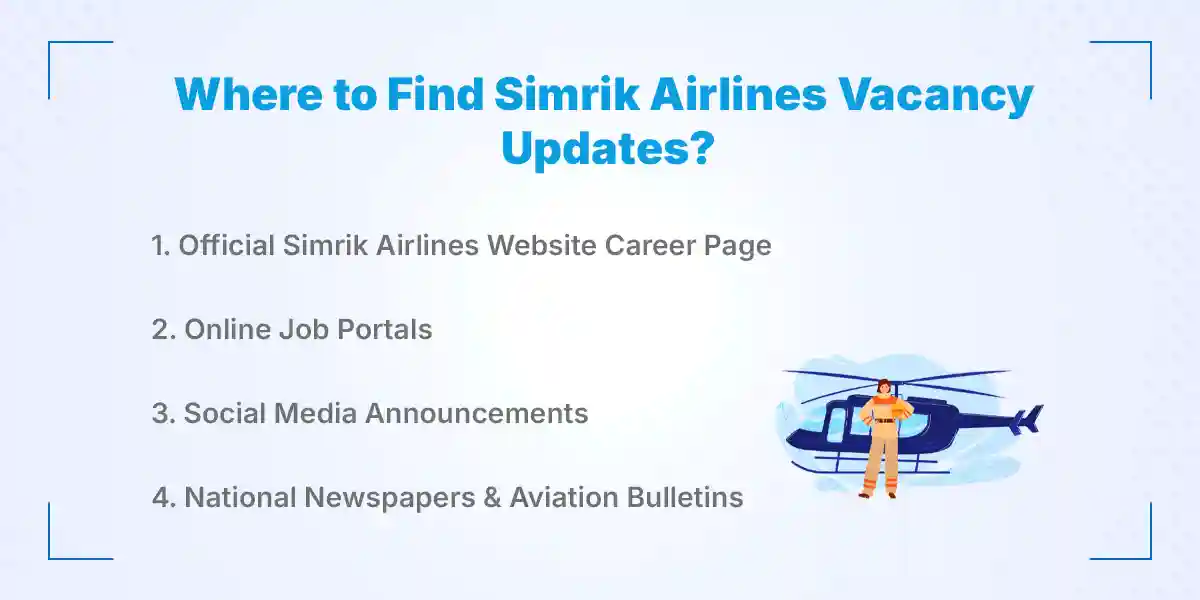
1. Official Simrik Airlines Website Career Page
The most reliable source is always the airline’s own career page. New job postings, eligibility criteria, and deadlines are published here first. Checking regularly is like keeping an eye on the runway lights, you want to know exactly when your flight is cleared for takeoff.
2. Online Job Portals
Trusted portals like Kumari Job often list Simrik Airlines vacancies. The platform can send alerts and notifications, making it easier to track openings without constantly refreshing pages. Think of it as your personal radar, picking up signals from the airline job market so you never miss your chance to apply.
3. Social Media Announcements
Airlines sometimes post vacancy updates on social media channels like Facebook or LinkedIn. Following official accounts can give you early hints before listings appear elsewhere. It’s like spotting the first signs of good weather before a mountain flight, small signals, but useful if you know where to look.
4. National Newspapers & Aviation Bulletins
Though less common today, some vacancies are still advertised in newspapers or specialized aviation bulletins. Keeping an eye on publications like The Kathmandu Post or aviation newsletters can help catch opportunities others might miss. In a fast-moving industry, these are like the old-school compasses, not flashy, but surprisingly reliable.
Conclusion
Landing a Simrik Airlines vacancy may seem like navigating a mountain flight, challenging, precise, and requiring careful planning, but it’s absolutely achievable with the right approach. From understanding eligibility criteria and required documents to preparing a tailored CV and acing interviews, every step matters. Staying updated through official channels like Simrik Airlines’ career page and Kumari Job ensures you never miss an opportunity. Patience, preparation, and attention to detail are your co-pilots on this journey.
Remember, an aviation career isn’t just about a job; it’s about growth, learning, and being part of a team that literally keeps Nepal connected from the skies. By following these steps and tips, you can approach the application process confidently and increase your chances of taking off successfully in the world of Simrik Airlines.
Frequently Asked Questions
Submit your comments

Get Our App On



SEO Training for Freshers in Nepal: Skills, Career & Job Opportunities
VIEW DETAILS
SEO Training vs. Self-Learning: Which Is Right for You?
VIEW DETAILS
How to Choose Between Two Job Offers
VIEW DETAILS
Digital Marketing Training Interview Questions and Answers for Freshers
VIEW DETAILS


Loading Comments...