



Are you wondering whether studying BHM in Nepal is worth your time, money, and effort? With the hospitality and tourism industry growing steadily, many students are asking if a Bachelor of Hotel Management can lead to a stable and rewarding career. Choosing the right course is a big decision, and understanding future opportunities is essential.
In this blog, we discuss the scope of BHM in Nepal and explain career options, salary expectations, and job opportunities after graduation. You’ll learn where BHM graduates work, how much they can earn, and why hospitality education is gaining value in Nepal’s job market. This guide will help you make an informed career decision with clarity and confidence.
In this blog
Who is a BHM Graduate?
A BHM graduate is a hospitality professional trained to manage hotel and service operations efficiently. BHM stands for Bachelor of Hotel Management, a four-year undergraduate program focused on hospitality leadership and business operations. Graduates gain knowledge in hotel management, food and beverage service, front office operations, housekeeping, and customer service. The course also builds communication, problem-solving, and leadership skills. This makes BHM graduates suitable for supervisory and management-level roles in hospitality.
A BHM graduate develops strong core skills and professional knowledge required in the hospitality industry. These include guest handling, team coordination, service quality management, and operational planning. Students also learn about marketing, accounting, human resource management, and hospitality laws. Practical training and internships prepare them for real-world hotel environments. This balance of theory and practice helps graduates adapt quickly to industry demands.
The difference between BHM and other hospitality courses lies in depth and career scope. Short-term diploma or certificate courses focus mainly on specific skills like cooking or service. BHM, however, provides comprehensive management-level education and long-term career growth. It prepares students for leadership roles rather than entry-level positions only. This makes BHM a preferred choice for those seeking career advancement in hospitality.
Scope of BHM in Nepal
The scope of BHM in Nepal is strong due to the steady growth of tourism and hospitality services. Nepal’s tourism industry continues to expand with increasing domestic and international travelers, significantly increasing the availability of hospitality jobs in Nepal. This growth creates demand for trained hospitality professionals. BHM graduates are well-positioned for both operational and management roles. The degree offers long-term career stability and growth opportunities.
1. Expanding Tourism and Hotel Industry
Nepal’s tourism industry is expanding every year with more visitors and new destinations. Hotels, resorts, and travel services are increasing across major cities and tourist areas. This expansion creates continuous demand for trained hotel management professionals. BHM graduates meet this demand with practical and managerial skills. Tourism growth also opens opportunities in airlines, travel agencies, and event management. This makes BHM a versatile career option.
2. Growth of Luxury Hotels, Resorts, and Restaurants
Luxury hotels and high-end resorts are growing rapidly in Nepal. International hotel brands are entering the market and raising service standards. These establishments prefer professionally trained BHM graduates for leadership roles. Fine-dining restaurants and hospitality chains also seek skilled managers. Higher service standards lead to better job roles and salaries. This growth improves long-term career prospects for BHM graduates.
3. International Career Opportunities for BHM Graduates
BHM graduates have strong international career opportunities. The degree is recognized in many countries with a hospitality demand. Graduates can work in hotels, cruise lines, airlines, and resorts abroad. Countries in the Middle East, Europe, Australia, and Asia offer hospitality jobs. International exposure helps increase income and career growth. This global scope makes BHM a valuable qualification.
Career Opportunities After BHM in Nepal
There are many career opportunities after BHM in Nepal across the hospitality and service industries. The degree prepares graduates for both operational and managerial roles, often starting with various entry-level jobs in Nepal that pave the way for rapid advancement. BHM professionals can work in hotels, airlines, travel companies, and event management firms. The skills gained are transferable across service sectors. This makes BHM a flexible and future-focused career choice.
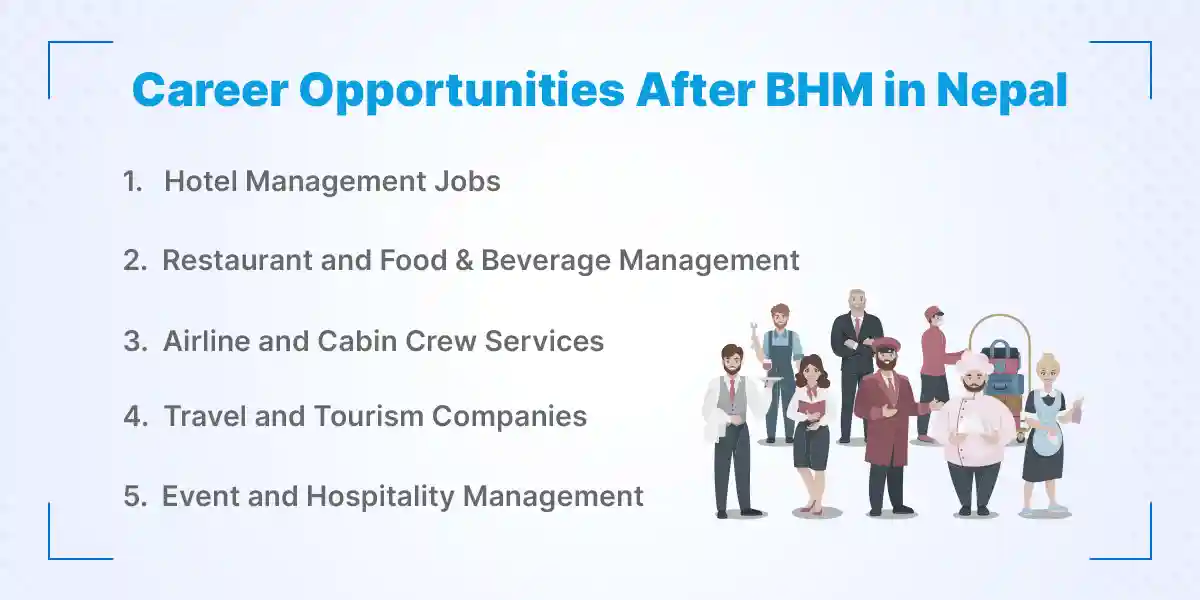
1. Hotel Management Jobs
Hotel management is one of the most common career paths after BHM. Graduates can work in the front office, housekeeping, food and beverage, or operations departments. With experience, they can move into supervisory and management roles. Hotels prefer BHM graduates for leadership positions. These jobs offer career growth and stable income. Large hotels also provide training and promotion opportunities.
2. Restaurant and Food & Beverage Management
BHM graduates can build strong careers in restaurant and food service management. They handle operations, staff coordination, and customer service. Fine-dining restaurants and hotel outlets prefer trained professionals. These roles require strong service and leadership skills. BHM graduates fit well due to their practical training. Career growth is faster in high-end food service businesses.
3. Airline and Cabin Crew Services
Airlines value BHM graduates for their service training and communication skills. Graduates can work as cabin crew or in ground service roles. The hospitality background helps with passenger handling and safety service. Airlines also offer international exposure and travel benefits. These roles are competitive but rewarding. BHM graduates often have an advantage over general applicants.
4. Travel and Tourism Companies
Travel and tourism companies hire BHM graduates for customer service and operations roles. Graduates can work in tour operations, travel consulting, and destination management. Knowledge of tourism and guest handling is a strong advantage. These roles involve coordination and client interaction. Career growth depends on experience and performance. Tourism companies value hospitality-trained professionals.
5. Event and Hospitality Management
Event management is a growing career option for BHM graduates. Graduates manage corporate events, weddings, and hospitality services. Strong planning and coordination skills are required. BHM training helps with service delivery and team management. Event roles offer creative and dynamic work environments. Successful professionals can earn a high income in this field.
Job Roles for BHM Graduates
BHM graduates qualify for a wide range of job roles in the hospitality industry. These roles focus on service delivery, operations, and team management. Most positions offer clear career progression with experience, which often begins with hospitality internships in Nepal at renowned hotels. Employers prefer BHM graduates for leadership-track roles. The degree prepares students for both operational and supervisory responsibilities.
1. Hotel Manager
Hotel managers oversee daily hotel operations and staff performance. They handle guest satisfaction, budgeting, and service quality. BHM graduates are trained to manage multiple departments efficiently. Leadership and decision-making skills are essential in this role. With experience, hotel managers earn competitive salaries. This role also offers international career opportunities.
2. Front Office Executive
Front office executives manage guest check-ins, reservations, and inquiries. They represent the hotel and create first impressions. BHM graduates are trained in communication and service standards. The role requires problem-solving and guest-handling skills. Front office roles often lead to supervisory positions. Strong performance can lead to rapid promotions.
3. Food and Beverage Manager
Food and beverage managers oversee restaurant and banquet operations. They manage staff, menus, and service quality. BHM training helps with cost control and customer service. This role requires leadership and attention to detail. Large hotels offer higher salaries for experienced professionals. It also provides exposure to international hospitality standards.
4. Housekeeping Supervisor
Housekeeping supervisors manage room cleanliness and staff coordination. They ensure hygiene and service standards are maintained. BHM graduates understand hotel cleanliness procedures. The role requires organization and team leadership skills. Supervisors can grow into department heads. Clean operations strongly influence guest ratings.
5. Guest Relations Officer
Guest relations officers focus on guest satisfaction and service recovery. They handle feedback, complaints, and special requests. BHM graduates excel due to strong communication skills. This role improves guest loyalty and hotel reputation. It also offers growth into management roles. Guest relations roles enhance brand image.
Salary of BHM Graduates in Nepal
The salary of BHM graduates in Nepal depends on experience, job role, and organization type. Entry-level positions offer modest pay with learning opportunities. As experience increases, salaries grow steadily. The average salary in Nepal for these roles reflects the industry standards for skilled hospitality staff. Management roles provide higher income and benefits. The hospitality sector rewards skill, performance, and leadership over time.
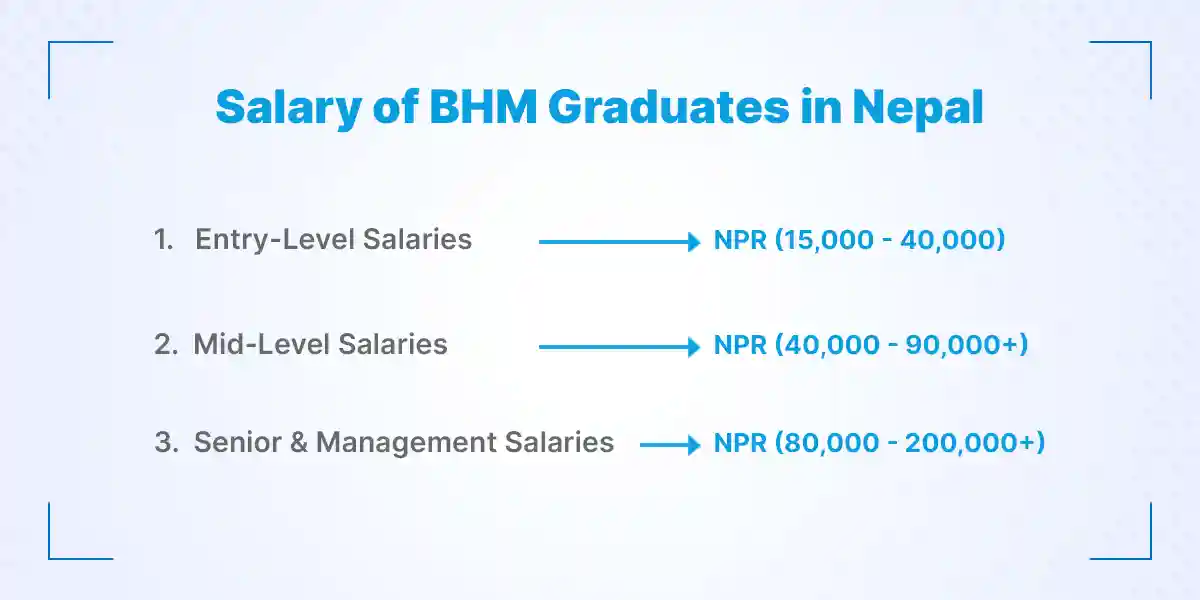
1. Entry-Level Salaries
Entry-level BHM graduates usually start in operational roles. These include front office, food service, or housekeeping positions. Salaries range from NPR 15,000 to 40,000 per month. Training and hands-on experience are key at this stage. Many hotels also offer meals and accommodation benefits. Performance can lead to quick salary growth.
2. Mid-Level Salaries
Mid-level professionals have two to five years of experience. They work as supervisors, assistant managers, or department leads. Salaries range from NPR 40,000 to 90,000 or more. Skill specialization increases earning potential. Larger hotels pay higher salaries. Career stability improves at this stage.
3. Senior & Management Salaries
Senior-level roles include managers and department heads. These positions require strong leadership and experience. Salaries range from NPR 80,000 to 200,000 or higher. International hotels offer better packages. Bonuses and benefits may apply. These roles provide long-term career growth.
Skills Required for a Successful BHM Career
A successful BHM career requires a mix of technical knowledge and soft skills. Hospitality professionals work directly with guests, teams, and management. Strong skills help handle service challenges and daily operations smoothly, making candidates more competitive for hospitality jobs in Kathmandu. Employers value attitude and behavior as much as qualifications. These skills help BHM graduates grow faster in their careers.
1. Communication and Customer Service Skills
Communication is one of the most important skills in hospitality. BHM professionals interact with guests, staff, and management daily. Clear communication helps avoid service issues and misunderstandings. Strong customer service skills improve guest satisfaction and loyalty. Handling complaints politely is also essential. Good communication also strengthens professional relationships.
2. Leadership and Management Abilities
Leadership skills help BHM graduates manage teams effectively. Hospitality roles often require supervising staff and coordinating tasks. Good leadership improves team performance and service quality. Managers must motivate employees and resolve conflicts. Decision-making skills are also important. Strong leadership supports long-term career growth.
3. Problem-Solving and Multitasking Skills
Hospitality professionals face unexpected situations daily. Problem-solving skills help manage guest complaints and service delays. Multitasking is common during peak hours. BHM graduates must stay calm under pressure. Quick thinking improves service efficiency. These skills help maintain guest satisfaction.
4. Professional Attitude and Teamwork
A professional attitude reflects discipline and responsibility. Hospitality work requires teamwork across departments. Cooperation improves service delivery and work culture. BHM graduates must respect colleagues and guests. Teamwork reduces work stress. Professional behavior builds employer trust.
Where Can BHM Graduates Work in Nepal?
BHM graduates can work in hotels, restaurants, airlines, travel companies, and event management firms across Nepal. The hospitality industry offers diverse work environments and career paths. Graduates can choose operational or management roles based on their interests. Urban areas and tourist destinations offer more opportunities. With experience, professionals can move into leadership positions. This flexibility makes BHM a strong career choice.
1. Hotels and Resorts
Hotels and resorts are the primary employers of BHM graduates. Graduates work in front office, housekeeping, food and beverage, and management roles. These workplaces offer structured career growth. Large hotels provide training and promotion opportunities. Resort jobs often include accommodation benefits. Experience in hotels builds strong industry foundations.
2. Restaurants and Cafés
Restaurants and cafés hire BHM graduates for service and management roles. Graduates manage operations, staff, and customer experience. Fine-dining and chain restaurants prefer trained professionals. These roles require strong service and leadership skills. Career growth is faster in busy establishments. This sector offers flexible working environments.
3. Airlines and Cruise Services
Airlines and cruise services value hospitality-trained professionals. BHM graduates work in cabin crew and ground service roles. Service training helps with passenger handling. International exposure is a major benefit. These roles are competitive but rewarding. Hospitality skills improve performance in this sector.
4. Travel Agencies and Event Companies
Travel agencies hire BHM graduates for customer service and coordination roles. Event companies employ graduates for planning and execution tasks. Knowledge of hospitality and tourism is useful. These roles involve client interaction and organization. Career growth depends on performance. The work environment is dynamic and creative.
Is BHM a Good Career Choice in Nepal?
Yes, BHM is a good career choice in Nepal due to strong career potential and steady demand in the hospitality industry. Tourism continues to grow, creating consistent job opportunities for trained professionals. BHM graduates have access to roles in hotels, restaurants, airlines, and travel companies. The degree offers both local and international career paths. With experience, professionals can move into management positions with higher salaries.
BHM also offers long-term growth and global demand. Hospitality skills are transferable across countries, making it easier to work abroad. The degree also supports entrepreneurship, allowing graduates to start hotels, restaurants, cafés, or travel businesses. Many BHM graduates become successful business owners over time. This flexibility and global scope make BHM a valuable and future-proof career option.
How to Build a Successful Career After BHM?
To build a successful career after BHM, you need to gain practical experience, improve skills, and plan long-term growth. Classroom knowledge alone is not enough in hospitality. Employers value hands-on exposure and a professional attitude. Continuous learning helps you stay competitive. Smart career planning leads to faster promotions and better opportunities.
1. Internships and Industrial Training
Internships and industrial training are essential after BHM. They provide real-world experience in hotel and service operations. Graduates learn how departments work together, often by securing an internship in Nepal at leading five-star hotels or resorts. Practical training improves confidence and job readiness. Many students receive job offers after internships. Strong performance during training builds professional networks.
2. Gaining International Exposure
International exposure helps BHM graduates grow professionally. Working abroad improves service skills and industry knowledge. It also increases earning potential. Exposure to global hospitality standards enhances career value. Many countries hire trained hospitality professionals. International experience opens leadership opportunities.
3. Professional Certifications and Skill Upgrades
Professional certifications improve career growth after BHM. Courses in food safety, management, or customer service add value. Skill upgrades help professionals move into leadership roles. Certifications also increase salary potential. Continuous learning keeps professionals updated. Skill development improves job security.
Conclusion
The scope of BHM in Nepal is strong and continues to grow with the expansion of tourism, hotels, and service industries. BHM graduates have access to diverse career options, competitive salaries, and international opportunities. From hotels and airlines to travel and event management, the degree offers long-term career stability and growth. With the right skills and experience, BHM professionals can move into leadership roles and even start their own hospitality businesses.
For students choosing BHM, the key is commitment, practical exposure, and continuous learning. Hospitality rewards professionalism, service attitude, and adaptability. If you are passionate about service and people management, BHM can be a rewarding career path.
Explore more hospitality jobs in Nepal on Kumari Job. Start building your hospitality career with trusted opportunities today.
Frequently Asked Questions
Submit your comments

Get Our App On



SEO Training for Freshers in Nepal: Skills, Career & Job Opportunities
VIEW DETAILS
SEO Training vs. Self-Learning: Which Is Right for You?
VIEW DETAILS
How to Choose Between Two Job Offers
VIEW DETAILS
Digital Marketing Training Interview Questions and Answers for Freshers
VIEW DETAILS


Loading Comments...