


Looking to start a career in hospitality this year? Hotels, resorts, and restaurants are constantly hiring staff for various roles. With tourism growing, opportunities for front desk officers, chefs, housekeeping staff, and event coordinators have increased. Knowing the right steps can help you secure your dream position quickly and confidently.
In this blog, we will guide you on how to get hospitality jobs in Kathmandu. You will learn about different vacancies, essential skills, application processes, and tips to succeed. By following this guide, you can enhance your chances of landing a well-paying role in Kathmandu’s competitive market and position yourself for the best hospitality jobs in Nepal.
In this blog
Overview of Hospitality Jobs in Kathmandu
Hospitality jobs in Kathmandu are growing steadily due to the city’s expanding tourism and business sectors. Hotels, resorts, restaurants, and travel companies are constantly seeking skilled staff to meet increasing guest demands. Positions range from front desk officers and housekeeping staff to chefs and event coordinators. This growth has created a wide variety of employment opportunities for both fresh graduates and experienced professionals.
Kathmandu’s hospitality sector attracts students and job seekers because it offers flexible career paths, skill development, and hands-on experience in customer service and operations. Many roles provide the chance to interact with international guests, learn industry best practices, and gain exposure to global hospitality standards. For young professionals, these positions often serve as a stepping stone toward management or specialized careers in hotel and restaurant operations.
Types of Hospitality Vacancies in Kathmandu
Hospitality jobs in Kathmandu cover a wide range of roles across hotels, resorts, restaurants, and event venues. These positions cater to different skills and experience levels, from entry-level service staff to specialized culinary and event management roles. Candidates can choose a career path based on their interests, such as front desk, housekeeping, culinary, or guest relations. Each vacancy requires a unique set of skills, offering opportunities for learning and growth in a dynamic work environment.
1. Front Desk Officer
Front desk officers manage guest check-ins and check-outs, handle reservations, and provide customer service. They often coordinate with housekeeping, room service, and management to ensure smooth operations. Strong communication, problem-solving, and multitasking skills are essential. A front desk officer also assists with billing, answering guest queries, and maintaining records. Professionalism and a friendly attitude help enhance guest satisfaction and create a positive experience. They also play a key role in building the hotel’s reputation through consistent guest interactions.
2. Housekeeping Staff
Housekeeping staff maintain cleanliness in guest rooms, common areas, and facilities. They manage laundry, replenish supplies, and ensure guest comfort through attention to detail, organization, and teamwork. Staff may also assist with inventory management and reporting maintenance issues, as efficiency and consistency directly improve the guest experience and hotel reputation. Given the growing tourism sector, there is a consistent demand for skilled individuals to fill housekeeping jobs in Kathmandu. By contributing to hygiene audits and implementing strict cleanliness policies, these professionals play a vital role in a hotel's success.
3. Restaurant/Bar Staff
Roles in restaurants and bars include waiters, bartenders, and kitchen assistants. Responsibilities include serving food and beverages, taking orders, maintaining hygiene, and assisting chefs. Customer service skills, knowledge of food safety, and teamwork are critical. Staff must handle peak hours calmly and maintain guest satisfaction. Coordination with kitchen and front-of-house staff ensures smooth operations. They also help in suggesting menu items and upselling beverages or specials.
4. Chef and Kitchen Roles
Chefs and kitchen staff prepare meals, manage kitchen operations, and maintain hygiene standards. They create menus, control inventory, and ensure timely service. Culinary skills, creativity, and time management are essential. Staff must follow health regulations and maintain consistent food quality. Working collaboratively with other kitchen team members ensures efficiency and guest satisfaction. Chefs may also train junior staff and introduce new dishes to enhance the menu.
5. Event and Banquet Coordinator
Event and banquet coordinators organize functions, manage bookings, and oversee staff during events. They plan logistics, coordinate with clients, and handle on-the-spot problem-solving. Strong communication, planning, and leadership skills are essential. Coordinators ensure events run smoothly and meet client expectations. Attention to detail and the ability to manage multiple tasks under pressure are critical. They also monitor budgets and coordinate with vendors for event success.
6. Guest Relations and Concierge
Guest relations and concierge staff assist guests with information, services, and special requests. They handle reservations, provide local guidance, and resolve complaints efficiently. Strong interpersonal skills, knowledge of local attractions, and professionalism are crucial. Their role enhances guest experience and encourages repeat visits. Proactive service and attention to individual needs make a lasting impression. Concierge staff also organize transportation, sightseeing, and personalized guest experiences.
How to Get Hospitality Jobs in Kathmandu: Step-by-Step
To get hospitality jobs in Kathmandu, candidates must identify a career path, develop essential skills, prepare a strong resume and portfolio, and apply strategically. They should also attend interviews, perform well in assessments, and follow up professionally to secure employment. Consistency, preparation, and networking play a key role in landing the right position.
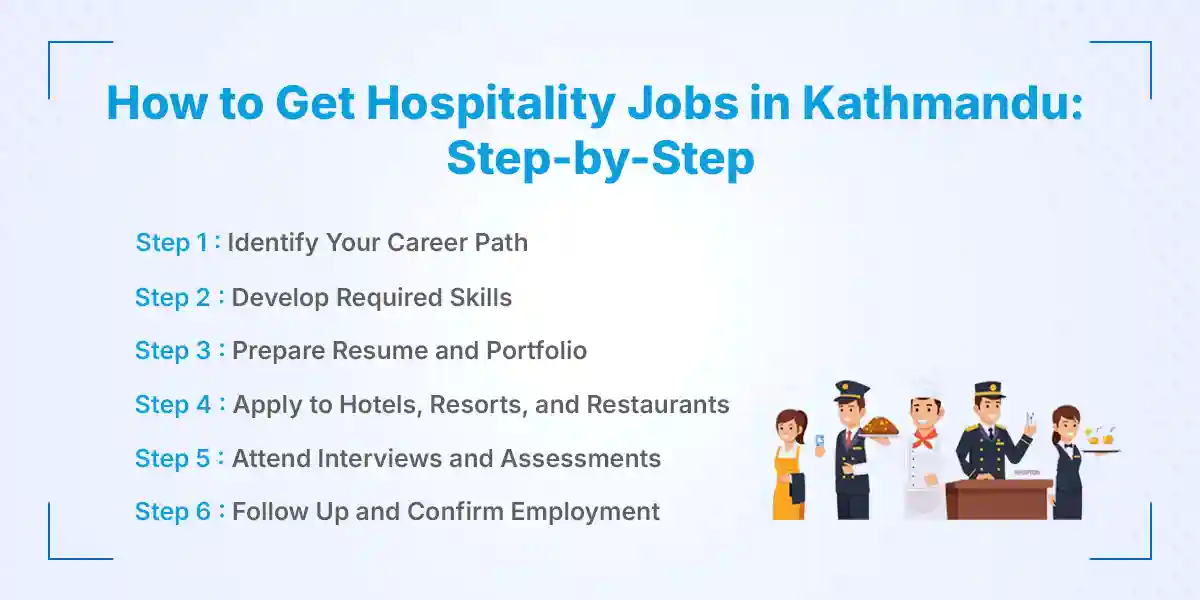
Step 1: Identify Your Career Path
Choose the type of hospitality role that suits your skills and interests, such as front desk, housekeeping, culinary, restaurant, or event management. Research responsibilities, growth potential, and required qualifications. Knowing your career path helps focus learning, training, and applications. This clarity allows you to select suitable internships and gain practical experience. It also helps you target employers who match your career goals and increases the chances of success.
Step 2: Develop Required Skills
Acquire the technical and soft skills needed for your chosen role. Front desk staff require communication and multitasking abilities, chefs need culinary expertise and time management, and housekeeping demands attention to detail. Event coordinators must develop planning and leadership skills. Regular practice, workshops, and real-world experience make candidates job-ready and confident. Continuous learning and skill upgrades help you stay competitive in Kathmandu’s growing hospitality sector.
Step 3: Prepare Resume and Portfolio
Create a professional resume highlighting education, certifications, internships, or volunteer experience. For chefs or event coordinators, maintain a portfolio showcasing past work. Ensure documents are error-free, organized, and clearly demonstrate your achievements. A strong resume and portfolio improve your chances of securing interviews from top employers. Tailoring your resume to specific job roles can make your application stand out.
Step 4: Apply to Hotels, Resorts, and Restaurants
Submit applications directly through career pages or Kumari Job, targeting multiple employers and tailoring resumes for each role. Networking and referrals can also improve chances. Keeping track of applications, deadlines, and follow-ups ensures you do not miss opportunities and increases the likelihood of interview calls. Applying strategically to positions that match your skills maximizes your chances of selection.
Step 5: Attend Interviews and Assessments
Prepare for interviews, practical assessments, and group discussions. Highlight relevant skills, experiences, and customer service abilities while demonstrating professionalism and confidence. Dressing appropriately, being punctual, and having a positive attitude help leave a strong impression on employers. Practicing common questions and role-specific scenarios boosts confidence and performance during interviews.
Step 6: Follow Up and Confirm Employment
Send a professional follow-up email after interviews to thank employers and express continued interest. Confirm joining dates and employment details once selected. Being proactive during onboarding and maintaining communication ensures a smooth transition and helps you start the role successfully. Following up professionally also reflects reliability and a strong work ethic to your new employer.
Skills Needed for Hospitality Jobs in Kathmandu
To succeed in hospitality jobs in Kathmandu, candidates need a combination of customer service, technical, operational, and interpersonal skills. Strong communication, problem-solving, and teamwork are critical for handling guest interactions effectively. Knowledge of industry-specific tools, reservation software, and operational procedures enhances efficiency. Time management and multitasking allow staff to meet high standards of service. Additionally, language proficiency and cultural awareness improve guest satisfaction and overall performance.
1. Customer Service and Communication Skills
Customer service and communication skills are essential for interacting with guests, handling complaints, and ensuring satisfaction. Staff must convey information clearly, maintain a friendly attitude, and respond promptly to inquiries. Effective communication helps resolve conflicts and creates a positive experience for visitors. These skills are especially important for front desk, restaurant, and concierge roles. Active listening, empathy, and clarity in responses can greatly improve guest relationships and loyalty.
2. Technical and Operational Skills
Technical and operational skills include knowledge of reservation software, POS systems, kitchen operations, and hygiene standards. Staff must understand daily operational procedures and ensure smooth service. Chefs and kitchen staff require culinary expertise, while front desk officers need familiarity with booking systems. Proficiency in these tools and procedures ensures efficiency and reduces errors during daily operations.
3. Time Management and Teamwork
Time management and teamwork skills are crucial for multitasking and meeting deadlines in a fast-paced environment. Coordinating with colleagues in housekeeping, front desk, kitchen, or events ensures a smooth workflow. Staff must prioritize tasks and manage workloads efficiently. Strong collaboration improves overall service quality and allows teams to handle peak hours effectively.
4. Language and Interpersonal Skills
Language and interpersonal skills enhance guest interactions and service quality. Knowledge of English, Nepali, and other languages helps staff communicate with local and international visitors. Building rapport, understanding cultural nuances, and showing empathy are essential for positive experiences. These skills also help staff provide personalized assistance, recommend services, and resolve issues smoothly.
Where to Find Hospitality Jobs in Kathmandu?
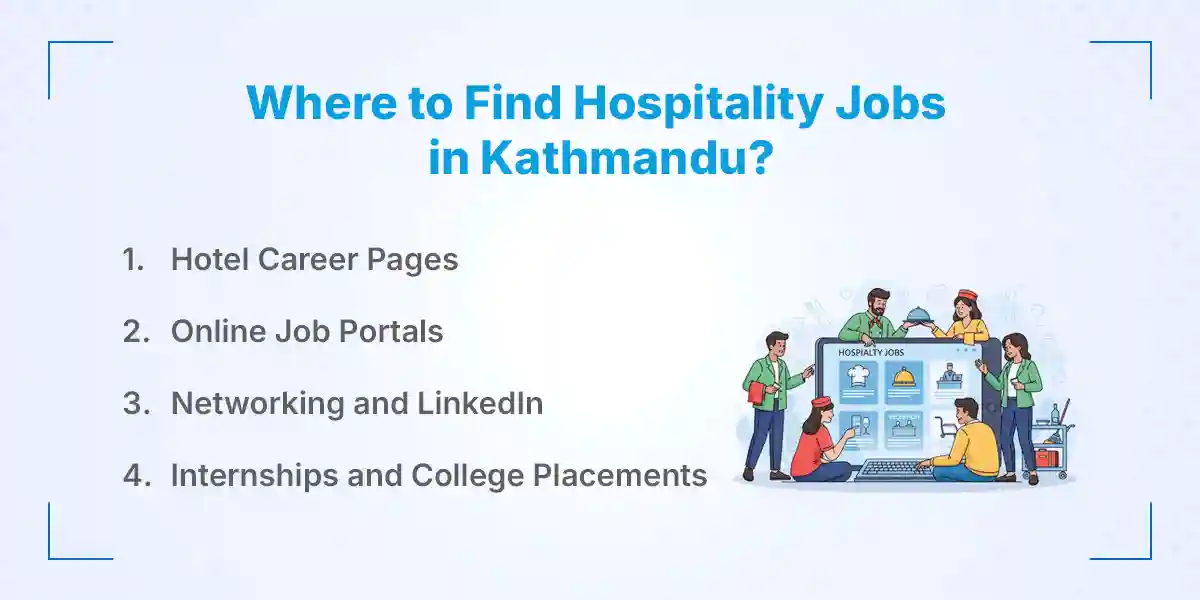
You can find hospitality jobs in Kathmandu through online job portals like Kumari Job and official hotel career pages. Networking, professional connections, and college placements also play an important role in discovering opportunities. Targeting multiple channels increases your chances of landing interviews and securing roles that match your skills. Staying updated with openings and applying strategically helps candidates gain an edge in the competitive hospitality sector.
1. Hotel Career Pages
Most hotels and resorts in Kathmandu maintain career pages on their official websites. Candidates can browse available positions, check eligibility requirements, and apply directly. Career pages often post roles in front desk, housekeeping, culinary, restaurant, and event management. Applying through official portals ensures your application reaches the hiring team directly and increases credibility. Regularly checking these pages helps you stay updated with the latest openings and deadlines.
2. Online Job Portals
Online job portals like Kumari Job list multiple hospitality vacancies in Kathmandu, from entry-level to specialized positions. Candidates can filter roles by job type, location, and experience. Portals also allow direct application submissions and alert notifications for new openings. Using job portals saves time and provides access to a wider range of employers and opportunities. Applying early through portals can improve your chances of getting shortlisted before positions fill up.
3. Networking and LinkedIn
Professional networking and LinkedIn are effective tools to find hospitality jobs. Connecting with industry professionals, joining relevant groups, and following hotel pages increases awareness of openings. Networking helps in referrals and gaining insights about the company culture. Active engagement on LinkedIn can also demonstrate your skills and professionalism to potential employers. Personal connections often provide tips, recommendations, or insider information about upcoming vacancies.
4. Internships and College Placements
Internships and college placement programs are excellent ways to enter the hospitality sector. Students gain practical experience, learn industry standards, and often receive full-time job offers after successful internships. Colleges frequently collaborate with hotels and resorts for placements, helping students bridge the gap between classroom theory and real-world operations. Participating in these programs builds essential soft skills, enhances your resume, and significantly boosts your profile for internships in Nepal. These opportunities also help in building a professional network that can lead to permanent job roles and long-term career success.
Salary and Career Growth in Kathmandu’s Hospitality Sector
Salary and career growth in Kathmandu’s hospitality sector vary depending on the role, experience, and type of employer. Entry-level positions, such as front desk staff or housekeeping, start with moderate pay, while specialized roles like chefs, event coordinators, or management positions offer higher income. Benefits, perks, training, and promotion opportunities make hospitality careers rewarding. Consistently improving skills, gaining experience, and performing well in roles can accelerate career progression and significantly increase your earning potential compared to the average salary in Nepal.
1. Starting Salary by Job Role
Starting salaries in Kathmandu’s hospitality sector differ by position and hotel category. Front desk officers, housekeeping, and restaurant staff usually earn between NPR 15,000–30,000 per month. Luxury hotels or international chains often offer higher starting pay along with additional benefits to attract skilled professionals, particularly for culinary experts, where the chef's salary in Nepal can range from NPR 25,000 to over 50,000 per month, depending on expertise.
2. Benefits and Perks
Hospitality jobs provide various benefits, including health insurance, meals, accommodation, and transport allowances in some hotels. Employees may also receive incentives for performance or seasonal bonuses. Perks improve job satisfaction and make positions more attractive, especially for staff working in busy hotels or resorts.
3. Promotions and Career Advancement
Employees can advance from entry-level roles to supervisory or management positions over time. Consistent performance, skill improvement, and experience increase promotion opportunities. Hotels and resorts often provide clear career pathways, allowing staff to grow within the organization and take on leadership responsibilities.
4. Training and Professional Development
Many hotels and hospitality companies offer training programs for skills development, operational knowledge, and customer service. Staff can attend workshops, online courses, or internal training to enhance expertise. Continuous professional development improves performance, boosts employability, and increases potential for higher salaries.
Tips to Succeed in Hospitality Jobs in Kathmandu
To succeed in hospitality jobs in Kathmandu, candidates must focus on developing strong soft skills, gaining relevant experience, building professional networks, and staying updated with industry trends. Success depends on combining practical knowledge with excellent customer service and effective communication. Continuous learning, adaptability, and professionalism help employees grow and secure long-term career opportunities. Following these tips ensures better performance, higher employability, and faster career progression in Kathmandu’s competitive hospitality sector.
1. Develop Soft Skills
Soft skills like communication, problem-solving, teamwork, and customer service are critical for hospitality roles. These abilities help staff interact effectively with guests, handle complaints, and maintain a positive work environment. Developing empathy, patience, and cultural awareness improves guest satisfaction. Regular practice and feedback from mentors or colleagues can strengthen these skills and make employees more reliable and professional.
2. Gain Relevant Experience
Practical experience through internships, part-time jobs, or volunteering in hotels, restaurants, or events is essential. Hands-on work helps candidates understand daily operations, service standards, and role-specific responsibilities. Experience also boosts confidence, builds a portfolio of achievements, and makes applicants more attractive to employers.
3. Network with Industry Professionals
Networking with hotel managers, senior staff, and industry peers can open doors to job opportunities. Attending industry events, joining hospitality groups, and connecting on LinkedIn help discover openings and gain referrals. Strong professional connections also provide guidance, mentorship, and insights about the latest hiring trends.
4. Stay Updated with Industry Trends
Hospitality trends, customer preferences, and technology keep evolving. Staying informed about new tools, service practices, and guest expectations is crucial. Reading industry publications, attending workshops, and following relevant news ensures employees remain competitive. Being aware of trends allows staff to offer modern solutions and maintain high-quality service standards.
Conclusion
The hospitality sector in Kathmandu offers diverse opportunities for candidates across hotels, resorts, restaurants, and event management. With proper skills, relevant experience, and a professional approach, individuals can build rewarding careers in roles like front desk officers, chefs, housekeeping staff, and event coordinators. Success depends on continuous learning, adaptability, and delivering excellent customer service.
By developing strong soft skills, gaining practical experience, networking with industry professionals, and staying updated on trends, candidates can secure competitive positions and advance their careers. Strategic applications through portals like Kumari Job and hotel career pages further improve chances of landing desirable roles.
Frequently Asked Questions
Submit your comments

Get Our App On



SEO Training for Freshers in Nepal: Skills, Career & Job Opportunities
VIEW DETAILS
SEO Training vs. Self-Learning: Which Is Right for You?
VIEW DETAILS
How to Choose Between Two Job Offers
VIEW DETAILS
Digital Marketing Training Interview Questions and Answers for Freshers
VIEW DETAILS


Loading Comments...