



Breaking into backend development in Nepal sounds exciting, until you realize hundreds of candidates are applying for the same role with similar skills. The real challenge isn’t just learning to code, it’s proving you can solve real-world problems that companies actually care about. Nepal's IT sector is growing fast, but many aspiring developers still struggle to land their first job because they don’t know how to stand out.
In this blog, we’ll explore how to get backend developer jobs in Nepal and walk you through the complete process step by step. From the skills Nepali companies look for, to building a strong portfolio, finding real job opportunities like IT jobs in Nepal, and cracking interviews, this guide covers everything you need to move from learning to actually getting hired in 2026.
In this blog
What is Backend Development?
Backend development refers to server-side work that powers websites and applications, everything users don't see directly. While frontend developers build the visual interface you interact with, backend developers create the logic, databases, and APIs that make applications function.
When you log into an app, the backend verifies your credentials, retrieves your data, and sends it to your screen. This invisible infrastructure handles three core responsibilities:
- Server-side logic: Processing user requests, running business rules, and managing authentication
- Database management: Storing, organizing, and retrieving information efficiently
- API development: Creating connections that allow frontend interfaces to communicate with data sources
Skills Required For Backend Developer Jobs In Nepal
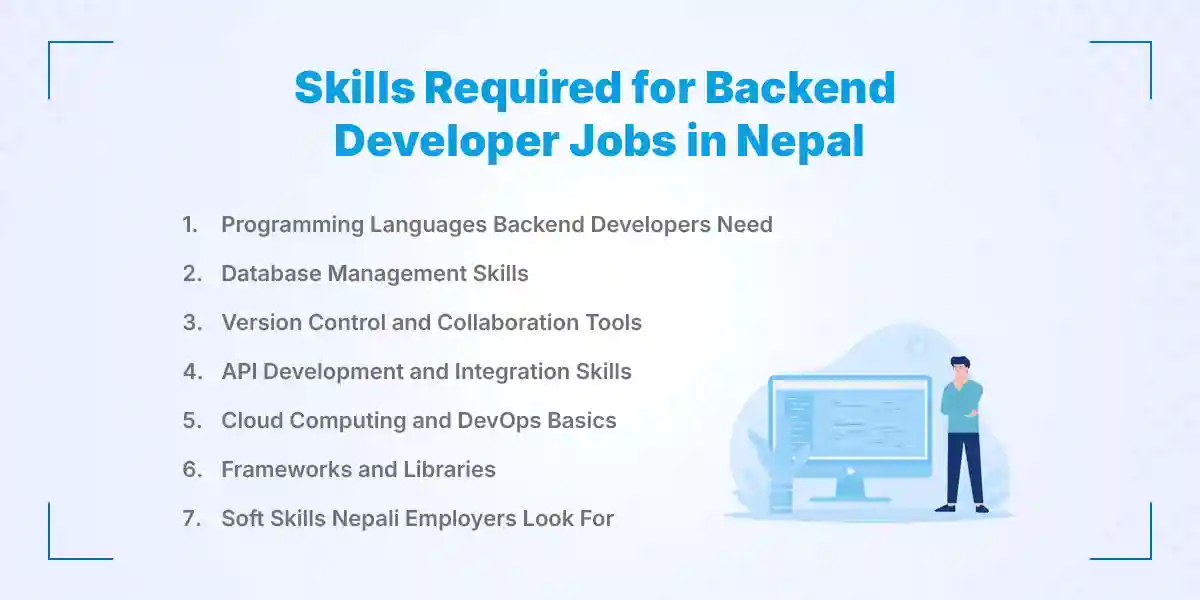
To get backend developer jobs in Nepal, you need a balanced mix of technical skills and practical workplace abilities. Employers don’t just look for coding knowledge; they want developers who can build, manage, and maintain real-world systems. The requirements may vary slightly, but certain core skills appear consistently across job listings. Focusing on these essential areas can significantly improve your chances of getting hired.
1. Programming Languages Backend Developers Need
Node.js remains one of the most in-demand backend technologies in Nepal, followed by Python and PHP. Some companies also prefer Java or C# for enterprise-level applications. Instead of learning many languages at once, focusing on one and building strong fundamentals works better. Node.js and Python are beginner-friendly and widely used in startups. Mastering one language properly can make you job-ready faster.
2. Database Management Skills
Backend developers work closely with databases to store and manage application data. SQL databases like MySQL and PostgreSQL are commonly used for structured data, while MongoDB is popular for flexible storage. Understanding how to design schemas and write efficient queries is essential. Performance optimization is also a key skill employers look for. Strong database knowledge helps you build scalable and efficient applications.
3. Version Control And Collaboration Tools
Git and GitHub are essential tools for managing code and collaborating with teams. Git tracks changes, while GitHub allows you to showcase your projects publicly. Recruiters often check GitHub profiles before shortlisting candidates. Maintaining clean, well-documented repositories makes a strong impression. Regular commits also show consistency and real development activity.
4. API Development And Integration Skills
APIs allow different systems to communicate, making them a core part of backend development. Most applications use REST APIs, while some also adopt GraphQL for flexibility. Knowing how to design, test, and secure APIs is important. It shows you can build systems that integrate with other services. Strong API skills make you more valuable as a developer.
5. Cloud Computing And DevOps Basics
Basic knowledge of cloud platforms such as AWS, Google Cloud, and Azure is becoming increasingly important. Employers also value familiarity with tools like Docker and CI/CD pipelines. These skills show that you understand how applications are deployed and managed. Even a basic understanding can give you an advantage over other candidates. It also prepares you for real-world development environments.
6. Frameworks And Libraries
Using frameworks helps developers build applications faster and more efficiently. Express.js is popular for Node.js, while Django and Flask are widely used in Python. Laravel is commonly used for PHP development. These frameworks provide structure and reduce development time. Knowing at least one framework well is often expected by employers.
7. Soft Skills Nepali Employers Look For
Technical skills alone are not enough to secure a job. Employers value problem-solving, communication, teamwork, and time management as essential IT skills. Being able to explain your work clearly and collaborate with others is important. Meeting deadlines and handling tasks efficiently also matter. These soft skills often make the difference during interviews and real projects.
Educational Qualifications for Backend Developers in Nepal
A Bachelor's degree in Computer Science or IT remains the most common qualification among backend developers in Nepal. However, formal education isn't always mandatory, practical skills and a strong portfolio often matter more to hiring managers.
Several pathways lead to backend development roles:
- Bachelor's degree in Computer Science, IT, or related field
- Diploma in software development from recognized institutions
- Coding bootcamp certificates with hands-on project experience
- Self-taught developers with demonstrable GitHub portfolios
Some employers, particularly startups, care more about what you can build than where you studied. Banks and larger corporations, on the other hand, often prefer candidates with formal degrees.
How To Get Backend Developer Jobs In Nepal?
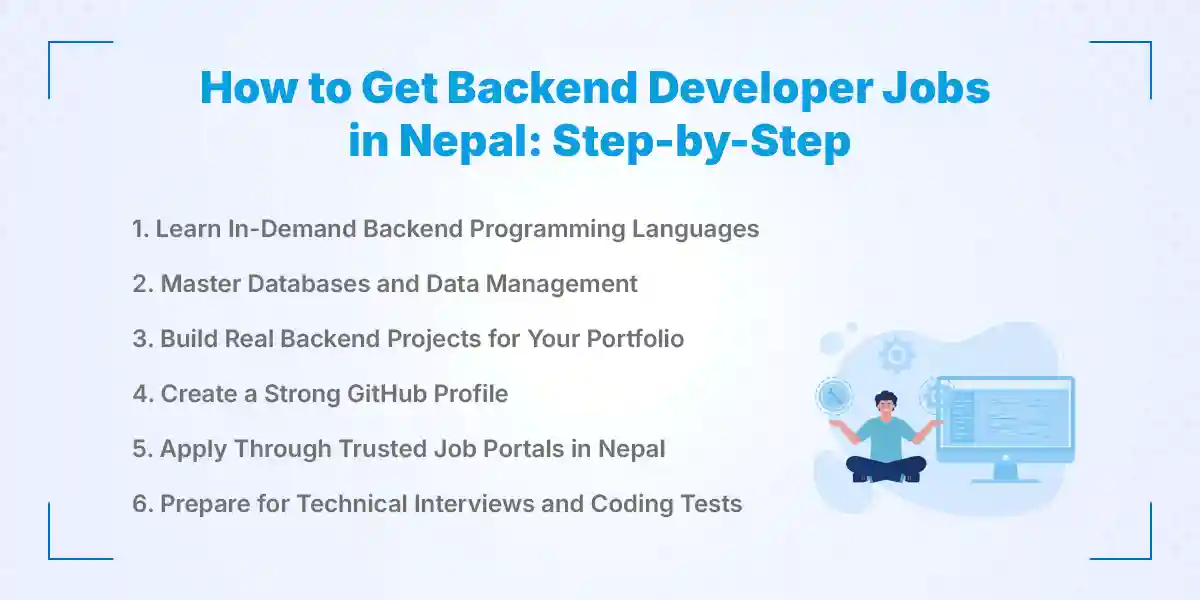
You can get backend developer jobs in Nepal by learning in-demand programming languages, mastering databases, building real projects, creating a strong portfolio, applying through trusted platforms, and preparing for interviews. Following a structured step-by-step approach helps you move from learning to getting hired more effectively. Instead of random effort, a clear path increases your chances of landing your first job. Consistency and practical experience are key here.
1. Learn In-Demand Backend Programming Languages
Starting with Node.js or Python makes sense for most beginners because both are widely used in Nepal. These languages have strong community support and plenty of learning resources. Platforms like freeCodeCamp and The Odin Project offer structured courses. Building small projects while learning helps reinforce concepts. Focusing on depth rather than jumping between languages makes learning more effective.
2. Master Databases And Data Management
Backend development heavily involves working with data, so database knowledge is essential. Start with relational databases like MySQL or PostgreSQL to understand structure and relationships. Then explore MongoDB for NoSQL concepts. Practice CRUD operations through small projects. Strong database skills help you build efficient and scalable applications.
3. Build Real Backend Projects For Your Portfolio
Projects are what employers actually look at, not just certificates. Building applications like an e-commerce API, blog system, or task manager shows practical skills. Each project should solve a real problem and demonstrate different concepts. Well-built projects help you stand out among other candidates. A strong portfolio often matters more than academic qualifications.
4. Create A Strong GitHub Profile
Your GitHub profile acts as your online portfolio for recruiters. It should contain clean, well-documented projects with proper structure. Writing clear README files helps others understand your work easily. Regular commits show consistency and ongoing learning. A strong GitHub profile can significantly increase your chances of getting interview calls.
5. Apply Through Trusted Job Portals In Nepal
Knowing where to apply is just as important as preparing skills. Platforms like Kumari Job list backend developer roles across major cities in Nepal. LinkedIn and company career pages are also useful sources. Applying consistently across multiple platforms improves your chances. Staying active in job searches helps you find opportunities faster.
6. Prepare For Technical Interviews And Coding Tests
Most companies follow a process that includes coding tests and technical interviews. Practicing on platforms like LeetCode or HackerRank helps you prepare for interview and improve problem-solving skills. Focus on data structures, algorithms, and basic system design. Mock interviews can help reduce nervousness and improve confidence. Proper preparation ensures you perform well when the opportunity comes.
What is the Salary of a Backend Developer in Nepal?
The backend developer salary in Nepal varies based on experience level, company type, and location. IT jobs in Kathmandu typically offer higher compensation than positions in other cities.
| Experience Level | Monthly Salary (NPR) | Notes |
|---|---|---|
| Entry-level | Rs. 25,000 – 45,000 | Fresh graduates, 0-1 year experience |
| Mid-level | Rs. 50,000 – 90,000 | 2-4 years experience |
| Senior-level | Rs. 100,000 – 180,000+ | 5+ years, leadership responsibilities |
1. Entry-Level Backend Developer Salary
Fresh graduates typically start in the lower range, though rapid growth is possible with skill development. Startups may offer lower base pay but provide equity, learning opportunities, or faster advancement.
2. Mid-Level Backend Developer Salary
Developers with specialized skills in cloud computing or DevOps command higher salaries at this level. Switching companies often leads to significant salary increases.
3. Senior-Level Backend Developer Salary
Senior roles include team leads, technical architects, and engineering managers, positions that rank among the highest-paying IT jobs in Nepal. Remote positions with international companies can offer compensation in USD, increasing earning potential beyond local market rates.
Top Companies Hiring Backend Developers In Nepal
Backend developer opportunities in Nepal are growing across multiple industries, not just IT companies. From established software firms to banks and startups, each offers different work environments and career benefits. Understanding where to apply helps you align your goals with the right type of company. Choosing the right environment can shape your learning, salary, and long-term career growth.
1. IT Companies And Software Development Firms
Established companies in Nepal and foreign hire backend developers. These firms offer structured work environments with defined roles and responsibilities. Many also provide training programs and career development opportunities. Working in such companies helps build strong technical foundations. They are often the best starting point for fresh backend developers.
2. Banks And Financial Institutions
Banks like Nabil, NIC Asia, and Global IME are rapidly adopting digital technologies. Backend developers work on systems like online banking, mobile apps, and payment gateways. These roles offer stable careers with attractive benefits and job security. The work often involves handling sensitive financial data and systems. It’s a good option for those looking for long-term stability.
3. Startups And Tech Ventures
Startups in Nepal provide dynamic environments with faster learning opportunities. Developers often work on multiple technologies and take on varied responsibilities. This exposure helps build practical skills quickly. However, the workload can be intense compared to traditional companies. Startups are ideal for those who want rapid growth and hands-on experience.
4. International Companies With Remote Opportunities
Remote work has opened global opportunities for Nepali backend developers. Platforms like Upwork and Toptal connect developers with international clients. These roles often offer higher pay compared to local companies. Working remotely also provides flexibility and exposure to global standards. It’s a great option for experienced developers looking to earn in foreign currency.
Is Backend Development still in Demand in Nepal?
Demand for backend developers remains strong across Nepal's economy. Digital transformation continues to accelerate in banking, e-commerce, healthcare, and education, all sectors requiring robust server-side infrastructure.
Several trends support continued growth:
- Digital banking expansion: Financial institutions require backend systems for transactions and security
- E-commerce growth: Online shopping platforms require scalable backends to handle inventory and payments
- Startup ecosystem: New ventures require technical foundations to build products
- Remote work trend: International opportunities are increasingly accessible from Nepal
Companies often struggle to find qualified backend developers, creating favorable conditions for job seekers with the right skills.
Best Training and Courses for Backend Development in Nepal
Choosing the right training and courses can significantly speed up your journey into backend development. Structured programs provide a clear learning path, hands-on practice, and guidance that self-study sometimes lacks. They are especially helpful for beginners or those switching careers who need direction. With the right course, you not only learn faster but also build confidence to enter the job market.
1. Backend Programming Bootcamps in Kathmandu
Intensive bootcamps offer fast-track learning with job placement support. Programs typically run 3-6 months and focus heavily on practical projects. Kumari Job offers training programs designed to develop skills aligned with employer expectations.
2. MERN and MEAN Stack Training Programs
MERN (MongoDB, Express, React, Node.js) and MEAN (MongoDB, Express, Angular, Node.js) are popular full-stack combinations taught at many institutes. Learning full-stack development makes graduates versatile, capable of handling both frontend and backend work.
3. Python and Django Development Courses
Python's readability makes it popular for backend development. Django provides a powerful framework for building web applications quickly. Python and Django skills are particularly valuable for data-heavy applications and companies working with machine learning.
Conclusion
Breaking into backend development in Nepal is achievable with focused effort. The path involves mastering programming languages like Node.js or Python, building a portfolio of real projects, and applying through trusted platforms.
Employers value practical skills and problem-solving ability alongside formal education. Your GitHub portfolio often speaks louder than your degree, so investing time in creating projects that demonstrate your capabilities pays off.
Nepal's IT sector continues expanding, with opportunities ranging from established software firms to innovative startups and international remote positions. Whether you're a fresh graduate or transitioning careers, the demand for skilled backend developers means your efforts will find recognition.
Frequently Asked Questions
Submit your comments

Get Our App On



SEO Training for Freshers in Nepal: Skills, Career & Job Opportunities
VIEW DETAILS
SEO Training vs. Self-Learning: Which Is Right for You?
VIEW DETAILS
How to Choose Between Two Job Offers
VIEW DETAILS
Digital Marketing Training Interview Questions and Answers for Freshers
VIEW DETAILS


Loading Comments...