



Are you passionate about coffee and wondering how to turn that love into a stable career in Nepal? Many aspiring baristas struggle to find clear guidance on skills, job opportunities, and salary expectations. Choosing the right path early can help you secure a rewarding job in cafes, restaurants, or coffee chains. With proper training and experience, barista roles can also lead to managerial and specialty coffee positions in the future.
In this blog, how to get a barista job in Nepal is explained step by step. We cover essential skills, required qualifications, salary ranges, and career growth opportunities for those seeking hospitality jobs in Nepal. Readers will also discover where to find reliable job openings and how to prepare a strong application to impress employers in this competitive industry.
In this blog
What Is a Barista Job?
Barista job is a professional role focused on preparing, serving, and presenting coffee and other beverages while providing excellent customer service. Baristas often work in cafés, restaurants, hotels, and specialty coffee shops, creating a welcoming environment for customers. They need to master coffee-making techniques, maintain cleanliness, and sometimes manage inventory or assist in training junior staff. A barista’s role combines technical skills with hospitality, ensuring each customer enjoys a high-quality coffee experience.
Roles and Responsibilities of a Barista:
- Prepare and serve espresso-based drinks, teas, and specialty beverages according to standard recipes.
- Operate coffee machines, grinders, and brewing equipment safely and efficiently.
- Maintain the cleanliness of coffee machines, workstations, and customer areas.
- Take customer orders accurately and provide recommendations when needed.
- Monitor inventory of coffee beans, milk, syrups, and other ingredients.
- Train and guide junior baristas or trainees when required.
- Ensure consistency in taste, presentation, and quality of every beverage served.
Skills Required for a Barista Job in Nepal
To succeed as a barista in Nepal, candidates need a mix of technical, interpersonal, and organizational skills. Strong coffee preparation abilities, excellent customer service, and teamwork are essential for creating a smooth café experience. Baristas also need good time management to handle busy shifts efficiently while maintaining quality. Developing these skills not only helps secure a job but also ensures career growth in specialty coffee and hospitality sectors.
1. Coffee Preparation Skills
Baristas must master espresso-making, milk frothing, latte art, and brewing methods for drip, pour-over, and cold brew coffee. Consistency in taste and presentation is critical to delight customers. Knowledge of coffee beans, roast levels, and grind sizes enhances beverage quality. Hands-on practice and training ensure proficiency and help baristas stand out in competitive cafés.
2. Customer Service and Communication
Strong communication skills allow baristas to take orders accurately, answer questions, and recommend beverages effectively. Providing friendly, attentive service improves customer satisfaction and encourages repeat visits. Baristas also need patience and problem-solving abilities to handle complaints professionally.
3. Time Management and Teamwork
Baristas must manage multiple orders simultaneously, especially during peak hours, without compromising quality. Coordinating with colleagues ensures smooth workflow and faster service. Good teamwork and time management reduce stress, enhance efficiency, and improve overall café operations.
How to Get a Barista Job in Nepal? Step by Step
To get a barista job in Nepal, candidates must focus on developing both technical and soft skills, gaining relevant experience, and preparing a strong application. Training in coffee preparation, customer service, and café operations is essential to meet the standard barista job description, which typically includes mastering espresso extraction, milk frothing, and equipment maintenance. Candidates should also build a professional CV and practice interview skills to increase their chances of selection. Following a structured approach ensures you stand out in the competitive hospitality industry and secure rewarding barista roles.

1. Gain Skills and Training
Candidates should enroll in barista courses or on-the-job training programs to learn espresso-making, latte art, brewing methods, and machine operation. Understanding different coffee beans, roasts, and preparation techniques helps maintain consistency and quality. Hands-on experience in cafés or training centers allows practical learning and boosts confidence. Continuous practice and experimentation with new drinks improve proficiency and creativity.
2. Develop Soft Skills
Excellent communication, customer service, and interpersonal skills are critical for baristas. Being friendly, approachable, and patient ensures customers have a pleasant experience. Teamwork, time management, and adaptability are equally important for handling busy shifts efficiently. Developing empathy and problem-solving skills helps manage customer complaints effectively.
3. Prepare Your CV
Create a professional CV highlighting coffee skills, training, previous café experience, and soft skills. Include certifications, internships, or volunteer experience related to hospitality. A clear and well-structured CV increases visibility to employers and improves interview chances. Tailoring the CV for specific barista roles demonstrates attention to detail and commitment.
4. Practice for the Interview
Prepare for interview questions about coffee knowledge, work experience, and customer service scenarios. Practice demonstrating technical skills, like making espresso or latte art, if required. Rehearsing professional behavior, punctuality, and confidence leaves a strong impression on interviewers. Being ready to explain your passion for coffee and career goals can set you apart from other candidates.
Types of Barista Jobs in Nepal
Barista jobs in Nepal are diverse, offering opportunities in cafés, hotels, restaurants, and coffee shop chains. Each type of workplace has different expectations, work environments, and career growth potential. Understanding these differences helps candidates choose a role that fits their skills, interests, and long-term goals. Experience in one setting can also open doors to more specialized or managerial barista positions in the future.
1. Café Barista
Café baristas typically work in independent or small-scale cafés, serving espresso-based drinks, teas, and specialty beverages. They often interact directly with customers, providing personalized service and recommendations. Café baristas may also handle inventory, maintain cleanliness, and assist in marketing or events. This role helps build strong customer service and multitasking skills while offering creative freedom in beverage preparation.
2. Hotel and Restaurant Barista
Baristas in hotels or restaurants usually work as part of a larger hospitality team, preparing coffee for guests during breakfast, events, or in the lounge area. They must maintain high standards of presentation and service, often dealing with larger volumes than a café. Experience here helps develop professionalism, speed, and consistency under pressure. Baristas may also collaborate with chefs and beverage managers, learning about pairing drinks with food and enhancing guest experiences.
3. Coffee Shop Chain Barista
Chain baristas work in branded coffee shops like Starbucks-style outlets or local coffee franchises, following standardized recipes and operating procedures. They often focus on efficiency, consistency, and customer service in high-traffic environments. Training programs in chains help develop technical skills, teamwork, and familiarity with modern coffee equipment. Career progression in chains can lead to supervisory or managerial roles, making it a solid path for long-term growth.
Salary of Barista Jobs in Nepal
Barista jobs in Nepal offer competitive salaries depending on experience, skills, and the type of workplace. Entry-level positions in cafés or small restaurants pay modestly, while hotels, restaurants, and coffee chains offer higher pay with experience. While a barista's earnings are unique to the hospitality sector, they often align with the current average salary in Nepal, with the total pay often being complemented by tips, service charges, or additional benefits. Understanding compensation trends helps candidates plan their career and negotiate better packages. Growth in skills and certifications can significantly increase earning potential over time.
1. Entry-Level Salary Range
Entry-level baristas in Nepal typically earn between NPR 15,000 to NPR 25,000 per month, depending on the café or restaurant. Salary may vary with location, the size of the business, and job responsibilities. Fresh graduates or trainees may start at the lower end but gain faster growth through hands-on experience.
2. Salary with Experience and Skills
Experienced baristas with advanced skills, certifications, or managerial responsibilities can earn between NPR 25,000 to NPR 45,000 per month. Specialized skills like latte art, coffee roasting, or machine maintenance often increase salary offers. Working in high-end hotels, branded coffee chains, or busy restaurants usually results in better pay and incentives.
3. Tips, Service Charge, and Benefits
Baristas often receive tips or a share of service charges from customers, which supplements their base salary. Some workplaces also provide benefits like meals, health insurance, or performance bonuses. Consistently providing excellent service can lead to recognition, promotions, and higher long-term earnings.
Working Hours and Job Environment
Barista jobs in Nepal involve dynamic work environments, often requiring multitasking and direct customer interaction. Work can vary based on café size, hotel standards, or coffee chain policies. Understanding working hours, job expectations, and workplace culture is essential for managing stress and maintaining consistent performance. Flexibility, punctuality, and stamina are important traits for anyone considering this career.
1. Full-time vs Part-time Barista Jobs
Full-time baristas usually work 40-48 hours per week, often with fixed or rotating shifts. Part-time roles offer flexibility for students or those seeking supplementary income. Full-time employees may receive higher pay, benefits, and career growth opportunities compared to part-time staff. Part-time jobs provide exposure to café operations and practical experience without long-term commitment. Both options help develop skills, but full-time roles often offer faster career progression.
2. Shift-Based Work Schedule
Many cafés, restaurants, and coffee chains operate in shifts, including mornings, afternoons, evenings, and weekends. Baristas must adapt to peak-hour rushes and off-peak downtime efficiently. Shift schedules require good time management and coordination with colleagues to maintain consistent service. Understanding the schedule beforehand helps in balancing personal life and work responsibilities effectively. Regular shift work also builds resilience and prepares baristas for high-pressure environments.
Career Growth and Opportunities for Baristas
Barista jobs in Nepal offer clear pathways for career growth with experience, skills, and training. Starting from entry-level roles, baristas can progress to supervisory, managerial, or training positions. Opportunities also exist in specialty coffee, hotel chains, and even international cafés. Continuous learning, certifications, and professional networking can help baristas achieve higher responsibilities and better compensation. Exploring career growth options ensures long-term stability and job satisfaction in the hospitality industry.
1. Senior Barista and Supervisor Roles
Experienced baristas can advance to senior or lead barista positions, overseeing café operations and guiding junior staff. Supervisory roles include managing shift schedules, quality control, and inventory monitoring. Senior baristas also mentor new hires, ensuring consistency in beverage quality and customer service. These positions come with higher pay, more responsibilities, and opportunities for professional recognition.
2. Café Manager or Trainer Opportunities
Baristas with strong leadership and operational skills can become café managers or trainers, handling staff, budgets, and customer satisfaction. Trainers develop training programs for new baristas and help maintain standards across outlets. Managerial roles often involve marketing, supplier coordination, and ensuring smooth daily operations. These positions provide higher salary potential, career stability, and strategic decision-making experience.
3. International Opportunities
Skilled baristas with certifications or specialty coffee expertise can explore opportunities abroad in hotels, specialty cafés, or coffee chains. International roles expose baristas to global coffee trends, advanced equipment, and diverse customer expectations. Working internationally also increases earning potential and builds a strong professional reputation. Experience abroad can later help in opening cafés or training future baristas in Nepal.
Where to Find Barista Jobs in Nepal?
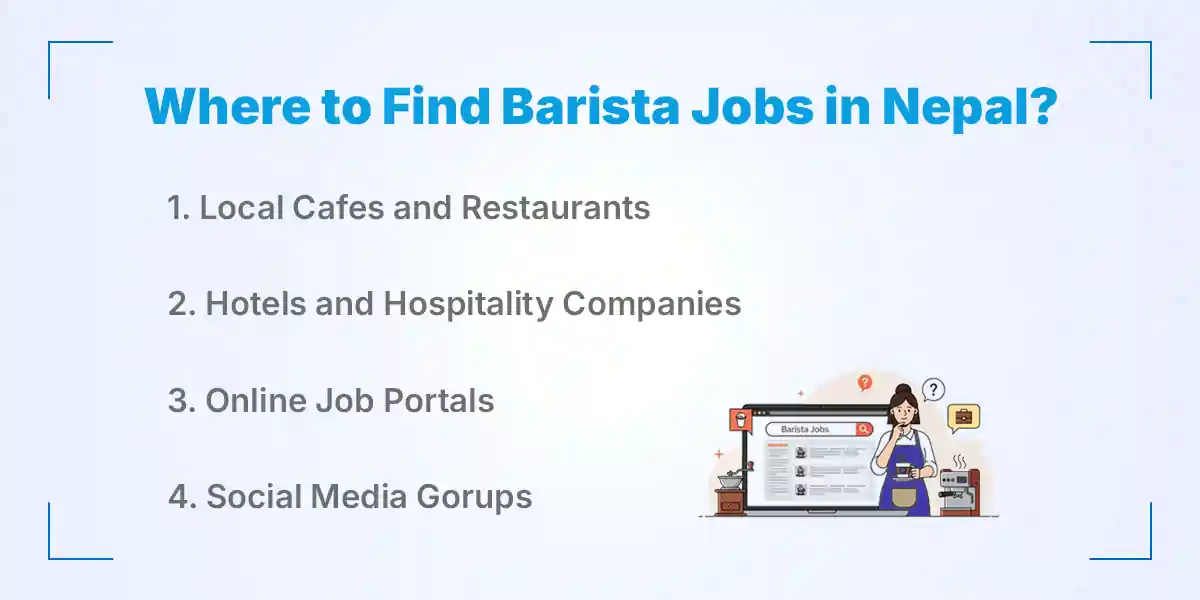
You can find barista jobs in Nepal through online job portals like Kumari Job, as well as local cafés, restaurants, and hospitality companies. Checking multiple sources increases your chances of discovering openings that match your skills and career goals. Networking and visiting workplaces in person can also help find unadvertised opportunities. Regularly monitoring these sources ensures you don’t miss new positions and can apply promptly.
1. Local Cafés and Restaurants
Many small and independent cafés hire baristas directly without posting online. Visiting cafés in person or sending your CV shows initiative and interest. These roles often provide hands-on training and exposure to everyday café operations. Working in local cafés helps build customer service skills and practical coffee-making experience. Networking with café owners can lead to referrals and future job opportunities.
2. Hotels and Hospitality Companies
Hotels, resorts, and restaurants with coffee services often recruit baristas through internal HR or career pages. These positions may offer structured training, higher salaries, and professional work environments. Experience in hotels enhances skills in high-volume coffee service and customer management. Baristas may also gain exposure to international standards and advanced coffee equipment.
3. Online Job Portals
Job portals like Kumari Job list updated barista openings across Nepal. Candidates can apply directly through the portal and track their applications. Online applications save time and provide detailed job descriptions, requirements, and deadlines. Regularly checking portals increases the chances of finding competitive roles in cafés, hotels, or coffee chains.
4. Social Media Groups
Facebook, LinkedIn, and hospitality groups often share barista vacancies and hiring announcements. Following relevant groups allows quick access to openings and networking opportunities. Engaging with these communities can provide tips, referrals, and insider information about upcoming jobs. Active participation can make employers notice your interest and professionalism.
Conclusion
Becoming a barista in Nepal offers an exciting career path for those passionate about coffee, customer service, and hospitality. With the right mix of technical skills, soft skills, and practical experience, candidates can secure rewarding positions in cafés, hotels, restaurants, and coffee chains. Understanding the work environment, salary expectations, and growth opportunities helps aspirants make informed career choices.
Continuous learning, certifications, and networking are key to advancing as a barista. From entry-level roles to senior, managerial, or even international opportunities, the barista profession provides steady career growth, financial stability, and the chance to be part of Nepal’s growing coffee culture.
Frequently Asked Questions
Submit your comments

Get Our App On



SEO Training for Freshers in Nepal: Skills, Career & Job Opportunities
VIEW DETAILS
SEO Training vs. Self-Learning: Which Is Right for You?
VIEW DETAILS
How to Choose Between Two Job Offers
VIEW DETAILS
Digital Marketing Training Interview Questions and Answers for Freshers
VIEW DETAILS


Loading Comments...