



Do you struggle to find reliable job opportunities in Nepal? Many applicants spend months searching and applying without success because they follow unclear steps or rely on unofficial sources. Missing eligibility criteria, incomplete documents, or submitting applications through the wrong channels often lead to rejection. Competition for roles with top organisations like UNICEF adds to the challenge, leaving candidates frustrated and unsure where to start.
In this blog, you will learn exactly how to apply for a UNICEF Nepal vacancy online. We explain different types of positions, eligibility requirements, skills needed, and where to look for UN jobs in Nepal. Additionally, we provide step-by-step guidance on preparing documents, submitting applications, and tips to improve selection chances. By following this guide, candidates gain clarity, save time, and increase their likelihood of securing a rewarding role with UNICEF in Nepal.
In this blog
What is a UNICEF Job & Types of Jobs in UNICEF
A UNICEF job is a position within the United Nations Children’s Fund in Nepal that focuses on child rights, education, health, and humanitarian initiatives. Employees contribute to programs that improve the well-being of children and communities. Roles range from administrative and technical positions to project management and field operations. Working at UNICEF provides exposure to international development standards and professional growth opportunities. Jobs also emphasise teamwork, problem-solving, and community impact.
Types of Jobs in UNICEF
Full-Time Positions
Full-time positions involve long-term roles in program management, administration, operations, and technical support. Employees are responsible for planning, executing, and monitoring projects across Nepal. They coordinate with field teams, government agencies, and partner organisations to ensure program objectives are met. Full-time staff gain structured professional development, mentoring opportunities, and potential for promotions. These roles offer stability while allowing individuals to contribute directly to large-scale, high-impact initiatives.
Internship Opportunities
Internships are temporary positions designed for students or recent graduates to gain practical exposure. Internship in UNICEF roles support program implementation, research, reporting, and administrative tasks. Interns work alongside experienced professionals, gaining insights into project management, field operations, and organisational processes. These internships provide skill-building, networking opportunities, and a stepping stone for future full-time roles within UNICEF or other development organisations.
Consultant or Contract Roles
Consultant or contract roles are project-based positions requiring specific expertise. Consultants handle defined tasks such as research, technical assessments, or specialised program management for a limited period. These roles allow professionals to contribute their expertise without a long-term commitment. Consultants often collaborate with cross-functional teams, providing insights, recommendations, and deliverables that directly influence project outcomes. These positions offer flexibility while exposing candidates to diverse projects and challenges.
Volunteer Positions
Volunteer positions focus on community engagement, awareness campaigns, and supporting ongoing programs. Volunteers assist in organising events, mobilising local communities, and providing support for child-focused initiatives. They gain firsthand experience in social development, advocacy, and project execution. Volunteering provides practical exposure to UNICEF’s mission, builds professional skills, and fosters a sense of contribution to meaningful societal change. Volunteers often develop networks and experience that can support future career opportunities.
How to Apply for UNICEF Jobs In Nepal?
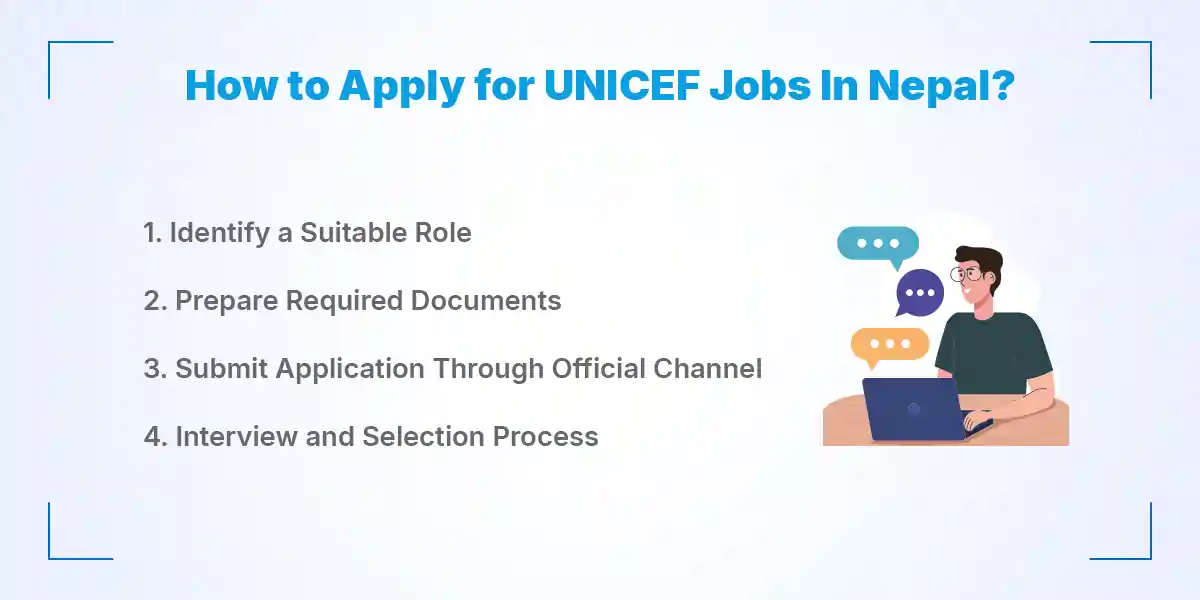
You can apply for UNICEF jobs in Nepal by following a structured, step-by-step process. Begin by identifying roles that match your education, experience, and career aspirations. Prepare all necessary documents, including CV, cover letter, and supporting certificates. Submit applications exclusively through official channels to ensure authenticity. Shortlisted candidates undergo interviews or assessments, and successful applicants are offered positions. Following this process ensures your application is complete, professional, and increases your chances of selection.
Step 1: Identify a Suitable Role
Start by visiting the official UNICEF Nepal career portal or the UNICEF global careers website. Carefully review each open position, paying attention to job title, responsibilities, required qualifications, and skills. Consider the duration, level of responsibility, and location of the role before applying. Make a list of roles that match your education, professional experience, and career goals. Avoid applying for positions that do not fit your profile, as this reduces chances of selection and wastes time. Research past projects or initiatives related to the role to better understand expectations.
Step 2: Prepare Required Documents
Prepare a professional CV that highlights relevant skills, experience, and achievements. Write a cover letter explaining why you are suitable for the role and how you align with UNICEF’s mission. Collect academic transcripts, professional certificates, and reference letters, ensuring each document is accurate and verifiable. Ensure all documents meet format, file size, and naming requirements specified in the job posting. Proofread all materials to eliminate errors and present a professional image. Preparing documents carefully demonstrates attention to detail and increases credibility with recruiters.
Step 3: Submit Application Through Official Channel
Submit your application only through UNICEF’s official website or authorised portals to guarantee it reaches the hiring team. Fill out all sections of the online form accurately, providing detailed information where required. Upload your CV, cover letter, and supporting documents in the specified formats. Double-check that the application is complete and submitted before the deadline. Confirm submission through automated acknowledgement emails if provided. Following official channels prevents scams, ensures timely processing, and signals professionalism to recruiters.
Step 4: Interview and Selection Process
Shortlisted candidates may be contacted for written tests, technical assessments, or interview preparation for competency-based interviews. Interviews may be conducted online or in person, depending on the role and location. Prepare by reviewing UNICEF’s mission, projects, and the responsibilities of the position, and practice answering behavioural and scenario-based questions. Highlight both technical expertise and soft skills such as teamwork, communication, and problem-solving. After the assessment, successful candidates receive an offer letter and onboarding details. Proper preparation and understanding of the process significantly improve chances of selection.
Eligibility Criteria
Eligibility criteria for UNICEF Nepal jobs vary depending on role type, level of responsibility, and technical requirements. Candidates must meet educational standards, possess relevant work experience, and sometimes hold specific certifications. Age limits may apply for certain positions, especially internships or entry-level roles. Technical or specialised roles often require additional qualifications or professional credentials. Meeting these criteria ensures applicants are capable of performing the responsibilities effectively.
Education Requirements for Different Roles
Full-time positions typically require a bachelor’s or master’s degree in relevant fields such as social sciences, public health, education, or development studies. Internships may accept current students or recent graduates with partial coursework completed. Consultant roles often require advanced degrees or specialised knowledge, depending on the project. Administrative and support roles may require diplomas or certifications in management, finance, or IT. Ensuring your education aligns with the job description is essential before applying.
Age and Experience Requirements
Internships usually have age restrictions or target candidates in early career stages. Full-time and consultant positions often require 2–5 years of relevant work experience, though senior roles may demand more. Experience in project management, field operations, or relevant technical domains increases eligibility and competitiveness. Demonstrated experience in development, research, or humanitarian projects strengthens applications. Candidates without the required experience may find their applications rejected.
Specific Certifications or Qualifications for Technical Roles
Technical positions may require certifications in project management, monitoring and evaluation, health, IT, or education. Certain roles in child protection, nutrition, or finance may demand specialised credentials recognised internationally or nationally. Professional qualifications signal expertise, ensuring candidates can handle responsibilities with minimal supervision. Keeping certifications updated and relevant improves eligibility and demonstrates commitment to professional standards.
Skills Needed for UNICEF Jobs
Candidates applying for UNICEF Nepal jobs must possess a combination of technical expertise and interpersonal abilities. Roles demand specific knowledge relevant to the position, along with strong communication, teamwork, and problem-solving capabilities. Language proficiency, particularly in English, is often required for both written and oral communication. Developing these skills increases effectiveness in project delivery and improves selection chances. A balanced skill set ensures candidates can contribute meaningfully to UNICEF’s mission.
Technical Skills
Technical skills depend on the role and may include program management, data analysis, monitoring and evaluation, IT skills, finance, education, or health expertise. Candidates in field operations must understand project implementation, reporting systems, and relevant software tools. For technical or specialised roles, proficiency in tools such as MS Office, SPSS, GIS, or project management software is often required. Demonstrating hands-on experience and knowledge of international development practices strengthens the application.
Soft Skills
Soft skills are critical for collaboration and effective communication. Key abilities include teamwork, problem-solving, adaptability, time management, and interpersonal communication. Roles require interacting with government agencies, local communities, and international colleagues. Leadership, conflict resolution, and initiative are valued in both project and administrative positions. Strong soft skills ensure smooth project execution and enhance professional relationships within UNICEF.
Language Requirements
Fluency in English is typically mandatory for reports, communication, and project documentation. Knowledge of Nepali or local languages is often preferred for field positions, community engagement, and stakeholder coordination. Multilingual candidates have an advantage in diverse project settings. Effective language skills improve clarity, collaboration, and the ability to convey technical and social messages accurately.
Where to Look for UNICEF Jobs in Nepal?
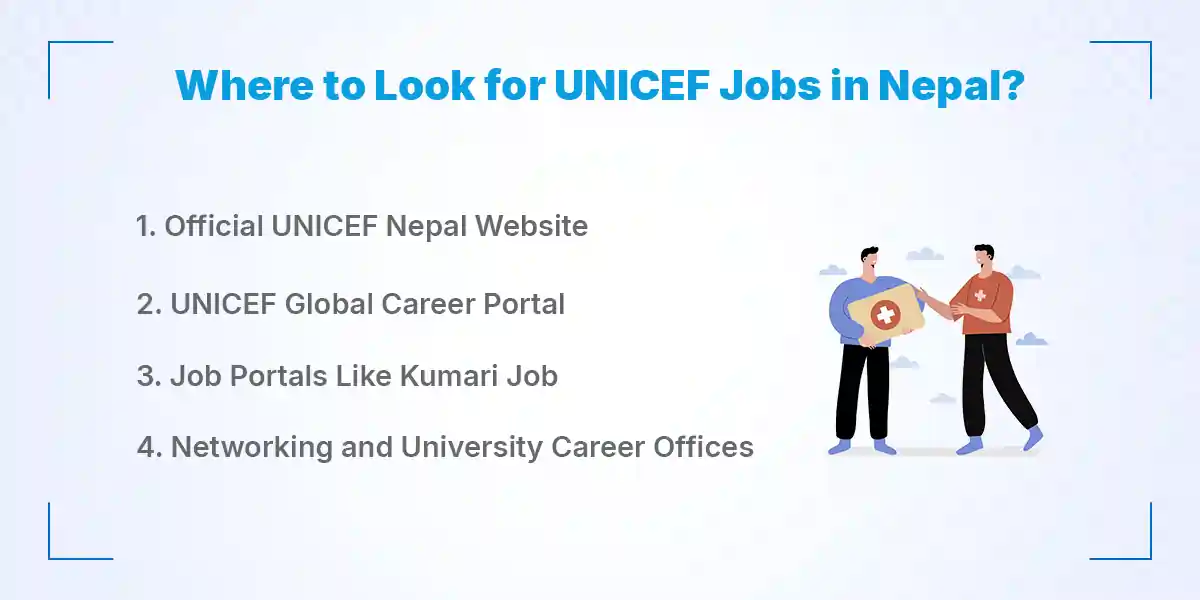
You can look for UNICEF jobs in Nepal through UNICEF’s official website and trusted job portals like Kumari Job, which provide updates on current vacancies. The official site lists all openings with detailed role descriptions, eligibility requirements, and application instructions. Kumari Job offers curated alerts for UNICEF positions, helping candidates stay informed without constantly checking multiple sources. Using these platforms ensures access to legitimate opportunities and improves the chances of timely applications. Combining official and portal sources helps candidates apply efficiently to suitable roles.
1. Official UNICEF Nepal Website
UNICEF Nepal is the primary source for accurate job listings. It provides full role descriptions, eligibility criteria, responsibilities, and application deadlines. Candidates can submit applications directly through the official portal, ensuring secure and verified submissions. The site also lists internships, consultancy roles, and volunteer positions, giving a comprehensive view of available opportunities. Regularly checking the site ensures candidates don’t miss new openings.
2. UNICEF Global Career Portal
The UNICEF global career portal lists positions worldwide, including Nepal-based roles. It allows filtering by location, contract type, and job category. Applications submitted through this portal are officially tracked by UNICEF HR teams. Candidates can create profiles, set alerts for new vacancies, and access resources about competencies and career growth.
3. Job Portals Like Kumari Job
Job portals such as Kumari Job provide timely information about UNICEF Nepal job vacancies and their requirements. While you cannot apply directly through Kumari Job, it offers alerts and updates on new openings, eligibility criteria, and application deadlines. Users can filter opportunities based on location, role type, or experience level. This allows candidates to prepare documents and applications in advance. By using these notifications, applicants can remain up-to-date and apply through official channels as soon as positions are announced.
4. Networking and University Career Offices
Networking with professionals in the development sector or alumni working with UNICEF can reveal unpublished opportunities. University career offices often maintain connections with international organisations and NGOs. Attending workshops, seminars, and job fairs increases exposure to available positions. Networking also offers guidance on application preparation, interviews, and selection tips.
Career Growth in UNICEF Nepal
Career growth in UNICEF Nepal offers structured opportunities for professional development and long-term advancement. Employees gain access to training, mentorship, and skill-building programs that enhance expertise in development, management, and field operations. Performance is regularly assessed to identify potential promotions and career progression. Long-term roles allow staff to take on greater responsibilities and participate in high-impact projects. Overall, UNICEF provides an environment that supports continuous learning and career advancement.
1. Training and Development Programs
UNICEF Nepal provides various training programs designed to enhance technical knowledge, leadership skills, and project management capabilities. Staff can attend workshops, online courses, and seminars relevant to their roles. Mentorship opportunities allow employees to learn from experienced professionals within the organisation. Training also covers areas such as child protection, health, education, and monitoring & evaluation. Continuous skill development ensures staff stay updated with best practices in international development.
2. Promotion and Performance Appraisal
Employee performance is evaluated regularly through structured appraisal systems. High-performing staff may receive promotions to roles with increased responsibility, leadership opportunities, or specialised technical positions. Appraisals consider project outcomes, teamwork, problem-solving, and adherence to organisational values. Feedback and goal-setting during evaluations help staff understand growth paths and areas for improvement. Transparent performance management ensures merit-based career progression.
3. Long-Term Opportunities
Long-term employment at UNICEF Nepal allows professionals to engage in significant projects and initiatives that impact children and communities. Experienced staff may take on senior management roles, cross-functional assignments, or international postings. Extended tenure provides exposure to policy development, strategy implementation, and global networking. Long-term positions also offer stability, professional recognition, and the opportunity to make meaningful contributions to development goals.
Tips to Increase Selection Chances
To improve your chances of selection for UNICEF Nepal jobs, focus on presenting a strong, relevant application and demonstrating your skills effectively. Tailoring your CV and cover letter to the role, highlighting volunteer or field experience, and preparing for competency-based interviews are essential. Continuous learning, relevant certifications, and networking with current or former employees can further enhance your profile. Combining these strategies increases your visibility and credibility with recruiters.
1. Tailor CV and Cover Letter
Customise your CV and cover letter for each position, emphasising skills, experience, and achievements that match the job description. Use clear, concise language and highlight measurable results. Avoid generic applications, as recruiters prioritise candidates who demonstrate a clear fit for the role. Properly structured documents show professionalism and attention to detail.
2. Highlight Relevant Volunteer or Field Experience
Showcase any volunteer work, internships, or field experience that aligns with UNICEF’s mission. Detail your responsibilities, outcomes, and the impact of your work. Experience in development projects, child welfare programs, or humanitarian initiatives is highly valued. Providing concrete examples strengthens credibility and demonstrates practical understanding of development work.
3. Prepare for Competency-Based Interviews
Understand the competencies required for the role and practice answering behavioural and scenario-based questions. Use real-life examples to demonstrate problem-solving, teamwork, communication, and leadership skills. Research UNICEF projects and initiatives to show awareness of the organisation’s priorities. Effective preparation increases confidence and performance during interviews.
4. Maintain Continuous Learning and Certifications
Engage in ongoing professional development, such as online courses, workshops, and certifications relevant to your field. Keep skills updated in areas like project management, monitoring and evaluation, IT, or education. Certifications demonstrate commitment to learning and enhance technical credibility. Employers value candidates who actively improve their knowledge and expertise.
5. Network with Current or Former UNICEF Employees
Connect with professionals working at UNICEF or alumni who have experience with the organisation. Seek guidance on application strategies, interview preparation, and insights into organisational culture. Networking can provide referrals or tips on upcoming vacancies. Building professional relationships improves visibility and access to insider knowledge that can enhance selection chances.
Conclusion
Getting a job at UNICEF Nepal requires preparation and a clear strategy. Understanding eligibility, identifying suitable roles, and applying through official channels ensures your application is considered. Tailoring your CV, highlighting volunteer or field experience, and preparing for competency-based interviews increases your chances of selection.
Continuous learning, earning relevant certifications, and networking with current or former employees improve credibility and access to opportunities. Career growth at UNICEF includes training, promotions, and long-term engagement in impactful projects. Following these steps equips candidates to apply effectively, enhance their skills, and contribute meaningfully to development initiatives in Nepal.
Frequently Asked Questions
Submit your comments

Get Our App On



SEO Training for Freshers in Nepal: Skills, Career & Job Opportunities
VIEW DETAILS
SEO Training vs. Self-Learning: Which Is Right for You?
VIEW DETAILS
How to Choose Between Two Job Offers
VIEW DETAILS
Digital Marketing Training Interview Questions and Answers for Freshers
VIEW DETAILS


Loading Comments...