



Running digital campaigns in Nepal often feels frustrating. You invest time, money, and effort, yet the results stay inconsistent due to low internet reach, limited skills, tight budgets, and unpredictable consumer behavior. Many businesses struggle to generate quality leads, build trust online, or measure real ROI, making digital marketing feel more confusing than effective.
As Nepal’s market rapidly shifts online, these issues are no longer optional to ignore. Understanding why digital marketing underperforms is the first step toward fixing it and gaining a competitive edge.
In this guide, we break down the challenges of digital marketing in Nepal, explain why they exist, and show how businesses can overcome them with practical, Nepal-focused strategies to achieve sustainable online growth.
In this blog
Digital Marketing Landscape in Nepal
Digital marketing in Nepal has grown rapidly over the past few years, driven by increasing smartphone usage, affordable mobile data, and the expansion of social media platforms. Businesses of all sizes, from local startups to established brands, are shifting their focus from traditional advertising to digital marketing to reach wider and more targeted audiences. Platforms like Facebook, Instagram, Google Search, and YouTube dominate the digital space due to their high user engagement in Nepal.
However, the digital ecosystem is still in a developing phase. Many businesses adopt digital marketing without a clear strategy, often relying only on boosted posts or basic ads. This limits long-term growth and makes results inconsistent.
Key characteristics of the digital marketing landscape in Nepal include:
- High mobile dependency, with most users accessing the internet through smartphones rather than desktops
- Social media-first marketing, especially Facebook and Instagram, as primary customer touchpoints
- Growing interest in SEO and content marketing, though adoption remains limited
- Increasing use of digital ads, mainly for brand awareness rather than conversions
- Rising demand for digital marketing services, especially among SMEs and startups
Despite strong growth potential, challenges such as skill gaps, budget limitations, and trust issues with online transactions continue to shape how digital marketing is practiced in Nepal. Understanding this evolving landscape helps businesses make informed decisions, choose the right channels, and prepare better strategies to compete effectively in the Nepali digital market.
Why Digital Marketing Is Crucial for Nepali Businesses?
Digital marketing is crucial for Nepali businesses because it offers cost-effective reach, targeted visibility, and measurable growth in an increasingly online market. As more consumers in Nepal rely on search engines and social media to discover products and services, businesses without a strong digital presence risk losing relevance. Digital marketing helps brands stay competitive, build trust, and connect with the right audience at the right time.
1. Cost-Effective Marketing for Small and Medium Businesses
Digital marketing allows Nepali SMEs to promote their products without the high costs of traditional advertising like TV, radio, or print. Even with a limited budget, businesses can run targeted ads and control spending. Platforms like Facebook and Google Ads let brands reach specific locations, age groups, and interests. This reduces wasted ad spend and improves efficiency. Organic channels such as SEO and content marketing further lower long-term costs. Small businesses can compete with larger brands through a smart strategy. This makes digital marketing practical and scalable.
2. Direct Access to Local and Targeted Audiences
Most Nepali consumers actively use social media and search engines to make buying decisions. Digital marketing helps businesses appear exactly where customers are looking. Local SEO improves visibility for location-based searches. Social media enables direct communication with potential buyers. Businesses can personalize messages based on user behavior. This improves engagement and conversion rates. Targeted reach also builds stronger customer relationships over time.
3. Measurable Growth and Better Decision-Making
Unlike traditional marketing, digital marketing provides clear data and performance insights. Businesses can track traffic, leads, conversions, and ROI in real time. This helps identify what works and what does not. Campaigns can be optimized quickly based on results. Data-driven decisions reduce guesswork and risk. Over time, this leads to consistent growth. Measurability is a major advantage for long-term success.
Challenges of Digital Marketing in Nepal
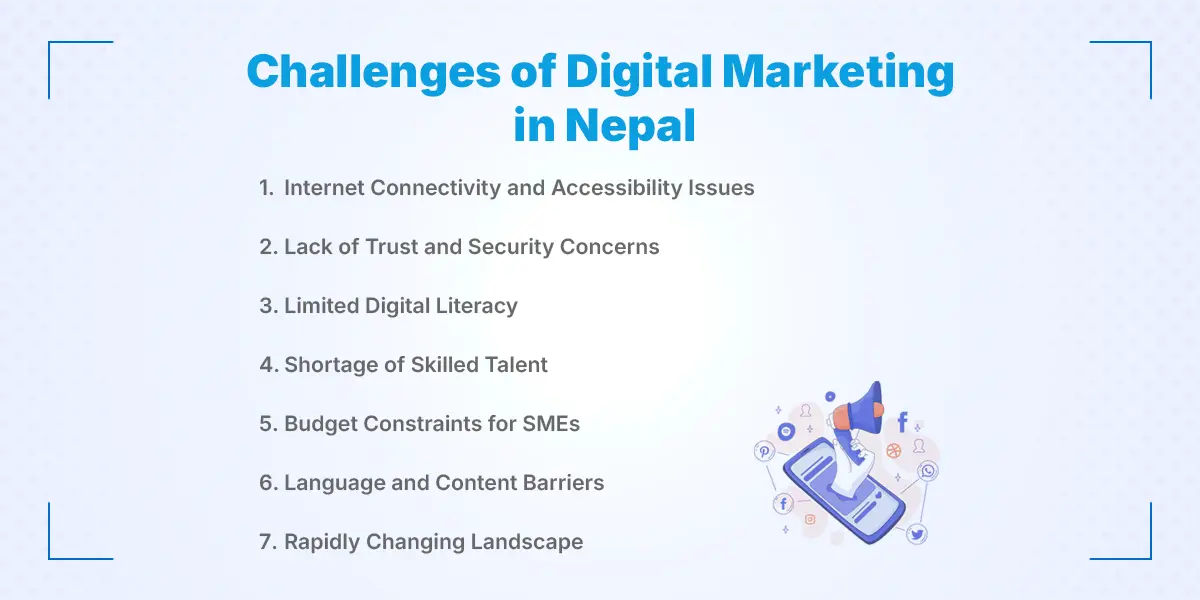
Digital marketing in Nepal is growing, but many businesses still struggle to get results. Even after spending time and money, campaigns often fail to perform as expected. The problems are not only technical but also related to people, skills, and mindset. Understanding these challenges helps businesses avoid mistakes and plan better digital strategies.
1. Internet Connectivity and Accessibility Issues
Internet access is still uneven across Nepal. Many rural areas have slow or unstable internet connections. This makes it hard for businesses to reach audiences outside major cities. Mobile internet is common, but speed and reliability are not always consistent. Slow-loading websites cause users to leave quickly. Video ads and rich content often fail to load properly. This directly affects engagement and conversions. Poor connectivity remains a major barrier to digital growth.
2. Lack of Trust and Security Concerns
Many users in Nepal do not fully trust online platforms. People worry about online scams, fake ads, and data misuse. Online payment systems are still not trusted by many customers. This makes users hesitant to complete purchases. Businesses also struggle to build credibility online. A lack of clear policies and secure systems adds to the fear. Trust takes time to build in the digital space. Without trust, marketing efforts lose impact.
3. Limited Digital Literacy
A large number of users have basic internet skills only. Many people know how to use social media but not how online marketing works. This limits how they interact with ads and websites. Some users find digital platforms confusing. Businesses also lack a proper understanding of digital tools. Wrong campaign setup leads to poor results. Training and awareness are still low. Digital literacy remains a key challenge.
4. Shortage of Skilled Talent
There are not enough trained digital marketing professionals in Nepal. Many businesses depend on self-taught marketers with limited experience. Advanced skills like SEO, analytics, and paid ads are hard to find. This leads to poor planning and weak execution. Hiring experienced talent is also expensive. Agencies are limited in number, and the quality varies. Skill gaps slow down growth. Talent shortage affects overall performance.
5. Budget Constraints for SMEs
Most small businesses in Nepal work with tight budgets. Digital marketing is often seen as an extra cost. Many cannot afford long-term campaigns. Paid ads are stopped too early due to low funds. This prevents proper testing and optimization. Free tools are used, but they have limits. Small budgets reduce reach and visibility. Budget issues restrict growth.
6. Language and Content Barriers
Nepal has many languages and cultural differences. Creating content that fits everyone is difficult. English content does not always connect with local users. Nepali content performs better but needs careful writing. Many businesses lack content skills. Poor content fails to attract attention. Cultural mismatch reduces engagement. Language remains a big challenge.
7. Rapidly Changing Landscape
Digital marketing platforms change very fast. Algorithms, ad rules, and features are updated often. What works today may fail tomorrow. Many businesses struggle to keep up. Learning new tools takes time and effort. Lack of updates leads to poor performance. Trends shift quickly in social media. Staying updated is difficult but necessary.
How Businesses Can Overcome These Challenges?
Businesses in Nepal can overcome digital marketing challenges by improving skills, using smart strategies, and focusing on long-term growth instead of quick results. When the right approach is followed, even small businesses can achieve strong online visibility. Understanding the problems and taking practical steps helps brands grow steadily in the digital space.
1. Invest in Advanced Digital Marketing Training
One of the biggest solutions is proper training. Many problems come from a lack of skills and clear knowledge. Advanced digital marketing training helps teams understand SEO, ads, content, and analytics better. It reduces mistakes and improves results. Trained professionals can plan campaigns with clear goals. Businesses also save money by avoiding trial-and-error methods. Regular learning helps teams stay updated with changes. Training builds confidence and long-term success.
2. Focus on Simple and Consistent Strategies
Trying too many tactics at once often leads to failure. Businesses should start with a few clear goals. Consistency matters more than speed. Posting regularly and running steady campaigns builds trust. Simple strategies are easier to manage and improve. Over time, results become more stable. Small steps lead to steady growth. Clear planning reduces confusion.
3. Use Local Content and Build Trust
Local language content connects better with Nepali audiences. Using Nepali or mixed language improves engagement. Honest messaging builds trust with users. Clear contact details and reviews increase credibility. Secure payment options reduce fear. Educational content also helps build confidence. Trust grows slowly but strongly. This improves conversions.
4. Track Performance and Adjust Regularly
Businesses should track what works and what does not. Basic tools can show traffic and leads. Data helps improve future campaigns. Poor results should be fixed early. Testing small changes improves performance. Regular checks prevent wasted effort. Data-driven decisions lead to better outcomes.
Conclusion
The challenges of digital marketing in Nepal are real, but they are not barriers that cannot be overcome. They exist because the market is still growing, learning, and adapting to digital change. Issues like limited skills, low trust, budget limits, and fast platform changes make digital marketing harder, not impossible. Businesses that understand these challenges gain a clear advantage over those that ignore them.
With the right mindset, proper training, local-focused content, and consistent effort, digital marketing can deliver strong and lasting results in Nepal. Success does not come from shortcuts but from learning, testing, and improving over time. For Nepali businesses, digital marketing is no longer optional. It is a necessary step toward long-term growth and relevance.
Frequently Asked Questions
Submit your comments

Get Our App On



SEO Training for Freshers in Nepal: Skills, Career & Job Opportunities
VIEW DETAILS
SEO Training vs. Self-Learning: Which Is Right for You?
VIEW DETAILS
How to Choose Between Two Job Offers
VIEW DETAILS
Digital Marketing Training Interview Questions and Answers for Freshers
VIEW DETAILS


Loading Comments...