
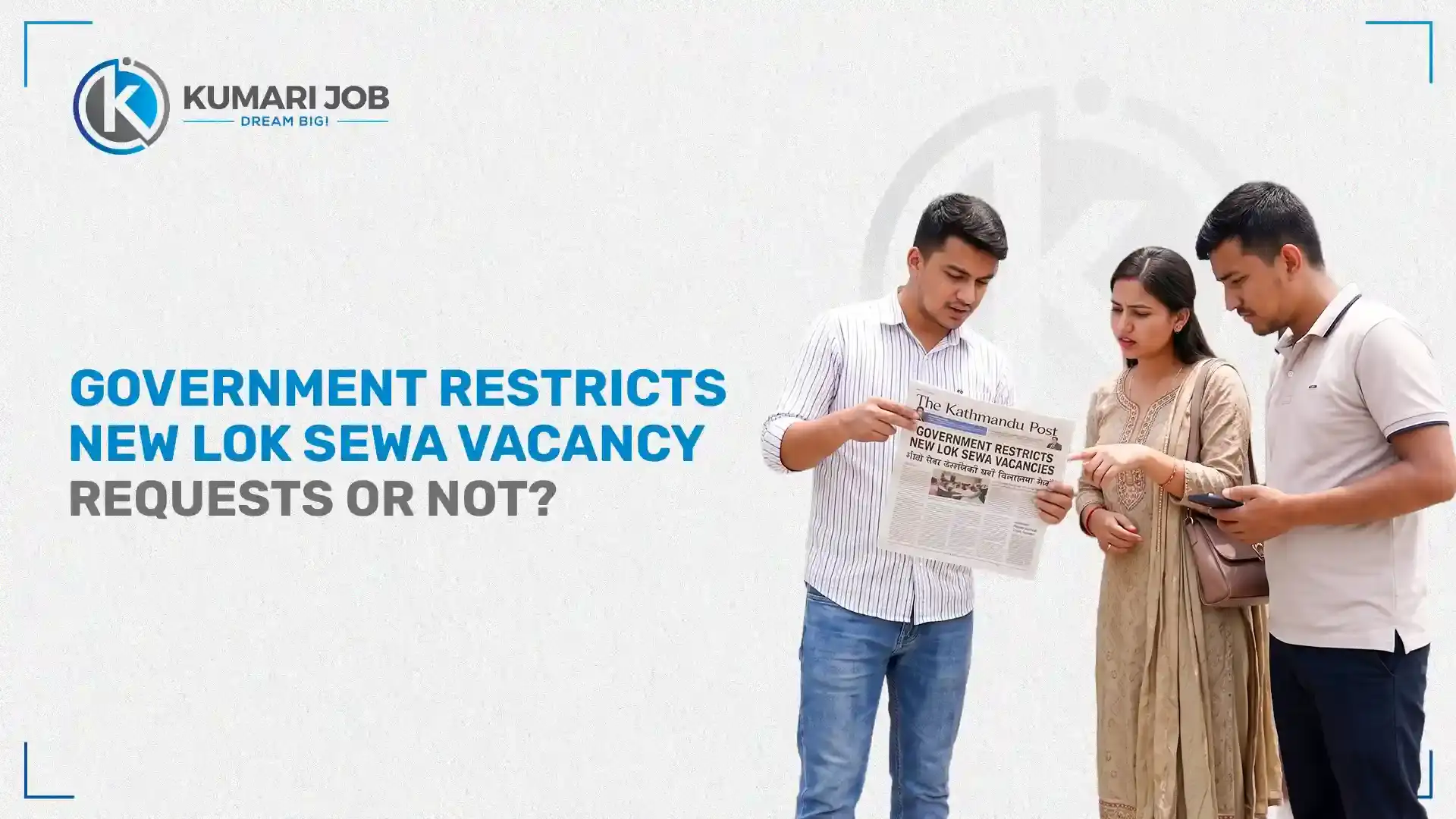

The Nepal Government has temporarily stopped government offices from sending new permanent recruitment requests to the Public Service Commission (Lok Sewa Aayog) while it carries out an Organization and Management (O&M) survey and adjusts employees after restructuring ministries. The news quickly led many people to believe that Lok Sewa vacancies had been halted completely. However, the government later clarified that Lok Sewa recruitment itself has not been suspended.
Even so, the announcement has left thousands of aspirants worried about upcoming vacancies and their career plans. So, what does this decision actually mean? In this article, you'll clearly understand what happened, why the decision was taken, what comes next, and how you can keep your career moving forward during this uncertain period.
In this blog
Government Decided to Halt Loksewa Recruitment: What Actually Happened?
The reports are only partly true. The Government of Nepal directed ministries and government offices to temporarily stop sending new permanent recruitment requests to the Public Service Commission (Lok Sewa Aayog). This decision is linked to the ongoing Organization and Management (O&M) survey, which aims to review government structures and adjust employees after the recent ministry restructuring.
Soon after the announcement, many news reports and social media posts claimed that Lok Sewa recruitment had been halted. Naturally, this created confusion among thousands of candidates preparing for government jobs.
However, the government later clarified that Lok Sewa recruitment has not been completely suspended. The temporary restriction applies only to new recruitment requests from government offices while the restructuring process is underway.
This is the official notice sent by the government:
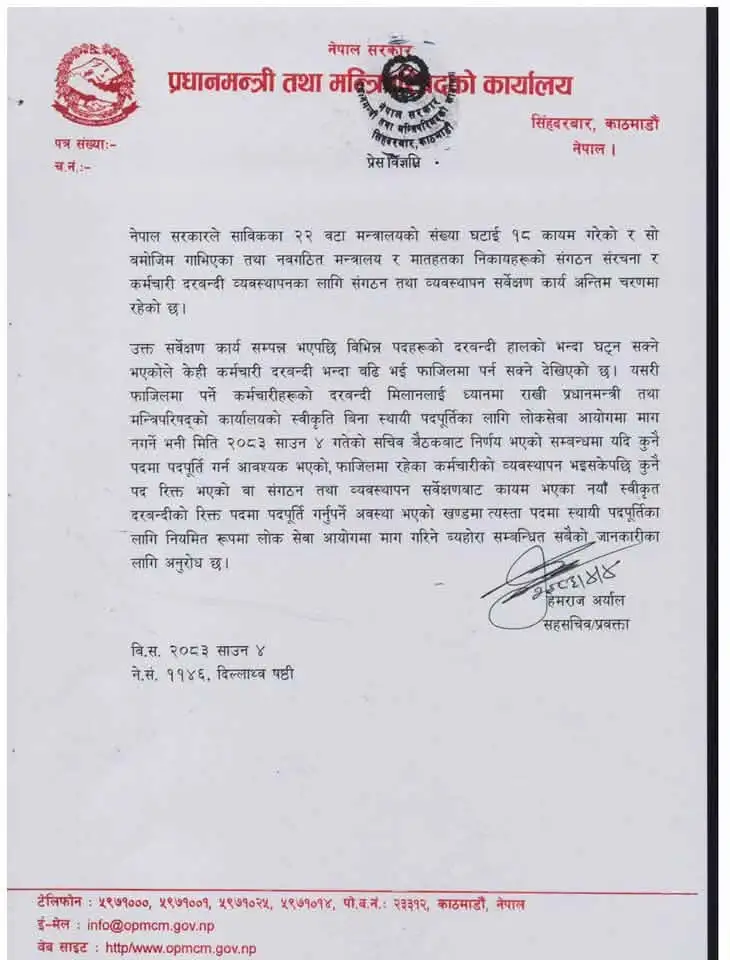
Simply put, government hiring has not stopped. However, some vacancies may be delayed, revised, or put on hold until the restructuring is complete.
Why Did the Government Restrict New Lok Sewa Recruitment Requests?
The government made this decision to complete its Organization and Management (O&M) survey before hiring new permanent employees.
The survey reviews the structure of ministries and government offices to determine how many employees are actually needed. This comes after the government reduced the number of ministries from 22 to 18, requiring offices to be reorganized and existing employees to be adjusted before creating new permanent positions.
This helps prevent recruitment for positions that may later be changed, merged, or removed once the restructuring process is complete.
Will Lok Sewa Vacancies Stop Completely?
No. Based on the government's clarification, Lok Sewa recruitment has not been completely suspended.
However, the number and timing of upcoming vacancies may be affected. Some government offices may delay sending recruitment requests until the restructuring process is complete, while certain positions could be revised or removed altogether.
For job seekers, this means there may be fewer vacancy announcements in the short term. Even so, government recruitment is expected to continue once offices finalize their staffing requirements.
Who Will Feel the Impact of the Lok Sewa Recruitment Delay?
This decision will mainly affect candidates who are waiting for new Lok Sewa vacancy announcements. Fresh graduates, first-time applicants, and those preparing for specific government positions may have to wait longer than expected.
Candidates targeting technical or newly created positions may also see changes if those roles are reviewed during the restructuring process.
On the other hand, those who are already preparing for Lok Sewa should not assume their efforts are wasted. Recruitment has not stopped completely, and once the restructuring is finished, vacancy announcements are expected to resume.
Should You Stop Preparing for Lok Sewa?
No. If your goal is landing a government job, this is not the time to stop preparing.
The government has only paused new recruitment requests while it completes its restructuring. It has not announced the end of Lok Sewa recruitment. Once the process is complete, vacancy announcements are expected to continue.
In fact, this extra time can work in your favor. You can revise the syllabus, practice more mock tests, improve your weak subjects, and stay updated with official notices. When new vacancies are announced, candidates who stayed consistent will have a clear advantage over those who stopped preparing.
Loksewa Vacancy Temporarily Stopped: Government's Reason vs Public Concerns
The government's reasoning is simple. It wants to complete the Organization and Management (O&M) survey before approving new permanent recruitment. This allows ministries and government offices to adjust existing employees and confirm how many positions are actually needed after the restructuring.
The government's position has also evolved since the initial announcement. While the first circular raised concerns about a pause in recruitment requests, officials later clarified that regular Lok Sewa recruitment would continue according to existing laws and that the government would not unnecessarily interfere with ministries' recruitment processes.
For many Lok Sewa aspirants, however, the concern is different. Thousands of candidates have spent months or even years preparing for government jobs. A delay in vacancy announcements can affect their study plans, career decisions, and confidence about what comes next. Some also worry that fewer positions may be available after the restructuring. This builds even more pressure, with more competition for limited openings.
Both perspectives are understandable. The government is trying to improve how public offices are managed, while candidates simply want a predictable recruitment process they can plan around.
The Bigger Challenge Is the Uncertainty
The delay itself may not be the biggest problem. For many candidates, the real challenge is not knowing what happens next.
The initial announcement led many people to believe that Lok Sewa recruitment had stopped completely. Although the government later clarified its decision, the mixed messages created confusion and raised more questions than answers.
Most candidates understand that government reforms take time. What they need now is clear communication and timely updates. Until then, the best approach is to stay informed through official sources, continue preparing, and avoid making career decisions based on rumors alone.
What Should You Do While Waiting for New Lok Sewa Vacancies?
Waiting doesn't mean putting your career on hold. Use this time to become a stronger candidate for both government and private sector opportunities.
Here are a few things you can do:
Continue preparing for the Lok Sewa exam and revise regularly.
Follow official announcements instead of relying on rumors or social media posts.
Learn practical skills such as computer applications, communication, or job-related software.
Gain work experience through internships or private sector jobs.
Keep your CV updated and apply for opportunities that match your skills.
Even if Lok Sewa vacancies take longer to open, the experience and skills you build now will benefit your career in the long run.
1. Don't Put Your Career on Hold.
Many candidates spend years waiting for the next government vacancy. While there's nothing wrong with aiming for a Lok Sewa job, putting your entire career on hold can mean missing valuable opportunities.
Private companies, banks, NGOs, INGOs, and growing businesses across Nepal continue to hire throughout the year. These roles help you gain practical experience, build professional skills, and earn an income while you continue preparing for government exams.
If a Lok Sewa vacancy opens later, you'll still be ready. In the meantime, you'll have strengthened your resume instead of waiting without progress.
Find Top Companies Hiring Right Now!
2. Explore Other Job Opportunities in Nepal
While waiting for the next Lok Sewa vacancy, consider exploring other career opportunities as well. Many companies across Nepal are actively hiring for full-time jobs, internships, and entry-level positions.
Working in the private sector helps you build practical skills, gain valuable experience, and grow your career while continuing your Lok Sewa preparation.
Explore the Latest Jobs in Nepal
3. Keep Preparing for Upcoming Lok Sewa Vacancies
For now, candidates should closely follow official government announcements instead of relying on rumors. The timeline for new Lok Sewa vacancy requests will largely depend on how quickly the government completes its restructuring and O&M survey.
While some recruitment may be delayed, the government has made it clear that Lok Sewa recruitment has not been permanently stopped. Until then, the best approach is to stay informed, continue preparing, and remain open to other career opportunities. Follow Kumari Job’s blog posts and socials, and we’ll keep you updated with the latest government and public service commission updates.
Conclusion
The latest Lok Sewa recruitment update has created uncertainty, but one thing is clear: government recruitment has not come to a complete stop. While the restructuring process may delay some vacancy announcements, the government has clarified that it will not interfere with ministries' recruitment processes under existing laws.
For candidates, the best approach is to stay informed through official updates, continue preparing for upcoming Lok Sewa vacancies, and avoid making decisions based on rumors. At the same time, don't hesitate to explore other job opportunities that can help you gain skills and experience.
Whether your next opportunity comes through Lok Sewa or the private sector, staying prepared and proactive will always put you one step ahead.
Frequently Asked Questions
Submit your comments

Get Our App On


How to Make a Police Report (Police Clearance Certificate) in Nepal?
VIEW DETAILS
Types of SEO and How They Work: Complete Beginner's Guide
VIEW DETAILS
How to Apply for Tattoo Artist Jobs in Nepal?
VIEW DETAILS
How to Apply for Medicity Hospital Vacancy?
VIEW DETAILS


Loading Comments...