



Finding and managing the right employees has become a major challenge for many businesses in Nepal. Companies often face delays in hiring, rising recruitment costs, employee turnover, and difficulties in managing payroll and legal compliance. These problems slow down business growth and take focus away from core operations.
In Nepal, staff outsourcing is becoming a preferred solution as businesses look for faster and more reliable ways to manage their workforce. Industries such as IT, banking, hospitality, manufacturing, and sales are increasingly using outsourced staff to meet changing business needs. This growing demand shows a clear shift from traditional hiring to more flexible staffing models.
In this blog, we will explain what staff outsourcing is, how it works in Nepal, its benefits, and how to choose the right outsourcing company for your business. By the end of this guide, you will have a clear understanding of whether staff outsourcing is the right solution for your company.
In this blog
What is Staff Outsourcing?
Staff outsourcing is a business practice where a company hires employees through a third-party service provider instead of recruiting them directly. In simple terms, the outsourcing company manages hiring, payroll, and HR responsibilities while the staff works for your business. This helps companies reduce costs, save time, and avoid HR and legal complexities.
Staff outsourcing is different from direct hiring because the employees are not on your company’s payroll. In direct hiring, businesses handle recruitment, salaries, taxes, and compliance on their own. With outsourcing, these responsibilities are handled by a professional service provider, reducing administrative workload and operational risk.
In a business environment, staff outsourcing works by first identifying manpower needs and sharing them with the outsourcing company. The provider then recruits, screens, and deploys suitable candidates. The outsourced staff works under your supervision, while the service provider manages payroll, benefits, documentation, and legal compliance.
Types of Staff Outsourcing in Nepal
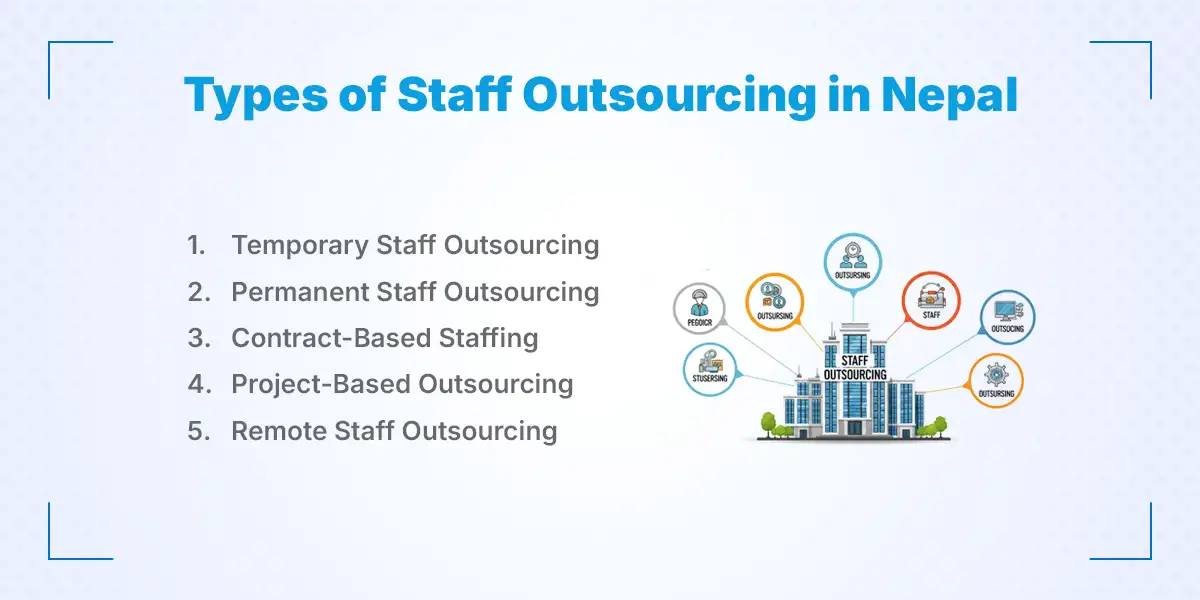
Staff outsourcing in Nepal is available in different forms depending on business needs, duration, and work nature. Companies choose the type of outsourcing based on flexibility, cost, and project requirements. Below are the most common types of staff outsourcing used by Nepali businesses.
1. Temporary Staff Outsourcing
Temporary staff outsourcing is used when companies need employees for a short period of time. This is common during peak seasons, events, or sudden workload increases. Businesses do not need to worry about long-term contracts or employee benefits. It helps control costs while meeting immediate manpower needs. This type is popular in hospitality, sales, and administrative roles.
2. Permanent Staff Outsourcing
Permanent staff outsourcing is suitable when businesses need long-term employees but do not want to manage payroll and HR internally. The staff works continuously for the client company, but the outsourcing provider handles salaries, compliance, and documentation. This reduces HR workload and legal risks. Many growing companies in Nepal use this model to scale operations smoothly. It is commonly used in IT, banking support, and corporate offices.
3. Contract-Based Staffing
Contract-based staffing involves hiring employees for a fixed contract period with clear terms and conditions. This model is useful for roles with defined timelines and responsibilities. Once the contract ends, businesses can renew or release the staff without complications. It offers flexibility and cost control. This type is widely used in construction, engineering, and technical roles.
4. Project-Based Outsourcing
Project-based outsourcing is ideal for businesses that need manpower only for a specific project. Employees are hired to complete defined tasks within a set timeframe. After project completion, the staffing engagement ends automatically. This helps businesses avoid long-term hiring commitments. It is common in IT development, research, marketing campaigns, and system implementation projects.
5. Remote Staff Outsourcing
Remote staff outsourcing allows businesses to hire professionals who work from different locations. This model reduces office costs and expands access to skilled talent. It is increasingly popular in Nepal, especially for IT, digital marketing, and customer support roles. Companies benefit from flexible work arrangements and productivity. Remote outsourcing is well-suited for businesses adopting digital operations.
Why Do Companies Choose Staff Outsourcing in Nepal?
Companies in Nepal choose staff outsourcing to reduce operational pressure and manage manpower more efficiently. Outsourcing helps businesses stay competitive by lowering costs, speeding up hiring, and simplifying HR management. Below are the key reasons why outsourcing has become a preferred hiring solution.
1. Cost Efficiency
Staff outsourcing helps companies significantly reduce recruitment and operational costs. Businesses do not need to spend on job advertisements, training, employee benefits, or long-term payroll commitments. The outsourcing provider handles salaries, taxes, and compliance, which lowers overall HR expenses. This makes outsourcing a cost-effective option, especially for small and growing businesses. Companies can control budgets while still accessing reliable manpower.
2. Access to Skilled Manpower
Outsourcing companies maintain a ready pool of skilled and pre-screened candidates. This allows businesses to quickly find qualified employees without long recruitment cycles. Companies gain access to experienced professionals who match their job requirements. This is especially helpful in sectors facing talent shortages. Businesses can fill critical roles without compromising on quality.
3. Reduced HR Burden
Managing employees involves recruitment, payroll, attendance, legal compliance, and performance tracking. Staff outsourcing transfers these responsibilities to a professional service provider. This reduces internal HR workload and minimizes administrative stress. Businesses can focus on core operations instead of day-to-day HR tasks. It also lowers the risk of compliance errors.
4. Faster Hiring Process
Outsourcing speeds up the hiring process by using established recruitment systems and candidate databases. Positions can be filled in days instead of weeks. This is crucial when businesses need immediate manpower. Faster hiring helps prevent productivity loss due to staff shortages. It ensures business continuity during peak demand periods.
5. Workforce Flexibility
Staff outsourcing allows businesses to scale their workforce up or down based on demand. Companies can hire temporary, contract, or project-based staff without long-term commitments. This flexibility is useful in uncertain market conditions. Businesses can adapt quickly to workload changes without financial risk. Outsourcing supports agile workforce planning in Nepal’s evolving business environment.
Ready to Simplify Your HR Operations?
Let our HR specialists handle recruitment, payroll, and people-related processes with an expert's insight.
How Does Staff Outsourcing Work in Nepal?
Staff outsourcing in Nepal works through a structured process where a service provider manages manpower while the business focuses on daily operations. The outsourcing company handles recruitment, payroll, and compliance, ensuring smooth workforce management. Here’s a step-by-step explanation of how outsourcing works in a business environment:
1. Understanding Manpower Requirements
The process begins when a business clearly defines its staffing needs. This includes job roles, required skills, number of employees, and duration of work. Clear requirements help the outsourcing company find the right candidates quickly. It also ensures the selected staff matches business expectations. Proper planning at this stage reduces future hiring issues.
2. Candidate Sourcing and Screening
Once requirements are shared, the outsourcing provider searches for suitable candidates from its database and other recruitment channels. Candidates are screened based on skills, experience, and job fit. Interviews and background checks may also be conducted. This step ensures only qualified and reliable candidates are shortlisted. It saves businesses time and effort in recruitment.
3. Selection and Deployment
After screening, the best candidates are selected and deployed to the client company. The staff begins working under the client’s supervision and work culture. Deployment is done quickly to avoid business disruption. The outsourcing company ensures proper documentation and onboarding. This allows smooth integration of staff into the workplace.
4. Payroll and Compliance Management
The outsourcing provider also takes care of salaries, taxes, insurance, and legal compliance, which is basically what payroll outsourcing is all about. They ensure all labor laws are followed, and employee records are properly maintained. This way, businesses don’t have to worry about payroll mistakes or legal issues, reducing administrative work and risks. Proper payroll outsourcing helps operations run smoothly and efficiently.
5. Performance Monitoring
Performance is monitored through regular feedback from the client company. The outsourcing provider addresses issues related to attendance, productivity, or conduct. Necessary actions, such as replacement or performance improvement, are handled professionally. This ensures quality workforce management. Businesses benefit from continuous support without internal HR pressure.
Benefits of Staff Outsourcing for Businesses in Nepal
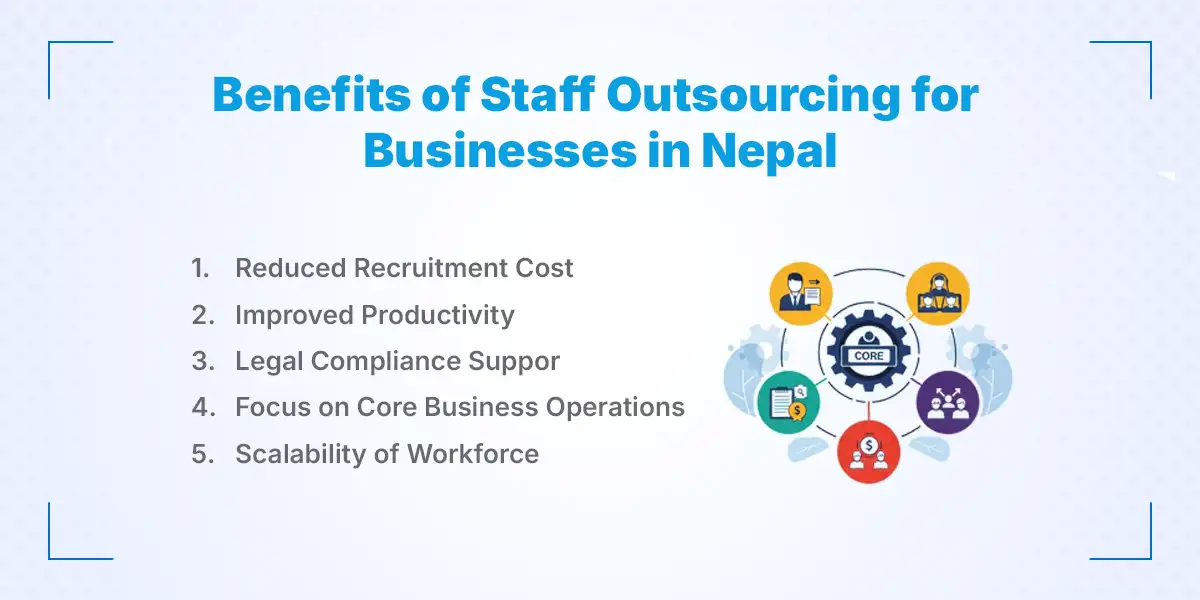
Staff outsourcing offers practical and long-term advantages for businesses in Nepal. It allows companies to manage their workforce efficiently, reduce costs, and minimize operational stress. By partnering with a reliable outsourcing provider, businesses can focus on their core activities while enjoying a flexible, skilled, and compliant workforce. Below are the key benefits of staff outsourcing for Nepali businesses:
1. Reduced Recruitment Cost
Staff outsourcing significantly lowers recruitment and hiring expenses. Businesses do not need to invest in job advertisements, repeated interviews, or onboarding processes. The outsourcing company already has systems and candidate pools in place. This reduces both direct and indirect hiring costs. It is especially beneficial for startups and SMEs in Nepal.
2. Improved Productivity
With staff outsourcing, businesses receive job-ready employees who can start work quickly. This minimizes training time and improves overall productivity. Employees are assigned roles that match their skills and experience. Managers can focus on work output instead of HR issues. As a result, teams perform more efficiently.
3. Legal Compliance Support
Outsourcing companies ensure compliance with Nepal’s labor laws and regulations. They handle employee contracts, taxes, insurance, and statutory requirements. This reduces the risk of legal penalties and disputes. Businesses stay compliant without needing deep legal knowledge. It provides peace of mind and operational security.
4. Focus on Core Business Operations
Outsourcing removes the burden of HR management from internal teams. Businesses can concentrate on growth, customer service, and strategic goals. Time and resources are not wasted on administrative tasks. This improves business efficiency and decision-making. Companies can scale faster with fewer internal distractions.
5. Scalability of Workforce
Staff outsourcing allows businesses to easily increase or reduce workforce size. Companies can hire staff based on seasonal demand or project needs. There is no long-term employment obligation. This flexibility helps manage costs and risk. It supports business adaptability in a changing market.
Which Is the Best Staff Outsourcing Company in Nepal?
Kumari Job is the best staff outsourcing company in Nepal because it provides skilled and reliable employees while managing payroll, HR, and legal compliance efficiently. With over 14 years of experience, Kumari Job has helped hundreds of businesses scale their workforce smoothly. Choosing them ensures cost-effective hiring, quick deployment of staff, and complete support for administrative and compliance tasks.
Here are some reasons why businesses trust Kumari Job for staff outsourcing:
- 14+ Years of Experience: Proven track record of delivering reliable outsourcing solutions across industries.
- Skilled Workforce: Provides pre-screened, qualified, and job-ready candidates for various roles.
- Payroll and HR Management: Handles salaries, benefits, attendance, and legal compliance professionally.
- Client-Focused Service: Transparent processes and dedicated support to meet business needs.
- Wide Industry Network: Experienced in IT, banking, hospitality, sales, and corporate staffing.
Explore Kumari Job's Outsourcing Services
How to Choose the Right Staff Outsourcing Company in Nepal
To choose the right staff outsourcing company in Nepal, businesses need to evaluate providers based on experience, service quality, compliance, and reliability. A trusted company ensures skilled workforce deployment, smooth HR management, and adherence to labor laws. Careful evaluation helps reduce operational risks, save costs, and maintain consistent productivity.
1. Understand Business Needs
Clearly define your manpower requirements, including the number of employees, job roles, skills, and duration of work. Knowing exactly what your business needs helps you select a provider who can deliver the right candidates efficiently. This prevents mismatches and ensures employees meet performance expectations.
2. Check Service Scope and Contracts
Review the services offered by the outsourcing company, including recruitment, payroll, HR, and compliance management. Examine contracts carefully to ensure responsibilities are clearly defined. A provider with a comprehensive service scope ensures smooth workforce management without hidden obligations.
3. Ensure Transparency in Pricing
Compare fees and check whether all services, such as payroll processing, employee benefits, and HR support, are included. Transparent pricing allows businesses to budget effectively and avoid unexpected costs. Avoid providers who are vague about service charges or have hidden fees.
4. Verify Compliance and Risk Management
Ensure the outsourcing company follows Nepali labor laws, tax regulations, and social security rules. Proper compliance reduces legal risks for your business. The provider should also handle contracts, insurance, and statutory benefits professionally to protect your company.
5. Evaluate Customer Support and Service Quality
Check client testimonials, reviews, and references to gauge service reliability. A company with strong support ensures timely problem-solving and effective communication. High-quality service guarantees consistent workforce performance and smooth operations.
Staff Outsourcing vs In-House Hiring
Choosing between staff outsourcing and in-house hiring depends on cost, time, management effort, and compliance risks. The table below compares the two approaches to help Nepali businesses decide which is better for their needs.
| Factor | Staff Outsourcing | In-House Hiring |
|---|---|---|
| Cost | Lower recruitment and administrative costs; no long-term payroll obligations. | Higher cost due to recruitment, training, benefits, and HR management. |
| Time to Hire | Faster hiring through outsourcing companies’ candidate pool and ready processes. | Longer recruitment process; posting jobs, interviews, and onboarding takes more time. |
| Management Effort | Minimal internal HR workload; outsourcing provider handles payroll, attendance, and compliance. | Full HR management required internally; payroll, benefits, and compliance handled by the company. |
| Risk and Compliance | Reduced legal and compliance risks; outsourcing company ensures adherence to labor laws and taxes. | The company bears all legal and compliance responsibilities, a higher risk of errors, and penalties. |
Industries That Commonly Use Staff Outsourcing in Nepal
Staff outsourcing is widely used across different industries in Nepal to manage manpower efficiently and reduce HR workload. Companies in these sectors prefer outsourcing to save time, reduce costs, and access skilled employees quickly. Below are the main industries that benefit from staff outsourcing:
1. IT and Technology
The IT sector often requires skilled programmers, developers, testers, and support staff. Outsourcing helps companies quickly hire technical talent without handling payroll or HR management internally. It also allows IT firms to scale teams up or down based on project demands. Many startups and tech companies in Nepal rely on outsourcing to meet fast-changing client requirements.
2. Banking and Finance
Banks and financial institutions use outsourcing for back-office operations, customer support, data entry, and accounting tasks. Outsourcing reduces administrative burden and ensures compliance with labor laws. Nepali banks also benefit from trained staff provided by outsourcing companies for temporary or permanent roles.
3. Manufacturing
Manufacturing units need both skilled and unskilled labor for production, assembly, and maintenance tasks. Outsourcing helps fill these roles efficiently, especially during peak production seasons. Companies avoid the hassle of managing large in-house teams and associated HR responsibilities.
4. Hospitality and Tourism
Hotels, restaurants, and travel agencies often require receptionists, housekeeping staff, tour guides, and front-line employees. Outsourcing provides trained personnel quickly and reduces the administrative burden on the management. Seasonal demand in tourism makes temporary outsourcing highly beneficial in Nepal.
5. Retail and Sales
Retail stores, showrooms, and sales companies use outsourcing for cashiers, sales assistants, and customer service staff. Outsourcing ensures a flexible workforce that can adapt to peak seasons and promotional campaigns. Nepali businesses can save costs while maintaining quality customer service.
6. NGOs and INGOs
Non-governmental and international organizations frequently hire project-based staff through outsourcing. Roles include field officers, coordinators, data entry staff, and administrative personnel. Outsourcing allows NGOs to focus on program delivery without the burden of managing HR and compliance internally.
Conclusion
Staff outsourcing in Nepal offers businesses a cost-effective and flexible way to manage manpower. It reduces recruitment and HR workload, provides access to skilled employees, ensures compliance with labor laws, and allows companies to focus on their core operations. By understanding the different types of outsourcing and evaluating providers carefully, businesses can maximize productivity and operational efficiency.
Looking for a trusted outsourcing partner? Kumari Job is one of the best staff outsourcing companies in Nepal, providing over 14 years of experience in delivering skilled workforce, payroll management, and HR support. Partnering with them ensures reliable employees, legal compliance, and smooth business operations, helping your company grow without the hassle of managing staff internally.
Frequently Asked Questions
Submit your comments

Get Our App On



SEO Training for Freshers in Nepal: Skills, Career & Job Opportunities
VIEW DETAILS
SEO Training vs. Self-Learning: Which Is Right for You?
VIEW DETAILS
How to Choose Between Two Job Offers
VIEW DETAILS
Digital Marketing Training Interview Questions and Answers for Freshers
VIEW DETAILS


Loading Comments...