

Have you ever wondered what the President of Nepal actually earns each month? Most people are curious, but the information often feels hidden or confusing. You hear different numbers, different claims, and nothing seems clear. Because of that, it becomes hard to understand how our leaders are paid and how our tax money is used.
In this blog, we keep things simple and easy to follow. Everything is explained clearly so you can understand the President’s salary and benefits without any confusion. By the end, you will know the exact salary of the President in Nepal in 2083, the perks that come with the role, and how the government decides the pay.
In this blog
What is the Salary of the President in Nepal in 2083?
The salary of the president in Nepal as per 2083 is NPR 1,77,531 per month. This figure reflects the latest official pay after the most recent increase approved by the government. Compared to other government jobs, this is a good salary in Nepal, according to the responsibilities.
On an annual basis, this salary comes to around NPR 2,130,372. This is the base pay and does not include the additional benefits and allowances that come with the position. These perks are provided to help the President perform official duties without worrying about personal expenses and to maintain the dignity of the office. Many people compare this to a good salary in Nepal and realize the gap between regular citizens and top leaders.
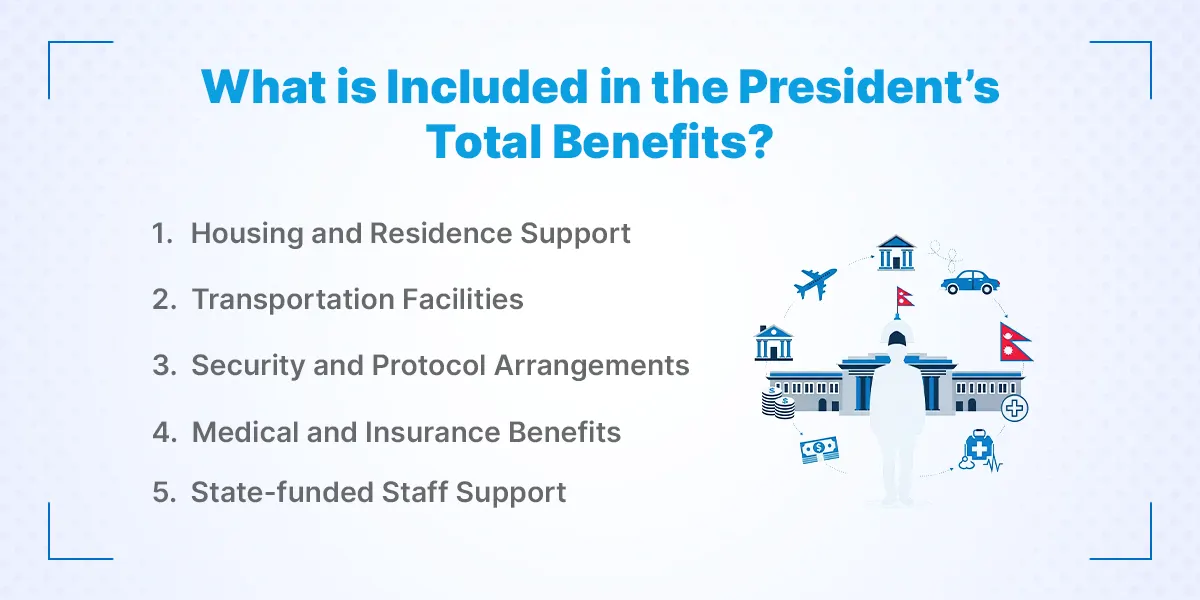
The President’s compensation package includes several important allowances and perks:
- Housing and residence support: The official residence is fully maintained by the government.
- Transportation facilities: Cars, fuel, and drivers are provided for official travel.
- Security and protocol arrangements: Full protection is ensured at all times.
- Medical and insurance benefits: Covers the President and sometimes immediate family members.
- State-funded staff support: Assistants and secretaries help manage official responsibilities smoothly.
All of these benefits combined make the total value of the President’s compensation much higher than the base salary alone. When people search for the salary of the President in Nepal, it’s not just the pay they are curious about—it’s also the lifestyle, perks, and responsibilities that come with the role. Understanding the full package gives a clearer picture of how the office functions and how public resources are allocated.
In short, the President’s pay is more than just numbers. It is a combination of salary, allowances, and benefits designed to support the leader of the nation in their official duties.
What is Included in the President’s Total Benefits?
The President of Nepal gets many benefits like housing, transportation, security, medical care, and staff support. The President’s salary is also eligible for SSF in Nepal, ensuring retirement and social security benefits. Being the highest leader of the country comes with responsibilities and privileges. The salary alone does not cover everything needed to perform the duties. That’s why the government provides additional benefits to make the role manageable and official life smooth.
1. Housing and Residence Support
The President lives in the official residence, which is fully maintained by the government. All costs for repairs, electricity, water, and upkeep are covered. This ensures the President can focus on work without worrying about home expenses. The residence is also designed for hosting official events and meetings. Furniture and basic facilities are provided. The house is secure and functional for both work and living.
2. Transportation Facilities
The President has access to official cars and drivers for daily travel. Fuel, maintenance, and insurance are all covered. For longer trips or official visits, special transport arrangements are provided. This helps the President move quickly and safely anywhere in Nepal. Official vehicles are well-maintained and equipped for comfort. Security and protocol are followed during all travel.
3. Security and Protocol Arrangements
Full-time security personnel protect the President at all times. The security team ensures safety both at home and during travel. Special arrangements are made during public appearances. This allows the President to work without fear or interruptions. Protocol staff also manage meetings and official ceremonies. Safety and decorum are always prioritized.
4. Medical and Insurance Benefits
The President gets medical coverage for personal and family health needs. Treatments at home or abroad are covered if necessary. Health checks and emergency care are included. Insurance also protects against unexpected medical expenses. This ensures the President can focus on duties without worrying about health costs.
5. State-funded Staff Support
The President has assistants, secretaries, and other staff to help with daily work. They handle correspondence, scheduling, and official tasks. Staff support makes managing government duties much easier. It ensures smooth communication with other officials. The team is fully funded by the government. This allows the President to concentrate on leadership duties effectively.
How is the President’s Salary Decided in Nepal?
The President’s salary in Nepal is set by law, revised periodically, and influenced by inflation and government policies. The President’s pay is not random. It is determined by clear legal rules to ensure fairness and transparency. The government follows a process so that the salary matches the responsibilities of the highest office.
1. Legal Provisions
The salary of the President is defined under Nepal’s constitution and related federal laws. These laws specify the basic pay, allowances, and official benefits. They ensure that the President receives proper compensation while performing duties. The legal framework prevents arbitrary changes. It also guarantees that the salary is publicly known and documented. These provisions protect the interests of both the President and the people.
2. Salary Revision Rules
The President’s salary can be revised by the government from time to time. Revisions are usually approved through official proposals and parliamentary procedures. This ensures that the pay keeps up with changing circumstances. The rules outline how and when salary adjustments can happen. They also make sure revisions are fair and transparent. Regular updates prevent the salary from becoming outdated or insufficient. Like other people, the President’s salary is subject to deductions according to the TDS in Nepal rules.
3. Factors Like Inflation and Policy Changes
Inflation and the cost of living are important factors in deciding the salary. The government also considers new policies and economic conditions. Changes in budget, public expenditure, and national priorities can affect adjustments. These factors make sure the President’s pay stays reasonable and sustainable. They help balance public interest with the needs of the office.
Comparison With Other Top Positions in Nepal
Many people wonder how the President’s salary differs from the salary of the Prime Minister or other important leaders in Nepal. Comparing these salaries helps us understand the value and responsibilities of each position. It also shows how the government balances compensation among top officials. Compared to the average salary in Nepal, these top officials earn significantly more, reflecting their duties. Let's compare the salaries of some of the top position holders in Nepal government.
| Position | Monthly Salary (NPR) | Annual Salary (NPR) | Notes on Benefits |
|---|---|---|---|
| President | 1,77,531 | 21,30,372 | Includes housing, transport, security, medical, and staff support |
| Prime Minister | 94,280 | 11,31,360 | Similar perks, including residence, travel, and security |
| Chief Justice | 1,02,293 | 12,27,516 | Official residence, medical, and staff support |
| Speaker of the House of Representatives | 81,986 | 9,83,840 | Standard allowances and security provisions |
| Vice President | 1,43,418 | 17,21,016 | Similar perks as the President, slightly lower basic salary |
Additional Non-Monetary Privileges
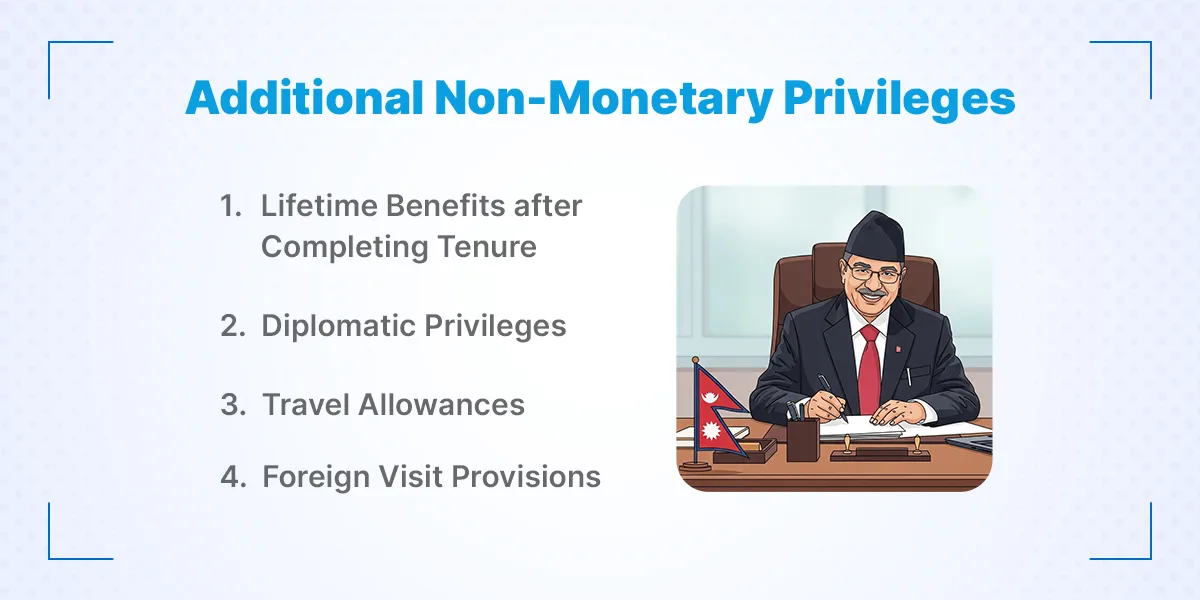
The President of Nepal receives several non-monetary privileges like lifetime benefits, diplomatic privileges, travel allowances, and support for foreign visits. Being the President comes with perks that go beyond salary. These benefits help the President focus on official work and maintain the dignity of the office. Some of these privileges even continue after the term ends. They are designed to make sure the President can work effectively and represent the country properly.
1. Lifetime Benefits after Completing Tenure
After leaving office, the President is entitled to certain benefits for life. This includes a pension to support personal expenses. Security arrangements may continue for a period, depending on government rules. Staff support might also be provided to help with personal or official tasks. These benefits ensure the former President lives with dignity. They also recognize the service given to the nation. The lifetime support helps maintain a stable and respected position after office.
2. Diplomatic Privileges
The President enjoys special diplomatic privileges while in office. This includes being treated with respect by foreign officials. The President can host and attend international meetings and events. Protocols are followed strictly to ensure proper representation. These privileges make it easier to communicate with other countries. They also help in building strong international relationships.
3. Travel Allowances
The President receives allowances for domestic travel. This covers vehicles, fuel, and drivers when visiting different parts of Nepal. It ensures the President can move safely and comfortably. Travel is arranged to complete official work without delays. Security is provided during all trips. This support allows the President to focus on duties rather than travel logistics.
4. Foreign Visit Provisions
When traveling abroad for official purposes, the government covers all necessary expenses. Flights, accommodation, and security are arranged. The President can participate in international conferences and meetings easily. Protocol staff often accompany to assist with official work. These provisions make foreign travel smooth and efficient.
Conclusion
Becoming the President of Nepal comes with a lot of responsibilities, but it also comes with a well-structured salary and benefits. The basic monthly salary of NPR 177,531 is just one part of the full package. Housing, transportation, security, medical care, and staff support make it easier for the President to focus on running the country.
On top of that, non-monetary privileges like lifetime benefits, diplomatic rights, and travel allowances add more value. These perks ensure the President can perform duties smoothly and represent Nepal properly, both at home and abroad. Overall, the salary and benefits together reflect the importance and responsibilities of the highest office in the nation.
Frequently Asked Questions
Submit your comments

Get Our App On


How to Make a Police Report (Police Clearance Certificate) in Nepal?
VIEW DETAILS
Types of SEO and How They Work: Complete Beginner's Guide
VIEW DETAILS
Government Restricts New Lok Sewa Vacancy Requests 2083/84 — Or Not?
VIEW DETAILS
How to Apply for Tattoo Artist Jobs in Nepal?
VIEW DETAILS


Loading Comments...