


How much income does creative skill bring inside Nepal’s fashion industry today? Many aspiring designers ask whether artistic vision can support stable earnings while building a long-term career across boutiques, labels, studios, or freelance work. Income clarity helps students, graduates, plus professionals plan education paths with realistic goals.
In this blog, fashion designers' salary receives a clear explanation through current pay ranges, career stages, experience levels, education impact, city differences, freelance income, brand ownership potential, growth opportunities, plus realistic expectations within Nepal’s market. Readers gain practical insight useful for career decisions, salary negotiation, plus future planning.
In this blog
Who are Fashion Designers and What do they do?
Fashion designers are professionals who create clothing, accessories, and footwear. They turn concepts into practical, wearable products, designing for brands, boutiques, studios, or independent labels. They combine creativity with style, market demand, and production requirements, planning collections, selecting materials, and ensuring designs meet quality standards.
What fashion designers do:
- Research trends, colors, fabrics, plus consumer preferences.
- Create sketches, digital designs, plus concept boards.
- Select materials, textiles, plus trims suitable for designs.
- Develop patterns, samples, plus prototypes for production.
- Coordinate with tailors, pattern makers, plus manufacturers.
- Review fittings, adjust designs, plus ensure quality standards.
- Prepare collections for shows, retail launch, or client orders.
What is the Average Salary of Fashion Designers in Nepal?
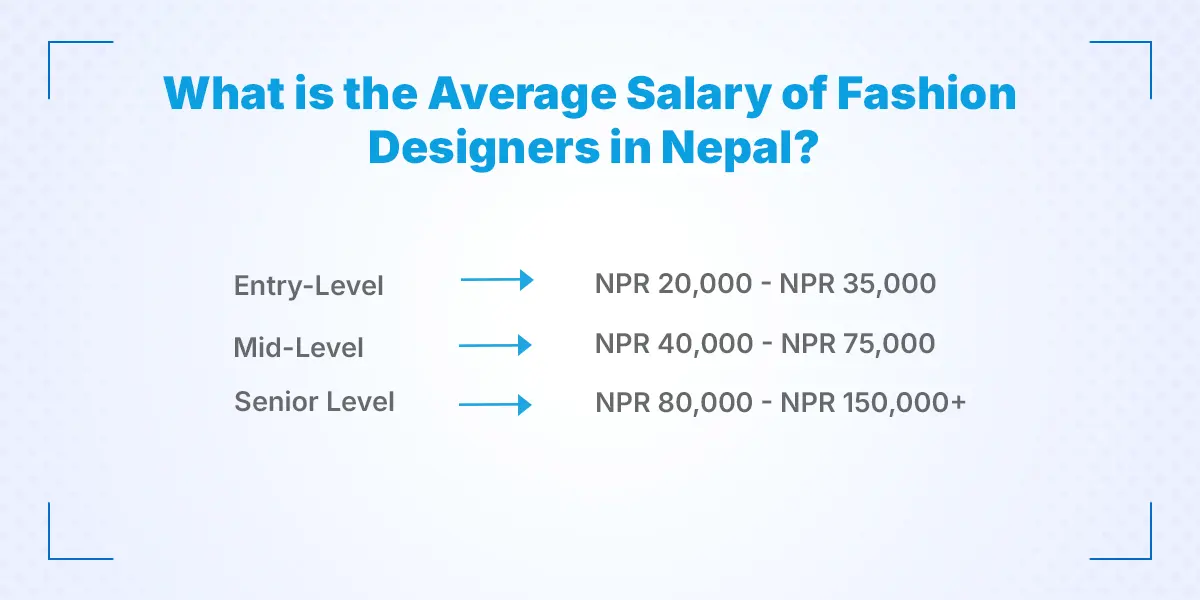
The average salary of fashion designers in Nepal is between NPR 20,000 and NPR 1,50,000 per month, depending on experience, skill level, and workplace. Entry-level designers earn less but gain practical skills, while experienced designers with strong portfolios or brand ownership can earn significantly more. Location, type of employer, and specialization also affect earnings. Freelancers may earn variably depending on projects and clients. Career growth and skill development directly influence salary increments over time, making it important to understand the average salary in Nepal.
1. Entry Level
Entry-level fashion designers usually work under supervision in studios, boutiques, or small brands. They assist senior designers, handle basic design tasks, and learn production processes. Entry-level jobs at this stage cover living expenses and provide on-the-job experience to develop skills, build portfolios, and understand market trends. They often take part in fabric selection, sample creation, and minor client interactions to gain practical exposure.
2. Mid Level
Mid-level designers have 3-7 years of experience and handle independent projects, small collections, or team management. They contribute to design decisions, material selection, and client communications. Salaries reflect their increased responsibility, proven skills, and ability to manage multiple designs or collections simultaneously. Mid-level jobs at this stage also involve mentoring juniors and participating in marketing or brand promotion activities.
3. Senior Level
Senior fashion designers lead design teams, plan collections, and manage brand strategies or large-scale production. They often own labels, consult for brands, or work on high-profile projects. Their salary depends on reputation, portfolio strength, and contribution to business growth. Earnings can exceed NPR 1,50,000 for established designers with international or premium brand associations. Senior designers also make strategic decisions on pricing, partnerships, and market expansion.
Key Factors Influencing the Salary of Fashion Designers in Nepal
Several factors determine a fashion designer's salary in Nepal. Experience, skill level, and workplace type play major roles. Education, portfolio quality, specialization, and software knowledge can significantly increase earning potential. Location and brand reputation also impact salaries. Understanding these factors helps designers plan career growth strategically.
1. Education & Certification
Formal education in fashion design or related fields can improve job prospects and salary potential. Institutes offering diplomas, bachelor’s, or professional certifications provide essential design knowledge, garment construction skills, and industry exposure. Employers often prefer candidates with recognized qualifications, which can result in higher starting salaries and faster career advancement. Continuous learning through workshops or short courses further enhances skills and keeps designers updated with industry trends.
2. Niche Specialization
Designers focusing on specific areas such as bridal wear, couture, menswear, or sustainable fashion can demand higher pay. Specialized skills create unique value for brands and clients, allowing designers to stand out in competitive markets. Expertise in trending or high-demand niches increases negotiation power and long-term earning potential. Developing a unique style or signature collection also attracts premium clients and higher-paying opportunities.
3. Software Proficiency
Knowledge of design software like Adobe Illustrator, Photoshop, CLO 3D, or CAD tools is increasingly essential. Proficiency allows designers to create accurate digital designs, technical drawings, and 3D prototypes efficiently. Brands and studios value software-skilled designers, often offering higher pay compared to those relying solely on hand sketches. Keeping up with new tools and software updates ensures designers maintain a competitive edge in the industry.
4. Portfolio Strength
A strong, well-presented portfolio demonstrates creativity, skill, and versatility. Employers assess past projects, collections, and successful client work to evaluate a designer’s capabilities. Designers with impressive portfolios can secure higher-paying roles, freelance projects, or leadership positions, directly influencing their salary growth. Regularly updating the portfolio with recent projects reflects ongoing skill development and adaptability to market trends.
Tips for Increasing Earning Potential
Fashion designers can boost their income by improving skills, expanding their client base, and building a strong professional network. Continuous learning, gaining practical experience, and exploring high-demand opportunities increase market value. Diversifying work across freelance projects, brand collaborations, and niche specializations also contributes to higher earnings. Strategic planning and proactive career management are key to long-term financial growth.
1. Master the Technicals
Designers should focus on mastering garment construction, pattern making, and fabric knowledge. Strong technical skills ensure designs are feasible, high-quality, and market-ready. Proficiency in digital design tools and production processes also increases efficiency and reliability. Mastery of technical details makes designers more valuable to employers and clients, enabling higher pay and leadership roles. Continuous practice and experimentation with new techniques help designers stay ahead of industry trends.
2. Freelance for International Clients
Working with international clients expands earning opportunities beyond the local market. Designers can take projects for global brands, online jobs on marketplaces, or custom orders, often at higher rates. Understanding international trends, sizing standards, and communication norms helps deliver quality work. Freelance international work also builds reputation and opens doors to collaborations with premium brands. Consistently delivering high-quality projects leads to repeat clients and long-term partnerships.
3. Networking
Building strong connections with industry professionals, brands, and influencers can directly impact earnings. Networking creates opportunities for collaborations, referrals, and exclusive projects. Attending fashion events, exhibitions, and workshops helps designers meet potential clients and mentors. A strong professional network increases visibility, credibility, and access to higher-paying roles or partnerships. Maintaining relationships through follow-ups and professional engagement strengthens trust and future opportunities.
Where to Find Fashion Designer Jobs in Nepal?
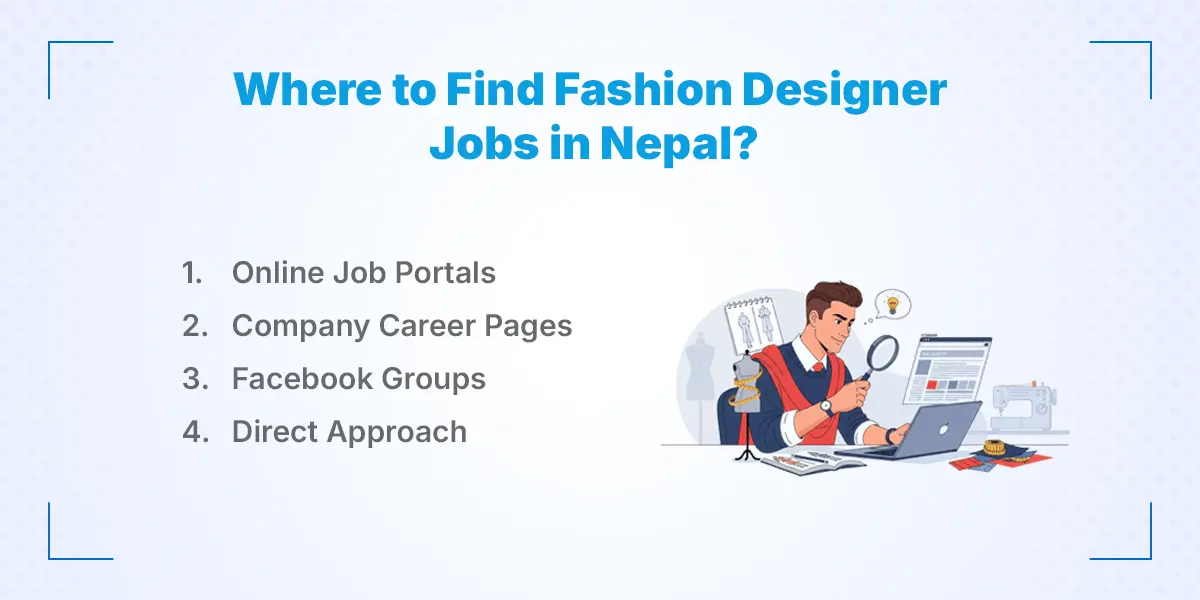
You can find fashion designer salary listings and job openings on portals like Kumari Job. These platforms provide updated vacancies for studios, brands, boutiques, and freelance opportunities across Nepal. They also display required qualifications, experience, and salary ranges, helping designers make informed career choices. Exploring multiple sources ensures better access to opportunities and higher chances of securing suitable positions. Staying active on these platforms allows designers to respond quickly to new openings.
1. Online Job Portals
Portals like Kumari Job list fashion designer positions with detailed information on salary, job description, and required skills. Designers can filter searches by location, experience, or specialization to find relevant openings. Portals also provide application submission options, alerts for new jobs, and tips for improving resumes and portfolios. Regularly checking these portals increases the likelihood of finding well-matched positions quickly.
2. Company Career Pages
Many fashion studios and brands post vacancies directly on their career pages. Designers can apply through official portals to target specific companies. Career pages often provide detailed insights into company culture, expected responsibilities, and salary structures. Applying directly increases visibility and demonstrates genuine interest in the brand, improving chances of selection.
3. Facebook Groups
Facebook groups focused on fashion careers in Nepal are valuable for networking and job discovery. Designers can find posts about openings, freelance projects, and collaboration opportunities. Group members often share referrals, insider tips, and updates about industry events. Active participation in these communities helps designers stay informed and connect with potential employers.
4. Direct Approach
Approaching fashion studios, boutiques, or brands directly can uncover unadvertised job opportunities. Designers can submit portfolios, resumes, or proposals in person or via email. A direct approach demonstrates initiative and confidence, which can leave a strong impression on employers. Following up after submission increases the likelihood of consideration for available roles.
Career Growth and Future
Fashion designers in Nepal have growing opportunities as the industry evolves. Increasing demand for creative talent, digital brands, and global collaborations expands career paths. Designers can progress from entry-level roles to senior positions, leadership, or entrepreneurship. Adapting to new technologies, trends, and niche markets boosts earning potential and career stability. Strategic skill development and networking are key to long-term growth.
1. Rise of Digital & E-commerce Brands
Digital and e-commerce brands have increased demand for designers who can create online-friendly collections. Designers develop products suitable for virtual catalogs, social media campaigns, and direct-to-consumer sales. Understanding digital marketing and consumer behavior helps designers create marketable products. Growth in online shopping provides continuous project opportunities and higher earning potential for adaptable designers.
2. Global Export & Sustainable Fashion Hub
Nepal’s fashion industry is gradually expanding into international exports and sustainable fashion markets. Designers focusing on eco-friendly materials or ethically produced collections attract global clients. Knowledge of export standards, international sizing, and compliance increases marketability. Sustainability trends also open opportunities for collaborations with global brands, raising both visibility and income.
3. Transition to Fashion Entrepreneurship
Experienced designers can start their own labels, boutiques, or online stores. Entrepreneurship allows control over design direction, pricing, and client base. Building a brand reputation enhances recognition, client loyalty, and revenue streams. Entrepreneurship also encourages creative freedom while presenting higher financial rewards for successful ventures.
4. Adoption of 3D Design & Fashion Tech
Technology adoption, including 3D design, virtual prototyping, and fashion tech tools, is shaping modern design workflows. Designers skilled in digital tools reduce production errors and speed up collection development. Mastery of fashion technology improves employability, attracts premium clients, and positions designers for leadership roles. Continuous learning in this area ensures competitiveness in evolving markets.
5. Expanding Roles in Styling & Media
Fashion designers are increasingly involved in styling, fashion shows, photography, and media content creation. Diversifying into these areas increases visibility, portfolio strength, and earning potential. Designers contribute to marketing campaigns, social media content, and influencer collaborations. Expanding into styling and media roles allows career growth beyond traditional design work.
Conclusion
Fashion designing in Nepal offers a dynamic career with growing opportunities across studios, brands, and independent ventures. Salaries vary based on experience, specialization, and skill level, with entry-level designers starting modestly and senior professionals or entrepreneurs earning significantly higher. Understanding key factors like education, portfolio strength, niche focus, and software proficiency can help maximize earning potential and career growth.
Aspiring designers can increase income through technical mastery, freelancing, networking, and exploring digital, export, or sustainable fashion markets. With dedication, adaptability, and strategic planning, fashion designers in Nepal can build rewarding careers that combine creativity, professional growth, and financial stability.
Frequently Asked Questions
Submit your comments

Get Our App On



SEO Training for Freshers in Nepal: Skills, Career & Job Opportunities
VIEW DETAILS
SEO Training vs. Self-Learning: Which Is Right for You?
VIEW DETAILS
How to Choose Between Two Job Offers
VIEW DETAILS
Digital Marketing Training Interview Questions and Answers for Freshers
VIEW DETAILS


Loading Comments...