



Are you curious about how much a biomedical engineer earns in Nepal? If you love science, technology, and helping people, this career could be perfect for you. Biomedical engineering is all about using engineering skills to design and maintain medical equipment that saves lives and improves healthcare.
In Nepal, hospitals, clinics, and research labs are slowly expanding, and biomedical engineers are becoming more important than ever. But what is the actual biomedical engineer’s salary in Nepal, and what do these engineers actually do every day?
In this article, we’ll break down the average salaries, job roles, required skills, and career growth opportunities for biomedical engineers in Nepal. By the end, you’ll have a clear idea of your potential in this field.
In this blog
What is the Average Biomedical Engineer Salary in Nepal?
The average biomedical engineer in Nepal earns around NPR 75,000 per month, with entry-level jobs starting at NPR 35,000 and senior roles going beyond NPR 120,000. Biomedical engineering is growing fast in Nepal’s healthcare sector. Hospitals and clinics need skilled engineers to handle medical devices. Salaries vary depending on experience, skills, and the type of job you do.
1. Entry-Level Engineers
At the start of your career, you can expect around NPR 25,000–40,000 per month. Most fresh graduates begin here. You will mostly do basic maintenance, assist senior engineers, and learn on the job. This stage is great for gaining practical experience. Skills like equipment handling and basic troubleshooting matter a lot.
2. Mid-Level Engineers
With a few years of experience, you can earn NPR 50,000–80,000 per month. You will handle more responsibilities, like supervising technicians and managing small projects. Problem-solving and teamwork become more important. This is the stage where you can specialize in areas like R&D or hospital equipment management.
3. Senior-Level Engineers
Senior biomedical engineers can earn NPR 100,000–120,000+ per month. They often manage teams, plan projects, or work as consultants. At this level, experience, certifications, and advanced skills really pay off. You may also get opportunities to lead research or implement new technologies in hospitals.
Factors Affecting a Biomedical Engineer's Salary in Nepal
Salaries for biomedical engineers in Nepal are not the same for everyone. Several factors decide how much you can earn. Your education, experience, skills, and even the city you work in all matter. Understanding these factors can help you plan your career better.
1. Education and Specialization
The level of education plays a big role in salary. A bachelor’s degree is enough for entry-level jobs. But a master’s degree or a specialized course can increase your pay. Specialization in areas like medical devices or R&D makes you more valuable. Employers often pay more for higher qualifications. Training in advanced equipment also helps. Your knowledge can directly impact your earning potential.
2. Experience and Job Role
Experience is very important in this field. Fresh graduates start with lower salaries. After a few years, your pay usually increases. Senior engineers earn much more than beginners. Job roles also matter. Someone managing a team or working in R&D will earn more than someone doing only maintenance tasks. Experience and responsibility together affect salary growth.
3. Type of Employer
The type of company or hospital you work for changes your pay. Private hospitals often pay more than small clinics. Research labs or international companies may offer higher salaries. NGOs may pay less but give other benefits. Larger organizations usually have better pay scales. Some employers also provide bonuses or extra training. Choosing the right employer can make a big difference.
4. Location
The city where you work affects your salary, too. Kathmandu usually offers the highest pay. Cities like Pokhara or Bharatpur may pay less. Living costs are lower in smaller cities, but salaries follow the city’s standard. Working in big hospitals or corporate offices in cities can increase earnings. Location can also affect opportunities for growth. Moving to a bigger city sometimes helps boost your career.
What do Biomedical Engineers do?
Biomedical engineers design, test, and maintain medical devices, collaborate with doctors, and work on new medical technologies to improve healthcare.
Biomedical jobs are very important in hospitals, clinics, and research labs. Their work ensures that medical devices function properly and safely. They combine engineering knowledge with biology and healthcare to solve real-world problems. Every day, their tasks can range from hands-on equipment maintenance to designing new technologies that improve patient care.
One of the main responsibilities is designing and testing medical devices. This can include things like imaging machines, patient monitors, or prosthetics. Engineers make sure these devices meet safety standards and perform accurately. Testing may involve running simulations or checking equipment in real-world settings.
Another key task is maintaining and repairing hospital equipment. Machines like ventilators, ECG devices, and lab analyzers need regular check-ups. Biomedical engineers ensure these devices work properly to prevent any disruptions in patient care. They also calibrate equipment and train hospital staff on proper use.
Collaboration is a big part of the job. Biomedical engineers work closely with doctors, nurses, and technicians to understand their needs. This ensures that equipment is user-friendly and effective. They provide technical support and sometimes help troubleshoot urgent problems.
Research and innovation are also essential. Biomedical engineers often participate in R&D for new medical technologies. They explore ways to improve existing devices or create entirely new ones. This can involve prototyping, testing, and evaluating performance. Engineers may also contribute to publications or patents, helping the medical field advance.
Typical tasks include:
- Designing and testing new medical devices
- Maintaining and repairing hospital equipment
- Calibrating and ensuring device accuracy
- Collaborating with doctors and technicians
- Conducting research and developing new technologies
- Training staff on equipment usage
In short, biomedical engineers are problem solvers and innovators in healthcare. Their work directly impacts patient safety, hospital efficiency, and medical advancements. For those who love technology and want to make a difference in healthcare, this career offers variety, challenges, and opportunities to grow.
What Qualifications Are Needed for Biomedical Engineers in Nepal?
To become a biomedical engineer in Nepal, you need at least a bachelor’s degree in biomedical engineering or a related field, and gaining practical experience or higher education can boost your career.
Biomedical engineering is a specialized field, so education plays a key role. Most entry-level jobs require a bachelor’s degree in biomedical engineering. Related fields like electronics, electrical, mechanical, or biotechnology are also accepted by some employers. The degree gives you foundational knowledge about medical devices, equipment maintenance, and healthcare technology.
While a bachelor’s degree is enough to start, a master’s degree or specialized training can improve career growth and increase your salary. Advanced courses in areas like medical device design, research and development, or clinical engineering make you more competitive. Employers often look for engineers with additional qualifications for senior roles or specialized positions.
Practical experience is just as important as formal education. Internships, hands-on projects, and lab work allow you to apply what you’ve learned in real-world settings. Hospitals, medical device companies, and research labs often offer internships that provide exposure to equipment maintenance, calibration, and R&D. This experience makes it easier to secure a job and can sometimes influence your starting salary.
Key qualifications and skills that help:
- Bachelor’s degree in Biomedical Engineering or related fields.
- Master’s degree or advanced certifications for specialization.
- Hands-on experience through internships or projects.
- Knowledge of medical device standards and safety protocols.
- Technical skills like CAD software, instrumentation, and equipment calibration.
- Soft skills such as communication, teamwork, and problem-solving.
Certifications like CBET (Certified Biomedical Equipment Technician) or ISO 13485 (Medical Device Quality Management) can also boost credibility. Many employers value candidates who continually upgrade their skills through workshops or online courses.
In short, becoming a biomedical engineer in Nepal requires a mix of formal education, practical experience, and a willingness to keep learning. The combination of a degree, hands-on work, and specialized skills can open doors to higher salaries, senior positions, and exciting career opportunities in hospitals, clinics, research labs, or medical device companies.
Skills That Increase a Biomedical Engineer's Salary
To earn a higher salary as a biomedical engineer in Nepal, having the right skills is very important. Employers pay more for engineers who can handle advanced tasks and solve problems efficiently. Technical knowledge, soft skills, and certifications all play a big role. Developing these skills can open doors to senior positions and better-paying jobs.
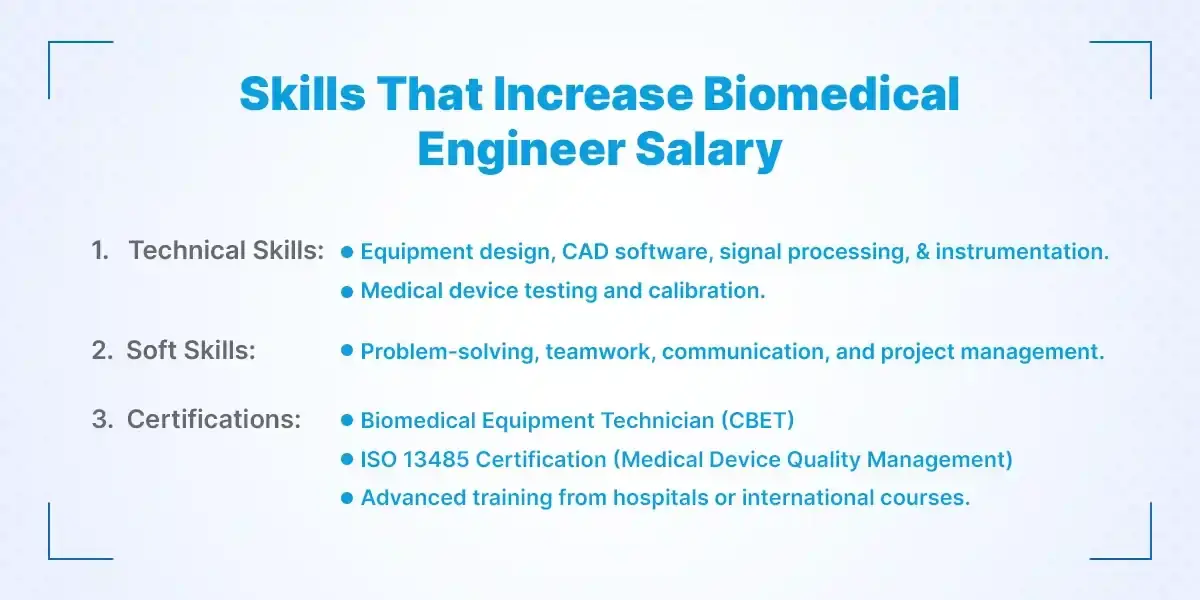
1. Technical Skills
- Designing and developing medical equipment.
- Using CAD software for modeling and device design.
- Signal processing and instrumentation knowledge for accurate measurements.
- Testing and calibrating medical devices to ensure safety and accuracy.
2. Soft Skills
- Strong problem-solving to fix issues quickly.
- Teamwork for collaborating with doctors, technicians, and colleagues.
- Clear communication to explain technical issues to non-engineers.
- Project management skills to handle multiple tasks and deadlines.
3. Certifications
- CBET (Certified Biomedical Equipment Technician) – boosts credibility in equipment maintenance.
- ISO 13485 (Medical Device Quality Management) – shows expertise in device standards.
- Advanced training from hospitals or international courses can improve technical knowledge and increase salary potential.
By focusing on technical skills, soft skills, and certifications, a biomedical engineer can stand out in Nepal’s job market. These abilities not only increase earning potential but also make your work more impactful and satisfying.
Scope of Biomedical Engineering in Nepal
Biomedical engineering is becoming an important career in Nepal. Hospitals, clinics, and diagnostic centers are growing, and they need skilled engineers to manage medical equipment. The demand for biomedical engineers is slowly increasing as healthcare technology improves.
Private companies importing and maintaining medical devices are also creating more jobs. Engineers who can repair, install, and manage these machines are in demand. Experienced professionals can find opportunities in research and innovation, improving or designing new medical devices.
Public health sectors are starting to hire biomedical engineers for projects that improve healthcare services.
Opportunities for biomedical engineers in Nepal:
- Working in hospitals and clinics to maintain and manage equipment
- Joining medical device companies for sales, support, or R&D roles
- Participating in research to develop new technologies
- Working in public health projects to improve healthcare delivery
- Exploring remote or international career paths
Experienced engineers can also work with international companies or on remote projects, earning higher salaries and gaining exposure to advanced technologies.
In short, biomedical engineering in Nepal offers growing opportunities. With the right skills and experience, engineers can work in hospitals, companies, research, or even abroad while contributing to better healthcare.
How to Start a Career as a Biomedical Engineer in Nepal?
To start a career as a biomedical engineer in Nepal, you need a relevant degree, hands-on experience, knowledge of equipment standards, entry-level job experience, and continuous skill upgrades.
1. Earn a Relevant Degree
The first step is to get a bachelor’s degree in biomedical engineering. Related fields like electronics, electrical, mechanical, or biotechnology are also accepted. Your degree gives you the basic knowledge of medical devices, hospital equipment, and healthcare technology. It also prepares you for technical tasks and problem-solving. A strong academic record can make it easier to get internships and your first job.
2. Gain Practical Experience
Internships in hospitals, clinics, or biomedical companies are very important. They help you understand real-world medical equipment and hospital procedures. You can learn maintenance, calibration, and troubleshooting. Hands-on experience also improves your confidence and makes your resume stronger. This step bridges the gap between theory and practice.
3. Learn Equipment Standards
Understanding medical equipment calibration and safety standards is crucial. Hospitals expect engineers to follow strict rules. Learning these standards ensures patient safety and proper equipment function. You can get training during internships, workshops, or short courses. Knowledge of standards makes you more valuable to employers.
4. Apply for Entry-Level Jobs
Once you have a degree and some experience, start applying for entry-level positions. Platforms like Kumari Job can help you find openings in hospitals or biomedical firms. Start with roles like junior engineer or technician. Early jobs give you practical experience and expose you to hospital workflows.
5. Upgrade Your Skills
Continuously improving your skills is important for growth. Certifications like CBET or ISO 13485 help. You can also pursue a master’s degree or specialized courses. Advanced training opens doors to higher salaries and senior positions. Lifelong learning keeps your career moving forward.
Conclusion
Biomedical engineering is a growing and exciting career in Nepal. Engineers design, maintain, and improve medical equipment that helps save lives every day. To succeed, you need a relevant degree, practical experience, and the right skills. Internships, certifications, and advanced training can open doors to better opportunities. There are many paths to explore, from hospitals and clinics to research, public health, and even international projects.
With dedication and continuous learning, biomedical engineers can build a rewarding career. If you enjoy technology, problem-solving, and helping people, this field offers growth, good pay, and the chance to make a real difference in healthcare.
Looking for a healthcare job in Nepal? Discover current openings in biomedical, medical, and pharmaceutical roles and take the next step in your career.
Frequently Asked Questions
Submit your comments

Get Our App On



SEO Training for Freshers in Nepal: Skills, Career & Job Opportunities
VIEW DETAILS
SEO Training vs. Self-Learning: Which Is Right for You?
VIEW DETAILS
How to Choose Between Two Job Offers
VIEW DETAILS
Digital Marketing Training Interview Questions and Answers for Freshers
VIEW DETAILS


Loading Comments...