


Many students finish BCA with the hope of good pay, yet feel unsure about career rewards. Graduates often ask how much entry-level roles offer, why some peers earn more, and whether growth reaches higher levels in Nepal. Parents also worry whether this degree leads to a stable income or forces students toward unrelated work after graduation. These concerns create stress during job hunting, especially when salary expectations clash with real offers.
In this blog, you learn what affects BCA salary in Nepal, average earnings at each stage, job roles with better pay, growth benefits, freelancing potential, location impact, and skills that help improve income over time. This guide gives fresh graduates and students clear insights into salary ranges, practical growth paths, and proven ways to increase earning power.
In this blog
What Is BCA and Why Is It Popular in Nepal?
BCA is a bachelor’s degree focused on computer applications, software development, and basic information technology. Students learn programming, networking, database skills, and digital tools for corporate work. This course builds a practical base for tech careers and smooth entry into IT roles.
Why is BCA popular in Nepal?
- Rising IT hiring creates strong demand for graduates with coding and system skills.
- Course offers practical subjects useful for entry-level roles without long specialisation.
- Fees remain affordable compared to other technical programs, attracting many families.
- Students gain career flexibility across software, support, networking, databases, and digital fields.
- Colleges promote internships and project work, helping students gain early exposure.
- Remote and freelancing opportunities increase confidence in job stability.
- Many see this degree as a gateway to advanced study options like MCA, MIT, and MBA Tech.
What Is the Average Salary of BCA Graduates in Nepal?
The average salary for a BCA graduate in Nepal starts around NPR 20,000 to NPR 40,000 per month, which aligns closely with the average salary in Nepal for entry-level technical roles. Employers pay higher amounts to candidates with internships, project experience, and practical skills. Professionals with several years of work or specialised roles often reach NPR 50,000 to NPR 100,000 or more per month.
Monthly vs Yearly Salary Overview
Monthly earnings for BCA graduates in Nepal range from NPR 20,000 to NPR 100,000 or higher based on position, capability, and organization size. Beginners usually fall on the lower side due to limited exposure, while skilled workers with project history move upward faster. Annual income for fresh graduates reaches around NPR 240,000 to NPR 480,000, which grows as they build technical value. Individuals with five or more years of experience often reach NPR 600,000 to NPR 1,200,000 or even beyond, especially in specialised tracks or senior technical roles.
Freshers vs Experienced Salary Comparison
Fresh graduates begin their journey within NPR 20,000 to NPR 40,000 across IT support, QA roles, junior developer positions, or technical assistant tasks. This stage focuses on learning, contributing to small tasks, and building real-world capability. Experienced specialists with advanced knowledge in programming, database handling, cybersecurity, or analytics often earn from NPR 50,000 to NPR 100,000 each month, especially when they move toward roles linked to highest paid jobs in Nepal based on skill scarcity. Their value grows as they work independently, solve problems faster, and manage tasks without supervision.
BCA Salary in Nepal by Experience Level
Salary growth for BCA graduates increases as capability improves. Beginners earn less since focus stays on learning tasks, while mid-level workers secure higher pay through practical output. Senior professionals command premium income due to expertise, specialisation, and leadership value.
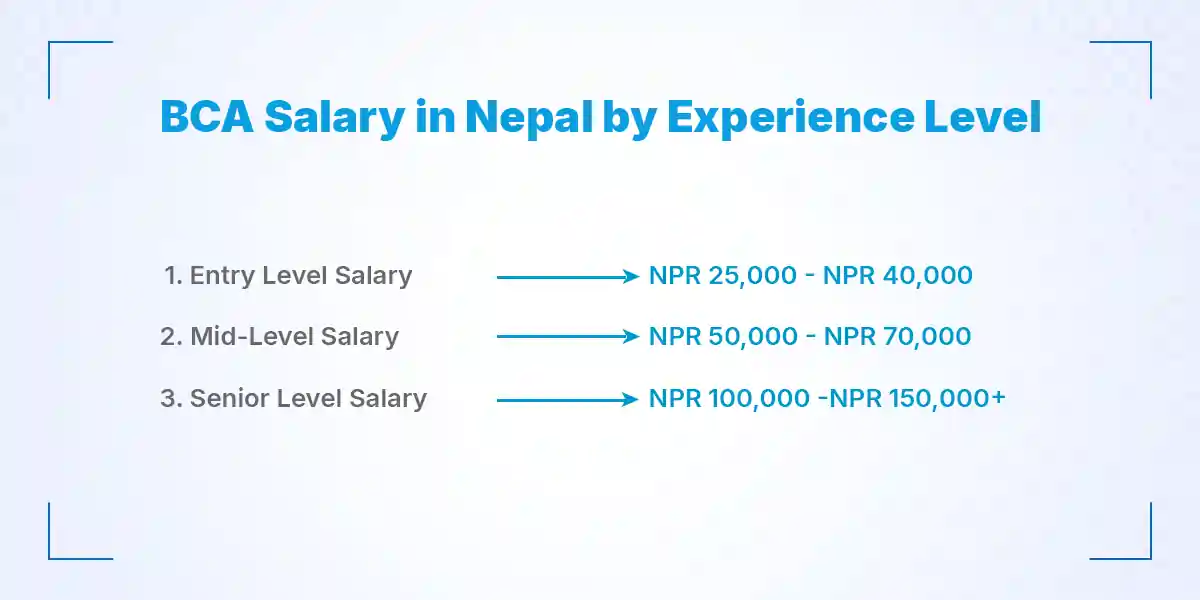
Entry Level Salary → NPR 25,000 – NPR 40,000
Fresh graduates enter roles like junior developer, QA trainee, or IT assistant within NPR 25,000 to NPR 40,000 monthly. Employers expect basic technical knowledge, willingness to learn, and ability to follow guidance. Growth often begins once candidates prove skill through internships, small projects, and initiative.
Mid-Level Salary → NPR 50,000 – NPR 70,000
Mid-level workers with two to five years of experience usually earn NPR 50,000 to NPR 70,000 each month. During this phase, professionals take responsibility for core tasks, handle independent problem-solving, and contribute real value. Their pay reflects applied skill, stronger confidence, and consistent results.
Senior Level Salary → NPR 100,000 – NPR 150,000+
Senior workers with five or more years of experience often reach NPR 100,000 to NPR 150,000 or higher. These roles demand advanced skills in planning, delivery oversight, mentoring, or system expertise. High salaries reward leadership, depth of knowledge, and impact on business outcomes.
BCA Salary in Nepal by Job Roles
Income varies across positions based on responsibility, skill depth, and hiring demand. Technical tracks like development, networking, data, and cybersecurity often pay higher due to specialised knowledge. Support-based roles provide entry opportunities with growth potential as capability improves.
1. Software Developer or Web Developer
These professionals earn strong starting pay because coding skills hold market value. Beginners often start within NPR 25,000 to NPR 45,000, and the growth aligns closely with web developer salary ranges in Nepal, rising to NPR 70,000 or more as they master frameworks, deployment, and project ownership. Developers with full project responsibility, clean coding habits, and problem-solving ability usually reach higher salary brackets and remote work access.
2. Frontend Backend Full Stack Developer
Frontend specialists handle interfaces, backend workers manage systems, and full-stack experts cover both sides. Pay for this track ranges from NPR 30,000 to NPR 90,000 based on framework experience, server handling, and production readiness. Full-stack workers with strong portfolios frequently earn the highest salaries within this group.
3. IT Officer or Assistant
These roles focus on system support, updates, and user assistance. Entry workers earn NPR 20,000 to NPR 40,000, while mid-level officers reach NPR 50,000 to NPR 70,000 after proving operational reliability. Growth depends on troubleshooting ability, documentation confidence, and strong IT skills that help deliver faster and more accurate support outcomes.
4. QA or Software Tester
Testers ensure quality and bug control. Manual QA workers usually earn NPR 20,000 to NPR 45,000, while automation testers move toward NPR 60,000 or more due to scripting knowledge. Those who document issues well, communicate findings clearly, and master automation tools push their income upward faster.
5. Network or System Administrator
Network and system administrators handle the configuration, maintenance, and security of the company's infrastructure. Entry salaries start from NPR 30,000 while skilled workers reach NPR 80,000+, depending on certifications, monitoring expertise, and availability during outages. Pay grows as employers rely on these workers for critical uptime.
6. Database Administrator or Data Analyst
Database handlers and analysts manage business data and insights. Income begins around NPR 35,000 to NPR 50,000 and increases to NPR 90,000 or higher with database tuning, reporting, and analytics skills, especially as data analyst jobs expand in Nepal. Demand grows as firms depend on accurate data for decisions.
7. Cybersecurity Analyst or SOC Roles
Security workers safeguard systems, detect threats, and monitor incidents. Entry pay ranges between NPR 40,000 to NPR 70,000, rising above NPR 120,000 for penetration testers or SOC specialists, reflecting growing demand for cyber security in Nepal. Certifications, alert handling, and forensic skills drive higher income in this track.
8. IT Support and Technical Helpdesk Roles
These positions support users, troubleshoot hardware or software, and respond to queries. Beginners earn NPR 20,000 to NPR 35,000, with experienced staff crossing NPR 50,000 as efficiency improves. Growth comes from faster problem resolution, clear communication, and the ability to handle multiple support channels.
Salary Range of BCA Graduates by Industry
Industry type plays a major role in determining income for BCA graduates. Some sectors reward technical depth, while others pay more for reliability and business impact. Earnings differ based on work nature, project exposure, and organisational budget.
1. IT Companies and Software Houses
These firms offer strong starting salaries due to constant demand for developers, testers, and support staff. Beginners earn NPR 25,000 to NPR 45,000, while skilled workers reach NPR 70,000 to NPR 120,000 or remote salaries beyond this range. Growth depends on project delivery, technical competence, and adaptability.
2. Corporate Groups and Enterprises
Corporations hire BCA graduates for internal tech support, system management, and process automation roles. Pay starts around NPR 25,000 to NPR 40,000 and grows to NPR 60,000 or higher for reliable candidates. These workplaces value consistency and dependability.
3. Banking Insurance Finance Sector
Banks and financial institutions pay competitive salaries due to system sensitivity. Entry salaries usually range from NPR 30,000 to NPR 50,000, with skilled professionals crossing NPR 100,000. Certifications and system control skills raise pay faster.
4. NGO INGO and Development Sector
NGOs pay for data management, tech support, and digital documentation skills. Salaries start from NPR 30,000 to NPR 45,000 while experienced workers earn NPR 60,000 to NPR 120,000, depending on the funding level, making this area attractive for NGO/INGO jobs seekers. English fluency and reporting ability boost earning power here.
5. Colleges Training Institutes Education
BCA graduates in academic settings work on labs, classes, and IT system upkeep. Entry workers earn NPR 20,000 to NPR 35,000, while specialists reach NPR 60,000 or more with long service. Pay rises slowly yet provides job stability.
6. Freelancing and Remote Work
Remote income varies widely based on client base and skill depth. Beginners earn NPR 30,000 to NPR 60,000 monthly, while experienced freelancers can reach NPR 150,000+ or more. Portfolio strength, negotiation ability, and delivery speed shape earnings.
7. Startup and Tech Entrepreneurship
Startups provide flexible income based on funding and performance. Entry earners may start lower at NPR 20,000 to NPR 35,000 but grow faster if their impact drives results. Founders and technical core members often earn profits beyond their fixed salary once product traction improves.
Salary Level by Location
Location influences salary because hiring demand, industry presence, and service cost differ across Nepal. Kathmandu holds higher competition yet better opportunities, while secondary cities offer slower but steady career progress. Remote work bypasses local pay limits, rewarding skill more than geography.
1. Kathmandu Valley
Kathmandu provides the strongest job market for BCA graduates as most IT firms, banks, corporates, and startups operate here, making it a central hub for jobs in Kathmandu. Freshers find monthly salaries between NPR 25,000 and NPR 45,000, with quicker jumps as they gain confidence. Skilled workers reach NPR 80,000 to NPR 150,000+ due to higher project responsibility, client exposure, and system handling.
2. Pokhara Tech Market
Pokhara continues growing as a secondary tech hub with outsourcing firms, travel companies, and emerging startups, making it appealing for jobs in Pokhara across tech and service sectors. Entry-level workers earn NPR 20,000 to NPR 35,000, while mid-level and senior professionals reach NPR 50,000 to NPR 90,000 based on capability. Skilled developers and administrators gain faster growth if they move into specialised tasks or remote gig roles.
3. Major Clusters Lalitpur Bhaktapur
Lalitpur and Bhaktapur host innovation spaces, colleges, and expanding workplaces, leading to competitive earnings. Beginners earn NPR 25,000 to NPR 40,000, with project contributors crossing NPR 60,000 and senior specialists reaching NPR 100,000 or higher. Technical roles connected to product building or research earn the most.
4. Other Cities: Chitwan, Butwal, Biratnagar
Cities outside major clusters deliver modest yet stable income opportunities. Freshers usually start from NPR 18,000 to NPR 30,000, rising to NPR 45,000 to NPR 70,000 with proven capability. Senior roles exist mainly in banks, colleges, and regional software companies, though competition for these posts remains low.
5. Remote and International Work
Remote employment stands as the biggest salary jump area for skilled BCA workers. Developers, analysts, cybersecurity staff, and cloud experts earn NPR 100,000 to NPR 300,000 monthly or more, depending on international contracts. Strong communication skills, reliable delivery, and portfolio proof help workers reach global markets where pay rises beyond Nepal’s averages.
Freelancing Income for BCA Graduates
Freelancing offers flexible earning choices for BCA graduates with strong skills and project proof, and it has become one of the easiest ways to find online jobs without location limits. Many choose this path for independence, extra income alongside jobs, or full-time remote work. Pay varies widely based on portfolio strength, niche expertise, and client reach.
1. Upwork Fiverr Remote Earnings
Platforms like Upwork and Fiverr allow BCA graduates to work with global clients on development, support, or data tasks. Beginners often earn NPR 20,000 to NPR 60,000 monthly through smaller projects, while experienced freelancers earn NPR 100,000 to NPR 300,000 based on demand and reviews. Long-term contracts and repeat clients help stabilise income.
2. Popular Freelance Roles for BCA Students
Students frequently work as web developers, WordPress designers, QA testers, virtual support workers, or social media troubleshooters. Data analysts, UI builders, and automation testers also succeed after building basic capability. These tracks suit flexible schedules and help students turn skills into pay before graduation.
3. Monthly Earning Potential
Income depends on skill depth, speed, communication, and the ability to meet deadlines. Beginners with limited experience start around NPR 20,000, but freelancers who deliver value often earn NPR 150,000 or more. Earnings grow as portfolios strengthen, ratings improve, and higher-paying markets open.
Factors Affecting BCA Salary in Nepal
Earnings differ for each graduate because employers value real capability, exposure, and confidence more than course completion alone. Salary rises faster for workers who keep learning, build evidence of skill, and fit company needs. Knowing these factors helps students plan growth early.
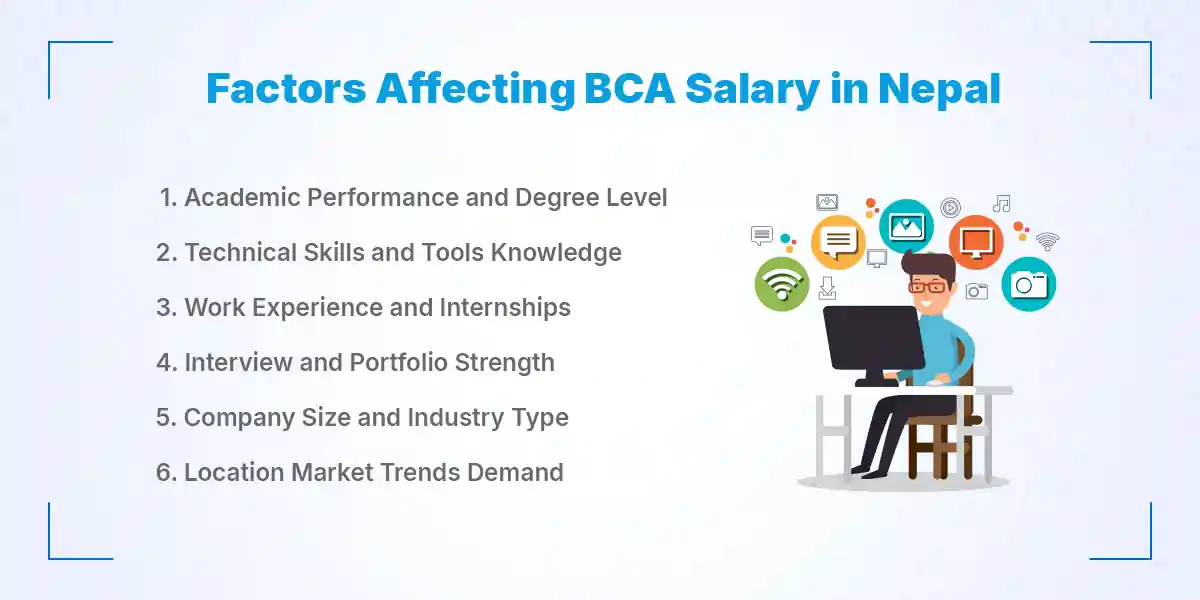
1. Academic Performance and Degree Level
High grades and reputable college backgrounds create an early advantage during interviews. Students with strong fundamentals learn faster in workplaces, securing smoother entry opportunities. Those who pursue further study, like MCA or MIT, often unlock higher roles and better salary brackets. A proven academic record signals discipline and reliability, which hiring teams appreciate.
2. Technical Skills and Tools Knowledge
Skills in programming, databases, networking, or cybersecurity directly affect pay. Workers who master relevant tools, frameworks, and automation tasks often earn more because they solve problems faster. Certifications or real project work show competence and increase salary value. Continuous skill upgrades make professionals competitive and raise earning prospects.
3. Work Experience and Internships
Internships improve job readiness and increase early salary offers, making internship roles valuable stepping stones for fresh graduates. Employers value exposure to real systems, teamwork, and troubleshooting over theory alone. Workers with hands-on practice adjust quickly, reducing training time for firms, thus gaining higher pay. Early project involvement also improves confidence during interviews.
4. Interview and Portfolio Strength
Good communication, clean portfolios, and clear project documentation impress hiring teams, making preparation for interview a key factor in success. A strong portfolio proves achievement rather than claims, leading to negotiable salary outcomes. Interview confidence, problem-solving ability, and clarity in answers raise earning potential. Candidates who showcase measurable results rank ahead of peers.
5. Company Size and Industry Type
Large companies, banks, and IT firms usually pay more because they handle bigger systems and require reliable output. Startups sometimes pay less initially but give rapid growth if the worker contributes value. Industry focus determines workload pressure, responsibility, and salary structure. High-budget sectors reward specialisation faster.
6. Location Market Trends Demand
Kathmandu pays more due to dense business presence and skill demand. Secondary cities offer moderate entry salaries with slower growth but stable roles. Global demand through remote platforms helps skilled workers bypass location limits and access higher international pay. Strong digital presence unlocks opportunities beyond geographic borders.
Skills Required to Earn a Higher BCA Salary
Strong salary growth depends on capability rather than degree completion alone. Workers who build practical skills, perform tasks independently, and adapt to business needs earn more. Skill-focused growth creates long-term career stability and higher earning potential.
1. Programming and Tech Skills
Coding knowledge in languages like Java, PHP, Python, or JavaScript strengthens hiring prospects. Candidates who build clean, functional applications earn trust faster and move toward higher-paid roles. Regular practice, project building, and learning new frameworks raise technical worth. Employers reward workers who solve technical problems with speed and accuracy.
2. Analytical and Problem-Solving Skills
Good analysis helps in debugging, system improvement, and process planning. Workers who break issues into smaller parts and find effective solutions often grow faster in salary. Interviewers prefer problem solvers because they reduce dependency on supervision. These skills show maturity and readiness for responsibility.
3. Communication and Team Collaboration
Clear communication improves workflow and project results. Professionals who express ideas well, listen actively, and work within teams usually gain promotions sooner. Collaboration makes tasks smoother and reduces mistakes. Strong communicators handle pressure better during meetings or client discussions.
4. Software Tools and Digital Knowledge
Knowledge of databases, networking tools, CMS systems, or cloud services increases job value. Workers who handle multiple software environments stand out in hiring pools. Certifications or real practice sessions validate skill ability. Companies pay more for candidates who reduce training time.
5. Time Management and Adaptability
Managing deadlines shows reliability at work. Employers value workers who deliver tasks without delays and adjust when priorities shift. Adaptability helps graduates fit new systems quickly. These qualities support growth and influence promotion decisions.
6. Client and Customer Handling Skills
Professionals who communicate well with clients secure better roles in support, development, or service teams. Patience, clarity, and problem ownership raise customer satisfaction. This skill often leads to leadership tasks and higher income. Workers who handle difficult situations well prove their growth potential.
Career Growth Opportunities for BCA Graduates
Career growth for BCA graduates expands with skill depth, work exposure, and role responsibility, shaping long-term jobs related to BCA in Nepal across multiple industries. Many start with basic tasks but progress to senior functions as confidence increases. Promotions, specialisation, and further study open multiple earning paths over time.
1. Promotion Path Junior to Managerial Roles
Graduates usually begin as trainees or assistants, handling small technical tasks under supervision. With experience, they move to developer, analyst, or administrator roles, leading projects and resolving complex issues. Those who perform consistently often progress into team leader or managerial roles, managing people and delivering outcomes.
2. High Demand Fields: AI, Data Cloud, Cybersecurity
BCA professionals grow faster in fields like data science, cloud services, artificial intelligence, and cybersecurity. These areas offer higher pay because skills remain scarce in Nepal. Graduates who master these domains often secure remote work or international contracts. Growth stays strong due to rising business dependence on automation and system security.
3. Higher Studies MCA MIT MBA Tech
Further study widens job reach and salary potential. MCA or MIT strengthens technical depth for engineering or consultant roles, while MBA Tech helps graduates move toward management or strategy positions. These programs open research options, senior positions, and international placements. Higher education improves confidence and industry relevance, leading to long-term career stability.
How to Build a Career After BCA in Nepal?
Building a strong career after BCA requires planned skill development, practical exposure, and consistent action. Graduates who prepare early often reach better roles faster. This journey grows smoother when students focus on learning outcomes rather than waiting for opportunity.
1. Academic Requirements
Completing BCA with strong grades builds credibility during interviews. Core subjects like programming, database systems, and networking serve as practical foundations at work. Some graduates choose higher study later to expand their income potential or specialise in advanced fields. A solid academic base helps candidates stand out among peers.
2. Develop Core Skills and Certifications
Skill advancement matters more than degrees for job success. Certifications in cloud systems, cybersecurity, data analytics, or programming strengthen hiring chances. Personal projects, coding challenges, and technical workshops boost confidence and attract employer attention. The more hands-on proof you have, the easier job conversations become.
3. Apply Through Job Portals and Websites
Platforms like job portals and company pages list openings for fresh graduates. Applying consistently increases interview opportunities and feedback for improvement. LinkedIn networking also helps candidates discover hiring managers directly. Creating an online presence improves visibility among recruiters.
4. Prepare for Interviews and Assessments
Interview readiness distinguishes candidates in competitive markets. Practising coding tasks, aptitude tests, and communication skills helps secure better offers. Clear, confident answers leave positive impressions on recruiters. Mock interviews and feedback sessions increase the success rate.
5. Start Your First Job or Internship
Taking the first role gives hands-on learning and experience. Internships or entry jobs shape workplace understanding and help graduates apply theory. Early exposure builds momentum for long-term growth and salary improvement. Real experience strengthens credibility and builds future negotiation power.
Where to Find Jobs After BCA in Nepal?
You can find jobs after BCA in job portals like Kumari Job, industry websites, and LinkedIn communities. Many companies advertise openings online, while colleges arrange placement programs for students. Graduates who search actively across these sources secure opportunities faster.
1. Online Job Portals Kumari Job
Portals like Kumari Job list IT openings for fresh graduates, internships, and mid-level roles. These sites provide filters for location, salary, and skill requirements, making job search easier. Creating a profile and applying consistently increases interview chances. Job portals remain the fastest way for freshers to find entry positions.
2. IT Company Careers Section
Many IT firms post vacancies directly on their career pages. Visiting these sites regularly helps candidates apply early before competition rises. Submitting CVs through company portals shows initiative and interest. Companies often prefer direct applicants over mass portal submissions.
3. LinkedIn and Tech Networks
LinkedIn connects job seekers with hiring teams and industry mentors. Professionals who share projects, interact with tech posts, and engage in networking gain visibility. Recruiters often approach active profiles for interviews. Joining groups or online forums helps students learn about hidden opportunities.
4. College Placements and Job Fairs
Colleges conduct placement drives offering interview chances with partner companies. Job fairs bring multiple employers together, making it simple for students to explore offers in one place. These events reduce competition pressure and give practice in interacting with recruiters. Participation improves confidence and can lead to faster hiring outcomes.
Challenges BCA Graduates Face in Nepal
Graduates often feel excited about entering the tech field, yet face hurdles that slow their progress. Salary expectations, skill gaps, and competition create frustration for many beginners. Understanding these challenges helps students prepare better and grow faster.
1. Low Entry Level Salary
Fresh graduates face modest starting pay due to limited exposure and practical ability. Companies hesitate to offer higher amounts until workers prove reliability and skill. This phase often feels discouraging, but salaries improve as experience grows. Many students accept internships first to build confidence and progress faster.
2. Gap Between Education and Industry Skills
College courses teach basics, but workplace demands real problem-solving and tool knowledge. Graduates who lack hands-on experience struggle early in roles. Bridging this gap requires practice, project work, and self-learning. Those who close this gap move toward higher salaries quickly.
3. High Competition
Many students choose BCA, increasing competition for entry positions. Recruiters compare portfolios and project work to filter applicants. Graduates who show real capability earn interviews more than those with theory alone. Standing out requires effort beyond classroom assignments.
4. Need for Continuous Learning and Certification
Technology changes fast, so skill upgrades stay essential. Graduates who stop learning fall behind, while those who adopt new tools succeed. Certifications and workshops help workers remain relevant and attractive to employers. Lifelong learning becomes key for salary growth and job security.
Future Scope of BCA in Nepal
BCA holds strong promise as Nepal’s digital economy expands. More businesses rely on software, data, and automation, increasing demand for skilled graduates. Remote hiring, tech policies, and global outsourcing trends continue to push opportunity forward.
1. Growth in International Remote Hiring
Global companies seek talent from countries with strong tech skills and reasonable salary expectations. Nepali graduates with coding, cloud, or security expertise often secure remote jobs offering higher income. This shift widens exposure, builds international standards, and accelerates learning.
2. Government and Private Tech Push
Digital Nepal initiatives and private sector investment create a rising demand for tech workers. Projects in e-governance, fintech, and automation expand hiring for developers, analysts, and cybersecurity roles. Graduates who align with these sectors enjoy long-term career stability.
3. AI Data Blockchain FinTech Markets
AI, machine learning, data analytics, and blockchain fields offer high growth for skilled professionals. Firms pay premium salaries to specialists in these emerging domains. BCA graduates who pursue advanced study or self-learning in these areas access strong earning potential and niche roles.
4. Rising Global Job Access
Improved internet infrastructure and remote project platforms allow Nepali workers to reach international employers. Students with strong English, clean portfolios, and reliable work habits find remote contracts and overseas job offers. This increases career mobility and reduces reliance on local salary scales.
Salary Growth After Experience
Income rises noticeably as BCA graduates gain experience and prove value. Workers who grow skill depth and deliver reliable results unlock higher roles and faster promotions.
- Salaries often rise within one to two years once workers handle tasks independently.
- Mid-level workers earn more because they solve bigger challenges without constant guidance.
- Senior roles reward leadership, mentoring, and decision-making.
- Certifications in cloud, cybersecurity, data, or automation help accelerate salary growth.
- Remote roles and specialised positions pay beyond Nepal’s average scale.
- Strong portfolios and proven outcomes fuel negotiation power during job switches.
Conclusion
BCA offers strong career potential in Nepal as demand for digital skills rises across industries. Graduates start with modest salaries but gain steady growth through experience, proven capability, and specialisation. Earnings differ by role, sector, and location, yet long-term pay remains attractive for those who keep learning.
Students who focus on practical skills, real projects, communication, and continuous improvement secure better roles faster. Internships, freelancing, remote work, and higher study options expand earning potential and bring exposure beyond local limits. With clear planning and skill development, BCA graduates can build stable careers and achieve income levels that reward effort and persistence.
Frequently Asked Questions
Submit your comments

Get Our App On



How to Make a Police Report (Police Clearance Certificate) in Nepal?
VIEW DETAILS
Types of SEO and How They Work: Complete Beginner's Guide
VIEW DETAILS
Government Restricts New Lok Sewa Vacancy Requests 2083/84 — Or Not?
VIEW DETAILS
How to Apply for Tattoo Artist Jobs in Nepal?
VIEW DETAILS


Loading Comments...