


Many people want stable income, growth, and respect from a public job, yet struggle to understand entry procedures. Applicants often miss deadlines, misunderstand requirements, or fail document checks, which block progress. Confusion about salaries, qualifications, and exam formats also creates stress for fresh graduates or skilled workers trying to enter the power sector work. Missing guidance delays employment chances and increases frustration for job seekers.
In this blog, readers learn everything about the NEA Vacancy process, including eligibility, salary insights, required paperwork, application steps, and growth tracks. This guide simplifies the hiring process at the Nepal Electricity Authority and helps candidates understand the requirements clearly, making preparation easier and increasing their chances of success.
In this blog
What is NEA?
NEA is Nepal Electricity Authority, a government-owned body formed on August 16, 1985, to manage power supply across Nepal. This institution handles the generation, transmission, and distribution of energy for homes, offices, and industries. NEA also plans expansion projects to reduce load issues and support future demand. Its mandate includes rural electrification, billing oversight, and maintenance of national grid systems. NEA operates through branches and field units nationwide to maintain a steady supply with minimal interruption, making it a strong choice for those aiming to get government job in the energy sector.
What Does NEA Do?
NEA manages energy services for Nepal by producing, transmitting, and delivering electricity to homes, offices, and factories. It also expands lines, modernizes old systems, and supports renewable sources to meet rising demand and improve supply security.
1. Electricity production and distribution
NEA runs hydropower stations, distribution centers, and transmission networks that move energy from the source to the city. It assigns power supply for households, industries, and health services. NEA regulates load balance so voltage remains steady during peak hours. Staff monitor flow and repair faults to keep service stable for users.
2. Project development and national grid expansion
NEA plans and builds new power stations, substations, and cross-country lines. These projects connect remote zones to national supply routes. Investment in big corridors strengthens energy availability during high-demand seasons. Expansion plans also prepare networks for future growth or export potential.
3. Rural electrification and renewable projects
NEA extends energy lines to villages so rural families gain lighting, education support, and business opportunities. Micro-hydro, solar, and cross-border links help supply settlements where big grids cannot reach. Renewable work reduces fuel pressure and supports green goals. Local communities benefit through improved services and development opportunities.
4. Customer service and billing management
NEA issues bills, handles meter reading, and enables tariff payment methods online or via offices. Support teams assist users with connection upgrades, complaint resolution, or transfers. Data systems track usage and detect faults on lines. Clear billing improves trust between users and the energy body.
5. Engineering, research, and maintenance
NEA engineers check transformers, substations, and lines to prevent outages. Research teams forecast demand habits and prepare safety plans for storm seasons. Technicians upgrade old gear to reduce failure rates. Maintenance schedules safeguard a continuous supply for residential and commercial groups.
NEA Vacancy Announcement Pattern
NEA publishes openings based on yearly planning, project needs, and workforce gaps. Recruitment volume rises when new plants or transmission projects begin. Applicants must track notices frequently because timelines vary by post type.
How often does NEA publish vacancies?
NEA publishes vacancies through yearly cycles designed to fill officer and assistant roles. Technical posts appear mid-year when fresh engineers or operators are required for active sites. Emergency recruitment happens during big expansions where manpower shortages slow progress. Candidates must review notices regularly because each intake follows different deadlines. Early awareness improves preparation time and boosts success chances for people trying to find government jobs.
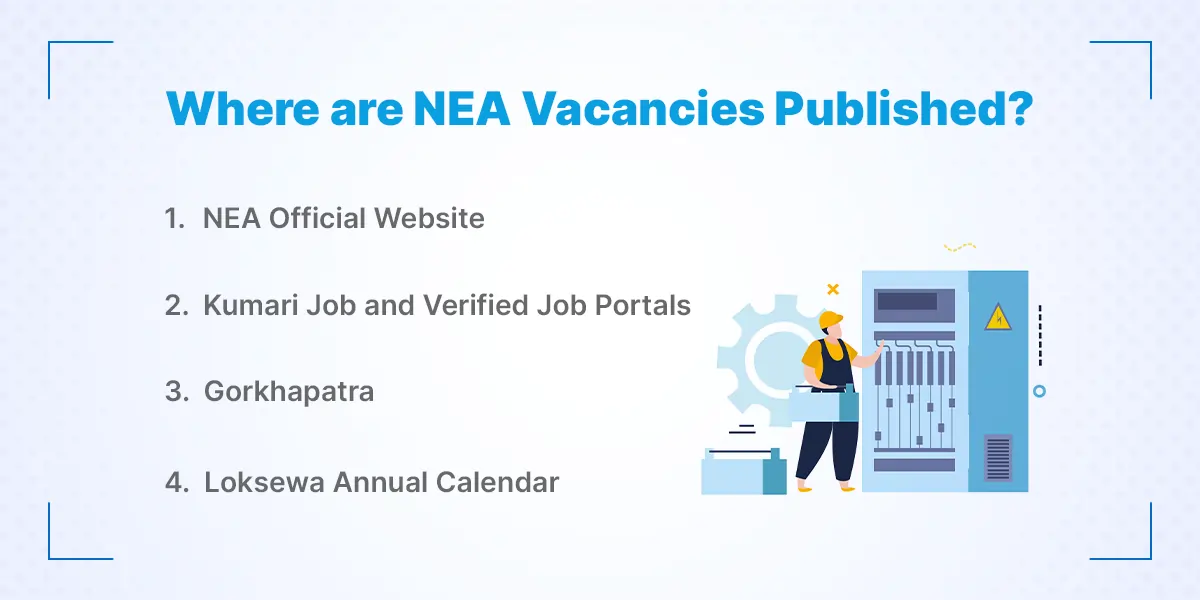
Where are NEA Vacancies Published?
- NEA Official Website: Vacancy updates appear on the official NEA site, where applicants access forms, guidelines, and requirements. Checking this platform ensures accurate dates and official details.
- Kumari Job and Verified Job Portals: Trusted portals like Kumari Job share openings with summaries, deadlines, eligibility notes, and application guidance. These platforms help users stay updated on vacancy announcements and understand how to apply without missing key steps.
- Gorkhapatra: Government print media carries detailed vacancy pages for civil service and key public employers. NEA uses this outlet to reach nationwide applicants.
- Loksewa Annual Calendar: The calendar guides yearly public hiring cycles and exam dates. NEA aligns some positions with this schedule, so candidates monitor updates for officer-level roles.
What Are Eligibility & Qualifications for NEA Jobs?
NEA sets fixed academic and skill requirements for different roles so applicants can match job duties. Education level changes by position category, ranging from engineering degrees to basic support qualifications. Candidates must meet these standards before entering exams, which helps NEA select capable staff for technical and administrative work.
1. Administrative Positions
Graduates with management, commerce, or economics degrees qualify for most office roles. Staff support posts accept intermediate or diploma-level studies, depending on position type. Strong accounting, documentation, and office system skills improve selection chances. Short training or experience helps candidates secure junior entry posts.
2. Engineering Positions
Applicants require electrical, civil, mechanical, or electronics engineering degrees for core engineering jobs. Nepal Engineering Council license is mandatory for many roles before joining duty. Engineers gain an advantage through internships or project work experience. Skills in planning tools, safety compliance, or power system basics also help.
3. Technical Level and Operators
Diploma holders from engineering streams qualify for technician or sub-overseer posts. TSLC trades cover line work, electrical repair, plant operation, or meter handling duties. Practical knowledge and field training increase hiring chances. Some roles need internal exams or skill tests to verify ability.
4. Junior Support Staff
Plus two qualification fits assistant office roles where basic clerical functions are required. Computer use, typing, and system handling ability matter for these posts. Short courses in office software help candidates perform well. Communication skills and accuracy also raise selection prospects.
What is Salary Structure at NEA?
NEA offers graded salary bands based on positions, where an electrical engineer might earn around NPR 50,000 monthly, with total compensation crossing NPR 70,000 after benefits. Pay rises further with seniority, duties, allowances, and pension access. Salary growth continues through periodic increments that reward skill, experience, and exam-based promotions, giving clarity to applicants comparing minimum salary scale across roles.
1. Officer Level (7th to 11th)
Officer posts earn monthly pay of nearly NPR 50,000 at entry for engineering roles and higher for senior grades. Annual totals reach NPR 553,000 to NPR 605,000 for mid-level engineers. Benefits include bonuses, health insurance, and pension systems. Leadership roles push income above base figures through extra allowances. Promotions through exams and performance checks also lift salaries every few years, which attracts candidates looking for section officer salary growth within NEA.
2. Technician and Assistant Level
Technician salaries vary from NPR 25,000 to NPR 45,000 monthly, depending on skill level. Job allowances increase final earnings through field duty, hardship pay, or performance-based rewards. Mid-career staff may cross NPR 50,000 with increments. Pensions and insurance further add value. Continuous service often brings grade upgrades that expand pay levels.
3. Field and Contract Workers
Field workers receive basic pay guided by job demand, with starting income of NPR 18,000 to NPR 25,000 monthly. Contract roles sometimes earn a project allowance tied to workload or location. Heavy-duty sites may provide lodging, food, or safety perks. Pay rises when experience or site pressure increases. Longer tenure or skill roles also boost compensation over time.
How to Apply for NEA Vacancy?
You can apply for NEA vacancy by following an online or notice-based process that guides applicants through each stage. Candidates access official updates, fill forms, pay fees, and prepare for exams. Successful submission depends on correct data entry and timely document attachment.
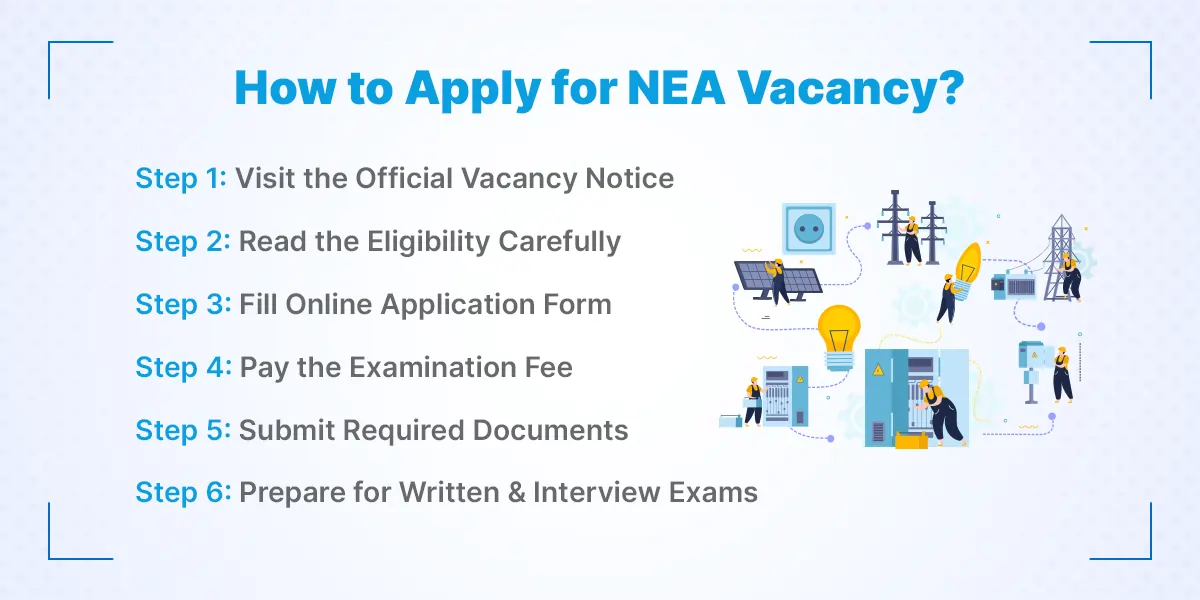
Step 1: Visit the Official Vacancy Notice
Applicants check NEA’s notice for dates, qualifications, and application rules. The official platform gives reliable information that avoids confusion. Reading the full document ensures no step is missed. Screenshots or printouts help track deadlines and support reference during form-filling.
Step 2: Read the Eligibility Carefully
Each post requires different education or skill criteria. Applicants match their profile with the listed standards before applying to prevent rejection. Reviewing age, license, and experience rules avoids wasted effort. Doubtful sections can be clarified through helplines or manuals, which help ensure correct understanding.
Step 3: Fill Online Application Form
Candidates open the online form and enter personal, academic, and job preference details. Accuracy matters because false input may cancel the application later during verification. Clear scanning of documents helps smooth upload and faster review. Users must save changes before final submission and revisit the form to check mistakes.
Step 4: Pay the Examination Fee
Payment is done through bank or online channels linked to the vacancy notice. Applicants collect vouchers or receipts as proof of payment. Fee amounts differ by level, so checking the correct rate is important to avoid underpayment or overpayment. Keeping a copy helps during the admit card issuance and final evaluation.
Step 5: Submit Required Documents
Candidates upload citizenship, academic papers, photos, and other documents. Documents must meet size or format conditions to avoid technical issues. Proper naming and sequencing ease verification for NEA staff. Double-checking files helps prevent missed uploads and strengthens form acceptance.
Step 6: Prepare for Written and Interview Exams
Applicants review NEA exam syllabus for their category. Study plans focus on technical topics, general knowledge, and office skills based on job level. Mock tests or old papers help boost confidence and strengthen weak areas. Interview preparation involves practice for communication, role knowledge, and problem-solving so candidates perform well during assessment.
Required Documents to Apply
NEA requires specific paperwork for vacancy submission so verification becomes easy. Candidates must gather originals and scanned versions before filling forms. Missing files often lead to rejection or delayed approval. Organizing documents early ensures smooth submission and reduces last-minute stress.
1. Citizenship copy
Applicants attach a clear scan of their citizenship card. This document proves identity and nationality. Cropped or unclear images create issues, so keeping multiple versions helps. Validity must match current records.
2. Academic certificates and transcripts
Education proof includes mark sheets, degree copies, and related documents. Scans must be readable to pass verification. Higher posts demand relevant degrees, so sorting papers matters. Keeping originals ready for interview checks is useful.
3. Experience letter (if required)
Some posts need prior work proof from recognized institutions. Letters state job role, duration, and duties. Clear formatting helps staff validate claims. Candidates attach updated letters to avoid confusion.
4. Engineering or technical license
Engineering posts often demand Nepal Engineering Council license copies. Without this, technical roles may get rejected. Scanning both sides ensures clarity. Renewed licenses show compliance with rules.
5. Passport size photos
Photos must fit size guidelines and show clear face features. Recent pictures reflect current identity. Digital formats help easy upload. Candidates keep extra photos for exam cards.
6. Bank voucher or payment slip
Fee receipts confirm payment of examination charges. Uploading this file is necessary for form acceptance. Applicants store physical copies for verification. Correct transaction details speed processing.
7. Character certificate
Some roles need conduct certificates from schools or authorities. This paper proves good behavior and discipline. Updated copies strengthen trust during hiring. Keeping it valid and recent improves acceptance.
Selection Process at NEA
NEA follows a structured hiring method to ensure fair evaluation of applicants. Candidates pass multiple stages to prove knowledge, skill, and suitability for job duties. Completing each phase successfully leads to an appointment in the applied post.
1. Written examination
Candidates sit a written test based on the syllabus for their applied role. Questions assess subject knowledge, reasoning ability, and general awareness. High scores improve placement chances for further stages. Practice through model papers helps boost performance. Strong preparation gives applicants confidence before facing advanced rounds.
2. Skill test or practical test
Technical roles may require hands-on assessments. Tests verify field ability, operational skills, or software handling. Performance reflects candidate readiness for real duty tasks. Good scores here strongly influence selection outcomes. Candidates should practice tools or task simulations when possible.
3. Interview
Shortlisted applicants attend interview sessions. Panels check personality, confidence, communication, and job understanding. Honest answers and clarity improve impression. Preparation helps avoid confusion during questioning. Revising basic concepts and project knowledge strengthens response quality, making structured preparation for interview a key factor for success.
4. Final merit list and appointment
NEA compiles results from all stages and publishes a merit list. Top-ranked candidates receive appointment letters. Successful applicants then proceed for document checks and joining procedures. Continuous learning supports long-term growth after placement. Understanding the system also helps workers aim for promotions later.
Career Growth Opportunities at NEA
NEA offers long-term growth paths for staff who perform well and pass internal assessments. Employees improve skills, earn new responsibilities, and move into higher grades over time. Structured systems reward commitment and technical development. This culture motivates workers to build stable public sector careers.
1. Internal promotions through exams
NEA conducts promotion exams to promote capable staff into higher ranks. Employees who pass earn better pay, duties, and recognition. Regular attempts increase chances of advancement. Goal-based preparation helps candidates secure improvement. Promotion frameworks give clear direction for career planning.
2. Project leadership roles
Experienced staff may lead power projects or expansion works. Leadership posts bring responsibility in planning, supervision, and team direction. Successful execution strengthens career status. Exposure to major sites boosts skill and visibility. These roles often act as stepping stones toward senior management levels.
3. Provincial and national level postings
Workers may receive transfers to provincial or central offices based on need and performance. New postings expand experience in different regions. Serving wider jurisdictions builds confidence and capacity. These rotations often support promotion eligibility. Staff who prove adaptable gain priority for higher responsibilities.
4. Training and professional skill development
NEA offers training on technical, managerial, or safety subjects. These programs improve staff expertise and task efficiency. Participants gain certificates that enhance their profiles. Learning new systems prepares workers for future duties. Training uptake also boosts competitiveness during review cycles.
5. Higher study scholarships for engineers
Engineers may access scholarships for advanced study or certification. Support applies to master's, technical courses, or research. Scholars return with improved knowledge useful for big projects. These opportunities help staff reach senior engineering posts. Scholarship holders often move into specialist or advisory roles.
Conclusion
NEA vacancy provides steady work, fair pay, and room for advancement, making it popular among jobseekers. Clear rules guide applicants from eligibility checks to final appointment, yet many people struggle due to missed deadlines or incomplete understanding of requirements. Proper knowledge of posts and preparation strategies helps candidates stand out among thousands of applicants.
Career prospects remain strong for those who learn continuously and perform well. Growth comes through exams, training, field exposure, and higher study support. Anyone planning to join NEA benefits from early awareness, organized document management, and focused study plans. With informed planning, candidates improve their chances of achieving a stable career inside Nepal’s power sector.
Frequently Asked Questions
Submit your comments

Get Our App On



How to Make a Police Report (Police Clearance Certificate) in Nepal?
VIEW DETAILS
Types of SEO and How They Work: Complete Beginner's Guide
VIEW DETAILS
Government Restricts New Lok Sewa Vacancy Requests 2083/84 — Or Not?
VIEW DETAILS
How to Apply for Tattoo Artist Jobs in Nepal?
VIEW DETAILS


Loading Comments...