


Many aspiring educators in Nepal feel lost when it comes to knowing the skills needed to become a teacher in Nepal. Without a clear idea, preparing for a teaching career can feel stressful and confusing. You may worry about managing students, planning lessons, or communicating effectively.
This guide will remove all that doubt. We will explain every essential skill, from communication and patience to creativity and classroom management, so you can confidently step into any teaching role. By the end, you will have a complete roadmap of the skills needed to become a teacher in Nepal and be ready to build a successful and rewarding career in education.
In this blog
What Skills are Needed to Become a Teacher in Nepal?
To become a teacher in Nepal, essential skills include strong subject knowledge, student-centered pedagogical techniques, effective communication, and classroom management. A Bachelor's degree (or 10+2 for primary levels) and formal teacher training typically support these competencies. Proficiency in Nepali and English is crucial, along with adaptability, creativity in creating resources, and empathy to nurture student learning.
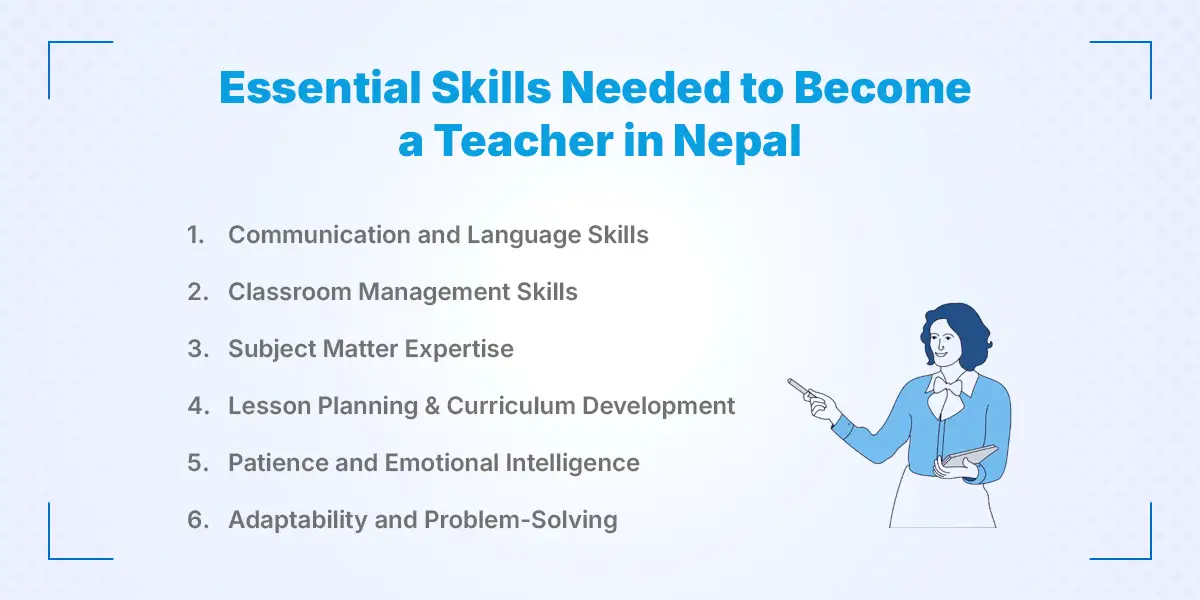
1. Communication and Language Skills
Clear communication sits at the heart of effective teaching. The ability to explain complex concepts in simple terms matters whether you're teaching mathematics in Nepali or conducting an English literature class.
Communication skills include verbal clarity, strong writing abilities, and active listening. For those planning to teach English in Nepal, high proficiency in the English language is non-negotiable since most private and international schools conduct interviews partly in English to assess fluency.
2. Classroom Management Skills
Classroom management refers to the strategies teachers use to maintain discipline, keep students engaged, and handle disruptions. Without this skill, even the most knowledgeable teacher struggles to deliver lessons effectively.
Balancing firmness with warmth helps students feel respected while maintaining order. A teacher who can redirect off-task behavior without escalating conflict creates a safer, more productive learning environment.
3. Subject Matter Expertise
Deep knowledge of your teaching subject forms the foundation of credibility in the classroom. Whether you're teaching science at a government school or business studies at a private institution, your expertise directly impacts student outcomes.
Subject knowledge aligns with Nepal's national curriculum or international standards like IB/Cambridge for relevant schools. Students and parents quickly notice when a teacher lacks command over their subject.
4. Lesson Planning and Curriculum Development
Lesson planning involves creating structured outlines that define learning objectives, activities, and assessments for each class. This skill ensures you cover the syllabus systematically while keeping students engaged.
Effective teachers also adapt curriculum materials to suit their students' needs. In resource-limited settings common in rural Nepal, adaptation might mean creating learning aids from locally available materials.
5. Patience and Emotional Intelligence
Working with diverse learners from various backgrounds requires immense patience. Some students grasp concepts quickly, while others need repeated explanations.
Emotional intelligence is the ability to understand and manage your own emotions while recognizing others'. A student acting out might be dealing with problems at home, and recognizing this changes how you respond.
6. Adaptability and Problem-Solving
No two teaching days look exactly alike. You might plan a perfect lesson only to find the projector isn't working, or discover that students didn't understand yesterday's material as well as you thought. Adaptable teachers adjust their methods on the fly, find creative solutions to unexpected problems, and remain effective despite resource limitations.
Soft Skills for Teachers in Nepal
Beyond core teaching abilities, interpersonal competencies separate good teachers from great ones.
1. Interpersonal and Relationship-Building Skills
Teaching isn't a solo profession. You'll interact daily with students, parents, colleagues, and administrators. Building strong rapport with each group makes your job easier and more rewarding.
Parent-teacher communication, in particular, significantly impacts student success. When parents trust you, they're more likely to support learning at home and address behavioral issues constructively.
2. Leadership and Motivational skills
Great teachers inspire students to learn, not just memorize. Leadership qualities include the confidence to guide classroom activities and the ability to motivate students who've lost interest. You might also mentor junior teachers or lead extracurricular activities. Leadership opportunities often factor into promotions and career advancement.
3. Time Management and Organization
Teachers juggle multiple responsibilities: preparing lessons, grading assignments, attending meetings, handling administrative duties, and managing examination schedules. Without strong organizational skills, important tasks slip through the cracks. A typical secondary school teacher in Nepal might handle 5-6 different classes daily. Staying organized isn't optional.
4. Cultural Sensitivity and Inclusivity
Nepal's diversity includes over 120 ethnic groups and 123 languages, meaning your classroom will include students from vastly different backgrounds. Effective teachers use inclusive approaches that respect caste, gender, and regional differences.
Inclusive teaching might mean being mindful of religious holidays, avoiding examples that exclude certain groups, or ensuring quieter students from marginalized communities get equal participation opportunities.
Technical and Digital Skills for Modern Teaching
The importance of technology in Nepal's classrooms has grown significantly, especially since the COVID-19 pandemic accelerated digital adoption.
1. Computer Literacy and Office Applications
Basic proficiency in MS Word, Excel, and PowerPoint is now expected in most schools. Teachers use these tools for creating worksheets, managing student records, preparing report cards, and designing presentations. Even government schools increasingly require teachers to submit digital records. If you're not comfortable with computers, investing time in basic training pays dividends.
2. Online Teaching Platforms and Tools
Familiarity with platforms like Zoom, Google Classroom, and Microsoft Teams has become essential for hybrid learning models. Many schools now use these tools for parent communication, assignment submission, and supplementary classes. For those wanting to teach English in Nepal through online platforms, mastering these tools opens opportunities to reach students across the country or even internationally.
3. Educational Technology Integration
EdTech (educational technology) goes beyond video calls. EdTech includes using projectors, smartboards, educational apps, and multimedia resources to enhance lessons. A biology teacher might use YouTube videos to show cell division, while a geography teacher could use Google Earth to explore different terrains. These tools make abstract concepts tangible and memorable.
Qualifications Required for Teacher Jobs in Nepal
Moving from skills to formal requirements, qualifications vary significantly depending on the type of school.
1. Educational Background and Degrees
A Bachelor of Education (B.Ed.) is the standard qualification for teaching in Nepal. For lower secondary levels, an Intermediate in Education (I.Ed.) may suffice, while higher secondary positions often require subject-specific master's degrees.
Tribhuvan University and its affiliated campuses remain the primary providers of education degrees in Nepal. The four-year B.Ed. The program combines subject knowledge with pedagogical training.
2. Teaching License from the Nepal Government
A teaching license is a mandatory certification issued by the Teacher Service Commission (TSC) required for permanent positions in government schools. The process involves passing a competitive written examination covering subject knowledge, pedagogy, and general awareness.
According to the Teachers Service Commission Rules, 2057 (2000), candidates also complete specified training hours. The license is valid for a set period and requires renewal.
3. TEFL Certification for English Teachers
TEFL (Teaching English as a Foreign Language) is a specialized certification for those wanting to teach English to non-native speakers. While not legally mandatory, TEFL is highly preferred by language centers, international schools, and reputable private institutions. A 120-hour TEFL certificate typically covers lesson planning, grammar instruction, classroom management, and teaching methodologies specific to language acquisition.
4. Experience Requirements by School Level
Experience expectations differ across teaching levels:
- Primary level: Entry-level positions often accept fresh graduates
- Lower secondary: 1-2 years of experience typically preferred
- Secondary and higher secondary: 2-5 years of experience commonly required
- Administrative roles: 5+ years with demonstrated leadership
Government positions specify exact experience requirements for different posts, so check TSC announcements carefully.
How to Get Teacher Jobs in Nepal?
To get a teacher job in Nepal, prepare a strong application and apply through multiple channels. Many qualified candidates struggle to get teaching jobs because they rely only on vacancies and miss hidden opportunities. The process becomes easier when you combine preparation, networking, and smart use of job portals. In Nepal, both government and private schools follow different hiring methods, so understanding each path is important. Here are practical steps that help you move from searching to getting hired faster.
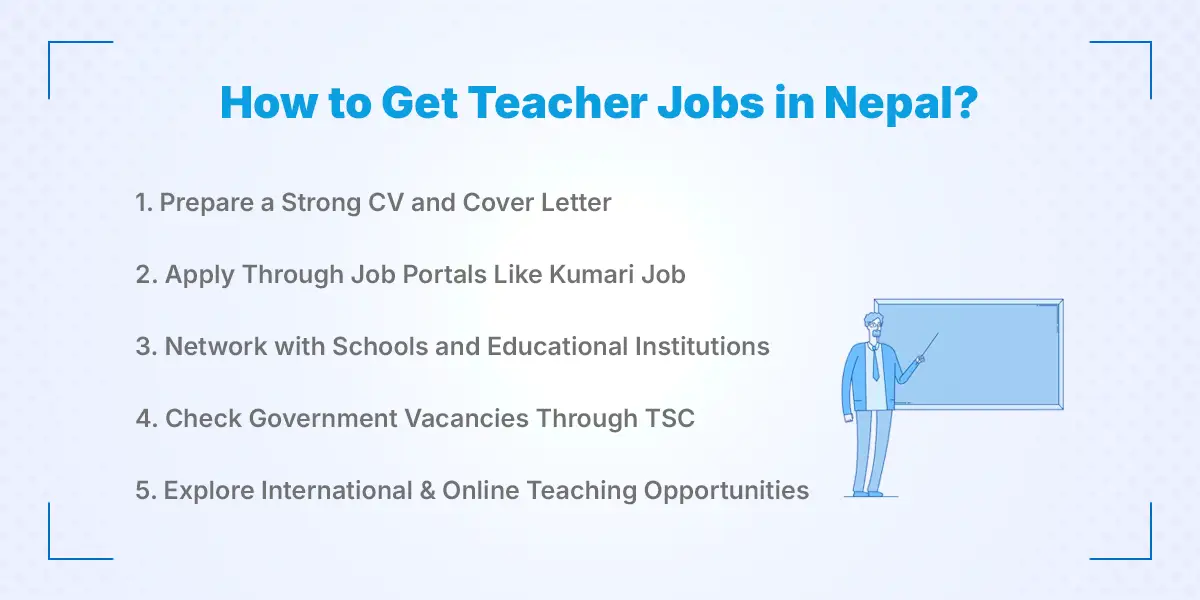
1. Prepare a Strong CV and Cover Letter
Your CV highlights teaching skills, certifications, and relevant experience. A strong job application letter should also accompany your CV. Tailor documents to the specific school type since a government school application looks different from an international school application. Include any student teaching experience, volunteer work, or extracurricular involvement that demonstrates your commitment to education.
2. Apply Through Job Portals like Kumari Job
Online job portals list teaching vacancies across Nepal, from Kathmandu to regional cities like Chitwan, Biratnagar, and Butwal. Kumari Job features positions across all levels and school types, making it easier to compare opportunities.
3. Network with Schools and Educational Institutions
Don't wait for advertised positions. Visit schools directly to submit your CV, attend education fairs, and connect with teacher communities on social media. Many positions, especially in private schools, are filled through referrals.
4. Check Government Vacancies Through TSC
The TSC announces vacancies periodically through its official website and national newspapers. Competitive examinations attract thousands of applicants for limited seats, so thorough preparation is essential.
5. Explore International and Online Teaching Opportunities
International schools often hire year-round and seek candidates with international qualifications or experience. Online platforms offer flexible options to teach students across Nepal or globally.
Salary Expectations for Teachers in Nepal
Teacher salaries in Nepal depend on school type, experience, and location, with government and international schools usually paying more than private schools. Many people enter teaching without a clear idea of how much they will actually earn. This creates confusion when comparing government, private, and international school jobs. Each sector offers different salary structures, benefits, and growth opportunities. Understanding these differences helps you choose the right path based on your financial goals.
1. Government School Teacher's Salary
Government teachers follow a standardized pay scale with increments based on teaching grade and years of service. Benefits include pension, medical allowances, and job security that private schools rarely match. Remote area postings often include additional allowances, making them financially attractive despite location challenges.
2. Private School Teacher's Salary
Private school salaries range significantly. Established schools in Kathmandu may pay competitively, while smaller schools in rural areas offer lower compensation with fewer benefits. Negotiation plays a larger role here than in government positions. Your qualifications, experience, and interview performance directly impact your starting salary.
3. International School Teacher's Salary
International schools offer the highest compensation packages, often including housing allowances, health insurance, and professional development funds. However, international schools also have the strictest qualification requirements.
Challenges of Becoming a Teacher in Nepal
Becoming a teacher in Nepal is rewarding, but it comes with challenges like competition, licensing hurdles, and salary concerns. Many aspiring teachers feel stuck because they underestimate the level of competition and requirements. Government jobs are limited, and the licensing process can take time and patience. Private schools offer opportunities, but not all provide fair pay or job security. Knowing these challenges early helps you prepare better and make smarter career decisions.
1. High Competition for Government Positions
TSC examinations attract thousands of applicants for limited seats. This reality means many qualified candidates wait years for permanent government positions. Meanwhile, candidates often work in private schools or as temporary teachers, building experience while preparing for future TSC attempts.
2. Licensing and Qualification Barriers
Obtaining the mandatory teaching license requires passing difficult exams, and the entire process can be lengthy and bureaucratic. Application deadlines, document verification, and result announcements sometimes stretch over many months.
3. Salary Limitations in Some Private Schools
Smaller private schools, particularly in rural areas, may offer lower salaries with limited benefits and job security. Some schools delay payments or don't provide contracts, leaving teachers vulnerable. Researching schools thoroughly before accepting positions helps avoid problematic employers.
How to Develop and Improve Teaching Skills?
You can develop teaching skills in Nepal through formal training, short courses, and hands-on experience, such as internships or tutoring. Many beginners feel unsure because they lack real classroom experience or proper training. The good news is you can build these skills step by step through structured programs and practical exposure. Combining theory with real teaching practice makes you more confident and job-ready. Here are effective ways to improve your teaching skills before applying for jobs.
1. Teacher Training Programs in Nepal
Formal education degrees from Tribhuvan University or affiliated campuses provide foundational training. The B.Ed. The program includes student teaching components that offer supervised classroom experience. Shorter diploma programs also exist for those who already hold bachelor's degrees in other fields and want to transition into teaching.
2. Professional Development Courses
NGOs like First Steps Himalaya and various educational organizations offer workshops on modern pedagogy, inclusive education, and digital literacy. Short courses help practicing teachers update their skills.
3. Practical Experience Through Internships
Student teaching placements during your degree provide invaluable hands-on experience. Volunteer teaching opportunities through NGOs offer similar benefits for those outside formal education programs. Even tutoring experience counts since tutoring demonstrates your ability to explain concepts and manage learning relationships.
Skills Needed to Teach English in Nepal
Teaching English in Nepal requires strong language skills, proper methodology training, and the ability to adapt to different learning environments. Many people think speaking English is enough, but teaching it effectively needs specific techniques and an understanding of students. Without the right skills, it becomes difficult to manage classes and deliver clear lessons. Employers also look for trained candidates who can handle real classroom situations confidently. Here are the key skills you need to succeed as an English teacher in Nepal.
1. English Language Proficiency Requirements
High fluency in both spoken and written English is essential. While being a native speaker isn't mandatory, native-level fluency is often seen as an advantage, particularly at international schools and language centers. Most employers assess English proficiency during interviews, so practice speaking confidently about educational topics.
2. TEFL Methodology and Certification
Understanding language acquisition theories, grammar instruction techniques, and conversational teaching methods distinguishes qualified English teachers from those who simply speak the language well. A TEFL certificate validates these skills and significantly improves employability. Online TEFL courses from accredited providers are widely accepted in Nepal.
3. Cross-Cultural Communication Skills
Teaching English to Nepali students requires understanding their learning context. Students may have different expectations about classroom participation, error correction, and teacher-student relationships than what Western teaching methods assume. Adapting your approach while maintaining effective instruction takes cultural awareness and flexibility.
Where to Find Teacher Job Opportunities in Nepal?
You can find teacher job opportunities in Nepal through job portals, direct school applications, government notices, and professional networks. Many job seekers miss good opportunities because they rely on only one method. Schools use different hiring channels, so limiting your search reduces your chances. A mix of online platforms, direct outreach, and networking gives better results. Here are the most effective ways to find teaching jobs across Nepal.
1. Online Job Portals
Kumari Job lists teaching positions across all levels and regions of Nepal, from entry-level primary school roles to senior secondary positions. Create a complete profile and upload your CV to receive relevant job recommendations.
2. Direct School Applications
Approaching private and international schools directly with your CV works well, especially during hiring seasons (typically February-April for the new academic year). This approach is particularly effective for teacher vacancies in Kathmandu. Even if no positions are advertised, schools often keep promising applications on file.
3. Government TSC Announcements
Monitor the official TSC website and public notices in newspapers like Gorkhapatra for vacancy announcements. Government positions follow a structured timeline, so missing deadlines means waiting for the next announcement cycle.
4. Social Media and Professional Networks
Facebook groups for teachers in Nepal share job postings, interview experiences, and career advice. LinkedIn connections with school administrators can lead to referrals and insider information about upcoming openings.
Conclusion
Becoming a teacher in Nepal is not just about having a degree; it is about building the right mix of skills, mindset, and real experience. The skills needed to become a teacher in Nepal include clear communication, strong subject knowledge, classroom control, and the ability to understand students from different backgrounds. When you combine these with proper qualifications and continuous learning, you stand out in a competitive job market.
Teaching also demands patience, adaptability, and a genuine interest in helping others grow. If you focus on improving these areas step by step, you can confidently enter the profession and build a stable and meaningful career as a teacher in Nepal.
Frequently Asked Questions
Submit your comments

Get Our App On



SEO Training for Freshers in Nepal: Skills, Career & Job Opportunities
VIEW DETAILS
SEO Training vs. Self-Learning: Which Is Right for You?
VIEW DETAILS
How to Choose Between Two Job Offers
VIEW DETAILS
Digital Marketing Training Interview Questions and Answers for Freshers
VIEW DETAILS


Loading Comments...