



Looking for a career that combines problem-solving, technology, and growth opportunities? Quality Assurance (QA) is one of Nepal’s fastest-growing fields, where skilled professionals ensure software, apps, and websites run flawlessly. Every bug you catch, every feature you test, directly improves user experience and shapes the success of a product.
QA jobs are in demand for both freshers and experienced candidates, offering roles from manual testing to automation, performance, and security testing. This guide will walk you through QA roles, essential skills, salary expectations, and actionable steps to land your first or next QA job in Nepal. With the right skills and mindset, a rewarding QA career is within your reach.
In this blog
What Is a Quality Assurance Job?
Quality Assurance, or QA, is the process of making sure a product, especially software, works correctly and meets the required standards. In simple terms, QA is about checking and improving quality so users get a smooth and error-free experience.
In the world of software and IT, QA focuses on testing programs, applications, and websites before they are released. QA professionals look for bugs, glitches, or any issues that could affect performance. They also make sure the product meets the client’s or company’s requirements.
This makes QA a vital role in the software development process, ensuring that products are reliable, safe, and user-friendly.
What Are the Roles and Responsibilities of QA?
Quality Assurance (QA) professionals are responsible for ensuring that software and applications work correctly and meet quality standards. They do this by testing features, identifying bugs, and collaborating with developers to fix issues. The following sections explain the specific roles and responsibilities of QA in detail.
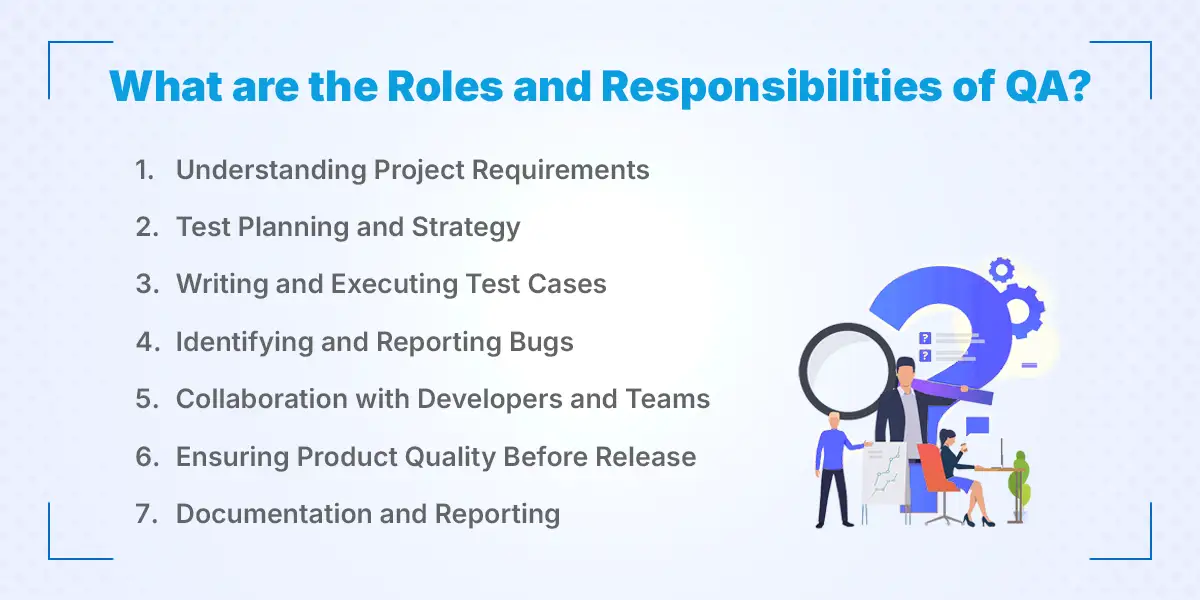
1. Understanding Project Requirements
QA professionals start by reviewing project documents, designs, and user stories to know exactly what the software should do. For example, if the company is developing a banking app, QA checks requirements like fund transfers, bill payments, and account statement generation. They also confirm edge cases, such as handling invalid account numbers or exceeding transfer limits. With thorough understanding of all the application requirements, a QA ensures every feature is tested correctly and nothing is overlooked.
2. Test Planning and Strategy
After understanding the requirements, QA prepares a test plan that defines what to test, how to test it, and in what order. For instance, in a mobile food delivery app, QA decides to first test user registration, menu browsing, and checkout flow manually, then automate repeated tasks like order history and payment verification. This strategy prevents skipping critical features and saves time during repetitive testing cycles.
3. Writing and Executing Test Cases
QA writes detailed test cases with step-by-step instructions. For example, for a ride-sharing app, a test case could include: opening the app, entering a pickup location, selecting a car type, confirming the ride, and checking the fare calculation. QA then executes these test cases on multiple devices and browsers to ensure consistency. Any unexpected behavior, like wrong fare calculation or app crashes during booking, is noted for fixing.
4. Identifying and Reporting Bugs
When QA finds a problem, they document it in detail. For example, if a payment feature in an e-commerce app fails when using a specific card type, QA records the exact steps, screenshots, device used, and severity. They submit this report in tools like JIRA, assigning it to the developer for fixing. This detailed reporting ensures developers can reproduce and fix the issue without guessing what went wrong.
5. Collaboration with Developers and Teams
QA doesn’t work alone. They constantly communicate with developers, project managers, and sometimes clients. For instance, if a video streaming app crashes on a low-end Android phone, QA explains the issue, provides logs, and may suggest testing approaches. Regular collaboration in meetings or chat tools helps solve problems faster, prevents misunderstandings, and keeps the project on schedule.
6. Ensuring Product Quality Before Release
Before software goes live, QA performs final checks on functionality, performance, and user experience. For example, in an online learning platform, QA tests video playback, quiz submission, and progress tracking under different network speeds. They also check if the app works correctly on Android and iOS. This step ensures the product is reliable, smooth, and ready for real users, preventing negative reviews or customer complaints.
7. Documentation and Reporting
QA maintains organized records of all tests, bugs, and results. For instance, a QA report might show that out of 100 test cases for a healthcare app, 90 passed, 8 failed, and 2 are blocked due to environmental issues. This documentation helps project managers track quality, supports audits, and provides a reference for future updates. Well-kept records make QA work transparent and accountable.
What are the Common QA Jobs in Nepal?
Common QA jobs in Nepal include Manual QA Tester, QA Analyst, QA Engineer, Performance QA Engineer, and QA Manager. These roles range from entry-level testing to team management and require different skills, tools, and experience levels. Let’s explore each of these QA jobs in detail to understand their responsibilities, tools, and career paths.
1. Manual QA Tester
Manual QA Testers are usually entry-level roles where freshers start their QA career. They test software features manually without using automation tools. For example, they check whether a login page, payment feature, or form submission works as expected. Common tools they use include JIRA for bug tracking and TestRail for managing test cases, helping ensure software is free from errors.
It’s important to understand the difference between QA and testing. Testing is a part of QA and usually involves checking specific features for errors. QA, on the other hand, covers the whole process of maintaining quality, which includes planning, preventing issues, and making improvements, not just finding bugs.
2. Automation QA Engineer
Automation QA Engineers focus on creating scripts that automatically test software, saving time on repetitive tasks. For example, they may automate login tests, product searches, or checkout flows in an e-commerce app. They often use frameworks like Selenium, Cypress, or Playwright, and languages like Java or Python. These roles require good coding knowledge and the ability to maintain automated test scripts efficiently.
3. QA Analyst
QA Analysts focus on understanding project requirements and designing detailed testing processes. They analyze software features, document expected results, and ensure everything aligns with client needs. Unlike manual testers, QA Analysts spend more time on planning, reviewing specifications, and reporting quality issues. This role requires attention to detail and strong communication to explain testing insights to developers and managers.
4. QA Engineer
QA Engineers are responsible for end-to-end testing of software projects, ensuring every feature works correctly. They test functional, integration, and sometimes performance aspects of an application. For example, in a banking app, they verify fund transfers, account statements, and notifications work flawlessly. They also collaborate with developers, provide detailed bug reports, and ensure the overall product quality meets standards.
5. Performance QA Engineer
Performance QA Engineers test how software behaves under stress or heavy usage. For instance, they check if a hotel booking app can handle thousands of users booking users simultaneously. They use tools like LoadRunner, JMeter, or Gatling to simulate traffic and monitor response times. This role ensures applications remain fast and stable even under high load, preventing crashes and slowdowns.
6. Security QA Tester
Security QA Testers focus on identifying vulnerabilities in applications and data systems. For example, they test login security, data encryption, and API access controls in a fintech app. They look for risks like SQL injection, data leaks, or weak password handling. By reporting and helping fix these issues, they protect both company data and user information.
7. QA Lead / Test Lead
QA Leads or Test Leads manage a team of testers and coordinate all testing activities. They create test plans, assign tasks, and ensure testing is done efficiently. For example, they review manual and automated test results before a software release. They also act as a bridge between QA team members, developers, and project managers to keep projects on track.
8. QA Manager
QA Managers oversee the entire quality assurance process in a company. They define quality strategies, monitor testing standards, and ensure timely delivery of high-quality products. For instance, they might decide which automation tools the team should adopt and how testing should be documented. They also coordinate with stakeholders and management to align quality goals with business objectives.
9. Remote and Freelance QA Jobs
Remote QA jobs allow professionals to work from home or anywhere in Nepal. Freelancers can take short-term projects like testing a mobile app or a website for international clients. Tools like JIRA, TestRail, and Zoom help manage remote testing tasks and communicate effectively. This setup offers flexibility, exposure to global projects, and the opportunity to work on multiple software products simultaneously.
How to Get a QA (Quality Assurance) Job in Nepal?
To get a QA job in Nepal, start by building strong testing skills, both manual and automation, and gaining practical experience through projects or internships. Then, create a QA-focused CV, search for opportunities on job portals or company websites, and apply consistently. In the following sections, we will explain step by step how to prepare, apply, and succeed in QA roles in Nepal.

Step 1: Strengthen Your Technical and Practical Skills
Before applying, focus on building both your manual and automation testing skills. Learn to write test cases, execute test plans, and report bugs clearly. For automation roles, practice tools like Selenium, Cypress, or Playwright, and basic coding in Java, Python, or JavaScript. You can also work on sample projects or internships to gain hands-on experience. This practical knowledge makes you more confident and attractive to employers.
Step 2: Start Searching for QA Opportunities
Begin by researching companies that hire QA professionals in Nepal, including local IT firms, startups, and international outsourcing companies. Check job portals like Kumari Job and LinkedIn, and follow company career pages. Keep an eye on internship and trainee positions if you are a fresher. Regular searching helps you spot opportunities early and prepare before applications close.
Step 3: Understand the QA Role You Are Applying For
Each QA job has specific responsibilities, so it’s important to know exactly what the role requires. For example, a Manual QA Tester focuses on executing test cases, while an Automation QA Engineer writes test scripts. Understanding the role helps you tailor your skills and prepare for relevant interview questions. It also prevents frustration after joining, as you know what to expect in daily tasks.
Step 4: Build a QA-Focused CV
Create a CV that highlights your QA skills, tools, and practical experience. Include test projects, internships, or freelance work, and mention tools like JIRA, TestRail, or Selenium. Clearly describe your responsibilities and achievements, such as “Executed 50+ test cases and reported 30+ bugs during internship.” A well-structured CV makes it easier for recruiters to see your potential and increases your chances of getting shortlisted.
Step 5: Apply Through the Right Job Platforms
Submit your applications through reliable platforms like Kumari Job, LinkedIn, and company websites. Customize your CV and cover letter for each role, emphasizing the skills most relevant to the job. Networking with QA professionals or joining local tech groups can also help you find hidden opportunities. Applying systematically increases your chances of landing interviews faster.
Step 6: Prepare and Attend Interviews
Before interviews, review common QA questions, including manual testing scenarios, bug reporting methods, and automation concepts if applicable. Practice explaining your test cases and problem-solving approach with examples. During the interview, communicate clearly, show your attention to detail, and demonstrate teamwork skills. Being prepared and confident helps you stand out and increases the likelihood of getting hired.
What Skills are Required for QA Jobs in Nepal?
The skills required for QA jobs in Nepal include a mix of technical knowledge, automation abilities, and soft skills. Technical skills involve software testing concepts, writing test cases, and using bug tracking tools, while automation skills cover tools like Selenium and basic programming. Understanding these skills sets the foundation for exploring them in detail in the following sections.
1. Technical Skills for QA Professionals
QA professionals need strong technical knowledge to test software effectively. This includes understanding software testing concepts like functional, regression, integration, and user acceptance testing. They should be able to write clear test cases and test plans that cover all possible scenarios, like checking if a payment feature works for different card types. Familiarity with bug tracking tools like JIRA or Bugzilla is also essential to report and track defects accurately, ensuring issues are resolved quickly.
2. Automation and Programming Skills
Automation is a growing part of QA, so knowing tools like Selenium, Cypress, or Playwright is highly valuable. QA professionals should understand basic programming concepts in languages like Java, Python, or JavaScript to write and maintain automated scripts. For example, automating login tests, product searches, or payment flows saves time and reduces human error. Even basic coding skills help you customize test scripts and debug automation issues effectively.
3. Soft Skills for QA Roles
Strong soft skills are just as important as technical skills in QA. Communication skills are needed to explain bugs clearly to developers and report progress to managers. Attention to detail ensures even small errors, like incorrect totals in a shopping cart, are caught before release. Problem-solving skills help QA suggest fixes or workarounds for issues found during testing. These skills make you a reliable team member and improve the overall product quality.
Educational Background and QA Certifications
Most QA jobs in Nepal prefer candidates with a degree in IT, Computer Science, or related fields, but entry-level roles may accept freshers without a degree. Certifications like ISTQB or automation tool training can boost your profile and improve job prospects.
1. Degree Requirements for QA Jobs
Most QA jobs in Nepal prefer candidates with a degree in IT, Computer Science, Software Engineering, or related fields. A relevant degree helps you understand programming, databases, and software development processes, which makes learning QA easier.
However, a degree is not always mandatory, especially for entry-level manual testing roles. Many freshers start QA careers through internships, online courses, or self-taught projects and later move into automation or specialized roles.
2. Popular QA Certifications
Certifications can boost your profile and demonstrate your knowledge to employers. The ISTQB (International Software Testing Qualifications Board) certification is widely recognized and covers fundamental and advanced QA concepts. For automation-focused roles, certifications in tools like Selenium, Cypress, or Postman show practical expertise. Having certifications helps you stand out in competitive hiring and can sometimes lead to higher starting salaries.
Scope of QA Jobs in Nepal
The scope of QA in Nepal is growing rapidly, with increasing demand for skilled testers in software, IT, and digital services. Companies are hiring for roles ranging from manual testing to automation, performance, and security testing. Next, we will explore the specific entry-level roles, career opportunities, and salary expectations for QA professionals in Nepal.
1. Entry-Level QA Roles
Entry-level QA roles in Nepal are a great starting point for freshers. Positions like Junior QA Tester or QA Trainee allow candidates to learn manual testing, report bugs, and understand the software development process. These roles provide hands-on experience, which is essential for moving into automation or senior QA positions later.
2. How Freshers Can Start a QA Career
Freshers can begin their QA journey by applying for internships, trainee programs, or short-term testing projects. Participating in online QA training programs and workshops also helps build practical skills. Additionally, creating a testing portfolio with sample projects, bug reports, or automated scripts demonstrates your abilities to employers. This combination of learning and practical work makes you ready for full-time QA opportunities.
2. Average QA Salary in Nepal
QA salaries in Nepal vary based on experience and role. Freshers typically earn between NPR 30,000–50,000 per month, while mid-level QA engineers can earn NPR 50,000–80,000. Senior QA engineers or QA leads may earn above NPR 100,000, especially in IT firms serving international clients. Salary also depends on specialization, such as manual versus automation testing.
3. Factors Affecting QA Salary
Several factors affect QA salaries in Nepal. Experience and skill level are the most important. Automation skills or advanced testing knowledge usually lead to higher pay. The type of testing also matters; automation or performance testing roles often pay more than basic manual testing. Finally, company size and project type play a role. International outsourcing firms or software companies with large-scale projects generally offer better packages.
Top Companies Hiring for QA Jobs in Nepal
Top companies hiring for QA jobs in Nepal include both local software firms and international IT outsourcing companies. These organizations offer roles ranging from manual testing to automation and performance QA, providing good learning and growth opportunities. Next, we will explore the types of companies and remote options where QA professionals can apply.
1. Software and IT Companies
Many local software companies in Nepal hire QA professionals to test web, mobile, and desktop applications. For example, companies in Kathmandu like Leapfrog Technology or Deerwalk often have openings for Junior QA Testers and QA Engineers. In addition, international outsourcing firms hire QA talent for projects serving clients worldwide. These roles may include testing mobile apps, websites, or enterprise software for banks, healthcare, and e-commerce, giving exposure to global standards and tools.
2. Remote and Freelance QA Jobs
Remote QA jobs are increasingly popular, offering the flexibility to work from home or anywhere in Nepal. Freelancers can take short-term projects like testing an e-commerce site, mobile app, or SaaS platform for international clients. Platforms like Upwork, Freelancer, and Toptal connect QA professionals with global opportunities. Remote QA work provides experience with diverse projects and allows professionals to manage multiple clients, often at higher pay than local full-time roles.
Career Growth in QA Jobs
QA offers a clear career path for professionals who want to grow in the IT industry. Most start as Junior QA Testers, learning manual testing and bug reporting. With experience, they can move to Senior QA Engineer roles, handling complex testing, automation, and mentoring juniors. Beyond that, opportunities exist as QA Lead or Test Manager, where professionals manage teams, plan testing strategies, and coordinate with project managers and developers for high-quality software delivery.
1. Switching from Manual to Automation QA
Many QA professionals start in manual testing but can advance by learning automation tools. For example, learning Selenium, Cypress, or Playwright helps testers automate repetitive test cases, which is highly valued by employers. Upskilling strategies include taking online courses, attending workshops, or working on small automation projects. Switching to automation not only increases your salary potential but also opens doors to more challenging and higher-level QA roles.
2. Future Scope of QA Jobs in Nepal
The demand for QA professionals in Nepal is growing, especially for those skilled in automation testing. Companies want testers who can automate repetitive tasks, such as login verification, payment processing, or report generation, which saves time and reduces errors. Emerging technologies like AI, cloud computing, and DevOps are also creating new QA opportunities. For example, testing an AI-powered chatbot involves checking accuracy, response times, and bias, while cloud-based applications require testing performance and security across different servers.
As more Nepali IT companies work with international clients, QA roles are expanding to include performance testing, security testing, and continuous integration testing. This trend makes QA a long-term career with opportunities for higher salaries, leadership positions, and specialized technical roles. Professionals who continuously upskill in automation tools, cloud platforms, and AI testing will be in high demand and can enjoy faster career growth.
What are the Common Challenges in QA Roles?
Common challenges in QA roles include tight deadlines, handling complex software systems, and keeping up with constantly evolving tools. These challenges can make testing stressful and require strong focus, adaptability, and continuous learning. Understanding these challenges helps explain why QA professionals need the right skills and strategies to succeed, which we will discuss in detail below.
1. Tight Deadlines and Release Pressure
QA professionals often work under strict deadlines, especially when software releases are scheduled for a specific date. For example, a banking or e-commerce app may need to launch before a festival or fiscal quarter. This can lead to rushed testing, which increases the risk of missing bugs. QA must balance speed with accuracy to ensure the product remains reliable and user-friendly.
2. Keeping Up with New Tools and Technologies
The QA field evolves quickly, with new testing tools, frameworks, and practices emerging regularly. For instance, automation tools like Cypress or Playwright get frequent updates, and cloud-based testing is becoming more common. QA professionals need to continuously learn and adapt to stay effective. Falling behind on tools or methodologies can limit career growth and reduce efficiency in testing.
3. Handling Complex Software Systems
Modern applications are often large and complex, with multiple features, integrations, and platforms. For example, testing a fintech app may involve mobile, web, API, and backend systems simultaneously. QA needs to understand how all components interact to identify hidden issues. This complexity can make testing more challenging and requires thorough planning and attention to detail.
4. Managing Communication and Coordination
QA professionals frequently collaborate with developers, project managers, and clients. Miscommunication can cause misunderstandings about bugs or requirements. For example, a developer might misinterpret a reported issue, delaying the fix. Effective communication, clear reporting, and regular coordination are essential to prevent errors and keep projects on track.
Conclusion
QA is more than just testing software. It’s a career where your attention to detail and problem-solving skills directly impact real products and users. In Nepal, opportunities in QA are growing fast, from manual testing for freshers to automation, performance, and security roles for experienced professionals. Companies, startups, and even global clients are hiring QA talent, offering remote and freelance options alongside full-time positions.
If you are curious, dedicated, and eager to learn, you can start small with internships, personal projects, or entry-level roles and gradually build your expertise. Certifications like ISTQB or training in automation tools can further boost your career and confidence. With consistent learning, hands-on experience, and determination, QA can become a stable, well-paying, and rewarding career where your growth mirrors your ambition.
Frequently Asked Questions
Submit your comments

Get Our App On



SEO Training for Freshers in Nepal: Skills, Career & Job Opportunities
VIEW DETAILS
SEO Training vs. Self-Learning: Which Is Right for You?
VIEW DETAILS
How to Choose Between Two Job Offers
VIEW DETAILS
Digital Marketing Training Interview Questions and Answers for Freshers
VIEW DETAILS


Loading Comments...