


Finding a medical officer position in Nepal can feel overwhelming. Many aspiring candidates struggle with unclear job postings, intense competition, and uncertain selection processes. Understanding eligibility, preparing for assessments, and identifying reliable openings often creates confusion and delays career progress. Without a clear roadmap, candidates risk missing opportunities or wasting time on unsuitable positions.
In this blog, readers will learn practical steps and essential requirements for how to get medical officer job in Nepal. We cover educational qualifications, skill preparation, application strategies, and tips to navigate written tests and interviews effectively. Following this guide will help candidates approach the process with confidence and clarity. You can also find medical and hospital jobs in Nepal to explore current openings and apply directly.
In this blog
What is a Medical Officer's Job in Nepal?
Medical officer’s job in Nepal is a professional role in healthcare responsible for providing patient care, diagnosing illnesses, prescribing treatments, and managing medical records. Officers work in hospitals, clinics, or health centers and may also supervise junior staff, coordinate with specialists, and ensure proper implementation of treatment protocols. They must stay updated on medical guidelines and emerging health issues to deliver effective care.
The role extends beyond clinical duties to include community health initiatives, preventive care programs, and administrative tasks such as maintaining patient data and reporting health trends. Medical officers serve as critical links between patients, healthcare teams, and public health authorities, contributing to overall health system efficiency. Their work directly impacts patient outcomes and the quality of healthcare services across regions. You can also explore medical and pharmaceutical jobs.
What Do Medical Officers Do?
Medical officers in Nepal perform a mix of clinical, administrative, and community-based duties. Clinically, they diagnose illnesses, prescribe treatments, and monitor patient recovery. Administratively, they maintain records, manage staff schedules, and ensure compliance with hospital policies. They also participate in community health programs, health awareness campaigns, and preventive care initiatives.
Key Responsibilities:
- Examine patients and perform medical assessments.
- Prescribe medications and develop treatment plans.
- Monitor patient progress and adjust treatments as needed.
- Supervise junior medical staff and interns.
- Maintain accurate medical records and documentation.
- Coordinate with specialists and hospital departments.
- Participate in vaccination drives and health awareness programs.
- Report public health data to the relevant authorities.
How to Get a Medical Officer Job in Nepal? Step By Step
The role extends beyond clinical duties to include community health initiatives, preventive care programs, and administrative tasks such as maintaining patient data and reporting health trends. Medical officers serve as critical links between patients, healthcare teams, and public health authorities, contributing to overall health system efficiency. You can find jobs in hospitals while exploring opportunities in the healthcare sector. Their work directly impacts patient outcomes and the quality of healthcare services across regions.
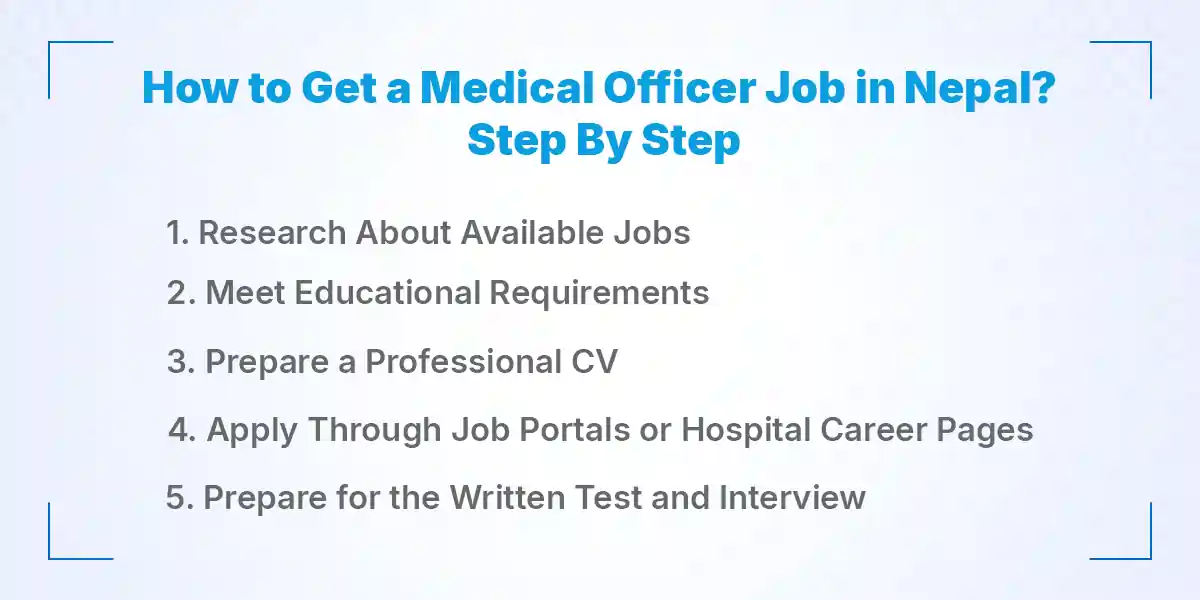
Step 1. Research About Available Jobs
To start, candidates should actively research available medical officer positions in government hospitals, private hospitals, NGOs, and international health organizations. Checking official websites, job portals, and hospital career notices regularly ensures awareness of new openings. Networking with professionals in the healthcare sector and joining medical communities can provide insider information and alerts about vacancies. Prioritizing positions that align with qualifications and career goals helps focus effort on suitable opportunities.
Step 2. Meet Educational Requirements
Meeting educational requirements is crucial for eligibility. Candidates must complete an MBBS or equivalent degree recognized by the Nepal Medical Council (NMC) and secure NMC registration. Additional certifications or specialized training may be necessary for certain roles. Ensuring all academic records and licensing documents are valid and up to date demonstrates preparedness and professionalism to potential employers.
Step 3. Prepare a Professional CV
A well-prepared CV creates a strong first impression. Candidates should clearly present their educational background, internships, clinical experience, and key skills. Highlighting achievements such as research publications, community service, or specialized training adds value. Maintaining a concise and well-structured format allows recruiters to assess qualifications quickly and increases the likelihood of shortlisting.
Step 4. Apply Through Job Portals or Hospital Career Pages
Apply through job portals like Kumari Job or from hospital career pages to submit applications efficiently. For government hospital positions, candidates must follow official procedures, which usually include filling out forms on the hospital or government health department website and submitting required documents such as academic certificates and NMC registration. Private hospitals and NGOs often accept applications directly through their HR departments or online portals, and each organization may have specific instructions or deadlines. Keeping track of submitted applications, confirming receipt, and targeting positions that align with qualifications and career goals increases the chance of advancing to the written test or interview stage.
Step 5. Prepare for the Written Test and Interview
Preparation for written tests and interviews is critical. Candidates should review medical knowledge, clinical procedures, and common case studies relevant to the role. Practicing communication, problem-solving, and decision-making scenarios helps during interviews. Proper interview preparation, including researching the organization, understanding its protocols, and anticipating situational questions, allows candidates to demonstrate competence and confidence, significantly improving their selection chances.
Qualifications Required for Medical Officer Jobs
Qualifications required for medical officer jobs in Nepal focus on medical education, legal licensing, and professional readiness. Candidates must complete recognized academic programs and obtain approval from regulatory authorities. Certain roles also prefer added certifications based on service area or specialization. Meeting qualification standards ensures eligibility across public and private healthcare institutions.
Educational Requirements (MBBS or Equivalent)
Educational qualification for medical officer roles starts with the completion of MBBS or an equivalent medical degree from a recognized institution. Degree recognition must comply with standards set by the Nepal Medical Council to ensure validity within Nepal’s healthcare system. Internship completion forms a mandatory part of academic training and provides hands-on clinical exposure. Without recognized medical education, candidates remain ineligible for medical officer positions.
Licensing and Registration with Nepal Medical Council
Licensing through the Nepal Medical Council is compulsory before practicing as a medical officer. Registration confirms legal authority to diagnose, treat, and prescribe within Nepal. Candidates must pass council registration requirements and submit verified academic documents. Active registration status remains essential throughout professional practice and job application stages.
Additional Certifications (If Applicable)
Additional certifications strengthen candidate profiles and improve job prospects. Training in emergency medicine, public health, ultrasound, or basic life support adds practical value. Rural health programs and NGO roles often prefer candidates with community health or disaster response training. While optional, such certifications increase selection chances and career flexibility.
Skills Needed to Become a Medical Officer
Skills required for a medical officer role go beyond academic qualifications. Healthcare institutions expect strong clinical ability, clear communication, and sound judgment under pressure. Daily responsibilities demand efficiency, accuracy, and responsibility toward patient safety. Skill development directly affects service quality and long-term career growth.
Clinical Skills and Knowledge
Clinical skills form the foundation of medical officer practice. Professionals must accurately assess symptoms, diagnose conditions, prescribe appropriate treatment, and monitor patient progress. Strong knowledge of general medicine, emergency care, and standard treatment protocols supports effective decision-making. Continuous learning through updated guidelines and clinical exposure helps maintain competence across diverse medical situations.
Communication and Leadership Skills
Clear communication supports patient trust and team coordination. Medical officers must explain diagnoses, treatment plans, and risks in simple language that patients understand. Leadership skills help manage junior staff, coordinate with nurses, and collaborate with specialists. Effective communication also reduces errors and improves overall healthcare delivery within facilities.
Problem-Solving and Decision-Making Skills
Problem-solving ability plays a critical role during emergencies and complex cases. Medical officers must analyze symptoms quickly, prioritize care, and choose suitable interventions without delay. Sound decision-making relies on clinical judgment, experience, and ethical responsibility. Consistent practice strengthens confidence while improving patient outcomes and professional reliability.
Where to Find Medical Officer Jobs in Nepal?
You can find medical officer jobs in Nepal in job portals like Kumari Job and hospital career pages. Vacancies also appear through NGOs, international health organizations, and national newspapers. Each source targets different sectors of healthcare employment. Regular monitoring of multiple platforms increases visibility of new openings.
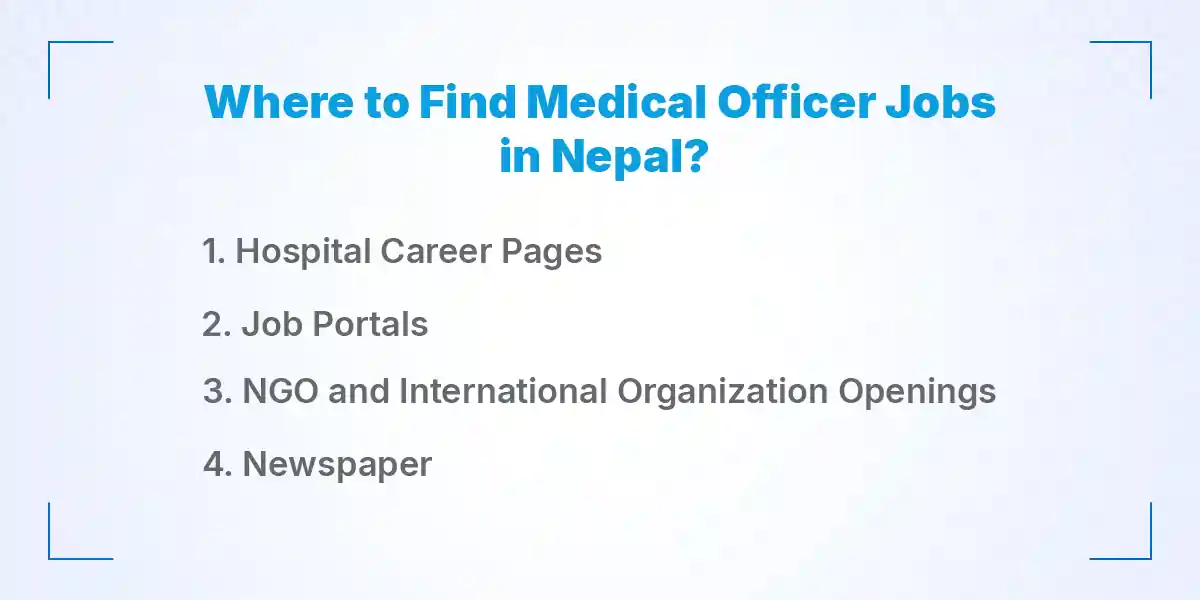
1. Hospital Career Pages
Hospital career pages publish direct vacancies for medical officer positions across private and public healthcare institutions. Official websites usually list eligibility criteria, deadlines, and application procedures. Direct applications help candidates connect with recruiters without intermediaries. This approach suits applicants targeting specific hospitals or regions.
2. Job Portals
Job portals like Kumari Job act as centralized platforms listing multiple medical officer openings across Nepal. Such platforms publish verified vacancies from hospitals, clinics, and healthcare organizations. Candidates can filter roles by location, experience level, or institution type. Online application features simplify tracking progress and managing follow-up efficiently.
3. NGO and International Organization Openings
NGOs and international organizations recruit medical officers for public health programs, rural healthcare delivery, and emergency response projects. These roles often emphasize community service and preventive healthcare and are commonly listed under NGO/INGO jobs. Vacancies appear on organization websites or partner job portals. Field experience or public health exposure may be preferred.
4. Newspapers
Newspapers remain a trusted source for medical officer job announcements, particularly for government hospitals and public institutions. Vacancy notices usually appear in classified or recruitment sections. Advertisements outline eligibility requirements and application steps. Regular review of national newspapers helps candidates stay informed about official openings.
Salary and Career Growth of Medical Officers in Nepal
Salary and career growth for medical officers in Nepal vary depending on sector, experience, and specialization. Government positions offer structured pay scales, while private hospitals may provide higher but variable doctor salaries in Nepal. Career progression depends on skills, performance, and additional qualifications. Specializations and leadership roles create opportunities for higher earnings and professional recognition.
Starting Salary in Government vs Private Sector
Starting salaries for medical officers in government hospitals follow official pay scales set by the Ministry of Health. Fresh graduates can expect a moderate fixed salary with allowances for housing, risk, or rural service. In private hospitals, starting pay may be higher and is considered among the highest paid jobs in Nepal, depending on the hospital’s size, location, and service scope. Private sector compensation often includes performance bonuses or incentives tied to patient care.
Career Advancement Opportunities
Career advancement for medical officers depends on experience, training, and continued professional development. Opportunities include promotions to senior medical officer, department head, or administrative roles. Pursuing further studies, research, or leadership training increases chances of moving into specialized or managerial positions. Consistent performance and skill development directly influence promotion prospects.
Specializations and Higher Positions
Medical officers can pursue specialization in fields such as surgery, pediatrics, internal medicine, or emergency care. Specialization often requires additional training, residency, or certification, but significantly enhances career scope. Higher positions include consultant, department chief, or hospital administrator roles, offering increased responsibility and higher remuneration. Specialization also opens opportunities in research, teaching, or international healthcare programs.
Conclusion
Medical officer jobs in Nepal offer a structured career path for qualified healthcare professionals seeking clinical, administrative, and community health responsibilities. Success in securing a position requires meeting educational standards, obtaining Nepal Medical Council registration, and developing essential skills such as clinical expertise, communication, and problem-solving. Candidates must actively search for openings through job portals, hospital career pages, NGOs, and newspapers while preparing effectively for written tests and interviews.
A medical officer's role provides opportunities for career growth, specialization, and leadership positions across government and private sectors. With dedication, continuous learning, and professional development, aspiring medical officers can achieve long-term success and contribute significantly to Nepal’s healthcare system. Following a clear, step-by-step approach improves chances of selection and professional fulfillment.
Frequently Asked Questions
Submit your comments

Get Our App On



SEO Training for Freshers in Nepal: Skills, Career & Job Opportunities
VIEW DETAILS
SEO Training vs. Self-Learning: Which Is Right for You?
VIEW DETAILS
How to Choose Between Two Job Offers
VIEW DETAILS
Digital Marketing Training Interview Questions and Answers for Freshers
VIEW DETAILS


Loading Comments...