



Landing an internship is one of the most important steps for BBA students looking to kickstart their careers. Internships provide practical experience, help develop essential skills, and give students a head start in building a successful professional journey.
By working on real-world business projects, internships bridge the gap between classroom learning and the professional environment. Students can apply theoretical knowledge to actual business challenges, gaining a deeper understanding of management, marketing, finance, and HR practices.
In Nepal, the demand for business internships is growing rapidly. Companies across various sectors are actively seeking interns to support their operations while providing students with valuable exposure to professional workflows and business dynamics.
In this blog
Why BBA Students Need an Internship
BBA students need internships to gain practical business experience, develop professional skills, and improve employability. Internships provide hands-on exposure to areas like business management, marketing, finance, and human resources, allowing students to apply classroom knowledge to real-world projects. They also help students enhance teamwork, communication, and problem-solving skills while building a strong resume for future career opportunities. With the growing scope of BBA in Nepal, internships play a crucial role in preparing students for diverse career paths in corporate sectors, entrepreneurship, finance, marketing, HR, and management roles.
Types of Internships for BBA Students
BBA students can choose from a variety of internships depending on their area of interest and career goals. Each type of internship provides unique exposure to different aspects of business and helps build relevant skills for future roles.
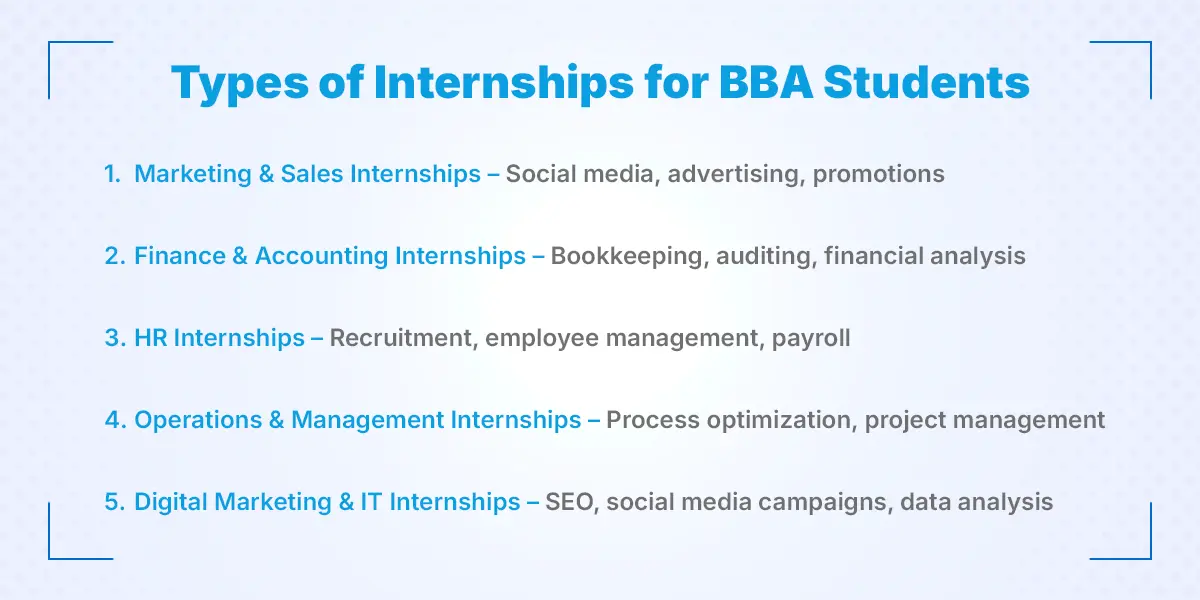
1. Marketing & Sales Internships
Marketing and sales internships involve promoting products or services, analyzing markets, and engaging with customers, providing a foundation for future marketing and sales jobs. Interns may work on social media campaigns, advertising strategies, or sales promotions. They learn how to conduct market research, identify target audiences, and measure campaign performance. These internships help students understand consumer behavior and sales processes. Interns also develop communication and persuasion skills that are crucial for success in marketing and sales jobs.
2. Finance & Accounting Internships
Finance and accounting internships focus on managing financial records, preparing reports, and analyzing budgets, providing a strong foundation for future finance and accounting jobs. Interns may assist in bookkeeping, auditing, or financial analysis tasks. They gain experience with accounting software and learn how to interpret financial statements. These internships help students understand corporate finance, cash flow management, and compliance requirements. Interns also develop analytical thinking and attention to detail, which are essential for success in finance and accounting jobs.
3. HR Internships
Human Resources internships involve supporting recruitment, employee management, and payroll processes. Interns may help with hiring, onboarding, training, and maintaining employee records. They learn how organizations handle workforce planning, performance evaluation, and employee engagement. These internships give students insights into labor laws and HR policies in practice. Interns also develop interpersonal skills and learn how to resolve workplace conflicts effectively.
4. Operations & Management Internships
Operations and management internships focus on optimizing business processes and managing projects. Interns may assist in workflow analysis, resource allocation, or project planning. They gain experience in coordinating tasks, monitoring performance, and implementing efficiency improvements. These internships help students understand organizational structures and operational strategies. Interns also build leadership, problem-solving, and decision-making skills essential for management roles.
5. Digital Marketing & IT Internships
Digital marketing and IT internships involve managing online campaigns, analyzing data, and optimizing digital presence. Interns may work on SEO, social media marketing, content creation, or website analytics. They gain exposure to digital tools, software, and data-driven decision-making. These internships help students understand modern marketing trends and technology-driven strategies. Interns also develop technical skills and learn how to measure and improve online performance effectively.
Where to Find BBA Internships in Nepal
BBA students can find internships in Nepal through job portals(Kumari Job), company websites, university placement cells, networking, and professional associations.
1. Job Portals
Job portals like Kumari Job and LinkedIn list a wide range of internship opportunities across sectors. Students can filter searches by location, field, or duration to find suitable roles. These platforms often provide application tracking, notifications, and company reviews. Applying through job portals is convenient and increases the chances of landing competitive internships.
2. Company Websites and Career Pages
Many companies post internship openings on their official websites. Checking career pages regularly ensures students don’t miss fresh opportunities. Direct applications through websites demonstrate initiative and professionalism, helping interns stand out.
3. University Internship Placement Cells
Most universities in Nepal have dedicated internship placement cells or career offices. They connect students with industry partners and manage internship programs. Students get guidance on applications, interviews, and access to curated opportunities.
4. Networking
Networking with professors, seniors, and alumni can lead to exclusive internship opportunities. Personal referrals often give an edge over general applicants. Networking also helps students learn about company culture and expectations beforehand.
5. Professional Associations and Business Organizations
Professional associations and business organizations often provide internship listings and mentorship programs. Being part of these networks gives students access to industry insights, workshops, and networking events. Participation can improve skills and increase chances of securing a good internship.
Eligibility and Requirements for BBA Internships
BBA students must meet certain criteria and prepare essential documents to be eligible for internships.
1. Academic Requirements
Most internships require students to be in their 2nd or 3rd year of BBA, as this ensures they have a foundational understanding of business concepts. Being in the right academic year shows that students have enough theoretical knowledge to contribute effectively. Some internships may have minimum grade or GPA requirements to maintain standards. This requirement helps employers select candidates who are academically prepared for real-world tasks. Meeting academic eligibility also increases the chances of being accepted for competitive internship programs.
2. Basic Computer and Business Knowledge
Interns should have basic computer skills, including proficiency in MS Office and spreadsheet management. Understanding business processes, accounting principles, or marketing fundamentals is also beneficial. These skills allow students to complete tasks efficiently and adapt quickly to workplace demands. Employers prefer candidates who can handle routine assignments independently. Strong computer and business knowledge also lays the groundwork for learning advanced tasks during the internship.
3. Communication and Teamwork Skills
Good communication skills are essential for interacting with colleagues, clients, and supervisors effectively. Interns must be able to express ideas clearly, both in writing and verbally. Teamwork skills are equally important, as interns often work on group projects or support departmental tasks. Employers look for candidates who can collaborate, listen actively, and contribute to team success. Strong interpersonal skills also help interns handle conflicts, negotiate tasks, and build professional relationships.
4. CV, Cover Letter, and Recommendation Letters
A professional CV highlights education, skills, and any prior experience relevant to the internship. A tailored cover letter explains why the student is a good fit for the role and demonstrates motivation. Recommendation letters from professors or previous employers provide credibility and attest to the student’s capabilities. Together, these documents make a strong impression on recruiters. Preparing them carefully can significantly improve the chances of securing the desired internship.
How to Apply for BBA Internships?
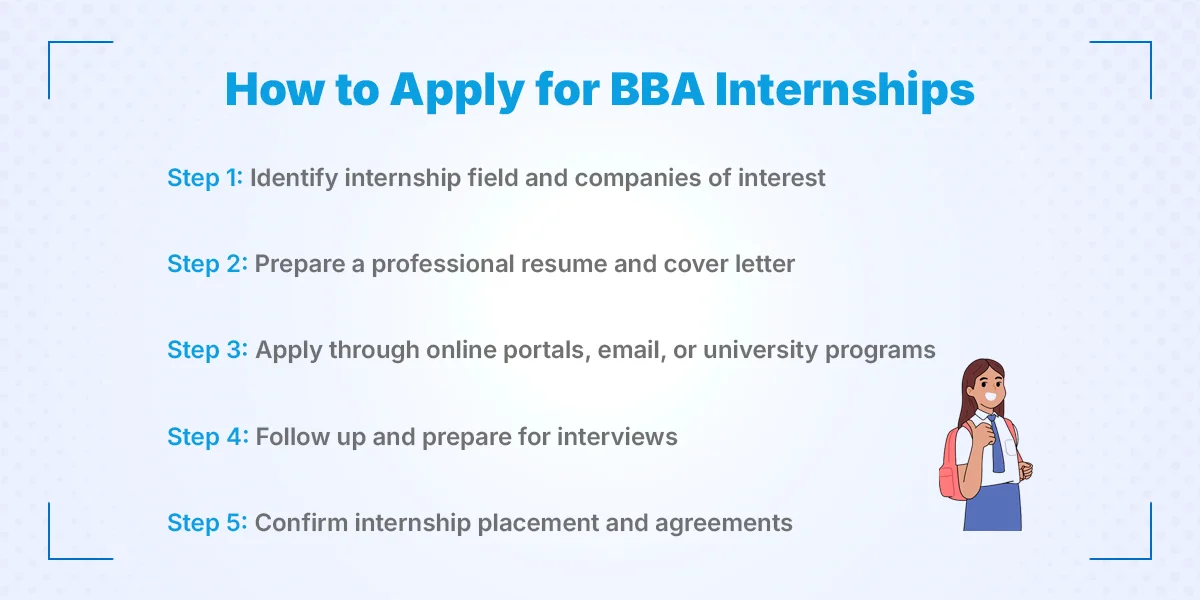
To apply for BBA internships, students should identify their preferred field, prepare professional documents, submit applications, follow up, and confirm their placement.
Applying strategically increases the chances of securing a meaningful internship. Proper planning ensures that students gain relevant experience and build essential skills for their careers.
1. Identify Internship Field and Companies of Interest
The first step is to determine which area of business you want to focus on, such as marketing, finance, HR, or operations. Research companies that align with your interests and career goals. Make a list of potential organizations and check their internship openings regularly. Understanding the company’s values, work culture, and projects helps you target applications effectively. Identifying the right field and companies ensures that your internship experience is meaningful and relevant to your career path.
2. Prepare a Professional Resume and Cover Letter
A well-structured resume highlights your education, skills, and any relevant projects or experience. Your cover letter should be tailored to each internship, explaining why you are interested in the role and how you can contribute. Both documents should be error-free and easy to read. Including measurable achievements or academic projects adds credibility. A strong resume and cover letter increase your chances of catching the recruiter’s attention.
3. Apply Through Online Portals, Email, or University Programs
Once your documents are ready, submit applications through job portals like Kumari Job, LinkedIn, company websites, or university placement programs. Follow the application instructions carefully to avoid errors. Some companies prefer direct emails, while others have online submission forms. Applying through multiple channels increases your chances of selection. Keep track of all applications to manage follow-ups effectively.
4. Follow Up and Prepare for Interviews
After submitting applications, follow up with recruiters to show interest and professionalism. Prepare for interviews by researching the company, reviewing your skills, and practicing common questions. Mock interviews and group discussions can help build confidence. Being punctual, polite, and well-prepared creates a positive impression. Following up demonstrates commitment and increases the likelihood of being shortlisted.
5. Confirm Internship Placement and Agreements
Once selected, confirm the internship placement and clarify responsibilities, duration, and any stipend or benefits. Review any agreements or offer letters carefully before accepting. Ensure that both parties have a clear understanding of expectations. This step helps avoid confusion and ensures a smooth internship experience. Official confirmation allows students to plan their schedule and make the most of their learning opportunity.
Tips to Secure a Good Internship
To secure a good internship, start applying early to increase your chances of being noticed by recruiters. Customize your CV and cover letter for each role to highlight relevant skills and experiences. Building a strong LinkedIn profile and networking with professionals, seniors, and alumni can also open doors to hidden opportunities.
Additionally, attending workshops, training programs, and skill development sessions enhances your knowledge and makes you more attractive to employers. Prepare thoroughly for interviews and practical tests to demonstrate your abilities confidently. Combining these strategies will help BBA students stand out and secure meaningful internship opportunities.
Benefits of Doing an Internship for BBA Students
Internships offer practical exposure and prepare BBA students for real-world business challenges. By participating in internship programs, students can develop key skills, gain industry knowledge, and enhance their career prospects.
1. Hands-on Business Experience
Internships provide students with direct exposure to business operations and workflows. By working on real projects, students learn how organizations function and how decisions are made. This hands-on experience helps bridge the gap between academic knowledge and practical application. Interns gain insights into workplace culture, team dynamics, and professional responsibilities. Such experience builds confidence and prepares students for future full-time roles.
2. Learn Industry Tools and Software
Interns often get the opportunity to use industry-standard tools and software specific to their field. For example, finance interns may use accounting software, while marketing interns may work on social media management tools or analytics platforms. Learning these tools early gives students a competitive edge in the job market. It also allows them to complete tasks more efficiently during their internship. Familiarity with industry technology strengthens technical skills that are highly valued by employers.
3. Improve Communication and Professional Skills
Internships help students enhance communication, presentation, and interpersonal skills. Working with colleagues, clients, or supervisors teaches students how to interact professionally in a corporate environment. Team projects and meetings improve collaboration and negotiation skills. Interns also learn to manage time effectively and handle workplace challenges. These professional skills are transferable and benefit students in any future career.
4. Increase Chances of Full-Time Job Offers
A successful internship can often lead to a full-time job offer from the same company. Employers prefer hiring candidates who have already demonstrated their capabilities during internships. Even if a full-time offer is not guaranteed, internship experience strengthens resumes and makes candidates more attractive to other employers. Completing internships shows initiative, commitment, and industry exposure. This significantly improves employment opportunities after graduation.
5. Expand Professional Network
Internships allow students to build a network of professionals in their chosen field. Connecting with colleagues, supervisors, and industry contacts can open doors to future opportunities. Networking also provides mentorship, guidance, and insights into career growth. A strong professional network can help students learn about job openings or projects not advertised publicly. Expanding connections during internships is a valuable asset for long-term career development.
Conclusion
Internships are essential for BBA students as they provide practical business experience, help develop professional skills, and improve employability. Planning and applying strategically ensures that students secure meaningful internships that align with their career goals. By gaining hands-on experience, BBA students can strengthen their resumes, expand their network, and boost future career opportunities.
If you are looking for internships in Nepal, explore Kumari Job to find a wide range of opportunities suited for BBA students and start building your professional journey today.
Frequently Asked Questions
Submit your comments

Get Our App On



SEO Training for Freshers in Nepal: Skills, Career & Job Opportunities
VIEW DETAILS
SEO Training vs. Self-Learning: Which Is Right for You?
VIEW DETAILS
How to Choose Between Two Job Offers
VIEW DETAILS
Digital Marketing Training Interview Questions and Answers for Freshers
VIEW DETAILS


Loading Comments...