



Being the face of a company, hotel, or hospital, receptionists play a crucial role in making a great first impression. In Nepal, their work is highly valued because they manage calls, welcome visitors, and keep day-to-day operations organized.
A receptionist does more than answer phones—they schedule appointments, handle customer queries, manage office tasks, and maintain records. This wide range of responsibilities makes receptionist jobs in Nepal in high demand across offices, hotels, hospitals, and schools.
Following proper guidance can help job seekers stand out from the competition and land a receptionist job faster. In this blog, we will cover how to get receptionist jobs in Nepal, the skills and qualifications required, and tips to succeed in your application.
In this blog
What is a Receptionist Job?
A receptionist manages front desk operations, greets visitors, and handles administrative tasks. It is a key role in offices, hotels, hospitals, and other organizations, ensuring smooth daily operations.
Receptionists perform tasks like answering phone calls, scheduling appointments, managing emails, maintaining records, and guiding visitors. In hotels, they may also handle bookings and customer inquiries, while in hospitals, they assist patients with registration and information. The work environment can vary from offices and hotels to hospitals and educational institutions, but the core responsibilities remain similar.
Professionalism and strong communication skills are essential for a receptionist. They must interact politely with clients, manage multiple tasks without stress, and create a positive impression of the organization at all times.
Skills Required to Become a Receptionist
To become a successful receptionist in Nepal, you need a mix of communication, technical, and organizational skills. These skills help you manage daily tasks, interact with clients, and ensure smooth office or hotel operations. Below are the key skills required:
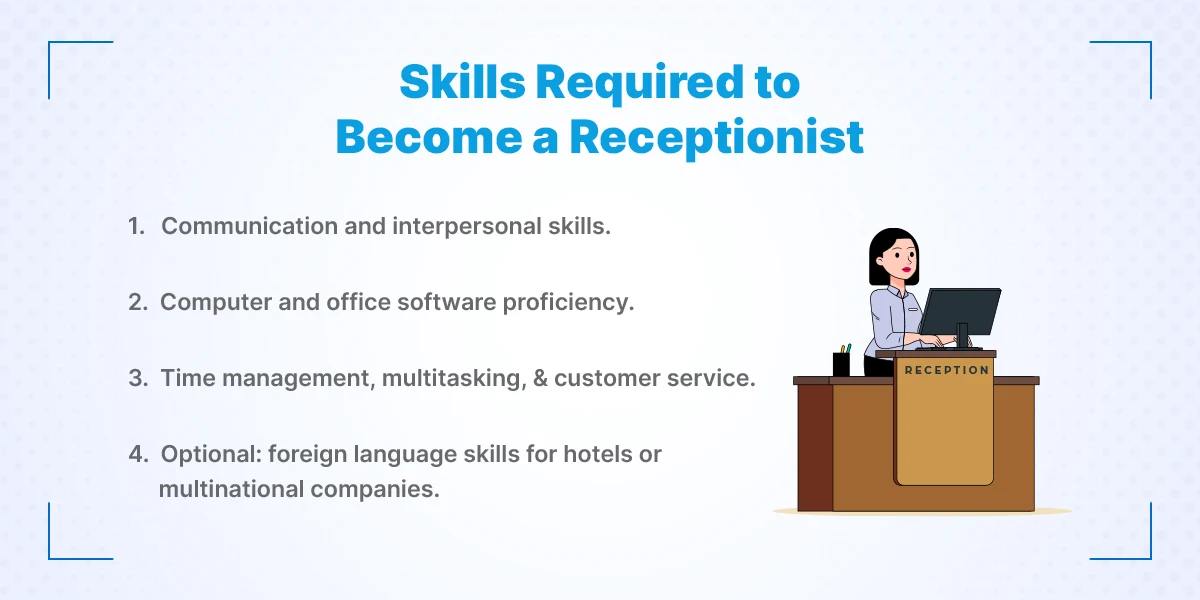
1. Communication and Interpersonal Skills
Receptionists must communicate clearly and politely with visitors, clients, and colleagues. Good listening skills help in understanding questions and resolving issues quickly. Strong interpersonal skills also create a positive impression and build trust with everyone who interacts with the organization.
2. Computer and Office Software Proficiency
Being comfortable with MS Office, email platforms, and scheduling tools is essential. Receptionists handle digital records, appointment calendars, and emails daily, so tech skills save time and prevent errors. Knowing basic troubleshooting and office software shortcuts can also make your work more efficient.
3. Time Management, Multitasking, and Customer Service
Receptionists often handle multiple tasks simultaneously, such as answering phone calls while assisting visitors. Effective time management ensures tasks are completed on schedule without mistakes. Strong customer service skills help in addressing queries politely and keeping visitors satisfied, even in busy or stressful situations.
4. Foreign Language Skills (Optional)
In hotels or multinational companies, foreign language skills can be a major advantage. They help you communicate with international guests or clients smoothly. Even basic knowledge of English or other popular languages can improve your chances of getting hired in competitive positions.
Educational Qualification Needed
Having the right educational background can increase your chances of landing a receptionist job in Nepal. While some positions accept basic qualifications, higher education or specialized training can make a candidate more competitive. Below are the key educational requirements and options:
1. Minimum Education Level
Most receptionist jobs require a 10+2 or equivalent certificate. This ensures candidates have the necessary literacy, numeracy, and communication skills. Certain offices, hotels, and hospitals may prefer candidates with higher secondary or bachelor-level education, depending on the responsibilities.
2. Relevant Certifications or Training
Short-term courses in office management, computer applications, or customer service can enhance a candidate’s profile. Certifications show employers that the applicant has practical knowledge and can handle daily receptionist duties efficiently. Training may also include telephone etiquette, front desk management, and basic administrative skills.
3. Receptionist Training Courses in Nepal
Several institutes in Nepal offer specialized receptionist training workshops. These programs teach professional skills such as managing appointments, using office software, and delivering excellent customer service. Completing these courses can boost confidence and make applications stand out in a competitive job market.
How to Find Receptionist Jobs in Nepal
To find a receptionist job in Nepal, use online job portals like Kumari Job, recruitment agencies, company websites, and personal networking. These methods help job seekers quickly discover openings and connect with potential employers.
Using online job portals like Kumari Job and LinkedIn is one of the easiest ways to find receptionist jobs. You can set up job alerts, apply quickly, and keep your profile updated to improve your chances. Walk-in interviews at hotels, hospitals, schools, and offices are also effective for finding jobs that may not be posted online.
Checking local businesses, hotels, hospitals, educational institutions, and corporate offices directly can reveal hidden openings. Networking with friends, colleagues, or professional groups in Nepal can further help you learn about upcoming receptionist vacancies.
How to Apply for a Receptionist Job?
To apply for a receptionist job in Nepal, prepare a professional CV and cover letter, apply through online job portals or company websites, and attend interviews confidently. Following up after submitting applications also improves your chances of being hired.
Applying for a receptionist job requires a professional and organized approach. The process involves preparing your documents, submitting applications through the right channels, and presenting yourself well in interviews. Below are the key steps to follow:

1. Writing a Professional CV and Cover Letter
A strong CV should highlight your communication skills, computer knowledge, and previous work experience. The cover letter should briefly explain why you are a good fit for the receptionist role. Tailoring your documents to each job increases your chances of getting shortlisted.
2. Preparing for Interviews
Research and prepare for interview questions like “How do you handle multiple tasks?” or “How would you greet a difficult client?” Dress professionally, maintain eye contact, and demonstrate confidence. Practicing beforehand helps you respond clearly and leave a positive impression.
3. Using Job Portals and Company Websites
Apply through trusted online job portals like Kumari Job and LinkedIn. Also, check company websites directly for openings and submit applications online. Job portals often allow you to set up alerts for new receptionist jobs, so you don’t miss opportunities.
4. Highlighting Relevant Experience or Skills
Emphasize skills like front desk management, customer service, and office software proficiency during applications and interviews. Even volunteer work or short internships can be included to show your readiness for the role.
5. Following Up After Submitting Applications
After applying, politely follow up via email or phone to show interest. This demonstrates professionalism and can help keep your application on the employer’s radar. Following up also gives you a chance to clarify any additional information about your qualifications.
Benefits of Working as a Receptionist in Nepal
Working as a receptionist in Nepal offers valuable experience in customer service and office management, helping you build essential professional skills. It is a role that introduces you to real workplace environments and daily administrative operations.
1. Gain Experience in Customer Service and Office Management
Receptionists interact with clients, visitors, and colleagues daily, which improves communication and problem-solving skills. Handling calls, scheduling appointments, and managing records also strengthens organizational abilities. This experience becomes a solid foundation for any future administrative or managerial role.
2. Opportunities to Work in Various Industries
Receptionist jobs are available across hotels, hospitals, offices, schools, and corporate companies in Nepal. Working in different industries allows you to gain diverse experience, understand different work cultures, and expand your professional network.
3. Career Growth Opportunities
A receptionist role can lead to higher positions in office administration, HR, or front-office management. By gaining experience and improving skills on the job, you can progress to supervisory roles or specialized positions in administration and human resources.
Common Challenges and Tips to Overcome Them
Receptionist jobs in Nepal can be competitive and demanding, requiring patience, skill, and persistence. Job seekers often face challenges like high competition, handling difficult customers, and managing multiple tasks under pressure. Below are common challenges and tips to overcome them:
1. Competition for Entry-Level Positions
Many candidates apply for receptionist jobs, making it important to stand out with a strong CV and cover letter. Gaining relevant skills through short courses or workshops can give you an edge. Networking and applying through trusted portals like Kumari Job also increases your chances of being noticed.
2. Handling Difficult Customers or High Workload
Receptionists often interact with irate clients or visitors and juggle multiple tasks at once. Maintaining professionalism, patience, and calmness is key. Learning stress management techniques and organizing tasks efficiently helps in managing workload without mistakes.
3. Tips to Overcome Challenges
Continuous learning, improving communication skills, and maintaining professional behavior can help overcome challenges. Participating in training programs or workshops enhances your knowledge and confidence. Being proactive, adaptable, and polite will make you more effective and valued in your role.
Conclusion
Getting a receptionist job in Nepal involves developing the right skills, preparing professional CVs and cover letters, finding suitable job openings, and performing confidently in interviews. By focusing on communication, computer proficiency, and customer service, job seekers can stand out in a competitive market.
Persistence is key. Regularly checking online portals like Kumari Job, applying through company websites, and following up on applications increases your chances of success. Continuous learning, attending training programs, and maintaining professional behavior can further enhance your profile.
By following these steps, you can secure a receptionist job faster and grow in your career. Looking for more entry-level jobs in Nepal, including receptionist roles? Explore thousands of openings on Kumari Job and kickstart your career today!
Frequently Asked Questions
Submit your comments

Get Our App On



SEO Training for Freshers in Nepal: Skills, Career & Job Opportunities
VIEW DETAILS
SEO Training vs. Self-Learning: Which Is Right for You?
VIEW DETAILS
How to Choose Between Two Job Offers
VIEW DETAILS
Digital Marketing Training Interview Questions and Answers for Freshers
VIEW DETAILS


Loading Comments...