



Many new nurses struggle to find stable jobs because hospitals demand experience, documentation skills, and council registration. Graduates often feel lost when vacancies appear scattered, selection criteria remain unclear, and competition from diploma or bachelor holders increases stress. Job seekers also worry about limited opportunities outside major cities and confusion about where to apply or how to build credibility.
In this blog, readers learn about nursing jobs in Nepal, including how hospitals recruit nurses, the required qualifications, skills that improve hiring prospects, and where vacancies are typically found. This guide explains how practical training, communication skill, certifications, and proper registration strengthen applications. By following these steps, nurses enter the job market with more clarity, confidence, and direction.
In this blog
What is a Nurse’s Job?
Nurse’s job is to provide patient care, assist doctors, and ensure treatment plans run smoothly. Nurses support recovery, monitor health conditions, maintain records, and comfort patients during treatment. Their role requires medical knowledge, empathy, and ability to work under pressure in hospitals, clinics, or community settings.
What Do Nurses Do in Nepal?
Nurses in Nepal handle clinical care, patient support, and documentation duties inside hospitals or field programs.
- Checking vital signs and monitoring patient conditions.
- Giving medicines or injections as instructed by doctors.
- Assisting in emergency care or critical situations.
- Preparing patients for surgery or post-operative recovery.
- Supporting doctors during examinations or procedures.
- Maintaining records and patient files.
- Guiding families about care, hygiene, or follow-up needs.
How to Get Nursing Jobs in Nepal?
You can get nursing jobs in Nepal by gaining clinical exposure, improving documentation skill, learning communication, and applying through vacancy sources regularly. Hospitals prefer nurses who show practical ability, confidence in patient handling, and proper registration, which strengthens access to nursing job opportunities across different facilities. Continuous learning, networking, and skill upgrades increase hiring chances and help nurses grow in their careers.
1. Gain Clinical Experience
Internships, volunteer work, or on-the-job training increases confidence and proves ability. Clinical practice helps nurses handle procedures, emergencies, and teamwork. Candidates with ward experience often get priority because they need less supervision. Hospitals value applicants who show capacity to adapt in real care situations, making practical exposure a strong hiring factor.
2. Build Documentation and Communication Skill
Nurses maintain patient notes, charts, and treatment records so improved documentation matters. Strong communication helps during patient counseling and coordination with doctors. Those who practice record-keeping and clear speaking become reliable team members and more likely to be hired. Hospitals trust candidates who present information clearly because accuracy supports quality treatment.
3. Networking and Continuous Learning
Joining professional groups, attending workshops, or connecting with nursing associations increases job visibility. Networking helps nurses hear about vacancies early and gain referrals from peers. Continuous learning through training or certifications improves skill which drives better hiring outcomes. Nurses who stay updated attract more attention because hospitals value growth-minded employees.
What skills are required for nursing jobs in Nepal?
Clinical and soft skills are required for nursing jobs in Nepal. Hospitals evaluate nurses based on their ability to handle patients, communicate effectively, work as a team, and maintain accurate records. Nurses who combine medical competence with empathy and problem-solving earn faster selection and career growth, which often leads to a better salary of nurse as experience increases. These skills directly influence how safely and confidently nurses manage their duties.
1. Clinical Skills
Clinical skills include vital sign monitoring, medicine administration, wound care, and emergency support. Nurses apply basic procedures, assist doctors, and maintain hygiene standards. Strong clinical skill helps nurses deliver safe care and build patient trust. Continuous practice during training or internships strengthens performance in real settings. Developing clinical confidence also helps nurses adapt smoothly to different hospital departments.
2. Soft Skills
Soft skills include communication, patience, teamwork, and problem-solving. Nurses must understand patient needs, explain care instructions, and coordinate with staff. Good soft skill reduces conflict and improve service quality. Employers value nurses who stay calm, show empathy, and respond professionally under pressure. These personal strengths often set candidates apart during interviews or field evaluations.
Educational Qualifications Needed
Nursing roles in Nepal require formal training supported by council registration. Candidates who complete diploma or bachelor's program secure higher hiring confidence. Academic knowledge paired with skill practice improves job placement in hospitals, clinics, and health programs. Higher study or specialization further strengthens career growth and salary potential.
Is a Nursing Degree Required?
Yes, a nursing degree or diploma is required for entry into nursing roles. Bachelor's degree holders often receive better opportunities, but diploma graduates also secure work when they show practical competence. Registration with Nepal Nursing Council remains essential because hospitals prefer licensed candidates. Additional training or short courses boost competitiveness during hiring.
Certifications That Improve Selection Chances
Certifications increase credibility because hospitals prefer nurses who show readiness for clinical duties. Training programs help applicants stand out, especially when competition is strong. Nurses who pursue extra skill courses gain faster hiring and better departmental placement. These certifications also improve confidence during emergencies or complex cases, making candidates more dependable in real settings.
1. Nepal Nursing Council Registration
Registration confirms legal practice eligibility and validates nursing competency. Hospitals check council status before hiring candidates because it reflects accountability. Registered nurses receive more attention since employers trust their qualifications. This registration also opens pathways for promotions, government service, and specialist departments, making it the most important credential for job entry.
2. Emergency and First Aid Training
Emergency training prepares nurses for injuries, trauma cases, or sudden health crises. Hospitals value candidates who remain calm during emergencies because these roles demand stable decision-making. First aid knowledge improves patient stability until doctors administer advanced care. This certificate shows preparedness, increases hiring potential, and improves workplace confidence when urgent situations arise.
3. Specialization or Diploma Courses
Extra diplomas in areas like psychiatric nursing, maternal care, or anesthesia enhance employability. Specialization allows nurses to work in focused departments where skill demand is high and shortage exists. Hospitals offer better roles to specialized staff due to training depth and service impact. These courses often lead to higher salaries, stronger career growth, and recognition within medical teams.
4. Training in NICU ICU or Critical Care
NICU and ICU training prepares nurses for newborn or critical patient handling, where care precision matters most. These departments require fast response, accurate monitoring, and close coordination with doctors. Certified nurses earn priority in government and private hospitals because skill shortage exists in critical units. This training develops confidence, expands placement options, and opens pathways to better pay or specialty posts.
Where to Look for Nursing Vacancies in Nepal?
You can look for nursing vacancies in Nepal in job portals like Kumari Job and other platforms such as hospital websites, government notices, and medical networks. Checking multiple sources increases your chances because different institutions post in different places. Regular monitoring, networking, and applying early help nurses secure roles before positions fill, and many candidates also benefit when they leverage internship opportunities shared within these networks. Staying active across these platforms gives better visibility and faster job discovery.
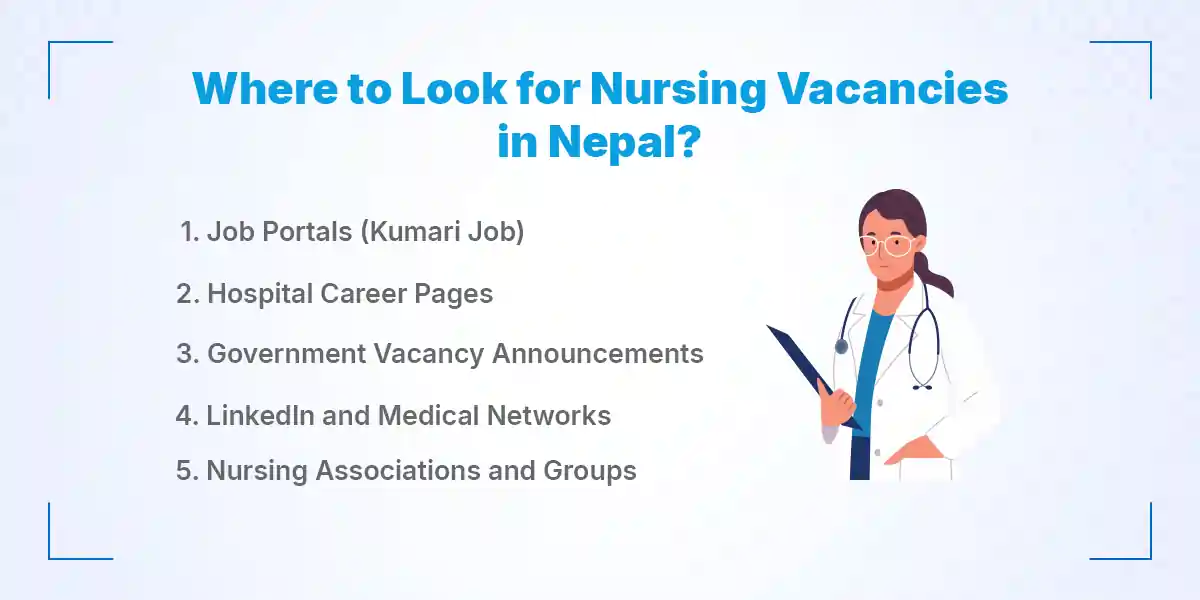
1. Job Portals Kumari Job
Kumari Job posts nursing vacancies from hospitals, clinics, NGOs, and healthcare providers. Nurses can apply directly, set alerts, and browse roles based on qualification or experience level. This portal helps applicants track openings without visiting multiple sites, making it dependable for frequent job updates.
2. Hospital Career Pages
Many hospitals publish job openings on their official websites or recruitment pages. Visiting these pages helps nurses apply early before positions reach public listings. Hospitals often prefer candidates who submit CVs directly through their platforms, showing proactive effort. Submitting profiles regularly increases chances when urgent hiring takes place.
3. Government Vacancy Announcements
Government hospitals, health centers, and local bodies announce nursing posts through official portals or notices. Government hiring offers stable income and long-term career benefits. Monitoring these announcements ensures nurses do not miss secure roles. Applying early improves chances since public seats fill quickly.
4. LinkedIn and Medical Networks
LinkedIn hosts verified openings while offering access to senior nurses or HR teams. Sharing profiles, networking, and engaging with posts helps nurses gain referrals or interview calls. Medical communities also share informal job leads that never reach public boards. Active participation increases visibility when recruiters search profiles.
5. Nursing Associations and Groups
Professional groups, forums, and social pages announce job openings, training events, and internship opportunities. Associations also help members connect with hospital HR teams or recruitment drives. Staying engaged with these groups improves awareness and increases chances of placement. Participation also supports learning through peer discussions and updates.
Application Tips That Improve Hiring
Nurses increase hiring success when applications reflect real skills, clinical exposure, and clear achievements. Recruiters look for candidates who understand patient care and present experience in a simple but confident way. A focused application helps hospitals evaluate capability faster and strengthens interview chances. Small improvements in presentation often make a big difference in selection.
1. Tailored CV
A tailored CV highlights relevant hospital rotations, duties, and achievements. Nurses should match their CV to the job description so HR teams see alignment. Including clinical tasks, department exposure, and patient care outcomes improves trust and increases shortlist chances. This targeted approach shows intention and professionalism to recruiters, helping candidates learn how to make good CV that attracts hiring managers.
2. Highlight Clinical Rotations
Clinical rotations provide hands-on experience in wards like emergency, pediatrics, ICU, or surgery. Mentioning duties performed during training shows readiness for responsibility. Hospitals prefer nurses who have already handled patient monitoring, procedures, or teamwork during rotations because it reduces training time. Clear listing of rotations helps candidates stand out from others with only theoretical knowledge.
3. Mention Patient Care Trainings
Training certificates in infection control, emergency response, or counseling add value. These trainings show preparedness to handle real hospital situations. Employers view candidates with extra care skills as more dependable, especially for departments requiring confidence and precision. Listing dates or duration of training increases authenticity and credibility.
4. Focus on Results and Outcomes
Instead of listing duties only, nurses should show what they achieved such as improved record accuracy or positive patient feedback. Outcome-based points help recruiters understand contribution rather than routine work. This mindset presents nurses as proactive professionals who support quality service. Employers are more likely to notice applicants who express impact rather than tasks.
Conclusion
Nursing careers in Nepal offer meaningful service, steady demand, and many growth paths for motivated professionals. Nurses who build real hospital exposure, improve documentation skill, and invest in clinical competence rise faster in the job market. With continuous practice and commitment to learning, candidates increase hiring confidence across hospitals, clinics, and programs. This profession rewards dedication because each skill directly improves patient care and workplace value.
Success in nursing depends on practical performance, communication, and patient-centered care. Opportunities expand when nurses pursue certifications, engage with networks, and apply early for openings. With the right preparation and focus on skill growth, nurses secure rewarding jobs that support both personal development and better healthcare outcomes in Nepal. Those who remain curious and adaptable often progress into leadership or specialized departments over time.
Frequently Asked Questions
Submit your comments

Get Our App On



SEO Training for Freshers in Nepal: Skills, Career & Job Opportunities
VIEW DETAILS
SEO Training vs. Self-Learning: Which Is Right for You?
VIEW DETAILS
How to Choose Between Two Job Offers
VIEW DETAILS
Digital Marketing Training Interview Questions and Answers for Freshers
VIEW DETAILS


Loading Comments...