



Hydropower is at the heart of Nepal’s economy, supplying a large part of the country’s electricity and supporting industrial growth as well as rural development. With Nepal blessed with abundant rivers and water resources, the hydropower sector offers one of the most promising career paths for those looking to work in energy and infrastructure.
The demand for skilled professionals in engineering, project management, and technical roles has been steadily rising, creating exciting opportunities for both fresh graduates and experienced candidates.
If you’re wondering how to start a career in Nepal’s hydropower industry, this guide is for you. We’ll cover the types of jobs available, the skills you need, how to apply, salary expectations, career growth, challenges, and the future of this sector, giving you a clear roadmap to land your ideal job and build a successful career in hydropower.
In this blog
Why Hydropower is Important in Nepal?
Nepal is blessed with abundant rivers and steep mountains, making it one of the most hydropower-rich countries in the world. Experts estimate the country’s hydropower potential at over 83,000 MW, but only a small part of it has been developed so far. This natural advantage makes hydropower a key driver of sustainable energy and economic growth.
Hydropower plays a vital role in Nepal’s energy security by providing electricity for homes, industries, and agriculture, reducing the need to import fuel. The sector also creates jobs, attracts investment, and supports infrastructure development, especially in remote areas.
Both the government and private companies are investing heavily in hydropower projects, from large dams like Upper Tamakoshi and Budhi Gandaki to smaller run-of-the-river plants. These projects not only increase electricity production but also open up a wide range of job opportunities for engineers, technicians, and project staff across the country.
Types of Hydropower Jobs in Nepal
The hydropower sector in Nepal offers a wide range of career opportunities for professionals with diverse skills. From engineering and technical roles to project management and environmental expertise, the industry requires qualified individuals to support the country’s growing energy needs.
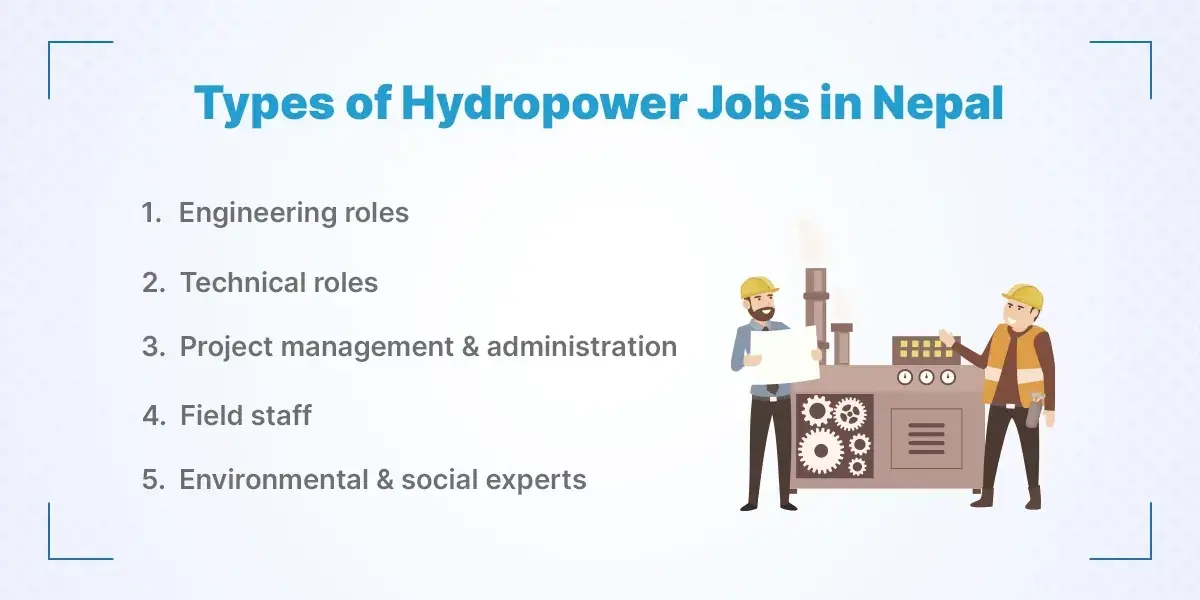
1. Engineering Roles
Engineering is the backbone of hydropower development. Professionals in this category design, construct, and maintain the critical infrastructure required for energy production. Engineering jobs ensure that dams, tunnels, powerhouses, and machinery operate safely and efficiently, making them essential to every hydropower project.
- Civil Engineers – Design dams, tunnels, and powerhouses while ensuring structural integrity and safety.
- Electrical Engineers – Manage electricity generation, transmission, and distribution.
- Mechanical Engineers – Handle turbines, generators, and other mechanical systems.
2. Technical Roles
Technical experts provide the specialized knowledge needed for accurate project planning and execution. They analyze natural conditions, assess project feasibility, and ensure that construction and operation meet technical standards. These roles are critical to reducing risks and optimizing energy production.
- Hydrologists – Analyze river flows and water availability to optimize energy production.
- Geologists – Examine soil and rock conditions to ensure safe construction.
- Surveyors – Map project sites and support design and layout planning.
3. Project Management & Administration
Project management and administration are key to completing hydropower projects on time and within budget. Professionals in this area coordinate multiple teams, monitor project progress, and handle the financial and human resources aspects of the project. Project management and admin jobs ensure smooth operations and compliance with legal and technical standards.
- Project Managers – Oversee planning, scheduling, and team coordination.
- HR Professionals – Manage recruitment, employee welfare, and staffing needs.
- Accountants & Finance Specialists – Maintain budgets, control costs, and report financial performance.
4. Field Staff
Field staff are responsible for the daily operations and maintenance of hydropower plants. They work on-site to monitor performance, troubleshoot issues, and ensure that all systems function efficiently. Their contribution is vital to preventing downtime and keeping projects running smoothly.
- Operators – Monitor plant performance and energy output.
- Technicians – Perform maintenance, troubleshoot equipment, and support engineers.
- Maintenance Staff – Ensure all mechanical, electrical, and civil components function safely.
5. Environmental & Social Experts
Environmental and social experts ensure that hydropower projects are sustainable and responsible. They assess environmental impacts, manage community relations, and implement mitigation measures to minimize negative consequences. Their role is increasingly important as modern projects focus on long-term sustainability.
- Environmental Specialists – Conduct Environmental Impact Assessments (EIA) and ensure compliance with regulations.
- Social Experts – Manage community relations, resettlement, and social impact mitigation.
Skills Required for Hydropower Jobs
To succeed in Nepal’s hydropower sector, professionals need a combination of technical expertise, practical skills, and soft skills. Employers look for candidates who can not only perform specialized tasks but also adapt to challenging environments and work effectively in teams.
1. Technical Knowledge
Strong technical knowledge forms the foundation for most hydropower roles. Professionals must understand engineering principles, geology, hydrology, and other technical aspects to design, construct, and operate projects safely and efficiently.
- Civil, electrical, and mechanical engineering expertise
- Hydrology and water resource analysis
- Geological and geotechnical assessment
2. Project Management and Problem-Solving
Hydropower projects involve complex planning, scheduling, and coordination. Professionals with project management skills can oversee multiple tasks, meet deadlines, and resolve issues as they arise. Problem-solving abilities are critical for addressing unexpected challenges in construction and operations.
- Planning and scheduling projects effectively
- Budget and resource management
- Troubleshooting operational and technical problems
3. Safety, Teamwork, and Adaptability
Working on hydropower sites often involves remote locations and challenging conditions. Safety awareness, teamwork, and adaptability are essential to ensure personal well-being, project efficiency, and collaboration across diverse teams.
- Adherence to safety protocols and standards
- Effective communication and collaboration with team members
- Flexibility to work in remote or challenging environments
4. Knowledge of Environmental Laws and Compliance
Sustainability is a key aspect of modern hydropower projects. Professionals must be familiar with environmental regulations, compliance requirements, and best practices to minimize the ecological and social impacts of their work.
- Environmental Impact Assessment (EIA) understanding
- Knowledge of local and international environmental regulations
- Implementation of sustainable and responsible practices
How to Get a Hydropower Job in Nepal?
To get a hydropower job in Nepal, you need the right combination of education, practical experience, certifications, and networking. With many projects underway, professionals with relevant skills and proactive applications have the best chances of securing roles in engineering, technical, or management positions.
1. Apply Through Online Job Portals
Online job portals are one of the most accessible ways to find hydropower jobs. Most hydropower companies in Nepal regularly post vacancies for engineers, technicians, project managers, and field staff. By applying through portals, candidates can easily track openings, submit applications, and connect with recruiters.
- Platforms like Kumari Job allow you to create a professional profile and upload an updated CV.
- Regularly checking job listings increases the chance of landing interviews.
- Some portals also provide notifications or email alerts for new openings, keeping candidates updated on the latest opportunities.
2. Networking with Hydropower Companies and Contractors
Networking is a key strategy to access opportunities that may not be publicly advertised. Building relationships with industry professionals, contractors, and companies can provide valuable referrals and insider knowledge about upcoming projects.
- Attend workshops, conferences, and seminars related to renewable energy and hydropower.
- Connect with professionals on LinkedIn or local engineering associations.
- Engage with alumni networks, mentors, or colleagues who have experience in the sector.
3. Internship or Training in Energy/Engineering Fields
Practical experience is highly valued in the hydropower industry. Internships and training programs allow candidates to gain hands-on knowledge of plant operations, turbine maintenance, and construction processes. This experience not only strengthens your resume but also helps you understand workplace challenges in remote and technical environments.
- Apply for internships at hydropower plants, engineering firms, or government projects.
- Participate in field training programs focused on civil, electrical, or mechanical operations.
- Use internships to build a professional network and gain mentorship from experienced engineers.
4. Certifications or Higher Studies in Renewable Energy
Specialized education and certifications can make candidates more competitive in a growing sector. Knowledge of modern renewable energy technologies, project management, or environmental compliance is highly valued by employers.
- Pursue degrees or diplomas in hydropower, civil, electrical, or mechanical engineering.
- Obtain certifications in project management, safety, or environmental impact assessment.
- Attend professional courses on sustainable energy, renewable technologies, or smart grid systems to stand out.
5. Stay Updated on Industry Trends and Policies
Understanding current trends, government policies, and upcoming projects is crucial for long-term success in the hydropower sector. Being informed helps you anticipate job openings and align your skills with industry needs.
- Follow news about government and private hydropower projects in Nepal.
- Keep track of policies related to renewable energy, incentives, and international collaborations.
- Join online forums, newsletters, or professional groups dedicated to hydropower and renewable energy.
Salary and Benefits in the Hydropower Sector
Hydropower jobs in Nepal offer competitive salaries and attractive benefits, making the sector appealing for professionals in engineering, technical, and management roles. Compensation varies depending on experience, role, and project scale, but there is significant potential for growth.
1. Entry-Level Salaries for Engineers, Technicians, and Support Staff
Entry-level positions in hydropower provide a good starting point for recent graduates or trainees. Civil, electrical, and mechanical engineers typically earn between NPR 40,000 and 80,000 per month, while technicians and field operators earn around NPR 25,000 to 50,000 per month. Administrative and support staff usually start with salaries of NPR 20,000 to 40,000 per month. Salaries are often higher in large-scale projects or private companies compared to government-run plants.
2. Salary Growth with Experience and Specialization
As professionals gain experience and specialize in high-demand areas, their salaries increase significantly. Mid-level engineers and managers can earn between NPR 80,000 and 150,000 per month, while senior engineers, project managers, or technical specialists may earn over NPR 150,000 to 300,000 per month. Expertise in hydrology, renewable energy, or international projects further enhances earning potential.
3. Additional Benefits
Many hydropower companies provide additional benefits to attract and retain skilled professionals. Employees working in remote project areas often receive housing or accommodation allowances, travel or transportation facilities, and health insurance. Some projects also offer meal allowances, performance bonuses, and other incentives, improving overall job satisfaction and supporting staff working in challenging environments.
Career Growth in Hydropower Jobs
Nepal’s hydropower sector offers excellent career growth for skilled professionals. With steady investment in both government and private projects, employees can gradually move from entry-level roles to senior positions, gaining experience and responsibilities along the way.
1. Moving from Junior to Senior Project Roles
Professionals often start as junior engineers, technicians, or project staff and can grow into senior roles like project managers, lead engineers, or department heads. Promotions usually depend on experience, performance, and the ability to take on larger responsibilities. Those who show leadership, problem-solving skills, and strong technical knowledge are more likely to advance quickly.
2. Opportunities in International Hydropower Projects
Skilled professionals also have chances to work on international projects. Many companies collaborate with foreign investors or participate in cross-border energy initiatives. Working on these projects helps you gain exposure to modern technologies, improve technical expertise, and often comes with better salary prospects.
3. Transition into Consultancy, Research, or Startups
After gaining experience, professionals can move into consultancy, research, or renewable energy startups. These roles let you specialize in areas like project feasibility, environmental assessments, or innovative energy solutions, and may even open doors to entrepreneurship or advisory positions.
Challenges in Hydropower Jobs
While hydropower jobs in Nepal offer good salaries and career growth, professionals often face several challenges that require preparation, adaptability, and problem-solving skills.
1. Remote Working Conditions and Project Site Difficulties
Many hydropower projects are located in remote areas, often in hilly or mountainous regions. Employees may need to work in challenging environments with limited access to transportation, communication, and basic facilities. Harsh weather conditions, long commuting times, and temporary living arrangements can make fieldwork physically and mentally demanding.
2. Environmental and Social Impact Management
Hydropower projects have significant environmental and social implications, including river ecosystem disruption, resettlement of communities, and land-use concerns. Professionals are often required to manage these impacts responsibly, ensure compliance with environmental regulations, and engage with local communities, which can be a complex and sensitive task.
3. High Competition for Skilled Positions
Despite the sector’s growth, there is strong competition for technical and managerial roles. Employers prefer candidates with specialized skills, certifications, and relevant work experience. Fresh graduates or those lacking hands-on exposure may find it challenging to secure positions, making internships, training, and networking crucial for entering the industry.
Future Scope of Hydropower Jobs in Nepal
Nepal’s hydropower sector has huge potential for growth thanks to its abundant water resources and rising energy demand. Skilled professionals can expect more job opportunities in both domestic and international projects as the sector expands.
1. Growing Government and Foreign Investment
The government and foreign investors are putting more money into hydropower projects, including large dams, smaller run-of-the-river plants, and upgrades to existing facilities. This investment creates steady demand for engineers, technicians, and project managers, ensuring long-term career opportunities.
2. Opportunities for Hydropower Exports
Nepal can export electricity to neighboring countries like India, China, and Bangladesh. Professionals with skills in project planning, cross-border regulations, and energy trading can benefit from international projects and higher-paying roles.
3. Rising Demand for Green Energy Experts
With the global focus on renewable energy, there is a growing demand for experts in sustainable and green energy solutions. Professionals with knowledge of modern hydropower technologies, environmental management, and energy efficiency will have a competitive advantage in the job market.
Conclusion
Hydropower is one of Nepal’s most promising and rapidly growing job sectors, offering stable employment and attractive career growth for skilled professionals. With the right combination of education, practical experience, certifications, and networking, Nepalese candidates can build rewarding careers in engineering, technical, management, and sustainability roles. Aspiring professionals are encouraged to explore available opportunities, pursue relevant training, and stay updated on industry trends to successfully enter and advance in this sector.
If you are searching for more job opportunities in Nepal, Kumari Job, the best job portal in the country, can help you find thousands of vacancies across hydropower, IT, finance, marketing, and more. Start exploring and take the next step toward your ideal career today!
Frequently Asked Questions
Submit your comments

Get Our App On



SEO Training for Freshers in Nepal: Skills, Career & Job Opportunities
VIEW DETAILS
SEO Training vs. Self-Learning: Which Is Right for You?
VIEW DETAILS
How to Choose Between Two Job Offers
VIEW DETAILS
Digital Marketing Training Interview Questions and Answers for Freshers
VIEW DETAILS


Loading Comments...