



Are you struggling to figure out how to start a career in software development in Nepal? You’re not alone. Many students and professionals feel lost when it comes to choosing the right skills, languages, and career path. The IT world can feel confusing at first, and it’s easy to get stuck or waste time on the wrong things.
But here’s the good news: becoming a software developer is completely possible, even if you don’t have an IT degree. With the right guidance, practice, and focus, you can build the skills companies are looking for and land your first job.
In this guide, I’ll show you step by step how to become a software developer in Nepal, from learning the basics to getting hired.
In this blog
What Does a Software Developer Do?
A software developer is someone who creates computer programs and applications. In simple words, they turn ideas into software that people can use on their computers, phones, or the internet. Whether it’s a website, a mobile app, or a business tool, software developers make it work.
Every day, a software developer does a variety of tasks to build and maintain software. Some of the main responsibilities include:
- Coding: Writing instructions in programming languages like Python, JavaScript, or Java.
- Debugging: Finding and fixing errors in the code.
- Testing: Checking that the software works correctly before it goes live.
- Collaborating: Working with other developers, designers, and managers to complete projects.
- Version Control: Using tools like Git and GitHub to manage changes in the code.
Software developers can specialize in different areas depending on what they like or where their skills are strongest. Some common types are:
- Frontend Developers: Focus on the part of the software that users see and interact with.
- Backend Developers: Handle the server, database, and logic behind the scenes.
- Full-Stack Developers: Do both frontend and backend work.
- Mobile App Developers: Create apps for Android and iOS.
- QA Automation Developers: Test software using automated tools.
- DevOps Engineers: Manage deployment, servers, and the smooth operation of software.
In short, software developers turn ideas into working programs. They combine technical skills, problem-solving, and teamwork to create software that makes life easier, faster, and more efficient for people and businesses.
What Qualifications are Required to Become a Software Developer in Nepal?
To become a software developer in Nepal, you either need a formal IT degree with the right skills or learn coding through boot camps, training, or online platforms. You don’t always need a fancy degree, but having a proper foundation helps a lot. There are multiple paths you can take depending on your situation and goals.
1. Formal Education
If you choose a traditional path, getting a degree in IT or computer science is the most common way to get software development jobs. These programs give you a strong foundation in programming, software development, and computer systems. They also make it easier to apply for jobs at big companies.
- BSc CSIT: Bachelor’s in Computer Science and Information Technology.
- BIT: Bachelor's in Information Technology degree.
- BCA: Bachelor of Computer Applications program.
- BIM: Bachelor of Information Management.
- BE Computer: Bachelor of Engineering in Computer.
- Diploma/Plus Two Science: Basic foundation for IT studies.
2. Alternative Path (Without an IT Degree)
You don’t need a formal degree to become a software developer. Many people learn online or attend boot camps and still land good jobs. The key is practice, projects, and building your skills step by step.
- Coding Bootcamps: Short-term programs focused on practical coding skills.
- Self-Learning Online: Learn programming through YouTube, Coursera, Udemy.
- Training Institutes: Local IT centers offering structured learning in Nepal.
Skills Required to Become a Software Developer
To become a successful software developer, you need a mix of technical and soft skills. Technical skills help you write and maintain code, while soft skills help you work well with others. Both are equally important for building a strong career in software development.
1. Technical Skills
Technical skills are the core of a software developer’s job. They help you create programs, apps, and websites that work smoothly. The better your technical skills, the easier it is to solve problems and build real projects. Here are some of the technical IT skills you need to become a software developer.
- Programming Languages: Knowing Python, JavaScript, Java, PHP, C#, or Dart helps you write functional and efficient code.
- Web Frameworks: Using frameworks like React, Laravel, Django, and Node.js makes building websites and apps faster and easier.
- Mobile Frameworks: Flutter, Kotlin, and Swift help you create apps for Android and iOS platforms.
- Databases: Skills in MySQL, PostgreSQL, and MongoDB let you store, organize, and access data efficiently.
- API Integration: Connecting apps with other services using APIs ensures your software works with external tools.
- Version Control: Git and GitHub help you manage code changes and collaborate with other developers.
2. Soft Skills
Soft skills help you communicate, solve problems, and work in a team. They are essential to succeed in a professional environment. Even with strong coding skills, lacking soft skills can slow your career growth.
- Problem-Solving: Ability to identify issues and find practical solutions while coding or debugging software.
- Communication: Clear communication helps you explain ideas and work effectively with teammates or clients.
- Team Collaboration: Working well with other developers, designers, and managers ensures smooth project completion.
- Time Management: Managing your time wisely helps you meet deadlines and balance multiple tasks efficiently.
How to Start Your Software Developer Journey in Nepal?
To start your journey as a software developer in Nepal, choose a path, learn fundamentals, build projects, showcase them, and prepare for interviews. Becoming a software developer might feel confusing at first. But if you follow simple steps, you can start learning and improving every day. This guide will break down each step clearly so you know exactly what to do.

1. Choose a Development Path
The first step is to decide which type of development you want to focus on. Picking a path helps you concentrate your learning and projects. You can choose web development to build websites, mobile app development for Android and iOS, backend engineering to manage servers and databases, QA testing to ensure software works correctly, or full-stack development to handle both frontend and backend tasks.
2. Learn the Fundamentals
Before building real projects, you need to understand the basics of programming. Learning the fundamentals makes advanced topics easier later on. Focus on understanding variables, loops, and functions, practice data structures, get comfortable with object-oriented programming concepts, and learn basic debugging to fix errors efficiently.
3. Build Real Projects
The best way to learn is by doing. Working on real projects helps you practice what you’ve learned and creates work you can show to employers. Start with a portfolio website, try building web apps, experiment with mobile apps, practice CRUD projects, and use your college final-year project as a real portfolio piece.
4. Create a Strong GitHub Portfolio
A GitHub portfolio is where employers check your coding skills. Keep it updated, organized, and clean. Upload all your projects, maintain readable code, and try contributing to small open-source projects to gain real-world experience. A strong GitHub portfolio helps you get a software developer job easily, as it shows your real coding skills.
5. Prepare for Interviews
Finally, get ready to show your skills during job interviews. Practice coding regularly, review data structures and algorithms, understand object-oriented concepts, and prepare for both technical and HR rounds. Being confident and consistent will help you succeed.
Where to Learn Software Development in Nepal?
You can learn software development in Nepal through colleges, coding bootcamps, online platforms, or local training centers. Finding the right place to learn is important for your growth. Some people prefer structured learning in colleges, while others like flexible online courses or hands-on bootcamps. No matter which option you choose, the key is to practice a lot and keep building projects.
1. IT Colleges
IT colleges in Nepal offer formal education in computer science and software development. These programs give you a strong foundation in programming, algorithms, and software tools. Colleges often have labs, experienced teachers, and a structured curriculum. You also get a recognized degree, which can help when applying for jobs. Some popular colleges include Kathmandu University, Purbanchal University, and Tribhuvan University-affiliated programs. Regular assignments, projects, and exams help you track your learning.
2. Coding Bootcamps
Bootcamps are short-term, intensive courses focused on practical coding skills. They teach you how to build real projects in a few months. Many bootcamps focus on web development, mobile apps, or full-stack development. You learn by doing, not just reading theory. Mentors guide you through coding challenges and projects. It’s a fast way to get job-ready skills without spending years in college.
3. Online Platforms
Online learning is flexible and allows you to learn at your own pace. Platforms like Udemy, Coursera, YouTube, and FreeCodeCamp offer tutorials and projects. You can choose specific programming languages or frameworks. Many courses include exercises and quizzes to practice what you learn. You can also follow coding communities online to get support and feedback. Online learning is affordable and works well if you are self-motivated.
4. Local Training Centers
Local training centers in Nepal offer hands-on learning in small batches. Centers like Kumari Job Training focus on coding, projects, and job readiness. You get personal attention from trainers and a chance to ask questions directly. They often include real-world projects in the curriculum. Classes can be part-time or full-time depending on your availability. These centers help bridge the gap between learning and getting your first job.
Software Developer Salary in Nepal
The salary of a software developer in Nepal varies widely depending on experience, skills, and the type of company you work for. Freshers usually earn between NPR 25,000 and NPR 40,000 per month, while mid-level developers make around NPR 40,000 to 80,000. Senior developers with strong skills or international/remote experience can earn NPR 1,00,000 or more. If you are just starting out, your salary may be lower, but as you gain experience, work on real projects, and specialize in high-demand technologies, your earning potential grows significantly. Many Nepali developers also explore remote jobs to boost their income.
1. Entry-Level Salary
Freshers and junior developers typically earn NPR 25,000–40,000 per month in Nepal. Those who are just learning on the job may start around NPR 20,000–35,000. At this stage, the focus is on improving coding skills, building projects, and understanding workplace practices. With dedication and practice, your salary can increase steadily over time.
2. Mid-Level Salary
Developers with 3–5 years of experience earn roughly NPR 40,000–80,000 per month. At this level, you work on bigger projects, handle more complex coding tasks, and sometimes mentor junior developers. Mid-level roles come with more responsibility, which is reflected in higher salaries. Companies value experienced developers who can solve problems and contribute to critical projects.
3. Senior-Level Salary
Senior developers with 5+ years of experience can earn NPR 1,00,000 or more, especially if they take leadership roles or work remotely. Senior positions involve guiding teams, making technical decisions, and managing large projects. Strong expertise, consistent performance, and specialization in in-demand technologies often lead to the highest salaries in the industry.
Top Companies Hiring Software Developers in Nepal
Nepal’s software industry is growing fast, and there are many opportunities for developers. Companies are looking for skilled programmers who can build websites, apps, and software solutions. Both freshers and experienced developers can find jobs if they have the right skills. Let’s look at the main types of companies hiring software developers in Nepal.
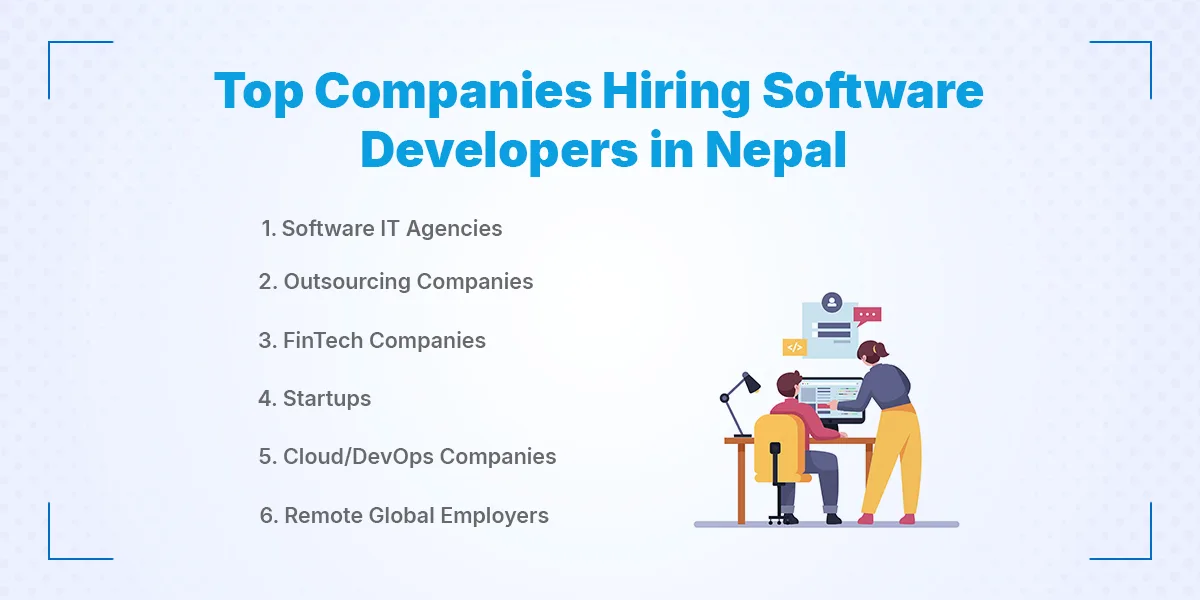
1. Software IT Companies
Software IT agencies develop custom software and web solutions for clients. They often work on different projects for local and international customers. Developers in these agencies get to learn new technologies and gain experience quickly. Agencies usually have small teams, so you get more responsibilities early. You may work on coding, testing, and project management. These companies are good for learning fast and building a strong portfolio.
2. Outsourcing Companies
Outsourcing companies handle projects for foreign clients. They hire developers to write code, maintain software, and solve technical problems. Salaries can be higher than local-focused companies, especially if the client is international. Developers learn global standards and modern technologies while working here. You might work on multiple projects at the same time. These companies are a good choice if you want experience with international clients.
3. FinTech Companies
FinTech companies build software for banking, payments, and financial services. They need developers who can handle secure and reliable systems. Working in FinTech teaches you about security, databases, and real-time applications. You may also work on mobile apps, websites, and backend systems. Salaries are often competitive in this sector. It’s a fast-growing field with many opportunities in Nepal.
4. Startups
Startups are small companies that work on new ideas and products. Developers here often do multiple roles, from coding to testing and deployment. You get the chance to learn quickly and make a visible impact. Startups often have flexible environments and encourage creativity. The work can be challenging but very rewarding. Startups are ideal if you like innovation and want to grow fast.
5. Cloud/DevOps Companies
These companies focus on cloud computing, servers, and automated deployment. Developers learn to manage large systems and improve software performance. You gain experience in modern tools like AWS, Docker, and Kubernetes. Cloud and DevOps roles are in high demand and pay well. You often collaborate with teams across different projects. This path is good if you enjoy infrastructure and automation work.
6. Remote Global Employers
Many Nepali developers now work for companies outside Nepal remotely. These jobs often pay higher than local salaries. You work on international projects, follow global standards, and communicate online with teams. Remote jobs give flexibility and exposure to new technologies. You can work from home while gaining international experience. Many developers start remote work after gaining some experience locally.
Common Mistakes to Avoid
Starting a career as a software developer is exciting, but it can also be confusing. Many beginners make simple mistakes that slow their progress. Knowing what to avoid will help you learn faster and build a stronger career. In this section, we will cover the most common mistakes and how to stay on track.
1. Learning Too Many Languages at Once
Trying to learn many programming languages at the same time can be confusing. It’s easy to get confused and forget concepts. Beginners often waste time switching between languages without mastering any of them. Focus on one language first and practice it until you are confident. Once you feel comfortable, you can gradually learn another language. This approach helps you build a strong foundation and improves your coding skills faster.
2. No Portfolio
Not having a portfolio is a common mistake for beginners. Employers want to see what you can actually do, not just what you know. A portfolio shows your projects, skills, and practical experience. Start with small projects like a website or a simple app. Update your portfolio regularly as you complete more projects. A strong portfolio can make you stand out in job applications and interviews.
3. Not Practicing Git
Many developers ignore version control when they start. Git and GitHub are essential tools for managing code and collaborating with teams. Without practicing Git, you may struggle when working on real projects. Learn basic commands like commit, push, pull, and branching. Use Git for all your projects from the beginning. This will make teamwork and project management much easier in the future.
4. Ignoring Soft Skills
Soft skills are just as important as coding skills. Communication, teamwork, and problem-solving help you work better with others. Many beginners focus only on technical skills and neglect soft skills. Employers value developers who can explain ideas clearly and collaborate in teams. Work on speaking, writing, and listening skills alongside coding. Strong soft skills improve your chances of career growth.
5. Only Relying on Theory, Not Projects
Learning theory without building projects is not enough. Coding is a practical skill that improves only by doing. Beginners who focus only on theory struggle to solve real problems. Start small projects and practice regularly. Experiment, make mistakes, and learn from them. Building projects gives you confidence and shows your abilities to employers.
Conclusion
Becoming a software developer in Nepal is completely possible if you take it step by step. You don’t need to know everything at once. Focus on learning one skill at a time and building real projects. Practice coding every day and keep improving your knowledge. Create a strong portfolio and share your work online. Soft skills like communication and teamwork are just as important as technical skills.
Avoid common mistakes like trying to learn too many languages or only reading theory. Stay consistent, be patient, and keep challenging yourself. With dedication and practice, you can start your career, grow as a developer, and achieve your goals in the IT industry.
Frequently Asked Questions
Submit your comments

Get Our App On



SEO Training for Freshers in Nepal: Skills, Career & Job Opportunities
VIEW DETAILS
SEO Training vs. Self-Learning: Which Is Right for You?
VIEW DETAILS
How to Choose Between Two Job Offers
VIEW DETAILS
Digital Marketing Training Interview Questions and Answers for Freshers
VIEW DETAILS


Loading Comments...