


Landing your first internship in Nepal can be frustrating. You send resumes but rarely hear back, leaving you unsure what went wrong. Often, the missing piece is a strong cover letter. Many students think resumes alone are enough, but a cover letter is your chance to tell your story and stand out. A well-written cover letter can grab attention, show your skills, and make employers want to meet you.
In this guide, we will show you step by step how to write a cover letter for an internship in Nepal that highlights your value, communicates your enthusiasm, and increases your chances of landing the role you want. By the end, you’ll know exactly what works and what to avoid.
In this blog
What is a Cover Letter for an Internship in Nepal?
A cover letter is a short, personal letter that you send along with your resume when applying for an internship. It gives you a chance to introduce yourself, explain why you are interested in the internship, and show what you can bring to the company. Unlike a resume, which just lists your education, skills, and experience, a cover letter lets you speak directly to the hiring manager. It is your opportunity to make a strong first impression and stand out from other applicants.
Purpose of a Cover Letter in the Nepali Internship Market
In Nepal, competition for internships can be tough, especially for popular companies and roles. A cover letter helps you:
- Show genuine interest in the company and role
- Explain how your skills and education match the internship
- Highlight achievements or experiences that make you unique
- Communicate your enthusiasm and motivation, even if you have little experience
- Stand out from applicants who only send resumes
Difference Between Resume and Cover Letter
- Resume: Lists your education, skills, experience, and achievements in a structured format. It is factual and brief.
- Cover Letter: Tells your story. It explains why you are applying, why you are a good fit, and how you can contribute. It is personal and persuasive.
Think of your resume as the “what” of your application and the cover letter as the “why.” Together, they create a complete picture of who you are and why the company should consider you for the internship.
Step-by-Step Guide to Write a Cover Letter for an Internship in Nepal
Writing a cover letter for an internship may seem tricky at first. But if you follow a simple step-by-step approach, it becomes much easier. A good cover letter shows your interest in the company and explains why you are a great fit. Below, we will go through each step in detail so you can create a strong and effective cover letter.
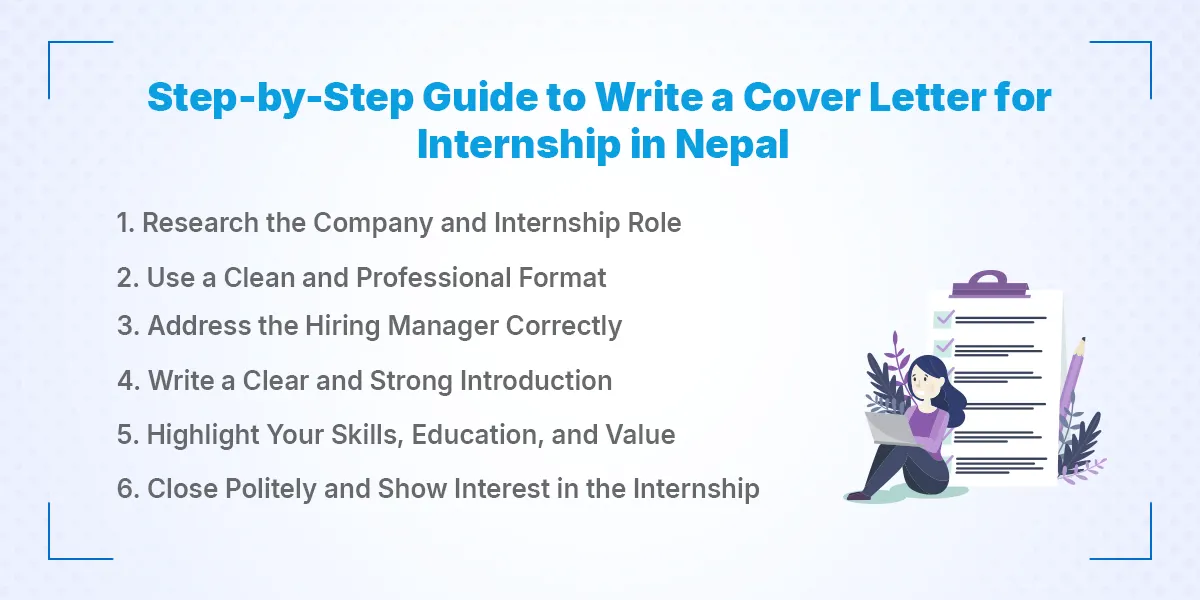
1. Research the Company and Internship Role
Before you start writing, spend some time learning about the company. Check their website, social media, and recent news to understand what they do and what they value. Learn about the internship role and the skills required. This will help you write a letter that matches what the company is looking for. Showing that you understand the company makes your application stronger. It also helps you explain why you want to work there.
2. Use a Clean and Professional Format
Your cover letter should look neat and easy to read. Use a standard font and keep the size between 10–12 points. Avoid fancy colors or designs; simplicity looks professional. Leave enough space between paragraphs. A clean format makes it easier for the hiring manager to focus on your content. Remember, first impressions count.
3. Address the Hiring Manager Correctly
Always try to find the name of the person who will read your letter. If you cannot find it, “Dear Hiring Manager” is acceptable. Using a name makes your letter more personal and shows effort. Avoid generic greetings like “To Whom It May Concern.” Proper addressing increases your chances of being noticed.
4. Write a Clear and Strong Introduction
Start with a sentence that introduces yourself and mentions the role you are applying for. Explain briefly why you are interested in the internship. Make it clear and confident. Avoid long sentences or unnecessary details. A strong introduction grabs attention and encourages the reader to continue.
5. Highlight Your Skills, Education, and Value
Use the body of your letter to show what you bring to the internship. Mention your skills, relevant coursework, and any projects or experiences. Focus on what makes you different from other applicants. Keep it relevant to the role. Show enthusiasm and a willingness to learn. Use simple examples to explain your abilities.
6. Close Politely and Show Interest in the Internship
End your letter by thanking the reader for their time. Express your interest in discussing your application further. Show enthusiasm for the opportunity. Keep it short, polite, and professional. A good closing leaves a positive final impression.
Why a Strong Cover Letter Matters for Internships in Nepal?
A strong cover letter matters for internships as it can make your application stand out. Many students send only resumes, so a well-written cover letter gives you an extra edge. It shows employers your enthusiasm, skills, and why you are the right fit for the internship.
- Helps Employers Spot the Right Candidates: Employers in Nepal often get many applications for the same internship. A strong cover letter makes it easy to see your skills and motivation.
- Shows Your Interest and Motivation: A cover letter proves you are genuinely interested in the company and role. Employers value candidates who explain why they want the internship.
- Highlights Your Skills Clearly: You can explain how your education and experiences match the role. This helps employers see the value you bring to the team.
- Makes You Stand Out: Many applicants send generic letters or none at all. A tailored cover letter makes you more memorable and competitive.
- Adds a Personal Touch: It lets you speak directly to the hiring manager. A cover letter adds personality that a resume alone cannot show.
Key Elements to Include in Your Cover Letter
A cover letter works best when it has all the important parts in place. Each part has a role in making your application clear and professional. Including the right elements helps employers quickly understand who you are and why you are a good fit. Below, we explain each key element and how to write it.
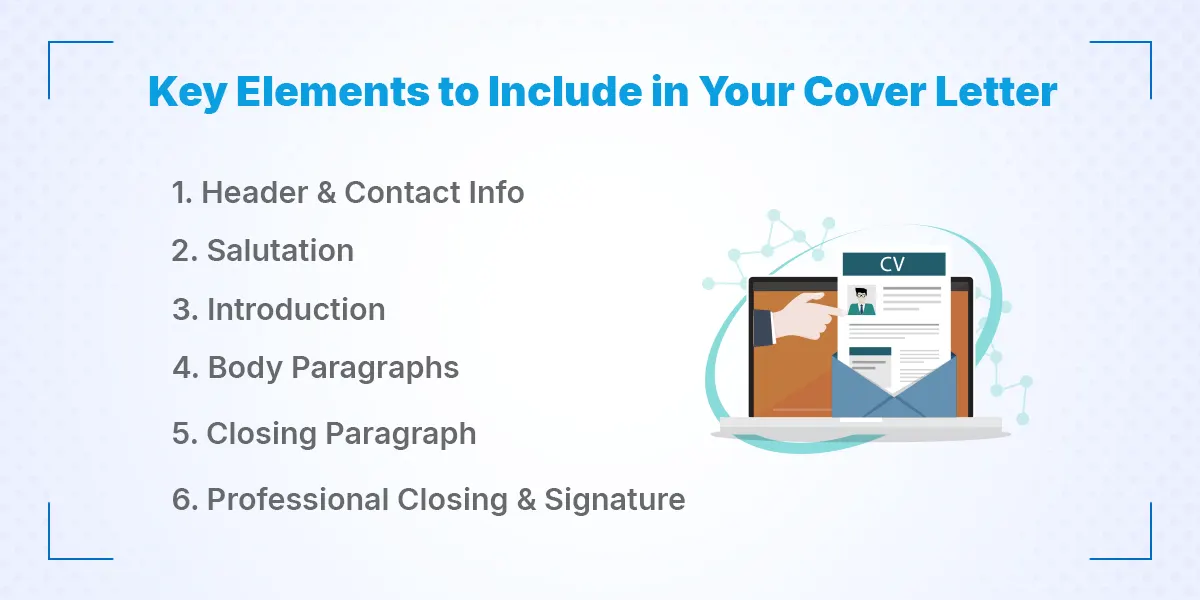
1. Header & Contact Info
Start with your full name, phone number, email, and address at the top. Include the date and the company’s name and address. This makes it easy for the employer to know who you are and how to contact you. A clear header shows professionalism from the very beginning.
2. Salutation
Always try to address the hiring manager by their name. If you cannot find it, use “Dear Hiring Manager.” A proper greeting makes your letter feel personal and shows effort. Avoid using “To Whom It May Concern” as it feels generic.
3. Introduction
Begin by introducing yourself and mentioning the internship role you are applying for. Explain briefly why you are interested in the position. A clear and confident introduction grabs the reader’s attention. Keep it short and focused.
4. Body Paragraphs
This is where you show your skills, education, and any relevant experience. Explain how these relate to the internship role. Keep your examples short and simple. Focus only on what matters for the position.
5. Closing Paragraph
End your letter by thanking the reader for their time. Express your interest in discussing the role further. Keep it polite, positive, and professional. Avoid repeating information from the body.
6. Professional Closing & Signature
Use a standard closing like “Sincerely” or “Best Regards.” Leave space for your signature if submitting a printed copy. This final touch keeps your letter professional and complete. Always double-check that your name is correct below the closing.
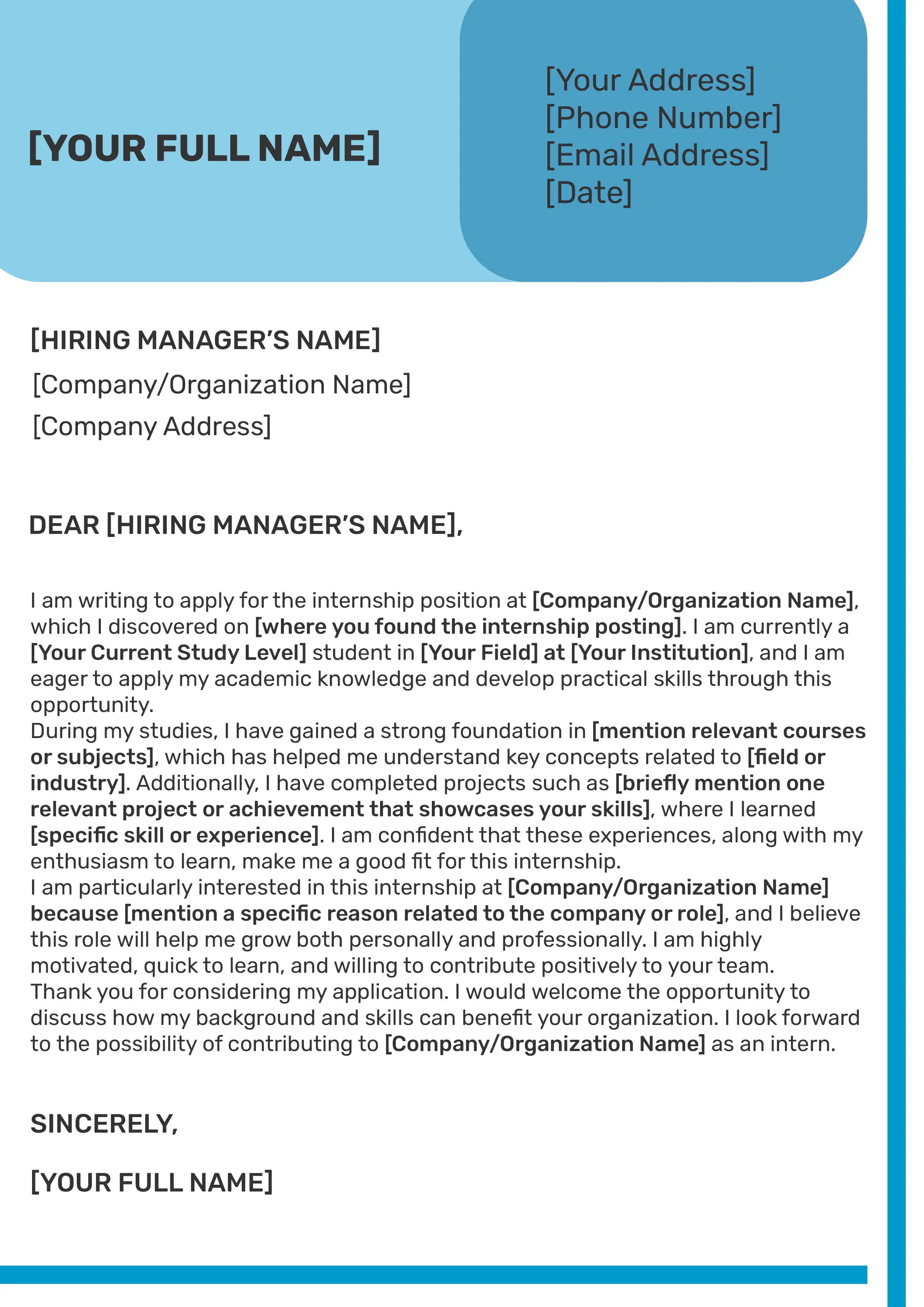
Sample of Cover Letter for Internships in Nepal
Seeing a real example can make writing your own cover letter much easier. The sample below shows a simple and professional format you can follow. You can use it as a guide and customize it for your internship application.
Common Mistakes to Avoid in Your Internship Cover Letter
Writing a cover letter can be tricky, especially for your first internship. Many students make simple mistakes that reduce their chances of getting noticed. Avoiding these mistakes can help you create a stronger, more professional application. Here are the most common errors and how to fix them.
1. Generic or Copy-Paste Letters
Many applicants copy a template or use the same letter for every internship. Employers can quickly tell when a letter is not personalized. Always write a letter specific to the company and role. Mention the company name and explain why you want to work there. Show that you understand the internship and its requirements. Personal letters feel more genuine and get more attention.
2. Grammatical and Spelling Errors
Simple mistakes in grammar or spelling can make your application look careless. Always proofread your letter before sending it. Use tools like spell check or ask a friend to read it. Clear, error-free writing shows professionalism and attention to detail. Even small errors can reduce your chances of being considered.
3. Overloading with Irrelevant Information
Some students include everything they have ever done. This makes the letter long and confusing. Only include skills, experiences, and achievements relevant to the internship. Keep the letter focused and concise. Employers prefer short letters that quickly show why you are a good fit.
4. Using Informal Language
Avoid casual words, slang, or emojis in your cover letter. Keep the tone professional and polite. Even if the company is relaxed, the cover letter should remain formal. Professional language shows that you respect the process and the reader.
5. Failing to Show Enthusiasm
A cover letter should reflect your interest in the internship. Simply listing your skills is not enough. Explain why you are excited about the role and what you hope to learn. Enthusiasm makes your application memorable and shows motivation.
Conclusion
Writing a strong cover letter is one of the most important steps to getting an internship in Nepal. It is your chance to show who you are, why you are interested in the role, and what you can offer the company. A good cover letter makes your application stand out, even if you have little experience.
By following the right format, highlighting your skills, and avoiding common mistakes, you can create a letter that grabs attention and leaves a positive impression. Remember, employers read many applications, so a clear, professional, and enthusiastic cover letter can make the difference between getting an interview and being ignored. Take your time and write it well.
Ready to take the next step in your career? Learn how to write a CV to create a complete and professional application for internships.
Frequently Asked Questions
Submit your comments

Get Our App On



SEO Training for Freshers in Nepal: Skills, Career & Job Opportunities
VIEW DETAILS
SEO Training vs. Self-Learning: Which Is Right for You?
VIEW DETAILS
How to Choose Between Two Job Offers
VIEW DETAILS
Digital Marketing Training Interview Questions and Answers for Freshers
VIEW DETAILS


Loading Comments...