

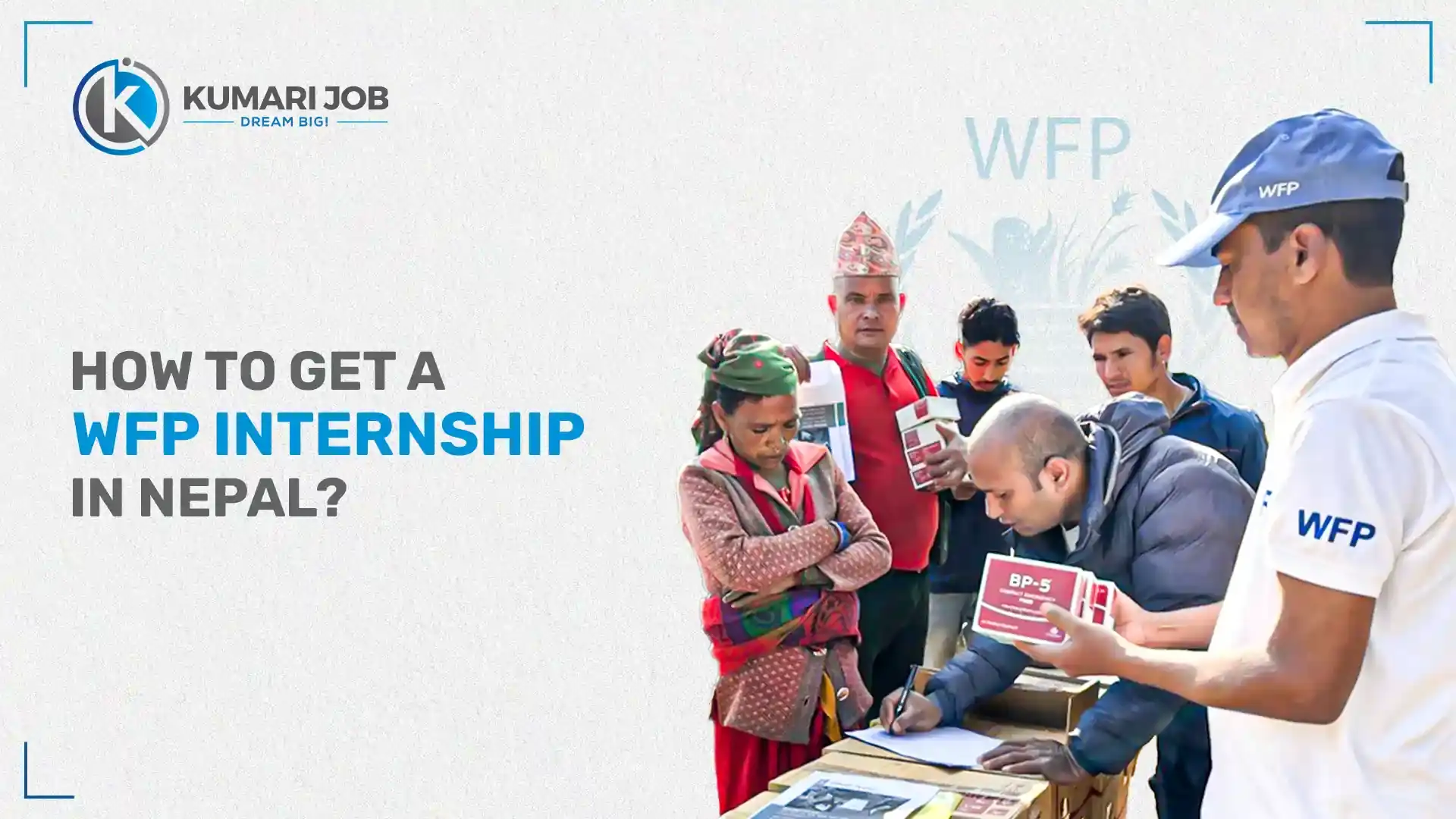

Are you looking to start a meaningful career in humanitarian work and wondering how to secure a WFP internship in Nepal in 2026? With increasing interest in UN careers, getting selected for a World Food Programme internship requires early preparation, the right skills, and a clear understanding of the application process.
In this blog, we focus on how to get a WFP internship in Nepal in 2026, covering everything from eligibility requirements and internship types to application steps, essential skills, and career opportunities after completion. This guide is especially useful for students, recent graduates, and young professionals who want to build a strong foundation in the humanitarian and development sector through WFP and other UN jobs in Nepal.
In this blog
What is a WFP Internship?
A WFP internship is a structured learning opportunity offered by the World Food Programme to students and recent graduates. It allows interns to gain practical experience while supporting WFP’s mission to fight hunger and improve food security worldwide. These internships are designed to build professional skills, provide exposure to the UN system, and prepare candidates for future humanitarian careers.
Interns at WFP typically support day-to-day operations and program activities, including:
- Assisting in planning, implementation, and reporting of humanitarian programs
- Supporting data collection, analysis, and monitoring activities
- Helping with research, documentation, and knowledge management
- Contributing to communication materials, reports, and presentations
- Coordinating with teams, partners, and field offices on assigned tasks
Types of Internship In WFP
WFP offers a wide range of internship opportunities across different functional areas to support its humanitarian and development work. These internships allow students and graduates to gain hands-on experience while working on real programs that address hunger, nutrition, and food security. If you are looking for an internship in Nepal, WFP roles are usually aligned with ongoing projects, emergency response needs, and development initiatives. Choosing the right internship type helps candidates match their academic background with the WFP’s operational priorities.
1. Programme and Policy Internship
This internship focuses on supporting the design, planning, and implementation of WFP programs. Interns assist with program documentation, coordination with partners, and progress reporting. They may also help analyze policy frameworks related to food security and social protection. This role is ideal for students from development studies, international relations, or social sciences backgrounds. It provides strong exposure to how humanitarian policies are translated into action.
2. Monitoring and Evaluation (M&E) Internship
The M&E internship involves supporting data collection, analysis, and reporting to measure program performance. Interns assist in tracking indicators, preparing monitoring reports, and supporting field data verification. This role requires attention to detail and basic analytical skills. It is well-suited for candidates with backgrounds in statistics, economics, public policy, or research. Interns also gain experience with results-based management systems.
3. Supply Chain and Logistics Internship
This internship supports the efficient movement and distribution of food and relief items. Interns assist with logistics planning, inventory tracking, and coordination with suppliers and transport partners. They learn how WFP manages large-scale humanitarian supply chains. This role is suitable for students studying logistics, management, engineering, or operations. It offers practical insight into emergency and development supply operations.
4. Nutrition and Food Security Internship
Nutrition and food security interns support assessments, program implementation, and reporting related to nutrition interventions. They may assist with data analysis, field reports, and coordination with nutrition partners. This internship is ideal for students with backgrounds in nutrition, public health, agriculture, or food science. Interns gain hands-on exposure to community-level nutrition programs.
5. Communication and Partnerships Internship
This internship focuses on communication, visibility, and stakeholder engagement. Interns support content creation, reports, presentations, and donor communication materials. They may also help manage social media or event coordination. While this role is specialized, it often involves tasks similar to various administrative job roles in Nepal, making it best suited for candidates with backgrounds in communications, media, journalism, or international relations. It helps interns develop strong storytelling and advocacy skills.
How to Get an Internship at WFP in Nepal? Step-by-Step
To get an internship at WFP in Nepal, candidates must follow a structured application process through official UN channels. The process focuses on matching academic background, skills, and interests with the WFP’s operational needs, so knowing how to apply for UN jobs is essential for a successful submission. Early preparation, accurate documentation, and a well-tailored application significantly improve selection chances. Understanding each step clearly helps applicants avoid common mistakes and apply with confidence.
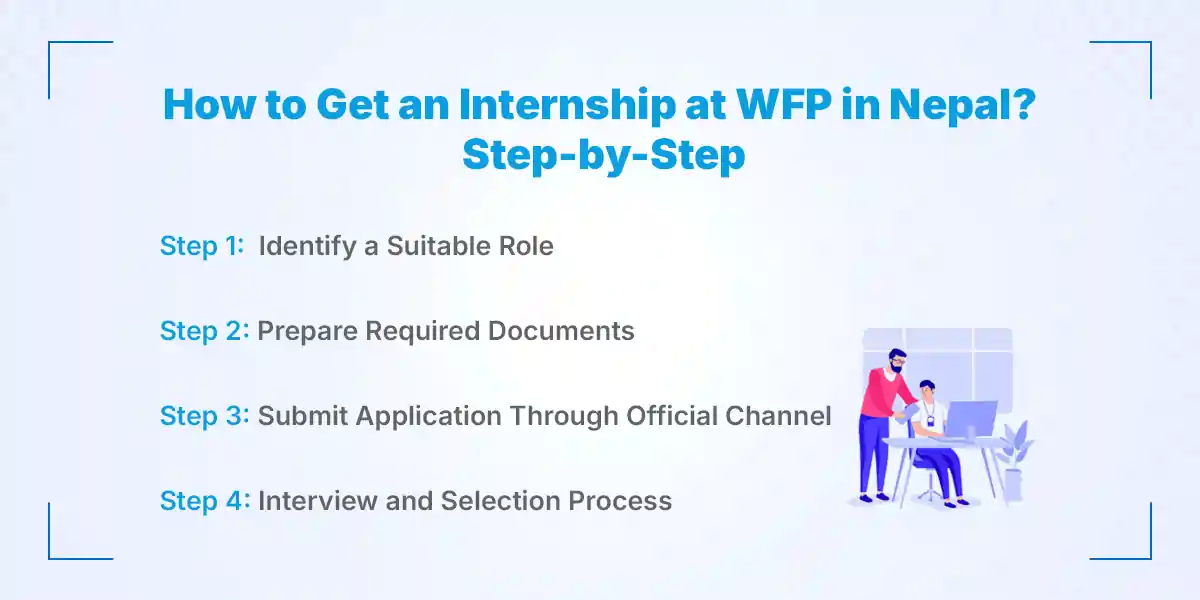
Step 1: Identify a Suitable Role
The first step is to identify a WFP internship role that aligns with your academic background and career goals. Applicants should review internship descriptions carefully to understand required skills and responsibilities. Choosing a role that matches your studies and interests increases relevance and competitiveness. It is also important to check the duty station, duration, and specific focus areas related to Nepal programs. Applying strategically improves your chances of shortlisting.
Step 2: Prepare Required Documents
Once a suitable role is identified, candidates must prepare the required application documents. These usually include a CV and a motivation letter tailored to the specific WFP internship. The documents should clearly highlight relevant education, skills, and any volunteer or NGO experience. Well-structured and concise documents help recruiters quickly assess suitability. Proofreading and formatting are equally important.
Step 3: Submit Application Through Official Channel
Applications for WFP internships must be submitted through the official WFP careers portal or authorized UN platforms. Candidates should complete all required fields carefully and upload documents in the correct format. Submitting accurate information and meeting deadlines is essential. Incomplete or late applications are usually not considered. Keeping track of application status is recommended.
Step 4: Interview and Selection Process
Shortlisted candidates may be invited for an interview or written assessment. The interview focuses on motivation, relevant skills, and understanding of the WFP’s humanitarian mission. Candidates should be prepared to discuss their academic background and interest in food security, so it is vital to prepare for interview sessions by researching competency-based questions. Final selection is based on merit, role fit, and organizational needs. Strong preparation improves interview performance.
Eligibility Criteria for WFP Internship
To apply for a WFP internship, candidates must meet specific eligibility criteria set by the World Food Programme. These requirements ensure that interns have the academic foundation, maturity, and skills needed to contribute effectively. Meeting the eligibility criteria is mandatory before applying. Candidates who clearly satisfy these conditions have a higher chance of being considered for internships in Nepal.
1. Age Requirements
Applicants must usually be at least 18 years old at the time of application. WFP internships are primarily designed for young professionals and students who are early in their careers. There is no strict upper age limit, but candidates should meet the general UN internship age expectations. Age eligibility helps ensure interns can manage professional responsibilities. Always check the specific vacancy notice for exact requirements.
2. Academic Background Requirements
Candidates must have an academic background relevant to the internship role they are applying for. Fields may include development studies, public health, nutrition, logistics, economics, communications, or related disciplines. WFP looks for candidates whose studies align with the functional area of the internship. Strong academic performance is considered an advantage. Relevant coursework adds value to the application.
3. Enrollment or Graduation Status
Applicants are usually required to be currently enrolled in a university program or recently graduated. Recent graduates are generally eligible if they apply within a specific time frame after graduation. This requirement ensures the internship remains a learning-focused opportunity. Candidates should clearly mention their enrollment or graduation status. Supporting documents may be required during the application.
4. Language Proficiency Expectations
Proficiency in English is required for most WFP internships, as it is the primary working language. Knowledge of Nepali is considered an advantage for internships based in Nepal. Additional language skills may be beneficial depending on the role. Strong communication skills help interns collaborate effectively. Language requirements are usually stated in the vacancy announcement.
5. Nationality and Visa Considerations
WFP internships are open to both Nepali and international candidates. International applicants may need to arrange their own visa and residence permits. WFP does not usually sponsor visas for interns. Candidates should ensure they can legally stay and work in Nepal. Understanding visa requirements is essential before applying.
Skills Needed for WFP Internship
To succeed in a WFP internship, candidates must demonstrate a mix of technical, analytical, and interpersonal skills. WFP looks for interns who can adapt to fast-paced humanitarian environments and contribute meaningfully to team objectives. Having the right skills not only improves selection chances but also enhances learning during the internship. These skills help interns support programs effectively in Nepal’s diverse operational settings.
1. Research and Analytical Skills
Research and analytical skills are essential for supporting assessments, reports, and program planning. Interns often review documents, analyze data, and summarize findings for decision-making. The ability to interpret information accurately is highly valued. Strong analytical skills help interns contribute to evidence-based humanitarian work. Basic research methods are an advantage. Problem-solving ability further strengthens this skill set.
2. Communication and Report Writing Skills
Clear communication is critical in a WFP internship. Interns are expected to draft reports, emails, and presentations for internal and external audiences. Good writing skills help convey complex information clearly. Verbal communication is also important for teamwork and coordination. Strong communication improves overall work efficiency. Attention to clarity and tone is essential.
3. Knowledge of Food Security and Nutrition
Understanding basic concepts of food security and nutrition is highly beneficial for WFP interns. This knowledge helps interns understand program objectives and humanitarian priorities. Familiarity with nutrition interventions or food assistance programs adds value. Academic exposure in this area is an advantage. It supports meaningful contributions to WFP projects. Continuous learning in this field is encouraged.
4. Data Management and Reporting Skills
Interns often handle data related to program monitoring and reporting. Basic skills in data organization, spreadsheets, and reporting tools are important, though general IT skills also play a significant role in managing these digital workflows. Accuracy and attention to detail are critical when working with data. These skills help ensure reliable program reporting. Data literacy is increasingly important in humanitarian work. Consistent data handling improves program quality.
5. Teamwork and Multicultural Collaboration
WFP operates in diverse and multicultural environments. Interns must be able to work effectively with colleagues from different backgrounds. Teamwork skills help interns collaborate, share ideas, and support team goals. Cultural sensitivity is highly valued. Strong collaboration skills contribute to a positive working environment. Flexibility and respect strengthen teamwork.
Where to Look for WFP Internship Opportunities in Nepal?
You can look for WFP internship opportunities in Nepal mainly through WFP’s official career page and trusted job platforms like Kumari Job, where internship vacancies are regularly updated. These sources provide authentic and up-to-date information about available internships. Following official channels helps candidates avoid fake listings and apply directly to verified opportunities. Staying active on these platforms increases the chances of finding suitable WFP internship openings.
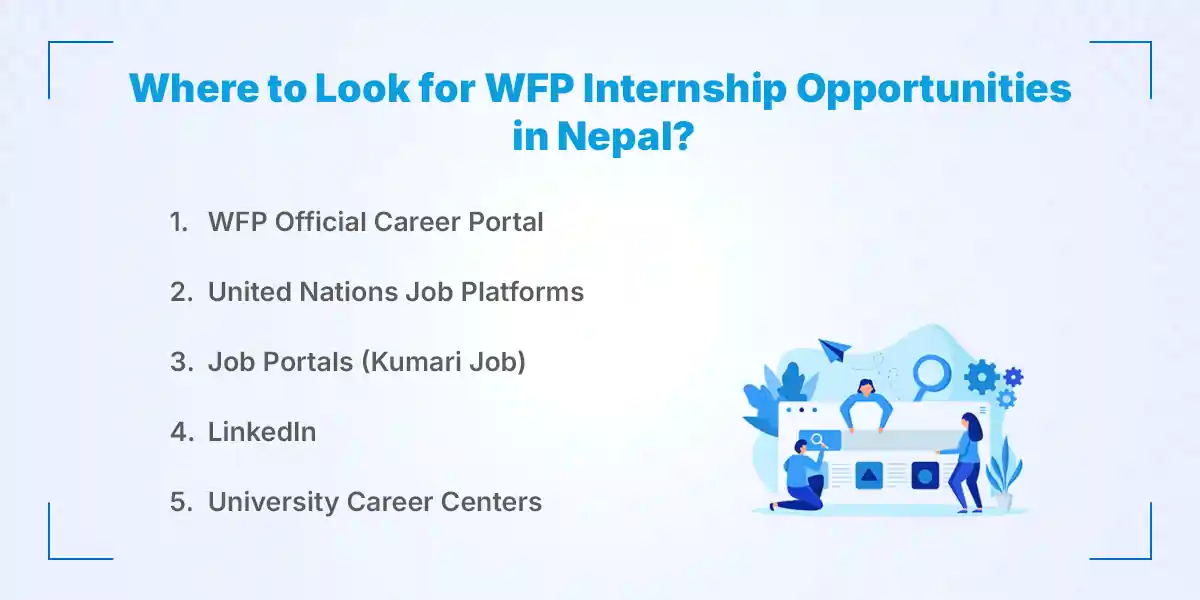
1. WFP Official Career Portal
The WFP official career portal is the primary source for all WFP internship vacancies. It lists detailed information about roles, eligibility criteria, and application deadlines. Candidates can search internships by location, functional area, or contract type. Applying through this portal ensures your application reaches the official recruitment team. Regularly checking the portal is highly recommended. Creating a job alert can help you stay updated.
2. United Nations Job Platforms
United Nations job platforms also advertise WFP internship opportunities. These platforms compile internship openings from different UN agencies, including WFP. Candidates can filter results by country and internship type. These platforms provide links to official application pages. They help applicants track multiple UN opportunities in one place. This saves time during the job search process.
3. Job Portals (Kumari Job)
Kumari Job regularly posts updates about verified WFP internship opportunities relevant to candidates in Nepal. It provides easy access to updated internship listings in the development and humanitarian sector. Applicants can find clear job descriptions and application guidance. Kumari Job helps local candidates stay informed about UN-related internships. It is a reliable source for Nepal-based internship seekers.
4. LinkedIn
LinkedIn is a useful platform for finding WFP internship updates and announcements. WFP offices and professionals often share internship opportunities on their profiles. Candidates can follow WFP pages and relevant professionals. Networking on LinkedIn also helps build visibility. It complements official application channels. Engaging with posts can increase reach and awareness.
5. University Career Centers
Many universities share internship opportunities through their career centers. These offices may circulate WFP internship announcements to students and recent graduates. Career centers also guide CVs and applications. They help students identify suitable roles. This is especially helpful for first-time applicants. Career advisors can offer personalized support.
Career After WFP Internship
Completing a WFP internship can open strong career opportunities in the humanitarian and development sector. The experience gained through WFP enhances professional credibility and practical skills. Interns develop a deeper understanding of UN operations and global development work. This internship often serves as a stepping stone for long-term careers in international organizations, NGOs, and research institutions.
1. Job Roles in UN Agencies and International Organizations
A WFP internship helps candidates build a strong foundation for future roles within the UN system. Interns gain familiarity with UN work culture, processes, and standards. This experience is valuable when applying for entry-level UN positions, consultancies, or UN Volunteer roles. It improves competitiveness in global recruitment processes. Many former interns continue their careers within UN agencies.
2. Career Opportunities in NGOs and INGOs
WFP internship experience is highly valued by NGOs and INGOs. Interns develop practical skills in program support, coordination, and reporting. This makes them suitable for roles in project management, monitoring, and field operations. Exposure to humanitarian principles strengthens professional profiles. NGOs often prefer candidates with UN experience.
3. Humanitarian, Food Security, and Development Careers
A WFP internship prepares candidates for specialized careers in food security, nutrition, and humanitarian response. Interns gain insight into emergency and development programming. This experience supports careers with international agencies, donors, and development organizations. It also helps candidates choose focused career paths. The internship builds sector-specific expertise.
4. Impact on Academic and Research Career Paths
For those interested in academia or research, a WFP internship provides valuable field and program exposure. Interns gain access to real-world data and case studies. This experience supports higher studies and research work. It strengthens academic applications and research proposals. Practical insights enhance academic credibility.
Tips to Get Selected for the WFP Internship
Getting selected for a WFP internship requires more than meeting basic eligibility criteria. Candidates must present a strong application that clearly reflects their skills, motivation, and interest in humanitarian work. WFP looks for applicants who align with its mission and values. Following practical application strategies can significantly improve selection chances. Careful preparation and attention to detail are key.
1. Resume and Motivation Letter Preparation
A well-prepared resume and motivation letter are critical for WFP internship selection. Candidates should use a clear CV format and highlight relevant academic and practical experience. The motivation letter should explain why you want to work with WFP and how your skills fit the role. Avoid generic statements and focus on specific contributions. Strong documentation creates a positive first impression.
2. Aligning Skills With WFP’s Humanitarian Work Areas
Applicants should clearly match their skills with WFP’s core work areas, such as food security, nutrition, logistics, or program support. This alignment helps recruiters see your relevance to the role. Highlight coursework, projects, or volunteer work related to humanitarian activities. Clear skill alignment strengthens application credibility. It shows a genuine understanding of the WFP’s mission.
3. Demonstrating Interest in Food Security and Nutrition
Showing genuine interest in food security and nutrition is important for WFP internships. Candidates can demonstrate this through academic studies, research, or volunteer experience. Reading about WFP programs and global hunger issues is helpful. Mentioning relevant interests in the application adds value. It reflects a long-term commitment to the sector.
4. Interview Preparation and Assessment Tips
Interview preparation is essential for shortlisted candidates. Applicants should be ready to discuss their background, skills, and motivation clearly. Understanding WFP’s mandate and programs in Nepal is important. Practicing common interview questions improves confidence. Strong preparation leads to better performance during assessments.
Conclusion
Securing a WFP internship in Nepal is a valuable opportunity for students and young professionals who want to build a career in humanitarian and development work. From understanding eligibility requirements to preparing strong application documents and developing relevant skills, each step plays an important role in the selection process. A well-planned approach can significantly improve your chances of success.
By staying informed through official channels, aligning your skills with WFP’s mission, and preparing thoughtfully for interviews, you can position yourself as a strong candidate. With dedication and early preparation, a WFP internship can become a meaningful stepping stone toward a long-term career in the humanitarian sector.
Frequently Asked Questions
Submit your comments

Get Our App On



SEO Training for Freshers in Nepal: Skills, Career & Job Opportunities
VIEW DETAILS
SEO Training vs. Self-Learning: Which Is Right for You?
VIEW DETAILS
How to Choose Between Two Job Offers
VIEW DETAILS
Digital Marketing Training Interview Questions and Answers for Freshers
VIEW DETAILS


Loading Comments...