


Looking to build a meaningful career in development work? Plan International Nepal vacancies attract professionals who want to create real impact in education, child rights, and community development. With competitive roles across programs, operations, and leadership, Plan International Nepal remains a top employer in the NGO sector. Understanding the application process clearly can greatly improve your chances of selection. That’s why knowing where to apply and how to prepare matters.
In this blog, we explain everything you need to know about Plan International Nepal vacancy opportunities. You’ll learn about available job types, eligibility criteria, required skills, and the step-by-step application process. The blog also covers where to find official vacancy announcements and practical tips to increase your selection chances for ngo ingo jobs in Nepal.
In this blog
Overview of Plan International Nepal
Plan International Nepal is a leading international development organization focused on advancing children’s rights and equality for girls. It works closely with communities, government bodies, and local partners to improve education, health, protection, and economic security. Through long-term development programs, Plan International Nepal aims to break the cycle of poverty and discrimination affecting vulnerable children and families.
The organization also plays a strong role in humanitarian and emergency response across Nepal. It supports communities during disasters, climate-related risks, and crises by providing protection, education, and livelihood support. Through evidence-based programs and inclusive approaches, Plan International Nepal continues to drive sustainable development and social change nationwide.
Plan International Nepal carries out a wide range of development and humanitarian activities across the country, including:
- Implements child-centered development programs focused on education, health, and protection
- Promotes gender equality and empowers girls through rights-based initiatives
- Responds to humanitarian emergencies and disaster-risk situations
- Works with local governments and communities for sustainable development
- Advocates for child rights, inclusion, and social justice at national and local levels
- Strengthens community capacity through training, policy support, and partnerships
Types of Vacancies in Plan International Nepal
Plan International Nepal offers a wide range of job opportunities for professionals from different backgrounds. These vacancies support development programs, humanitarian responses, and organizational operations. Roles are available at the field, provincial, and national levels depending on project needs. Most Plan International Nepal job vacancy announcements target experienced professionals as well as emerging talent looking for entry-level jobs. Each role contributes directly to program quality and long-term impact.
1. Project and Program Management Positions
These roles focus on planning, implementing, and managing development and humanitarian projects. Professionals coordinate with partners, donors, and local stakeholders to ensure project goals are met. They also manage budgets, timelines, and reporting requirements. Strong leadership and communication skills are essential for success. These positions often involve field visits and team supervision. Experience in development programming is highly valued. The roles require accountability and results-driven project delivery.
2. Monitoring, Evaluation, Research, and Learning (MERL) Roles
MERL roles ensure programs are effective, accountable, and data-driven. Professionals design monitoring frameworks, collect and analyze data, and support learning processes. They help improve program quality through evidence-based decisions. Attention to detail and analytical skills are critical for these roles. MERL staff also support donor reporting and evaluations. Familiarity with data tools and indicators is often required. These roles strengthen transparency and program improvement.
3. Logistics and Operations Roles
These roles support smooth project implementation through efficient logistics and administration. Responsibilities include procurement, supply chain management, fleet, and office operations. Professionals ensure compliance with organizational policies and donor requirements. Strong organizational and coordination skills are important. These roles are crucial during emergency responses. Experience in operations management is an advantage. Timely support directly affects project success.
4. Resource Mobilization and External Relations Roles
These positions focus on fundraising, partnerships, and donor engagement. Professionals develop proposals, manage donor relationships, and support visibility initiatives. Strong writing and communication skills are essential for these roles. They also coordinate with internal teams to align funding with program goals. Knowledge of donor guidelines and compliance is important. These roles help secure sustainable funding. Strong networking skills add value here.
5. Consortium and Leadership Positions
Consortium and leadership roles manage large, multi-partner projects. They provide strategic direction, coordination, and decision-making support. These positions require strong leadership and stakeholder management skills. Professionals oversee performance, compliance, and overall project impact. Experience in managing complex projects is essential. These roles shape organizational strategy and partnerships. Decision-making responsibility is high in these roles.
6. Business Development and Strategy Roles
These roles focus on organizational growth and long-term planning. Professionals identify funding opportunities and support proposal development. They analyze sector trends and align strategies with Plan International’s mission. Strong research and planning skills are required. Collaboration across departments is common in these roles. These positions help expand program reach and sustainability. Innovation and forward thinking are highly valued.
How to Apply for Plan International Nepal Vacancy: Step-by-Step
To apply for a Plan International Nepal vacancy, you must follow a structured and official application process. Plan International accepts applications only through its authorized career platforms. Understanding each step clearly helps you avoid mistakes and submit a strong application. Proper preparation also increases your chances of being shortlisted. Following the correct process is essential for both national and international applicants.
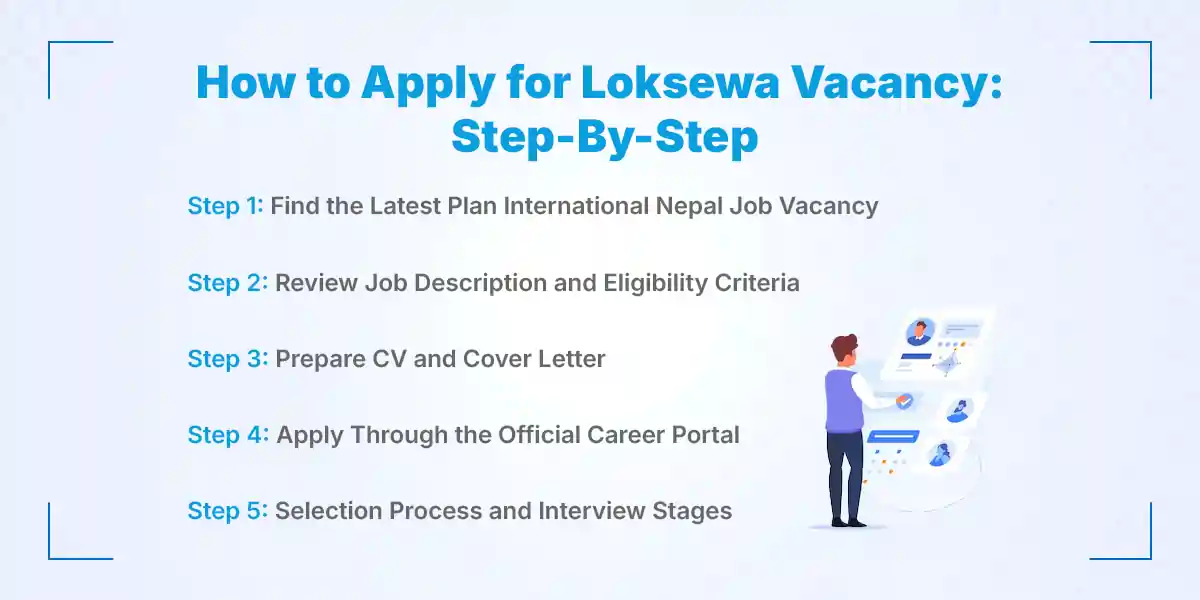
Step 1: Find the Latest Plan International Nepal Job Vacancy
Start by checking the official Plan International Nepal career page regularly. New vacancies are posted based on project needs and funding availability. You can also track openings through trusted job portals like Kumari Job. Always verify job details from official sources. Pay attention to deadlines and job locations. Subscribing to job alerts can help you stay updated. Staying informed early gives you more preparation time.
Step 2: Review Job Description and Eligibility Criteria
Carefully read the job description before applying. Check education, experience, and skill requirements in detail. Ensure your background matches the role expectations. Pay attention to required competencies and responsibilities. Applying only when you meet the criteria improves selection chances. Missing key requirements can lead to rejection. This step saves time for both applicants and recruiters.
Step 3: Prepare CV and Cover Letter
Prepare an updated CV highlighting relevant experience. Focus on development, NGO, or project-based work if applicable. Write a tailored cover letter for the specific role. Use simple language and highlight measurable achievements. Avoid generic applications. Well-prepared documents create a strong first impression. A strong CV reflects your professionalism and suitability.
Step 4: Apply Through the Official Career Portal
Submit your application through the official Plan International career portal only. Upload all required documents in the specified format. Double-check information before final submission. Late or incomplete applications are usually not accepted. Keep a copy of your submission for reference. Always follow the portal instructions carefully. Accuracy matters at this stage.
Step 5: Selection Process and Interview Stages
Shortlisted candidates are contacted for further assessments. The process may include written tests, technical tasks, or interviews. Interviews often focus on competency and experience-based questions. Be prepared to discuss past work and impact. Final selection depends on performance and role requirements. Successful candidates receive an official offer letter. Professional conduct throughout the process is important as you prepare for interview rounds at major organizations.
Eligibility Criteria for Plan International Nepal Job Vacancy
To qualify for a Plan International Nepal job vacancy, candidates must meet specific academic, professional, and skill-based requirements. These criteria ensure that selected candidates can effectively contribute to development and humanitarian programs. Eligibility standards vary depending on the role and project level. Meeting the minimum requirements is essential for shortlisting. Carefully reviewing eligibility details improves application success.
1. Educational Qualifications Required
Candidates must hold relevant academic degrees based on the job role. Most professional positions require a bachelor’s or master’s degree in development studies, social sciences, public health, management, or related fields. Specialized roles may need subject-specific qualifications. Educational background should align with job responsibilities. Recognized institutions are preferred. Strong academic foundations support effective performance.
2. Work Experience and Field Exposure
Relevant work experience is highly valued for most roles. Candidates with NGO, INGO, or development sector experience have an advantage. Field exposure shows practical understanding of community-based work. Senior roles require several years of proven experience. Experience working with donors or partners is beneficial. Hands-on exposure strengthens candidate credibility.
3. Skills and Competency Requirements
Plan International looks for both technical and behavioral competencies. Skills may include project management, reporting, coordination, or data analysis. Strong problem-solving and decision-making abilities are important. Candidates must adapt to dynamic work environments. Ethical standards and accountability are essential. For modern developmental roles, proficiency in relevant IT skills is assessed during selection.
4. Language and Communication Skills
Good communication skills are essential for most positions. Proficiency in English is usually required for reporting and coordination. Nepali language skills are important for field-level roles. Clear written and verbal communication supports teamwork. Strong communication improves stakeholder engagement. Multilingual ability is an added advantage.
Skills Required for the Plan International Nepal Job Vacancy
To succeed in a Plan International Nepal job vacancy, candidates must demonstrate a strong mix of technical expertise and professional skills. These skills help employees perform effectively in development and humanitarian settings. Skill requirements vary by role and project level. However, core competencies remain important across positions. Having the right skills increases both selection and long-term performance.
1. Technical and Role-Specific Skills
Technical skills depend on the specific job role and department. Program roles require planning, budgeting, and reporting skills. MERL roles need data collection, analysis, and evaluation expertise. Operations roles demand knowledge of procurement and logistics systems. Familiarity with donor guidelines is often required. Technical proficiency ensures quality work delivery.
2. Soft Skills and Leadership Qualities
Soft skills are essential for teamwork and field engagement. Strong communication helps in working with communities and partners. Leadership skills support team coordination and decision-making. Adaptability is important in dynamic work environments. Ethical behavior and accountability are highly valued. These qualities help build trust and effectiveness.
3. Monitoring and Reporting Skills
Monitoring and reporting skills help track program progress and results. Candidates should understand indicators, data tools, and reporting formats. Accurate documentation supports donor compliance. Analytical thinking improves decision-making. Timely reporting is critical for project success. These skills strengthen program transparency.
4. Coordination Skills
Coordination skills are vital for working with multiple stakeholders. Professionals must collaborate with partners, government bodies, and internal teams. Strong coordination ensures smooth project implementation. Clear communication avoids delays and confusion. Organizational skills support effective coordination. These skills help manage complex projects efficiently.
Where to Find Plan International Nepal Vacancy?
You can find Plan International Nepal vacancy updates mainly through the Plan International global job portal and online job platforms like Kumari Job. These sources provide reliable information about vacancy announcements, application deadlines, and job requirements. While Plan International publishes official job openings on its own portal, job platforms help share updates and notifications. Using multiple sources helps you stay informed and apply on time. Always verify details before applying.
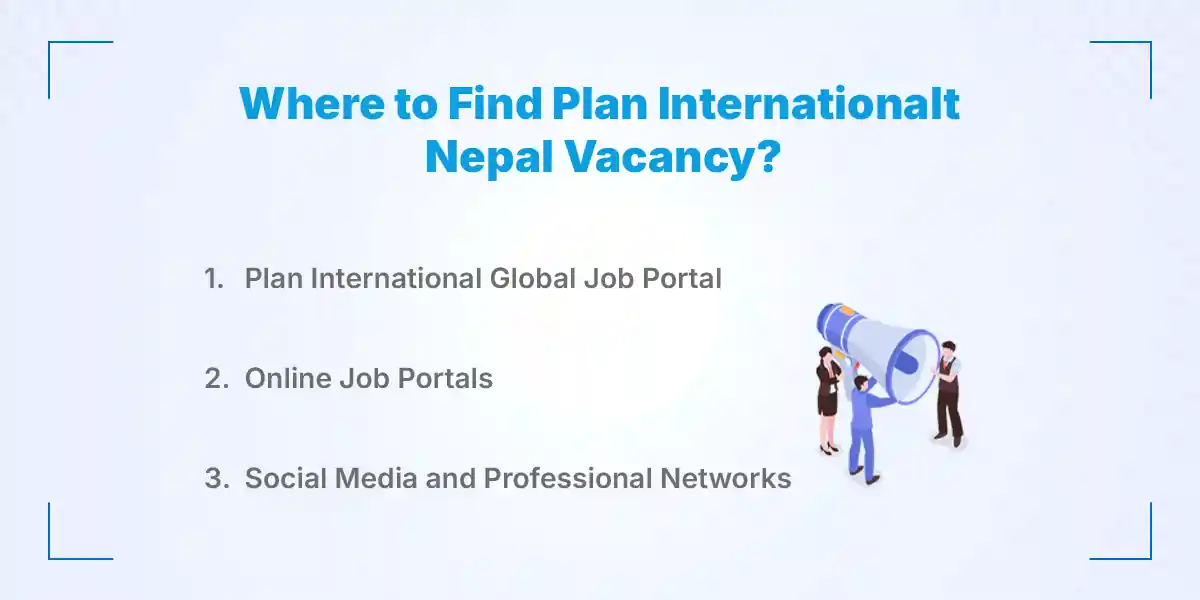
1. Plan International Global Job Portal
The Plan International global job portal is the official source for all Plan International Nepal vacancies. It lists detailed job announcements, eligibility criteria, and application instructions. Candidates can search for vacancies by country and role. Applications are submitted directly through this portal. Regular updates ensure accurate information. This is the most trusted platform for applying.
2. Online Job Portals
Online job portals help job seekers stay updated on vacancy announcements. Platforms like Kumari Job share updates and notifications related to Plan International Nepal job openings. These portals do not always list direct applications but provide useful alerts. They guide candidates to official application links. Job portals help track multiple opportunities in one place. They are helpful for timely updates.
3. Social Media and Professional Networks
Social media platforms often share vacancy updates and announcements. Plan International’s official pages post job-related information. Professional networks like LinkedIn also highlight new opportunities. Following trusted pages helps you stay informed. Networking can provide early alerts. Always cross-check details with official sources.
Selection Process for Vacancy in Plan International Nepal
The selection process for a Plan International Nepal vacancy is designed to identify qualified and capable candidates. It follows a transparent and merit-based approach. Each stage evaluates skills, experience, and role suitability. The process may vary depending on the position level. Understanding the steps helps candidates prepare better and perform confidently.
1. Application Screening
The screening process starts with reviewing submitted applications. Recruiters check eligibility, qualifications, and relevant experience. Only applications meeting the minimum criteria are shortlisted. Attention is given to role-specific skills and experience. Incomplete or late applications are usually rejected. Shortlisted candidates move to the next stage.
2. Written Assessment or Technical Test
Some roles require a written assessment or technical test. This evaluates subject knowledge, analytical skills, and practical understanding. Tests may include case studies or scenario-based questions. Performance in this stage is important for technical roles. Clear and structured answers improve scores. This stage helps assess job readiness.
3. Interview and Competency Evaluation
Interviews focus on experience, behavior, and competencies. Candidates may be asked about past work and problem-solving skills. Interviews assess communication and alignment with organizational values. Panel interviews are common for senior roles. Preparation is key to success. Strong examples strengthen your responses.
4. Final Selection and Offer
Final selection is based on overall performance in all stages. Reference checks may be conducted before offering the role. Selected candidates receive an official offer letter. Terms and conditions are clearly communicated. Only successful candidates are contacted. Acceptance completes the recruitment process.
Career Growth at Plan International Nepal
Plan International Nepal offers strong career growth opportunities for professionals committed to development work. The organization encourages continuous learning and performance-based advancement. Employees gain exposure to national and international projects. Career growth is supported through structured systems and supportive leadership. This makes Plan International Nepal an attractive long-term employer.
1. Training and Professional Development Opportunities
Plan International Nepal invests in employee training and skill development. Staff members receive opportunities to attend workshops, seminars, and learning programs. These trainings enhance technical and leadership skills. Learning is aligned with job roles and future growth. Continuous development improves performance and confidence. Employees are encouraged to upgrade their skills regularly.
2. Internal Promotions and Global Mobility
Internal promotion is encouraged based on performance and experience. Employees can grow into senior or specialized roles over time. Global mobility opportunities allow staff to apply for positions in other Plan International offices. This exposure enhances international experience. Career progression is transparent and merit-based. Employees benefit from long-term growth pathways.
3. Work Culture, Benefits, and Impact-Driven Careers
Plan International Nepal promotes a respectful and inclusive work culture. Employees work in a mission-driven environment focused on social impact. Benefits are provided according to organizational policies. Teamwork and ethical practices are strongly valued. Staff feel motivated by meaningful work. This culture supports job satisfaction and retention.
Tips to Increase Your Chances of Selection
To improve your chances of selection for a Plan International Nepal vacancy, preparation and strategy are essential. Strong applications clearly show relevance to the development sector. Recruiters look for candidates who align with organizational values and role requirements. Following these tips can help your application stand out.
1. Customize Your CV for Development Sector Roles
Tailor your CV to match development and humanitarian job requirements. Highlight relevant skills, projects, and responsibilities. Use simple language and clear formatting. Focus on roles related to community work or program management. A targeted CV increases shortlisting chances.
2. Highlight Relevant NGO or INGO Experience
Emphasize any experience working with NGOs or INGOs. Fieldwork and community engagement experience add value. Show your understanding of development challenges. Relevant experience shows readiness for the role. It strengthens your profile significantly.
3. Demonstrate Impact and Measurable Results
Clearly mention the results achieved in previous roles. Use numbers or outcomes to show impact. This helps recruiters understand your contribution. Measurable results build credibility. Impact-driven profiles stand out.
4. Prepare for Competency-Based Interviews
Practice answering competency-based questions. Use real examples from past experiences. Focus on problem-solving and teamwork. Preparation builds confidence. Strong responses improve interview performance.
5. Stay Updated on New Plan International Nepal Vacancies
Regularly check official career portals for updates. Follow trusted job platforms for notifications. Early awareness helps with timely applications. Staying updated increases opportunities. Consistency matters.
Conclusion
Applying for a Plan International Nepal vacancy is a great opportunity for professionals who want to build a meaningful career in the development sector. Plan International Nepal offers diverse roles, a transparent selection process, and a supportive work environment. Understanding eligibility criteria, application steps, and required skills helps candidates apply with confidence and accuracy.
By staying updated through official portals and trusted job platforms, applicants can avoid missing important opportunities. Preparing a strong, role-specific application increases your chances of success. With the right approach and commitment, working with Plan International Nepal can lead to long-term growth and impactful career development.
Frequently Asked Questions
Submit your comments

Get Our App On



SEO Training for Freshers in Nepal: Skills, Career & Job Opportunities
VIEW DETAILS
SEO Training vs. Self-Learning: Which Is Right for You?
VIEW DETAILS
How to Choose Between Two Job Offers
VIEW DETAILS
Digital Marketing Training Interview Questions and Answers for Freshers
VIEW DETAILS


Loading Comments...