


Have you ever wondered what career opportunities await students who study microbiology in Nepal? From detecting infectious diseases in hospitals to ensuring food safety and developing life-saving medicines, microbiology plays a crucial role in modern science and healthcare. As Nepal continues to strengthen its healthcare system, pharmaceutical industry, and research sector, the demand for skilled microbiology professionals is gradually increasing. This raises an important question for students: What is the real career scope of microbiology in Nepal?
In this blog, we will explore the microbiology scope in Nepal, including career opportunities, job roles, and salary prospects for microbiology graduates. We will also discuss industries where microbiologists can work, the skills required to succeed in this field, and how students can build a successful career after studying microbiology in Nepal, especially while exploring health and biotech jobs in Nepal.
In this blog
Who Is Microbiologist?
Microbiologist is a scientist who studies microorganisms such as bacteria, viruses, fungi, and other microscopic organisms. These professionals analyze how microbes live, grow, and interact with humans, animals, plants, and the environment. Microbiologists often work in laboratories to identify harmful microorganisms, develop medicines, and improve public health. Their research and testing help control diseases, ensure food safety, and support advancements in biotechnology and healthcare.
What is Microbiology Scope in Nepal?
Microbiology scope in Nepal is growing steadily as the country expands its healthcare services, pharmaceutical production, and scientific research. Microbiologists are increasingly needed in hospitals, diagnostic laboratories, food industries, and biotechnology companies. The rising focus on disease prevention, vaccine development, and public health research has also increased the importance of microbiology professionals. As Nepal continues to strengthen its health and research sectors, career opportunities for microbiology graduates are gradually expanding.
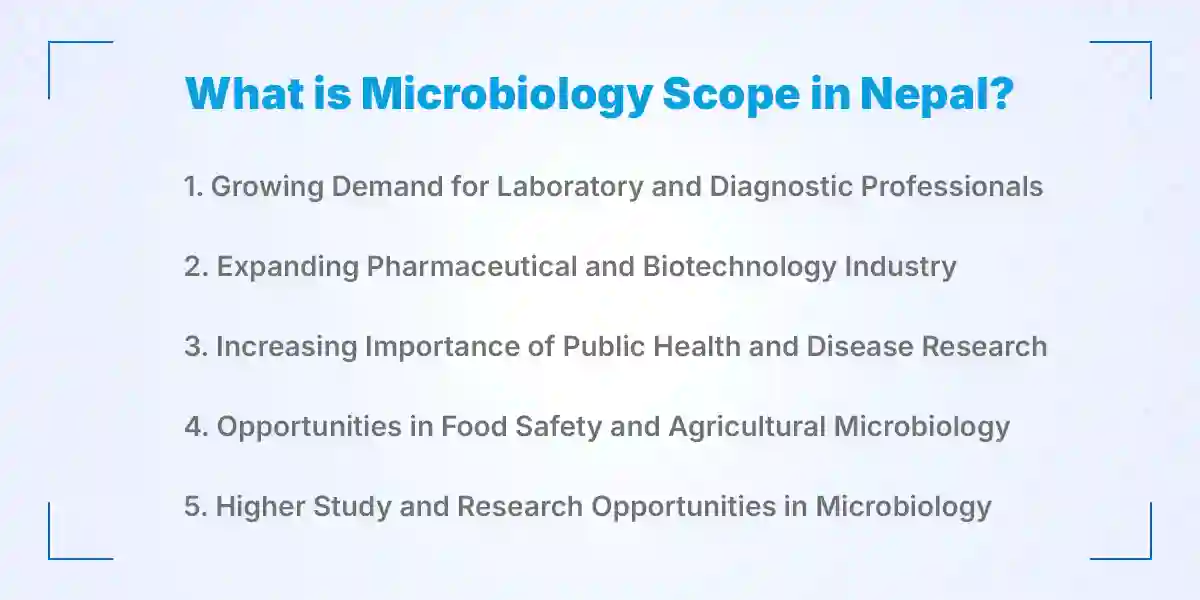
1. Growing Demand for Laboratory and Diagnostic Professionals
One of the major reasons behind the growing microbiology scope in Nepal is the increasing demand for laboratory and diagnostic professionals. Hospitals, medical laboratories, and diagnostic centers rely on microbiologists to detect and analyze infectious diseases. These professionals help identify bacteria, viruses, and other pathogens responsible for illnesses. With the expansion of healthcare facilities across the country, the need for trained microbiology experts is steadily rising. This demand creates promising career opportunities for graduates in microbiology.
2. Expanding Pharmaceutical and Biotechnology Industry
Nepal’s pharmaceutical and biotechnology industries are gradually developing, which has increased the need for microbiology professionals. Microbiologists play an important role in testing medicines, maintaining quality standards, and conducting research for new drug development. Pharmaceutical companies require experts who can analyze microbial contamination and ensure product safety. As the pharmaceutical sector grows, the demand for skilled microbiologists in research and quality control positions is expected to increase.
3. Increasing Importance of Public Health and Disease Research
Public health and disease research have become more important in Nepal, especially after global health challenges like pandemics and emerging infections. Microbiologists contribute significantly to understanding disease-causing microorganisms and developing preventive strategies. They assist health organizations in tracking infectious diseases and improving diagnostic techniques. Research institutions and public health laboratories often hire microbiology professionals for such work. This growing focus on health research has strengthened the role of microbiologists in the country.
4. Opportunities in Food Safety and Agricultural Microbiology
Microbiology also plays a vital role in food safety and agricultural development in Nepal. Food industries rely on microbiologists to ensure that food products are safe for consumption and free from harmful microorganisms. In agriculture, microbiologists study soil microorganisms and their effects on crop health and productivity. Their work helps improve food quality, prevent contamination, and support sustainable farming practices. These areas provide additional career pathways for microbiology graduates.
5. Higher Study and Research Opportunities in Microbiology
Students who complete a microbiology degree in Nepal also have opportunities to pursue higher studies and advanced research. Many graduates continue their education through master’s or doctoral programs in microbiology, biotechnology, or related life sciences. Higher education allows them to specialize in fields such as medical microbiology, molecular biology, or environmental microbiology. Research opportunities are available in universities, laboratories, and international research organizations. This academic pathway can lead to careers in teaching, advanced research, and scientific innovation.
Career Opportunities After Studying Microbiology in Nepal
After completing a microbiology degree, graduates in Nepal can explore a wide range of career opportunities in healthcare, research, pharmaceuticals, and food industry. The microbiology scope in Nepal is expanding as laboratories, hospitals, and scientific institutions require skilled professionals to analyze microorganisms and support disease control. Microbiology graduates can work in both the public and private sectors, including research centers and government health programs. With the right skills and experience, this field offers stable and rewarding career pathways, and graduates can get microbiologist jobs in Nepal with the right qualifications and laboratory experience.
1. Clinical Microbiologist in Hospitals and Diagnostic Labs
Clinical microbiologists play a crucial role in hospitals and diagnostic laboratories by identifying microorganisms that cause diseases. They analyze samples such as blood, urine, and tissue to detect infections and help doctors determine the correct treatment. Their work supports accurate disease diagnosis and helps control the spread of infectious diseases. Hospitals and private diagnostic labs regularly require trained microbiologists for laboratory testing and analysis. This role is one of the most common career paths for microbiology graduates.
2. Research Scientist in Biotechnology and Health Research Centers
Microbiology graduates can also work as research scientists in biotechnology companies and health research institutions. In this role, professionals conduct experiments to study microorganisms and develop new medical or scientific solutions. Their research may focus on vaccines, antibiotics, or disease prevention techniques. Research scientists often collaborate with healthcare professionals and scientific organizations to advance medical knowledge. This career path is ideal for individuals interested in scientific discovery and innovation.
3. Quality Control Officer in Pharmaceutical Industries
Quality control officers in pharmaceutical companies ensure that medicines and medical products meet safety and quality standards. Microbiologists working in this role test raw materials, finished products, and production environments for microbial contamination. Their work helps pharmaceutical companies maintain strict quality assurance processes. These professionals also monitor laboratory procedures to ensure compliance with regulatory guidelines. As Nepal’s pharmaceutical sector grows, the demand for quality control experts is increasing.
4. Food Microbiologist in Food Processing Industries
Food microbiologists work in food processing industries to ensure that food products are safe and free from harmful microorganisms. They analyze food samples to detect contamination and maintain hygiene standards during production. Their work helps prevent foodborne illnesses and ensures product quality for consumers. Food industries rely on microbiologists to maintain safety regulations and improve food preservation methods. This role combines microbiology knowledge with food science and quality assurance practices.
5. Environmental Microbiologist in Research and Conservation Projects
Environmental microbiologists study microorganisms that exist in natural environments such as soil, water, and air. Their research helps scientists understand ecological systems and environmental health. They may work on projects related to pollution control, waste management, or sustainable agriculture. Environmental microbiologists also contribute to conservation efforts by studying microbial interactions within ecosystems. This field is important for addressing environmental challenges and promoting sustainable development.
6. Public Health Microbiologist in Government Health Programs
Public health microbiologists work with government agencies and health organizations to monitor and control infectious diseases. They analyze disease outbreaks, track pathogens, and support public health initiatives. Their work helps authorities develop strategies for disease prevention and improve healthcare systems. These professionals often collaborate with epidemiologists, medical experts, and research institutions. Public health microbiologists play an essential role in protecting community health and preventing disease spread.
Job Roles for Microbiology Graduates in Nepal
Microbiology graduates in Nepal can work in various scientific, medical, and industrial roles that involve studying microorganisms and maintaining safety standards. The microbiology scope in Nepal continues to grow as hospitals, research institutions, pharmaceutical companies, and food industries require trained professionals. These job roles focus on laboratory testing, research, quality control, and environmental analysis. With proper laboratory skills and scientific knowledge, microbiology graduates can build stable careers across several sectors.
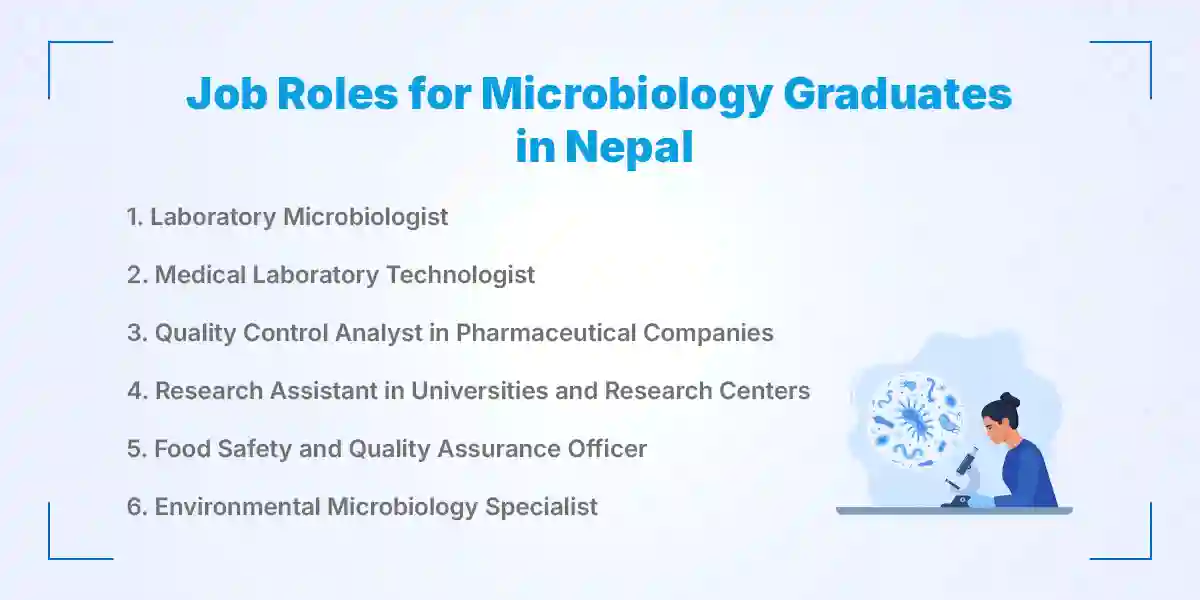
1. Laboratory Microbiologist
A laboratory microbiologist works in diagnostic laboratories and research centers to analyze microorganisms found in clinical or environmental samples. Their primary responsibility is to identify bacteria, viruses, fungi, and other microbes that may cause diseases. They conduct laboratory tests, maintain sterile conditions, and prepare detailed reports for doctors or researchers. This role requires strong laboratory skills and knowledge of microbiological techniques. Laboratory microbiologists play a key role in disease detection and medical research.
2. Medical Laboratory Technologist
Medical laboratory technologists assist healthcare professionals by performing laboratory tests that help diagnose diseases. They analyze patient samples such as blood, urine, or tissue to detect infections and medical conditions. These professionals operate laboratory equipment, record results, and ensure accurate testing procedures. Their work directly supports doctors in providing proper treatment to patients. Medical laboratory technologists are essential members of hospital diagnostic teams.
3. Quality Control Analyst in Pharmaceutical Companies
Quality control analysts in pharmaceutical companies ensure that medicines and pharmaceutical products meet strict safety and quality standards. They conduct microbial tests on raw materials, production environments, and finished products. Their responsibility is to detect contamination and ensure that pharmaceutical products are safe for public use. These professionals also follow regulatory guidelines and maintain laboratory documentation. Quality control roles are very important in maintaining the reliability of pharmaceutical products.
4. Research Assistant in Universities and Research Centers
Research assistants support scientists and professors in conducting microbiology research projects. They help design experiments, collect data, and analyze laboratory results. Research assistants also maintain laboratory equipment and prepare research documentation. This role provides valuable experience for graduates interested in pursuing higher studies or research careers. Working in research environments allows microbiology graduates to contribute to scientific discoveries and innovation.
5. Food Safety and Quality Assurance Officer
Food safety and quality assurance officers ensure that food products are produced under safe and hygienic conditions. They test food samples for microbial contamination and monitor food processing environments. Their work helps prevent foodborne diseases and maintain high-quality standards in food industry. These professionals also ensure that companies follow food safety regulations and quality guidelines. Food safety officers play a vital role in protecting public health.
6. Environmental Microbiology Specialist
Environmental microbiology specialists study microorganisms found in soil, water, and other natural environments. They analyze how microbes affect ecosystems, agriculture, and environmental health. These professionals may work on projects related to pollution control, waste management, and environmental conservation. Their research helps scientists develop solutions for environmental challenges. Environmental microbiologists contribute to sustainable development and ecological protection.
Salary of Microbiologist in Nepal
The salary of microbiologists in Nepal varies depending on experience, workplace, and level of responsibility. Fresh graduates usually begin with entry-level laboratory roles, while experienced professionals can move into research, management, or specialized scientific positions. The microbiology scope in Nepal is gradually expanding, and salaries tend to increase with practical laboratory skills and industry experience. Microbiologists working in pharmaceutical companies, research institutions, or large hospitals often earn higher salaries compared to those in smaller laboratories.
1. Entry-Level Microbiologist Salary
Entry-level microbiologists in Nepal generally earn between NPR 15,000 and NPR 30,000 per month, depending on the laboratory, hospital, or organization. These positions are typically held by fresh graduates who focus on routine laboratory testing, sample preparation, and assisting senior microbiologists. At this stage, professionals mainly gain practical experience and learn laboratory procedures and safety standards. Many graduates begin their careers through entry-level jobs in Nepal, where they build foundational laboratory skills. Although salaries may start modestly, they usually increase as individuals gain technical skills and hands-on laboratory experience.
2. Mid-Level Microbiologist Salary
Mid-level microbiologists usually earn around NPR 40,000 to NPR 60,000 per month, reflecting their increased expertise and professional responsibilities. At this stage, professionals often perform advanced diagnostic tests, manage laboratory sections, and supervise junior staff. They may also participate in research activities or quality control processes in pharmaceutical companies. Many professionals reach this stage after gaining experience through mid-level jobs in Nepal, where they handle more specialized laboratory tasks and leadership roles. Salary levels can vary depending on the employer, with private hospitals and pharmaceutical industries often offering better compensation. Experience and specialization can further increase earning potential.
3. Senior-Level Microbiologist Salary
Senior microbiologists in Nepal typically earn NPR 70,000 or more per month, especially when they hold leadership or specialized roles. These professionals are responsible for managing laboratory operations, overseeing quality control systems, and supervising research projects. Senior microbiologists may also work in pharmaceutical companies, research institutes, or large hospitals. Higher qualifications, advanced research experience, and professional certifications can significantly increase salary levels. This stage often involves strategic decision-making and scientific leadership within organizations.
Skills Required to Build a Successful Career in Microbiology
To succeed in microbiology, professionals need a combination of strong laboratory skills, scientific knowledge, and analytical thinking. Microbiologists often work with complex laboratory equipment, conduct experiments, and analyze microorganisms that affect human health, food safety, and the environment. Developing technical expertise along with research and problem-solving abilities is essential for career growth in this field. These skills help microbiology graduates perform accurate testing, contribute to research, and maintain high laboratory standards.
1. Laboratory and Microbial Testing Skills
Laboratory and microbial testing skills are fundamental for microbiologists working in hospitals, research labs, and pharmaceutical industries. Professionals must know how to handle samples safely, operate laboratory equipment, and perform microbial culture and identification techniques. Accurate testing is essential for diagnosing diseases and ensuring product safety in industries such as food and pharmaceuticals. Microbiologists must also follow strict laboratory protocols and hygiene standards. Strong laboratory skills ensure reliable test results and maintain scientific accuracy.
2. Research and Analytical Skills
Research and analytical skills help microbiologists investigate microorganisms and understand their behavior. These skills involve designing experiments, collecting data, and interpreting laboratory findings. Microbiologists use analytical thinking to identify patterns, detect microbial contamination, and develop solutions for health or environmental challenges. Research abilities are especially important for professionals working in universities and scientific research institutions. Strong analytical skills support scientific discoveries and advancements in microbiology.
3. Knowledge of Biotechnology and Molecular Techniques
Knowledge of biotechnology and molecular biology techniques is increasingly important in modern microbiology. Techniques such as PCR, DNA sequencing, and genetic analysis help scientists study microorganisms at the molecular level. These tools are widely used in disease diagnosis, vaccine development, and biotechnology research. Microbiologists with expertise in molecular techniques often have better career opportunities in research laboratories and pharmaceutical industries. Understanding biotechnology also helps professionals stay updated with scientific innovations.
4. Data Analysis and Scientific Reporting Skills
Data analysis and scientific reporting skills allow microbiologists to accurately document and interpret laboratory results. After conducting experiments or tests, professionals must analyze data and present findings in reports or research papers. Clear documentation is important for scientific communication and maintaining laboratory records. These skills are also essential when collaborating with doctors, researchers, or industry professionals. Strong reporting abilities ensure that scientific findings are understandable and useful for decision-making.
5. Problem-Solving and Critical Thinking Skills
Problem-solving and critical thinking skills are vital for microbiologists who deal with complex biological challenges. Professionals often encounter unexpected laboratory results or microbial behaviors that require careful analysis. Critical thinking helps them evaluate different possibilities and identify accurate conclusions. These skills also help microbiologists develop solutions for issues such as disease outbreaks, contamination, or environmental problems. Strong problem-solving abilities contribute to effective scientific research and practical laboratory work.
Where Can Microbiology Graduates Work in Nepal?
Microbiology graduates in Nepal can work in healthcare institutions, pharmaceutical companies, research organizations, food industries, and academic institutions where microbial testing and scientific research are essential.
1. Hospitals and Diagnostic Laboratories
Hospitals and diagnostic laboratories are among the most common workplaces for microbiology graduates in Nepal. In these settings, microbiologists analyze patient samples such as blood, urine, and tissue to identify infectious microorganisms. Their work helps doctors diagnose diseases accurately and determine appropriate treatments. Many graduates also begin their careers through a hospital internship in Nepal, where they gain practical laboratory experience and clinical exposure. Diagnostic laboratories rely heavily on microbiology professionals to conduct microbial testing and maintain laboratory standards. As healthcare facilities expand across Nepal, job opportunities in hospital laboratories continue to grow.
2. Pharmaceutical and Biotechnology Companies
Pharmaceutical and biotechnology companies employ microbiologists to ensure the safety and quality of medicines and biological products. Professionals in this sector perform microbial testing, monitor production environments, and support research related to drug development. Their work helps maintain strict quality control standards required for pharmaceutical manufacturing. Microbiologists may also participate in research projects aimed at developing new medicines or improving existing treatments. This sector offers promising career opportunities as Nepal’s pharmaceutical industry continues to expand.
3. Food Processing and Quality Control Industries
Food processing industries also require microbiologists to maintain food safety and quality standards. These professionals test food products for microbial contamination and ensure that production environments meet hygiene regulations. Their work helps prevent foodborne diseases and ensures that products are safe for consumers. Microbiologists also assist in improving food preservation techniques and quality assurance processes. As the food industry grows, the demand for food microbiology experts is increasing.
4. Government Health and Research Institutions
Government health agencies and research institutions provide additional career opportunities for microbiology graduates in Nepal. These organizations focus on disease monitoring, public health research, and laboratory testing related to infectious diseases. Microbiologists working in government institutions may contribute to national health programs, disease surveillance, and scientific research projects. Their work supports public health initiatives and helps authorities respond to disease outbreaks. Such roles allow professionals to contribute to improving healthcare systems in the country.
5. Universities and Academic Research Centers
Universities and academic research centers employ microbiologists as researchers, lecturers, and laboratory instructors. Professionals in these institutions conduct scientific research, publish academic studies, and teach microbiology to students. They also supervise laboratory experiments and guide students in research projects. Working in academic environments allows microbiologists to contribute to scientific advancement and education. This career path is especially suitable for individuals interested in teaching and advanced research.
Is Microbiology a Good Career in Nepal?
Yes, microbiology can be a good career in Nepal, especially for students interested in healthcare, laboratory science, and scientific research. As the healthcare, pharmaceutical, and food industries continue to grow, the demand for trained microbiology professionals is gradually increasing.
Some reasons why microbiology is considered a promising career in Nepal include:
- Growing healthcare sector creating demand for laboratory and diagnostic professionals
- Opportunities in pharmaceutical and biotechnology companies for quality control and research roles
- Increasing focus on public health and disease research in hospitals and government programs
- Career options in food safety and agricultural microbiology industries
- Opportunities for higher studies and research in microbiology and biotechnology
- Potential to work in hospitals, laboratories, universities, and research institutions
How to Build a Successful Career in Microbiology in Nepal?
To build a successful career in microbiology in Nepal, students need advanced education, practical laboratory experience, and continuous involvement in scientific research. Microbiology is a skill-based field where both theoretical knowledge and hands-on laboratory training are equally important. Graduates who focus on developing technical expertise and research abilities often find better career opportunities in hospitals, laboratories, and research institutions. Continuous learning and specialization can significantly improve career growth in this field.
1. Pursuing Master’s Degree in Microbiology or Biotechnology
Pursuing a master’s degree in microbiology or biotechnology can greatly improve career prospects for microbiology graduates. Higher education allows students to specialize in areas such as medical microbiology, molecular biology, or environmental microbiology. Advanced degrees also open opportunities in research institutions, universities, and higher-level laboratory positions. Many organizations prefer candidates with postgraduate qualifications for research and supervisory roles. This academic advancement helps professionals gain deeper scientific knowledge and career stability.
2. Gaining Laboratory Experience Through Internships
Practical laboratory experience is essential for building a strong career in microbiology. Internships provide students with hands-on training in laboratory procedures, microbial testing, and research techniques. Through internships, students learn how to operate laboratory equipment, handle biological samples, and follow scientific protocols. This practical exposure also helps them understand real-world laboratory environments. Employers often prefer candidates who already have internship or laboratory training experience.
3. Developing Expertise in Molecular Biology and Biotechnology
Modern microbiology increasingly relies on advanced techniques from molecular biology and biotechnology. Skills such as DNA analysis, PCR testing, and genetic sequencing are widely used in disease diagnosis and scientific research. Microbiology graduates who develop expertise in these areas can access better career opportunities in research laboratories and pharmaceutical companies. Knowledge of biotechnology also helps professionals stay updated with modern scientific advancements. This specialization can significantly enhance professional value in the microbiology field.
4. Participating in Research Projects and Scientific Publications
Participating in research projects helps microbiology students gain valuable experience in scientific investigation and innovation. Research activities allow students to explore new discoveries related to microorganisms, disease prevention, and biotechnology. Publishing research findings in scientific journals can also strengthen a professional profile. These achievements demonstrate expertise and dedication to scientific advancement. Active involvement in research can open opportunities in academic institutions and international research organizations.
Where to Look for Microbiology Jobs in Nepal?
You can look for microbiology jobs in Nepal through online job portals like Kumari Job, as well as through hospital career pages, pharmaceutical company websites, and professional networking platforms. Many healthcare institutions, laboratories, and pharmaceutical companies regularly post job vacancies online. Staying active on these platforms helps microbiology graduates discover new opportunities and apply quickly. Using multiple sources can increase the chances of finding suitable microbiology jobs in Nepal.
1. Job Portals
Online job portals such as Kumari Job are one of the most convenient ways to search for microbiology-related job opportunities in Nepal. Employers from hospitals, diagnostic laboratories, and pharmaceutical companies often post vacancies for laboratory technicians, microbiologists, and research assistants. Job seekers can easily browse available positions, upload resumes, and apply directly through these platforms. Job portals also allow candidates to filter opportunities based on location, experience level, and industry. Regularly checking these platforms helps graduates stay updated about new job openings.
2. Hospital and Diagnostic Laboratory Career Pages
Hospitals and diagnostic laboratories often post job openings on their official career pages. These institutions regularly hire microbiologists and laboratory professionals to support diagnostic testing and disease detection. Job seekers interested in hospital jobs in Kathmandu can regularly visit the career sections of hospital websites to find available laboratory positions and application instructions. Some hospitals also advertise internship opportunities for fresh graduates. Applying directly through hospital career pages can help candidates connect with healthcare employers more efficiently.
3. Pharmaceutical Company Career Sections
Pharmaceutical companies also provide career opportunities for microbiology graduates, particularly in quality control and research roles. Many pharmaceutical firms publish job vacancies on their official websites under the career section. These positions may include roles related to microbial testing, laboratory analysis, and pharmaceutical quality assurance. Checking these career pages regularly helps candidates stay informed about industry opportunities. Working in pharmaceutical companies can offer stable career growth for microbiology professionals.
4. Professional Networking and Social Media Groups
Professional networking platforms and social media groups can also be useful for discovering microbiology job opportunities. Many healthcare professionals, laboratories, and organizations share job announcements within professional communities. Joining microbiology or laboratory science groups allows job seekers to stay informed about vacancies and industry trends. Networking with professionals in the field can also lead to referrals and career advice. Active participation in such groups can improve visibility and job prospects.
Conclusion
The microbiology scope in Nepal is steadily expanding as the country strengthens its healthcare system, pharmaceutical production, and scientific research sectors. Microbiology graduates have opportunities to work in hospitals, diagnostic laboratories, pharmaceutical industries, food safety organizations, and research institutions. With the growing focus on disease detection, public health, and biotechnology, the demand for skilled microbiology professionals is gradually increasing. Developing strong laboratory skills, research abilities, and technical knowledge can help graduates build stable and rewarding careers in this field.
Overall, microbiology can be a promising career choice for students interested in science, healthcare, and research. By pursuing higher education, gaining laboratory experience, and staying updated with modern scientific techniques, microbiology graduates can expand their professional opportunities. As Nepal continues to invest in healthcare and scientific research, the role of microbiologists will become even more important in the future.
Frequently Asked Questions
Submit your comments

Get Our App On



How to Register a Personal PAN Card in Nepal: Online & Offline Methods
VIEW DETAILS
What Is the Average JavaScript Developer Salary in Nepal?
VIEW DETAILS
Salary Tax Slab 2083/84 in Nepal: Latest Tax Rates & Calculation
VIEW DETAILS
What Is the Average Java Developer Salary in Nepal?
VIEW DETAILS


Loading Comments...