



Are you looking for a stable banking career in Nepal and wondering how to apply for Kamana Sewa Bikas Bank jobs? Competition is high, and understanding the application process can increase your chances of securing a position. Knowing the steps, eligibility, and requirements beforehand helps candidates apply efficiently and avoid mistakes.
In this blog, How to Apply for Kamana Sewa Bikas Vacancy will guide you through the full application process. We will cover available positions, eligibility criteria, step-by-step application instructions, selection process, and tips to maximise your chances of getting hired in this reputed development bank, making it a valuable resource for anyone exploring banking jobs in Nepal.
In this blog
Overview of Kamana Sewa Bikas Bank
Kamana Sewa Bikas Bank is a prominent development bank in Nepal, focused on providing financial services to individuals, businesses, and communities. It operates across multiple branches offering loans, savings, and investment products. The bank emphasises professionalism, customer service, and growth opportunities for its employees. Working at Kamana Sewa Bikas Bank provides a stable career with exposure to the banking sector and opportunities for skill development. The bank continues to expand its services, contributing to economic growth in local communities.
What Kamana Sewa Bikas Bank Does:
- Provides personal and business banking services, including savings and current accounts.
- Offers various types of loans such as home, personal, and business loans.
- Facilitates investment options and fixed deposit schemes for clients.
- Provides digital banking solutions, including online and mobile banking.
- Supports financial inclusion in rural and urban areas through branch expansion.
- Conducts customer education programs on financial literacy and savings.
- Partners with local businesses and institutions to promote economic growth.
Types of Vacancies in Kamana Sewa Bikas Bank
Kamana Sewa Bikas Bank offers a variety of job opportunities across different levels to accommodate fresh graduates, experienced professionals, and specialised talent. Vacancies include entry-level positions for new candidates, mid-level and officer roles for experienced individuals, and specialised roles requiring niche expertise. The bank also provides internship and trainee programs for hands-on learning. Each type of vacancy comes with specific eligibility criteria, responsibilities, and career growth opportunities.
1. Entry-Level
Entry-level job positions are designed for fresh graduates or candidates with minimal work experience. Roles typically include clerical staff, junior tellers, and customer service assistants. Training is provided on banking operations, customer handling, and basic financial products such as deposits, withdrawals, and fund transfers. Candidates are introduced to branch operations, record maintenance, and basic reporting procedures. These positions help build a strong foundation in banking practices and prepare candidates for internal promotions.
2. Mid-Level and Officer Roles
Mid-level roles and officer roles are targeted at candidates with relevant experience or professional qualifications. Positions include branch officers, loan officers, and operations managers. Responsibilities cover managing daily branch activities, supervising staff, approving loans, and monitoring compliance with banking regulations. Officers often handle customer relationship management, problem resolution, and reporting to senior management. These roles provide exposure to leadership, operational decision-making, and strategic planning, creating pathways for career advancement.
3. Specialised Roles
Specialised roles require specific expertise in areas such as IT, risk management, finance, audit, or compliance. Positions include IT officers, internal auditors, financial analysts, and credit risk managers. Candidates are responsible for maintaining secure banking systems, conducting audits, analysing financial data, ensuring regulatory compliance, and supporting high-level business decisions. These roles demand advanced skills, certifications, and experience, making them suitable for professionals aiming for specialised career tracks or leadership positions within the bank.
4. Internship and Trainee
Internship in Nepal and trainee programs target students and fresh graduates seeking practical banking experience. Participants gain exposure to daily banking operations, customer service, loan processing, account management, and financial reporting. Mentorship from experienced professionals and hands-on projects allow interns to understand the bank’s workflow and operational standards. Successful interns often receive guidance on skill improvement, and top performers may secure full-time roles upon program completion, providing a direct pathway into permanent employment.
How to Apply For Kamana Sewa Bikas Bank Vacancy: Step-by-Step
To apply for Kamana Sewa Bikas Bank vacancy, candidates must follow a structured process to ensure their application is complete and meets eligibility criteria. The application involves checking available positions, understanding the job requirements, submitting an online form, and providing necessary documentation. Following the proper steps increases the chances of selection and ensures a smooth application experience.
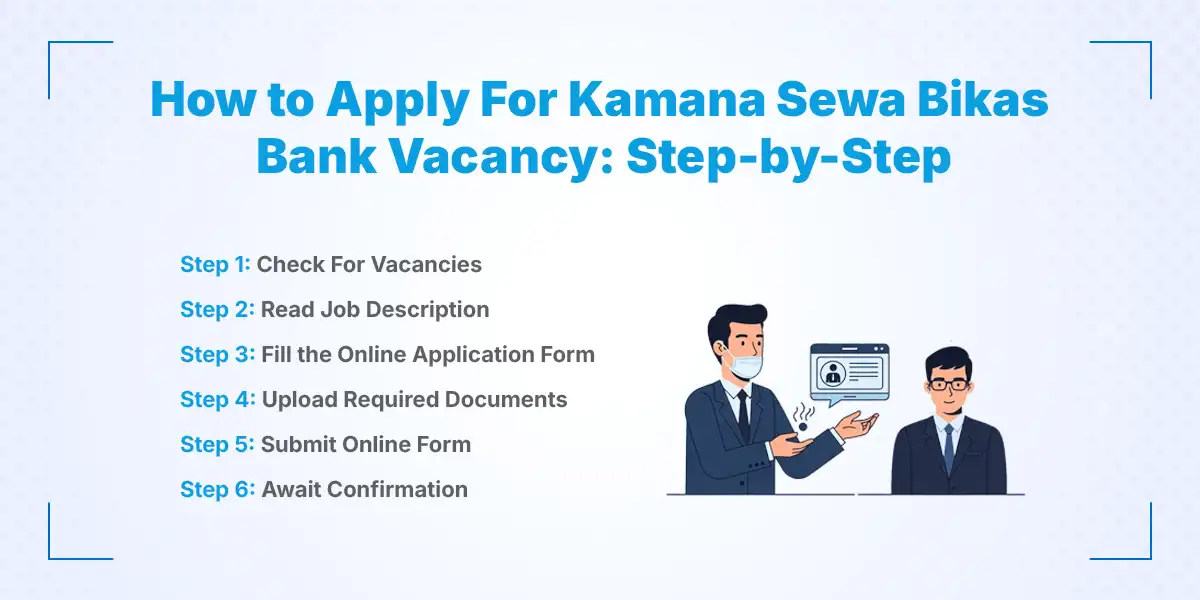
Step 1: Check For Vacancies
Visit the official Kamana Sewa Bikas Bank website or trusted job portals to find the latest openings. Look for details such as position title, number of vacancies, application deadlines, and branch locations. Verify eligibility criteria like age limit, educational qualifications, and experience requirements. Regularly monitoring updates ensures you don’t miss new announcements or sudden changes in the recruitment schedule.
Step 2: Read Job Description
Carefully review the job description to understand the specific role, responsibilities, and required skills. Check for any mandatory qualifications, technical skills, or certifications. Understand work location, department, and reporting hierarchy. Reading thoroughly helps tailor your application, highlighting relevant experience and skills that match the position.
Step 3: Fill the Online Application Form
Complete the online application form accurately with personal, educational, and professional details. Avoid typos or inconsistencies, as errors can lead to disqualification. Fill sections such as academic history, work experience, and contact information carefully. Some forms may require selecting preferred branches or roles, so choose appropriately to increase chances of placement.
Step 4: Upload Required Documents
Prepare digital copies of all necessary documents, including academic certificates, government ID, experience letters, and recent photographs. Ensure each file meets the specified format and size requirements. Double-check that scanned documents are clear and readable. Missing or unclear documents can result in rejection or delays in processing your application.
5. Step 5: Submit Online Form
Review the filled application form and uploaded documents before submitting. Confirm all details, as corrections may not be possible after submission. After submission, you will usually receive a confirmation email or an acknowledgement number. Keep a screenshot or printout for reference, as it may be needed for tracking your application or during the interview process.
Step 6: Await Confirmation
Once submitted, monitor your email and the bank’s website for updates on application status, written tests, or interview schedules. Some candidates may be called for document verification or preliminary assessments. Staying informed ensures you don’t miss important notifications and allows timely preparation for the next recruitment stages.
Eligibility Criteria for Kamansa Sewa Bikas Bank Vacancy
To apply for Kamana Sewa Bikas Bank vacancies, candidates must meet specific eligibility criteria set by the bank. These include age limits, academic qualifications, work experience, and role-specific requirements. Meeting the criteria ensures that applicants are considered for selection and can perform the responsibilities effectively. Different roles may have varying requirements based on seniority, specialisation, and department needs.
1. Age Limits
Candidates must fall within the age range specified for each role. Entry-level positions typically have a lower age limit, while officer and specialised roles may allow older candidates with relevant experience. Age relaxations may apply for certain categories as per government or bank guidelines. Ensuring compliance with age requirements prevents automatic disqualification. Adhering to the age criteria also helps candidates plan their applications for appropriate positions.
2. Academic Qualifications
Educational qualifications vary depending on the position. Entry-level roles generally require a bachelor’s degree in any discipline. Mid-level and officer roles may require degrees in finance, business administration, economics, or related fields. Specialised roles often require professional certifications or higher degrees relevant to the field. Candidates must have completed their education from recognised institutions. Meeting academic criteria ensures readiness for the technical aspects of each role.
3. Work Experience
Work experience requirements depend on the role’s level and complexity. Entry-level positions may not require prior experience. Officer and mid-level positions often require 1–5 years of relevant experience. Specialised roles demand significant experience in areas like IT, audit, finance, or risk management. Documented work history and references strengthen the application. Relevant experience demonstrates the ability to handle job responsibilities effectively from day one.
4. Other Specific Criteria for Specialised Roles
Specialised roles may require additional certifications, technical skills, or proficiency in banking software. Candidates may need knowledge of regulatory compliance, financial analysis, or digital banking tools. Language skills, computer literacy, and professional training can be mandatory. Meeting these criteria ensures candidates can handle specialised responsibilities efficiently. Additional requirements help align candidates’ expertise with the bank’s operational and strategic needs.
Required Documents for Vacancy in Kamana Sewa Bikas Bank
To apply for a Kamana Sewa Bikas Bank vacancy, candidates must prepare and submit a set of essential documents. These documents verify personal identity, educational qualifications, and professional experience. Proper documentation ensures the application is complete and meets bank requirements. Missing or incorrect documents can result in disqualification or delays in processing. Candidates should carefully check the list of required documents before applying to avoid errors. Organised documents also help streamline the verification and selection process.
1. CV
Well-prepared CV provides an overview of your education, work experience, skills, and achievements. It should be tailored to the specific role, highlighting relevant banking experience or transferable skills. Include personal details, contact information, and career objectives clearly. Use a clean, professional format to ensure readability. A strong CV increases the chances of being shortlisted for interviews or assessments.
2. Academic Documents
Academic documents include transcripts, mark sheets, and degree certificates that validate your qualifications. Ensure that all certificates are from recognised institutions and clearly legible. For positions requiring specialised knowledge, additional certifications or diplomas may be necessary. Keep both scanned copies and original documents ready for verification during interviews or assessments.
3. Citizenship
A valid citizenship certificate or national ID proves Nepalese nationality, which is mandatory for employment. The document must be current and correctly filled out without errors. If submitting a photocopy, ensure it is notarised or certified as required by the bank. Citizenship verification is crucial for legal compliance and to confirm eligibility for government-linked positions.
4. Passport-sized Photographs
Recent passport-sized photographs are required for identification purposes and should meet the bank’s specifications for size, background, and clarity. Usually, two to three photos are requested for application forms, ID cards, and other official records. Ensure the photographs are professional, with a clear view of the face and no obstructions. Keeping extra copies is recommended for further recruitment steps.
5. Other Supporting Documents
Other supporting documents may include work experience letters, recommendation letters, professional certifications, training certificates, and awards. These documents help demonstrate practical skills, achievements, and readiness for the role. Properly organised supporting documents enhance credibility and improve chances of selection. Always maintain both original and scanned copies for submission and verification.
Selection Process at Kamana Sewa Bikas Bank
The selection process at Kamana Sewa Bikas Bank is designed to identify candidates with the right skills, knowledge, and aptitude for various roles. It combines objective assessments, group evaluations, and personal interviews to ensure a fair and thorough evaluation. Candidates are assessed on technical knowledge, problem-solving ability, communication skills, and suitability for the bank’s work culture. Following each stage successfully moves applicants closer to final selection. Understanding the process helps candidates prepare strategically and improve their chances of success.
1. Written Exam
The written exam evaluates candidates’ knowledge in banking concepts, general awareness, quantitative aptitude, and logical reasoning. Some positions may include questions on finance, accounting, or IT, depending on the role. Time management and accuracy are crucial for scoring well. This stage filters candidates for the next round based on performance.
2. Group Discussion / Preliminary Assessment
Candidates who clear the written exam may participate in a group discussion or preliminary assessment. This stage assesses communication skills, teamwork, problem-solving, and leadership potential. Topics may include current affairs, banking trends, or hypothetical business scenarios. Performance in this round indicates the candidate’s ability to interact effectively in a professional environment.
3. Personal Interview
The personal interview is a one-on-one session with bank officials or HR representatives. It evaluates technical knowledge, experience, attitude, and cultural fit. Candidates are asked about experience, skills, motivation, and understanding of banking operations. Confidence, clarity, and professionalism during the interview significantly influence selection decisions, so proper preparation for the interview is crucial to increase your chances of success.
4. Final Selection
Final selection is based on the combined performance in the written exam, group discussion, and interview. Selected candidates receive official appointment letters with details of their role, salary, and joining date. Successful applicants may also undergo document verification before joining. This stage confirms that candidates meet all eligibility criteria and are ready to contribute effectively to the bank.
Where to find Kamana Sewa Bikas Bank Vacancies?
You can find Kamana Sewa Bikas Bank vacancy announcements on their official career page and job portals like Kumari Job. Regularly checking these sources ensures you don’t miss new openings. Notifications provide details about positions, eligibility, deadlines, and application procedures. Staying updated helps candidates prepare documents and apply promptly for suitable roles.
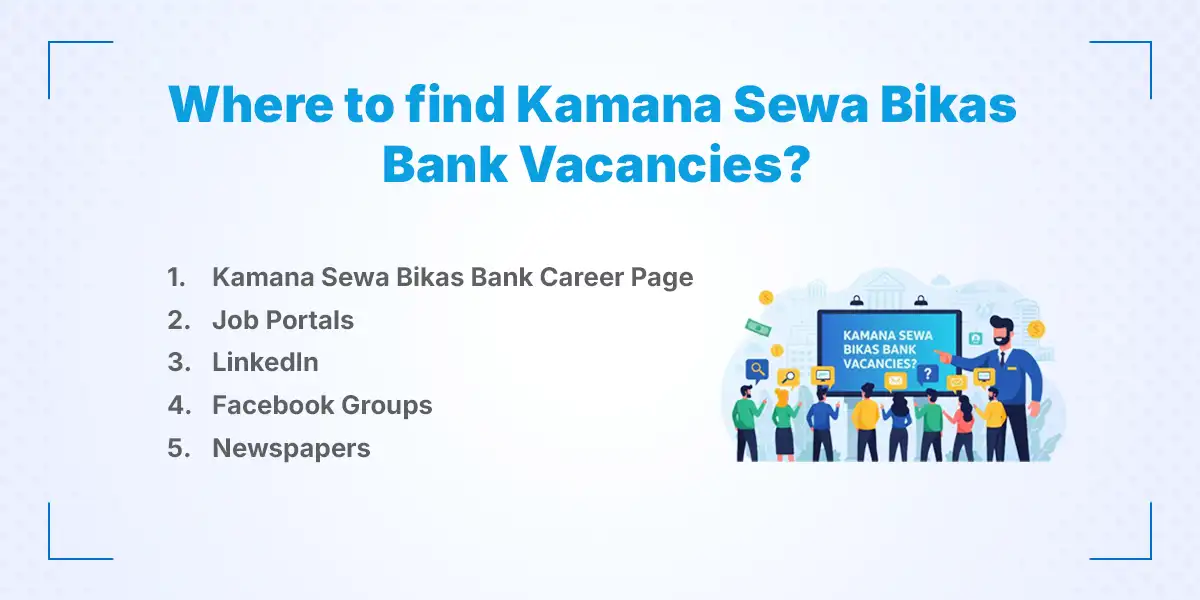
1. Kamana Sewa Bikas Bank Career Page
The official career page lists all current vacancies with detailed job descriptions, eligibility criteria, responsibilities, and application instructions. Candidates can directly apply online through the portal and track the status of their application. The page often includes updates on internships, trainee programs, and notifications for upcoming recruitment drives. Monitoring this page ensures you have the most accurate and official information.
2. Job Portals
Kumari Job provides regularly updated listings for Kamana Sewa Bikas Bank vacancies, including deadlines, required documents, and application links. Users can create accounts to receive email or SMS notifications for relevant roles. The portal also offers tips for preparing CVs, application guidance, and updates on new job openings, making it easier for candidates to stay informed.
3. LinkedIn
Kamana Sewa Bikas Bank posts selected vacancies on LinkedIn, targeting professionals and experienced candidates. Following the bank’s official page provides real-time updates about job openings, internship programs, and career events. LinkedIn also enables candidates to connect with HR personnel or employees, ask queries, and directly apply for positions while showcasing their professional profile.
4. Facebook Groups
Active banking and career-focused Facebook groups in Nepal often share notifications about Kamana Sewa Bikas Bank vacancies. Joining these groups helps candidates access immediate updates, application links, and peer guidance. Experienced members frequently provide insights on exam patterns, interview tips, and document requirements, which can be invaluable for first-time applicants.
5. Newspapers
National and local newspapers continue to publish official advertisements for bank vacancies, especially for development banks like Kamana Sewa Bikas Bank. Classified sections list job roles, eligibility, deadlines, and application instructions. Checking newspapers regularly ensures candidates don’t miss vacancies that might not be posted online. Some announcements also include preliminary exam dates and interview schedules.
Salary and Career Growth in Kamana Sewa Bikas Bank
Kamana Sewa Bikas Bank offers competitive salaries and structured career growth for employees at all levels. Compensation is designed to attract skilled professionals while providing opportunities for advancement. Alongside salaries, the bank provides benefits, allowances, and training programs to support employee development. Career progression depends on performance, experience, and successful completion of responsibilities. Working at the bank allows individuals to grow professionally while gaining valuable exposure to the financial sector, making it an insightful reference for understanding the average salary in Nepal.
1. Starting Salary Range at Different Positions
Entry-level positions, such as clerical staff or junior tellers, offer starting salaries appropriate for fresh graduates. Mid-level roles like branch officers or loan officers come with higher pay reflecting experience and responsibilities. Specialised roles such as IT officers, auditors, or financial analysts receive salaries that match technical expertise. Compensation may vary by branch location and job function, ensuring fairness and competitiveness within the banking sector.
2. Benefits and Allowances
Employees receive additional benefits, including health insurance, provident fund contributions, and performance-based incentives. Allowances may cover transportation, housing, or communication expenses, depending on the role. These perks enhance the overall compensation package and provide financial security. Regular reviews and updates to benefits ensure they remain competitive and aligned with industry standards.
3. Promotion Opportunities
Kamana Sewa Bikas Bank follows a structured promotion system based on performance, experience, and skill development. Employees can advance from entry-level positions to officer roles, managerial positions, and eventually senior management. Promotions often require completing training, achieving targets, and demonstrating leadership potential. Clear career pathways encourage long-term commitment and professional growth.
4. Training and Skill Development
The bank provides ongoing training programs to enhance technical skills, leadership abilities, and operational knowledge. Workshops, seminars, and online courses help employees stay updated with banking trends and regulatory changes. Skill development initiatives prepare staff for higher responsibilities and specialised roles. Continuous learning ensures employees remain competitive and can take advantage of career advancement opportunities.
Conclusion
Applying for a position at Kamana Sewa Bikas Bank offers a promising career in Nepal’s growing banking sector. By understanding the vacancy types, eligibility criteria, required documents, and the step-by-step application process, candidates can apply confidently and efficiently. The bank’s structured selection process ensures that qualified and skilled individuals are chosen for suitable roles, while internships and trainee programs provide practical experience for new entrants.
Working at Kamana Sewa Bikas Bank also provides competitive salaries, benefits, and clear career growth opportunities. Employees gain exposure to banking operations, skill development programs, and professional advancement pathways. Staying updated through the official career page and Kumari Job ensures timely application for vacancies, helping candidates secure rewarding roles in this reputable development bank.
Frequently Asked Questions
Submit your comments

Get Our App On



SEO Training for Freshers in Nepal: Skills, Career & Job Opportunities
VIEW DETAILS
SEO Training vs. Self-Learning: Which Is Right for You?
VIEW DETAILS
How to Choose Between Two Job Offers
VIEW DETAILS
Digital Marketing Training Interview Questions and Answers for Freshers
VIEW DETAILS


Loading Comments...