


Reliable internet and digital communication have become essential across Nepal, creating a growing need for skilled professionals who can install and maintain fiber optic networks. Many students and job seekers want to enter this field but are unsure about the qualifications, training, certifications, and career path required to become a Fiber Optic Technician.
This guide explains everything you need to know about becoming a Fiber Optic Technician in Nepal, from the skills and education you need to the best places to study, expected salary, top hiring companies, and practical steps to start your career. By the end, you'll have a clear roadmap to build a successful future in Nepal's expanding telecommunications industry.
In this blog
What Is a Fiber Optic Technician?
A Fiber Optic Technician is a skilled professional who installs, tests, repairs, and maintains fiber optic cables and communication systems that deliver high-speed internet, telephone, television, and data services. They are responsible for cable installation, fiber splicing, cable termination, network testing, troubleshooting faults, and performing routine maintenance to ensure reliable and uninterrupted network performance.
In Nepal, Fiber Optic Technicians work for telecommunications companies, Internet Service Providers (ISPs), engineering firms, construction companies, IT service providers, data centers, and government communication projects. As the country's broadband and telecom infrastructure continues to expand, skilled Fiber Optic Technicians are increasingly needed to build, maintain, and upgrade modern fiber optic networks.
Why Choose a Career as a Fiber Optic Technician in Nepal?
Choosing a career as a Fiber Optic Technician in Nepal is a smart decision because the demand for high-speed internet, broadband services, and modern telecommunications infrastructure continues to grow across the country. As telecom companies and Internet Service Providers (ISPs) expand their fiber optic networks to reach more homes, businesses, and rural areas, they need skilled technicians to install, maintain, and repair these systems, creating strong employment opportunities for qualified professionals.
A career as a Fiber Optic Technician also offers long-term job stability, competitive salary growth, and opportunities to advance into roles such as Network Engineer, Telecom Engineer, or Fiber Network Supervisor. Working in the telecommunications industry allows professionals to gain valuable technical skills, work with advanced networking technologies, and build a rewarding career in one of Nepal's fastest-growing sectors.
Skills Required to Become a Fiber Optic Technician
To become a Fiber Optic Technician in Nepal, you need a combination of technical knowledge and practical skills to install, maintain, and troubleshoot fiber optic networks effectively. Strong technical skills help you work with fiber optic cables, specialized tools, testing equipment, and network systems while ensuring installations meet industry standards.
You should be skilled in cable splicing and termination, network troubleshooting, and using fiber optic testing equipment to identify and fix connectivity issues. In addition, safety awareness, communication, teamwork, and problem-solving abilities are essential because technicians often work on live networks, collaborate with installation teams, and resolve technical problems quickly to minimize service disruptions.
Educational Qualifications Needed
There is no single mandatory degree required to become a Fiber Optic Technician in Nepal, but having the right education and technical training significantly improves your job prospects. Most employers prefer candidates who have completed at least the SEE or +2 level, along with relevant vocational or technical training in electrical, electronics, telecommunications, or networking.
To build a strong foundation for this career, consider the following qualifications:
- Minimum Academic Requirement: Completion of SEE is generally the minimum requirement, while +2 in Science or a technical stream is an added advantage.
- Diploma and Vocational Courses: Diploma programs in Electrical Engineering, Electronics Engineering, Telecommunications, or CTEVT-affiliated technical courses provide practical knowledge relevant to fiber optic work.
- Fiber Optic Certification Programs: Specialized training in fiber optic installation, cable splicing, termination, testing, and maintenance can improve your employability and technical expertise.
- Hands-on Training: Practical experience through workshops, internships, or on-the-job training is essential because employers value candidates who can confidently install, test, troubleshoot, and repair fiber optic networks.
How to Become a Fiber Optic Technician in Nepal
Becoming a Fiber Optic Technician in Nepal involves gaining the right education, developing practical technical skills, earning relevant certifications, and building hands-on experience. Following a structured career path will help you qualify for entry-level jobs and improve your opportunities for long-term growth in the telecommunications industry.
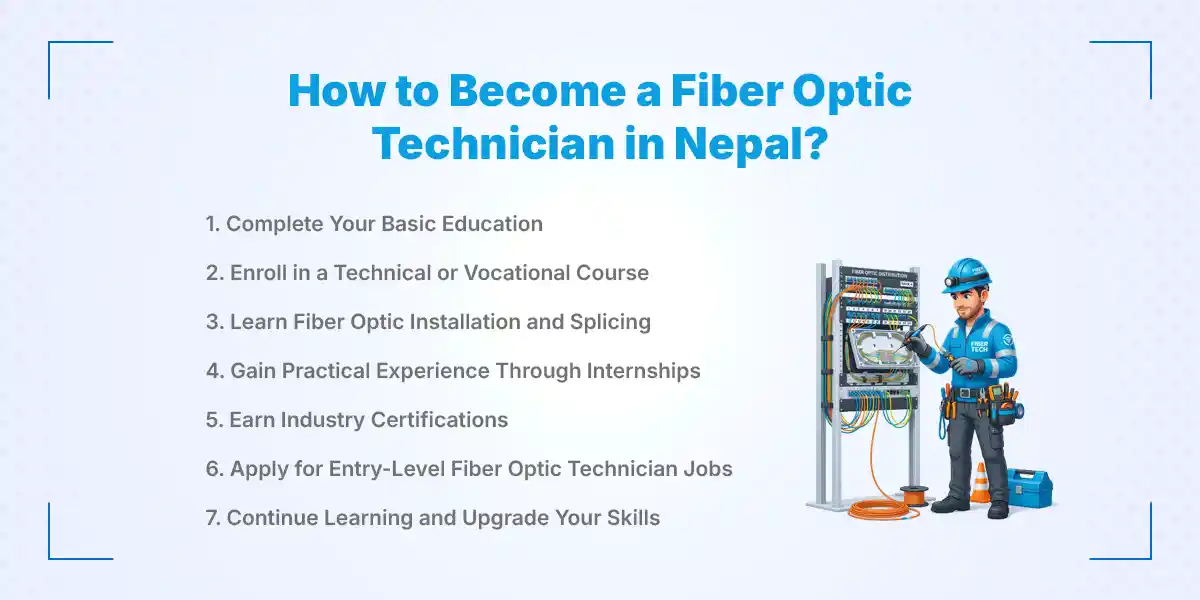
1. Complete Your Basic Education
Start by completing your SEE, as it is the minimum qualification for most technical training programs. Studying Science or a technical stream in +2 can provide a stronger foundation in mathematics, physics, and electronics. These subjects make it easier to understand fiber optic systems and networking concepts. A solid educational background also helps you qualify for advanced technical courses.
2. Enroll in a Technical or Vocational Course
Join a diploma or vocational program in electrical engineering, electronics, telecommunications, or networking. CTEVT-affiliated institutions and technical training centers offer courses that match industry requirements. These programs combine classroom learning with practical exercises. Completing a recognized course improves your chances of getting hired.
3. Learn Fiber Optic Installation and Splicing
Develop practical skills in fiber cable installation, splicing, termination, and testing. Learn how to use equipment such as fusion splicers, optical power meters, and OTDR devices. Practice reading network diagrams and following installation standards. Strong technical skills are essential for performing quality work in the field.
4. Gain Practical Experience Through Internships
Apply for internships or trainee positions with telecommunications companies or Internet Service Providers. Hands-on experience helps you understand real-world installation, maintenance, and troubleshooting procedures. It also improves your confidence in using professional tools and equipment. Many employers prefer candidates with practical field experience.
5. Earn Industry Certifications
Complete fiber optic certification programs to validate your technical knowledge and practical skills. Certifications demonstrate your commitment to professional development and industry standards. They can make your resume more competitive when applying for jobs. Employers often give preference to certified candidates during recruitment.
6. Apply for Entry-Level Fiber Optic Technician Jobs
Begin your career by applying for junior or entry-level technician positions with telecom companies, ISPs, and engineering firms. Prepare a professional resume that highlights your education, training, certifications, and practical experience. Continue improving your interview and communication skills throughout the job search. Entry-level roles provide valuable experience for future career advancement.
7. Continue Learning and Upgrade Your Skills
Technology in the telecommunications industry changes rapidly, so continuous learning is essential. Attend advanced training programs, workshops, and certification courses to stay updated with new fiber optic technologies. Develop additional networking and troubleshooting skills to expand your expertise. Ongoing professional development can lead to higher-paying positions and leadership roles.
What Does a Fiber Optic Technician Do?
A Fiber Optic Technician installs, tests, repairs, and maintains fiber optic cables and communication networks to ensure fast and reliable internet and data transmission. Their daily responsibilities include installing fiber optic cables, performing cable splicing and termination, testing network performance, troubleshooting connectivity issues, repairing damaged fiber lines, and maintaining communication infrastructure.
They also use specialized tools to identify network faults, follow safety standards during installation and maintenance, and prepare technical reports after completing projects or repairs. Their work helps telecommunications companies, Internet Service Providers (ISPs), and businesses deliver stable and uninterrupted network services.
Best Places to Find Fiber Optic Technician Jobs in Nepal
You can find Fiber Optic Technician jobs in Nepal through several online platforms, company career pages, and professional networks. The best places to search include:
- Kumari Job – One of Nepal's leading job portals with regular Fiber Optic Technician and telecom job vacancies.
- LinkedIn Jobs – Search for technician roles, connect with recruiters, and follow telecommunications companies for new openings.
- Telecom Company Career Pages – Check the official websites of companies like Nepal Telecom and Ncell for direct job announcements.
- Internet Service Provider (ISP) Websites – ISPs such as WorldLink, Vianet, DishHome Fibernet, Subisu, CG Net, and Classic Tech frequently recruit Fiber Optic Technicians.
- Engineering and Infrastructure Companies – Companies involved in telecom network installation and infrastructure development often hire fiber optic professionals.
- Facebook Job Groups – Join Nepal-based job groups where employers regularly post technician vacancies.
- Professional Networking – Attend career fairs, technical training programs, and industry events to connect with employers and learn about upcoming job opportunities.
Salary of a Fiber Optic Technician in Nepal
The salary of a Fiber Optic Technician in Nepal depends on experience, technical skills, certifications, employer, and project complexity. Technicians working for established telecommunications companies and Internet Service Providers (ISPs) generally earn higher salaries and receive better employment benefits than those working for smaller contractors.
- Entry-Level Salary (0–2 years): NPR 20,000–35,000 per month
- Mid-Level Salary (2–5 years): NPR 35,000–60,000 per month
- Senior-Level Salary (5+ years): NPR 60,000–90,000+ per month
- Freelance and Contract Earnings: NPR 1,500–5,000+ per day or project-based, depending on the scope of work and experience.
- Factors Affecting Salary: Experience, technical expertise, certifications, employer, location, and the complexity of fiber optic installation and maintenance projects.
- Employee Benefits: Many employers offer benefits such as Provident Fund (PF), festival bonuses, paid leave, medical insurance, overtime pay, and technical training opportunities.
Career Growth Opportunities
A career as a Fiber Optic Technician in Nepal offers strong long-term growth as the telecommunications and broadband industry continues to expand. With experience, advanced technical skills, and professional certifications, you can progress into higher-paying technical, supervisory, and management roles.
- Senior Fiber Optic Technician – Lead installation, maintenance, and troubleshooting projects while mentoring junior technicians.
- Network Engineer – Design, manage, and optimize fiber optic and communication networks for organizations and service providers.
- Telecom Engineer – Plan, develop, and maintain telecommunications infrastructure and network systems.
- Fiber Network Supervisor – Oversee field technicians, coordinate installation projects, and ensure quality and safety standards are met.
- Field Operations Manager – Manage field operations, project schedules, technical teams, and customer service delivery.
- Self-Employment and Contracting Opportunities – Start your own fiber optic installation and maintenance business or work as an independent contractor for telecom companies, ISPs, and infrastructure projects.
Why Is Fiber Optic Technology Important in Nepal?
Fiber optic technology is important in Nepal because it provides the fast, reliable, and high-capacity communication networks needed to support digital services, businesses, and economic growth. As internet usage continues to increase, fiber optic infrastructure plays a vital role in expanding broadband access and improving connectivity across the country.
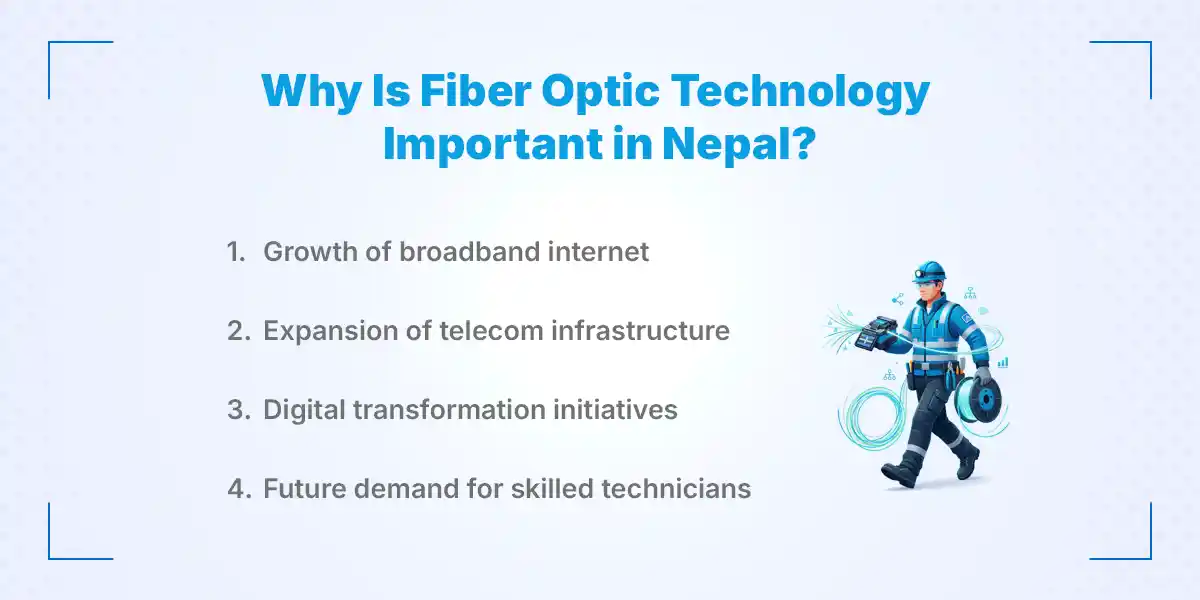
1. Growth of Broadband Internet
The demand for high-speed broadband internet is increasing rapidly in Nepal. Fiber optic networks provide faster speeds, greater reliability, and better performance than traditional cable systems. They support online learning, remote work, digital banking, and video streaming without significant interruptions. This growing demand has increased the need for skilled Fiber Optic Technicians.
2. Expansion of Telecom Infrastructure
Telecommunications companies and Internet Service Providers (ISPs) are expanding fiber optic networks throughout Nepal. New infrastructure projects require technicians to install, maintain, and upgrade communication systems. Expanding coverage also improves internet access in rural and underserved areas. This creates more employment opportunities for qualified professionals.
3. Digital Transformation Initiatives
Nepal's digital transformation depends on reliable and high-speed communication networks. Fiber optic technology supports e-government services, cloud computing, online education, healthcare, and digital businesses. Strong network infrastructure improves productivity and service delivery across multiple industries. As digital adoption grows, the importance of fiber optic networks continues to increase.
4. Future Demand for Skilled Technicians
The continued growth of fiber optic infrastructure will increase the demand for trained technicians in Nepal. Employers are looking for professionals who can install, troubleshoot, and maintain advanced communication networks. Technicians with practical experience and industry certifications will have better career opportunities. This makes fiber optic technology a promising field for long-term career growth.
Conclusion
Becoming a Fiber Optic Technician in Nepal is an excellent career choice for individuals interested in telecommunications and networking. With the right education, technical training, practical experience, and industry certifications, you can build a stable and rewarding career in a rapidly growing industry. As broadband internet and digital infrastructure continue to expand across Nepal, the demand for skilled Fiber Optic Technicians is expected to increase, creating more employment and career advancement opportunities.
If you are ready to start your career, focus on developing practical skills, gaining hands-on experience, and staying updated with the latest fiber optic technologies. You can also explore the latest Fiber Optic Technician jobs on Kumari Job to find opportunities that match your qualifications and career goals.
Frequently Asked Questions
Submit your comments

Get Our App On



What Is the Japan SSW Working Visa? Skill Test Dates and Language Requirements
VIEW DETAILS
Top 10 Highest Paying NGO & INGO Jobs in Nepal (With Salary)
VIEW DETAILS
What Is the Salary of a Flight Dispatcher in Nepal?
VIEW DETAILS
What Is the Salary of a Solar Technician in Nepal?
VIEW DETAILS


Loading Comments...