


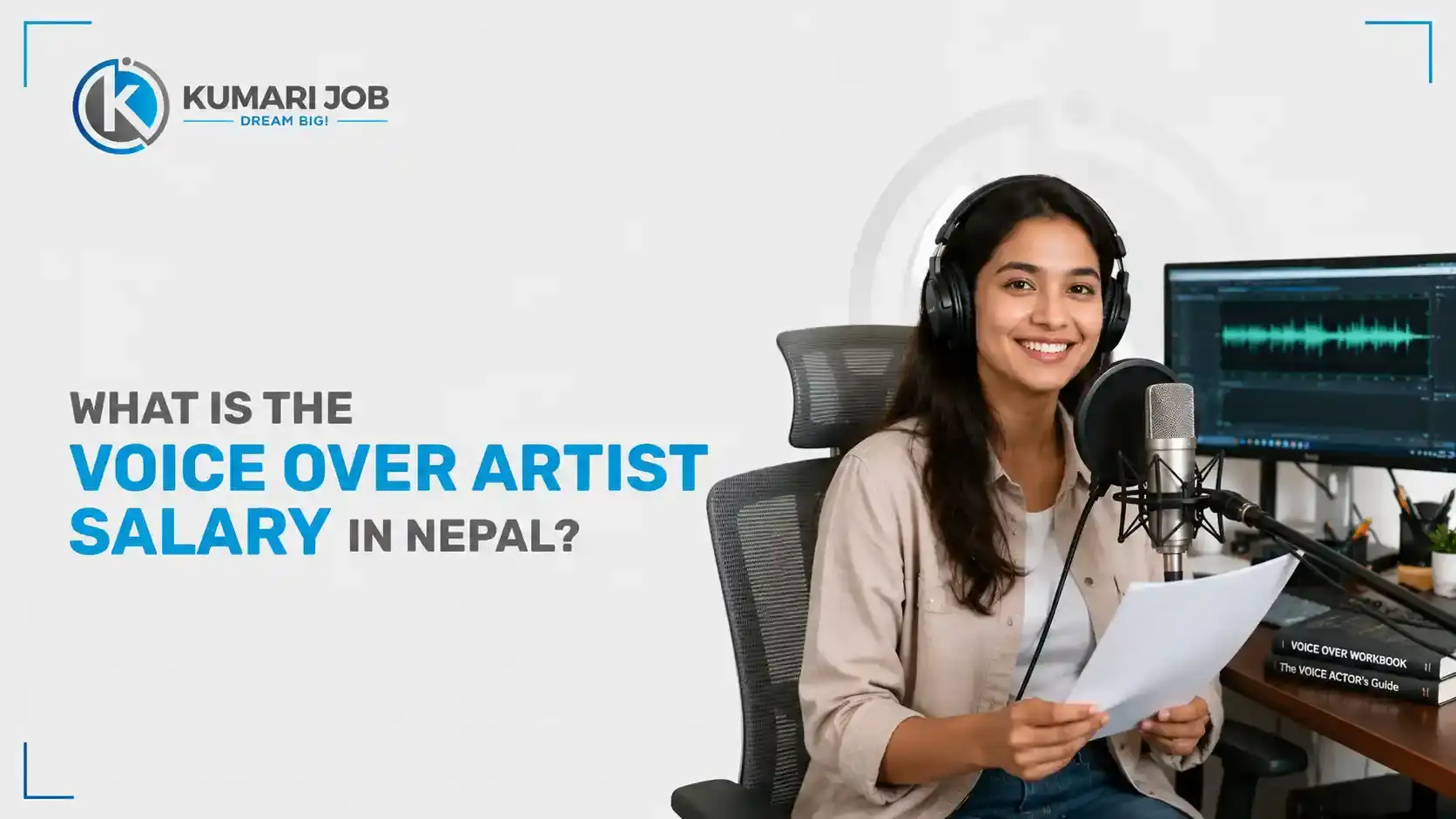

Voice-over work has quietly become one of Nepal's more flexible creative careers, showing up in advertisements, YouTube videos, films, radio spots, podcasts, e-learning courses, and corporate training content. Anyone considering this path usually lands on the same practical question fast: how much can a voice-over artist actually earn in Nepal, and is it enough to build a real income from.
Voice-over income in Nepal is not fixed, since most artists are paid per project, session, or finished audio minute rather than a flat monthly salary. Earnings vary based on experience level, project type, recording quality, language skills, and whether the artist works freelance or for an organization. This guide breaks down realistic income ranges, the factors that push rates higher, the skills and equipment the work requires, and where to find genuine voice-over opportunities in Nepal.
In this blog
What Does a Voice Over Artist Do?
A voice-over artist is a performer who records spoken audio for advertisements, videos, animations, and other media without appearing on camera. Their work covers everything from a fifteen-second radio ad to a full-length e-learning course, and the tone required can shift dramatically from one project to the next. Most voice-over artists in Nepal work across several formats rather than sticking to just one type of project.
Common responsibilities include:
- Recording voice for advertisements and commercials
- Narrating videos and documentaries
- Providing character voices for animation and film
- Recording e-learning courses and training materials
- Creating voice content for YouTube channels and social media
- Recording IVR systems and corporate audio messages
It helps to understand how this role differs from related ones. A voice actor typically performs a character with emotional range, most often for animation, games, or dubbing, while a voice-over artist more often narrates or reads scripted commercial content. A radio presenter works live or semi-live with an audience-facing personality, and a narrator focuses specifically on storytelling for documentaries, audiobooks, or long-form content. Many professionals move between these categories once they build experience.
How Much Is the Voice Over Artist Salary in Nepal?
Voice-over artists in Nepal typically earn between NPR 1,500 and NPR 15,000 per project, with monthly income ranging roughly from NPR 15,000 for beginners to NPR 80,000 or more for established professionals with steady client work. There is no single fixed salary in this field because most artists are paid per project, per recording session, or per finished audio minute rather than drawing a standard monthly paycheck. Earnings depend heavily on how many projects an artist completes each month and the type of client they work with.
Estimated income by experience level:
- Entry-level voice-over artists: roughly NPR 1,500–3,500 per project, or NPR 15,000–25,000 per month with consistent small projects
- Mid-level voice-over artists: roughly NPR 3,500–7,000 per project, or NPR 25,000–45,000 per month
- Experienced voice-over artists: roughly NPR 7,000–15,000+ per project, or NPR 45,000–80,000+ per month with a steady client base
- Freelance voice-over artists: income varies the most, since it depends entirely on the number and size of projects taken on in a given month
Artists who work full-time for a media company, agency, or production house usually receive a more predictable monthly salary, while freelancers trade that stability for the potential to earn more during high-demand months. A freelancer juggling five or six projects in a busy month can easily out-earn a salaried employee, but income also tends to dip sharply during slower months. These figures are estimated market ranges based on freelance and creative-industry pay patterns in Nepal, not guaranteed rates, and actual pay depends on the specific client, project scope, and the artist's negotiating experience.
What Factors Affect Voice Over Artist Salary in Nepal?
Voice-over pay in Nepal is shaped by a combination of skill, project type, and business factors rather than experience alone. Two artists with similar years in the field can earn very different amounts depending on their reputation, language range, and the kind of clients they attract. Understanding these factors makes it easier to identify exactly what to improve to earn more.
Key factors include:
- Experience and professional reputation
- Type of voice-over project (commercial, e-learning, animation, etc.)
- Language and accent range
- Voice quality and acting ability
- Recording and audio-editing skills
- Project duration and script length
- The specific client or employer
- Studio recording versus home recording setup
- Freelance work versus full-time employment
- Commercial usage rights and licensing requirements
- Turnaround time and overall project complexity
How Much Can a Beginner Voice Over Artist Earn in Nepal?
A beginner voice-over artist in Nepal can typically expect to earn between NPR 1,500 and NPR 3,500 per project while building a track record. Early opportunities are often smaller in scope, such as short social media clips, local ad reads, or simple e-learning narration. Income at this stage depends less on skill alone and more on how consistently a beginner can find and complete projects.
Beginners commonly find opportunities through:
- Small business advertisements and local commercial spots
- Short YouTube or social media narration projects
- Internships or training programs with media and production houses
- Per-project freelance gigs on local and international platforms
Building a strong demo reel early is one of the fastest ways for beginners to access better-paying projects, since most clients decide within seconds of listening whether an artist's voice fits their brand. A demo reel with two or three well-produced samples across different tones, such as commercial, narrative, and corporate, tends to open more doors than a long, unfocused recording. Early on, it is more valuable to prioritize gaining experience and building a portfolio than to fixate on rates, since a strong body of work is what eventually justifies charging higher prices.
How Can You Become a Voice Over Artist in Nepal?
Becoming a voice-over artist in Nepal starts with developing strong vocal control and then building a portfolio that proves it. Most successful artists follow a similar sequence: they train the voice, learn basic recording skills, build proof of their work, and then actively pursue opportunities. Skipping any one of these steps usually slows down how quickly an artist starts earning consistent income.
1. Build Your Voice and Delivery Skills
Start by developing voice clarity and clean pronunciation, since unclear diction is one of the fastest ways to lose a client's interest. Practice voice modulation and expression to handle different tones, from energetic commercial reads to calm narration. Basic acting and narration techniques help bring scripts to life instead of sounding flat or robotic. Strong Nepali and English speaking skills widen the range of projects an artist can realistically take on.
2. Learn Basic Recording and Editing
Learning basic audio recording and editing is essential, even for artists who eventually work with a professional studio. Understanding how to clean up background noise, adjust levels, and export files correctly makes an artist far easier to work with on tight deadlines. This skill also allows beginners to record test auditions and demo material without waiting on outside help. Clients frequently favor artists who can deliver broadcast-ready audio without back-and-forth revisions.
3. Create a Demo Reel and Portfolio
A professional voice-over demo reel is the single most important marketing tool in this field, since most clients judge an artist within the first few seconds of listening. Building an online portfolio that showcases a few strong, varied samples makes it easy for potential clients to picture the artist's voice on their project. Starting with small projects, even unpaid or low-paid ones early on, helps build real material for this portfolio. A portfolio that keeps growing over time signals reliability, which matters as much to clients as raw vocal talent.
4. Start Applying and Networking
Once the fundamentals are in place, actively applying for voice-over and media-related opportunities is what turns skill into income. Networking with production houses, advertising agencies, content creators, and businesses often surfaces opportunities that never get posted publicly. Consistent outreach, rather than a single application, is usually what leads to the first paid project. From there, referrals and repeat clients tend to become the most reliable source of ongoing work.
What Skills Do Voice Over Artists Need?
Voice-over artists need a combination of vocal technique, technical audio skills, and professional discipline to succeed in Nepal's competitive creative market. Vocal ability alone rarely leads to consistent income without the supporting skills that make an artist easy and reliable to work with. Clients tend to return to artists who combine strong performance with dependable delivery.
Core skills include:
- Clear pronunciation
- Voice modulation
- Acting and emotional expression
- Good communication with clients and directors
- Language proficiency in Nepali, English, or both
- Strong reading and script interpretation skills
- Proper microphone technique
- Basic audio editing ability
- Creativity in interpreting scripts
- Time management for deadlines
- Ability to follow direction and adjust quickly
- Adaptability across different voice styles and tones
Where Can Voice Over Artists Work in Nepal?
Voice-over artists in Nepal can find work across a wide range of media, advertising, and digital content organizations. The field has grown well beyond traditional radio and television as digital content, e-learning, and online marketing have expanded. This variety means artists rarely need to depend on a single type of client for steady work.
Common places to work include:
- Advertising agencies
- Radio stations
- Television and film production companies
- Animation studios
- YouTube channels
- Podcast production companies
- E-learning companies
- Corporate organizations
- Digital marketing agencies
- Freelance marketplaces
- Media and entertainment companies
What Are the Highest-Paying Voice Over Opportunities in Nepal?
The highest-paying voice-over opportunities in Nepal typically involve commercial advertisements, corporate narration, and specialized dubbing or animation work. These project types generally pay more because they involve wider audience reach, longer usage rights, or highly specialized delivery. Artists who consistently land these projects tend to have both strong vocal range and a proven professional track record.
Top-paying opportunity types include:
- Commercial advertisements
- Corporate narration
- Film and animation voice acting
- Documentary narration
- E-learning course narration
- Professional dubbing
- Long-form audiobook narration
- Specialized technical narration
Specialized skills and commercial usage rights are two of the biggest levers for increasing pay in this field. A national advertisement with broad broadcast rights typically pays far more than a short internal training video, since the client is paying for both the performance and the extended reach of the content. Artists who invest in a specific niche, such as pediatric-friendly narration or technical industry knowledge, often find it easier to charge premium rates within that niche.
What Equipment Does a Voice Over Artist Need?
A voice-over artist needs reliable recording equipment and a quiet space to produce broadcast-ready audio consistently. Poor audio quality is one of the fastest ways to lose repeat clients, regardless of how strong the performance is. Investing in the right basics early makes a bigger difference than chasing expensive gear before it is needed.
Essential equipment includes:
- A quality microphone
- Headphones for accurate monitoring
- An audio interface, where required for the microphone setup
- A pop filter to reduce harsh sounds
- A quiet, controlled recording space
- A microphone stand for consistent positioning
- Recording and editing software
- Basic acoustic treatment to reduce echo and background noise
Beginners do not need a professional studio setup to start. A simple home setup with a decent microphone, a quiet room, and basic acoustic treatment such as blankets or foam panels is enough to produce usable auditions and small paid projects, with equipment upgrades coming naturally as workload and income grow.
Where Can You Find Voice Over Artist Jobs in Nepal?
The most effective way to find voice-over jobs in Nepal is to combine regular job portal searches with direct outreach to media and advertising companies. Relying on a single platform tends to limit opportunities, since many voice-over gigs are shared through informal networks rather than public listings. A consistent, multi-channel search produces far more leads than checking one source occasionally.
Ways to find voice-over opportunities:
- Check job portals regularly for creative and media roles
- Search advertising and media companies directly
- Explore production houses and animation companies
- Follow relevant company career pages
- Network with content creators and agencies
- Search freelance marketplaces for voice-over listings
- Create job alerts for media and creative roles
- Check KumariJob regularly for relevant creative, media, and communication vacancies
What Is the Career Growth for Voice Over Artists in Nepal?
Career growth for voice-over artists in Nepal typically moves from small entry-level projects toward specialized, higher-paying work as experience and reputation build. Most artists do not follow a single fixed ladder, since the field rewards specialization and networking as much as raw years of experience. This makes it possible to build a strong career even without a traditional employer-based promotion path.
A typical progression includes:
- Entry-level voice-over artist
- Freelance voice artist
- Professional voice actor
- Commercial voice-over specialist
- Dubbing artist
- Narrator
- Voice-over trainer
- Studio or production professional
Experience builds the technical foundation, but specialization, a strong portfolio, and professional networking are usually what determine how far and how fast a voice-over artist's career grows. Artists who consistently build relationships with agencies and production houses tend to move into specialized or training roles faster than those who rely solely on public job listings.
Conclusion
Voice-over income in Nepal comes down to a combination of experience, project type, skill level, language range, and whether an artist works freelance or full-time, which means there is no single number that applies to everyone in this field. What consistently separates higher earners from beginners is a strong demo reel, dependable recording quality, and the discipline to keep improving both vocal and technical skills over time.
Building real income in this field takes practical experience more than formal credentials, so the fastest path forward is simply taking on projects, refining the portfolio, and staying visible to the right clients. Explore relevant voice-over, media, creative, and communication jobs on KumariJob to find opportunities and start building your career.
Frequently Asked Questions
Submit your comments

Get Our App On



What Is the Average Audiologist Salary in Nepal in 2026?
VIEW DETAILS
What Should You Do to Recover After a Bad Job Interview?
VIEW DETAILS
What Are the 6 Life Skills You Need to Succeed at Work?
VIEW DETAILS
How to Use ChatGPT for Job Applications in Nepal?
VIEW DETAILS


Loading Comments...