


Psychiatrist salary in Nepal has become a popular topic among medical students and healthcare professionals. Psychiatrists are medical doctors who diagnose and treat mental health conditions such as anxiety, depression, stress disorders, and addiction problems. As mental health awareness continues to grow in Nepal, the demand for qualified psychiatrists is also increasing in hospitals, clinics, rehabilitation centers, and private practices.
In recent years, the psychiatrist's salary in Nepal has increased because more people are seeking mental health treatment and counseling services. Government hospitals, private healthcare institutions, NGOs, and telemedicine platforms are actively hiring mental health specialists. Experienced psychiatrists with strong clinical skills, specialization, and private practice experience can earn high monthly incomes and enjoy long-term career stability in Nepal’s growing healthcare sector.
In this blog
How Much Is the Psychiatrist's Salary in Nepal?
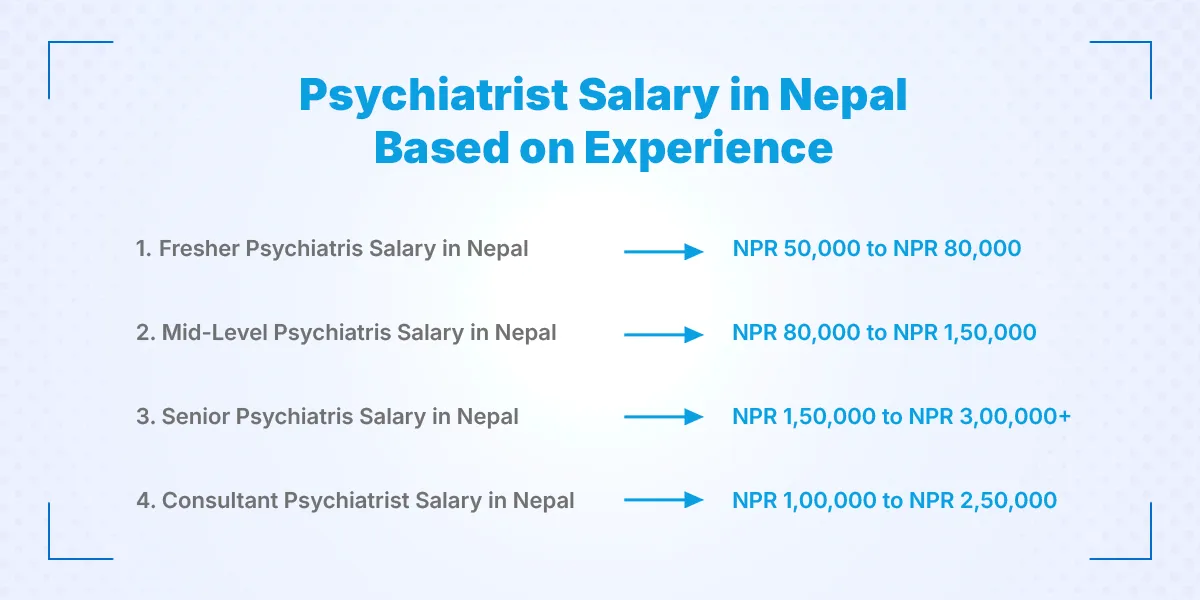
A psychiatrist's salary in Nepal depends on experience, workplace, specialization, and location. On average, psychiatrists in Nepal can earn between NPR 50,000 and NPR 3,00,000 or more per month. Fresh graduates usually start with lower salaries, while experienced psychiatrists working in reputed hospitals or private practice can earn significantly higher incomes. Entry-level psychiatrists in Nepal generally earn around NPR 50,000 to NPR 80,000 per month in hospitals and healthcare institutions. Mid-level professionals with several years of experience may earn between NPR 80,000 and NPR 1,50,000 monthly. Senior psychiatrists, consultants, and specialists with strong reputations often earn above NPR 2,00,000 per month through hospital salaries, consultation fees, and private clinics.
Psychiatrist earnings also vary between the government and private sectors. Government hospitals usually provide stable salaries, allowances, and long-term job security, while private hospitals may offer higher pay based on patient flow and expertise. Psychiatrists working in major cities like Kathmandu, Pokhara, and Lalitpur often earn more compared to smaller towns because of higher demand for mental health services and better healthcare facilities. Specialization also plays an important role in a psychiatrist's salary in Nepal. Professionals focusing on child psychiatry, addiction psychiatry, trauma counseling, or neuropsychiatry may receive higher salaries due to the limited number of specialists in these fields. Psychiatrists involved in teaching, telemedicine, or private counseling services can also increase their monthly income through multiple revenue sources.
Psychiatrist Salary in Nepal Based on Experience
Experience is one of the biggest factors that affect a psychiatrist's salary in Nepal. As psychiatrists gain clinical expertise, patient trust, and specialization, their earning potential increases significantly. Professionals working in reputed hospitals, medical colleges, and private clinics usually earn higher salaries with more years of experience.
1. Fresher Psychiatrist Salary in Nepal
Fresher psychiatrists in Nepal usually earn between NPR 50,000 and NPR 80,000 per month at the beginning of their careers. Most entry-level psychiatrists work in hospitals, rehabilitation centers, or mental health clinics after completing their MD in Psychiatry. Their salary depends on the healthcare institution, city, and level of practical training.
New psychiatrists often focus on building clinical experience and improving patient management skills during the first few years. Government hospitals may offer stable income and additional benefits, while private hospitals can provide faster career growth opportunities. Many fresh graduates also work under senior psychiatrists to gain hands-on experience in diagnosis and counseling.
2. Mid-Level Psychiatrist Salary
Mid-level psychiatrists in Nepal can earn around NPR 80,000 to NPR 1,50,000 per month. These professionals usually have several years of experience in treating mental health conditions and handling patients independently. Their higher salary reflects stronger clinical knowledge, communication skills, and a growing professional reputation.
Psychiatrists at this stage may work in private hospitals, medical colleges, NGOs, or telemedicine platforms. Some professionals also begin private consultations alongside full-time jobs to increase their monthly income. Demand for experienced psychiatrists continues to grow as mental health awareness expands across Nepal.
3. Senior Psychiatrist Earnings in Nepal
Senior psychiatrists in Nepal can earn between NPR 1,50,000 to NPR 3,00,000 or more per month. These professionals usually have extensive experience, specialized expertise, and strong patient networks. Senior psychiatrists often hold leadership roles in hospitals, academic institutions, or mental health organizations.
Many experienced psychiatrists generate additional income through private practice, counseling services, teaching, and training programs. Their earnings may increase further if they specialize in child psychiatry, addiction treatment, or trauma therapy. In major cities like Kathmandu, highly reputed psychiatrists can earn significantly higher consultation fees.
4. Consultant Psychiatrist Salary in Nepal
Consultant psychiatrists in Nepal generally earn between NPR 1,00,000 to NPR 2,50,000 per month, depending on their expertise and workplace. These professionals provide specialized mental health treatment, supervise junior doctors, and manage complex psychiatric cases. Consultant psychiatrists working in top private hospitals and medical colleges often receive competitive salaries and extra incentives.
Many consultant psychiatrists also operate private clinics or online consultation services to expand their income sources. Their earnings depend on patient flow, specialization, years of experience, and professional reputation. Psychiatrists with international fellowships or advanced certifications may receive higher-paying opportunities in Nepal and abroad.
Psychiatrist Salary in Nepal by Workplace
A psychiatrist's salary in Nepal varies widely based on the workplace and type of healthcare institution. Different sectors offer different salary structures, benefits, career growth opportunities, and patient exposure. Psychiatrists working in multiple sectors at the same time can also increase their overall monthly income.
1. Government Hospitals
Government hospitals in Nepal offer stable salaries, job security, and long-term career benefits for psychiatrists. Entry-level psychiatrists in government institutions may earn around NPR 50,000 to NPR 1,00,000 per month, while experienced professionals can earn much higher with allowances and promotions. These hospitals also provide opportunities to work with a large number of patients and gain broad clinical experience.
Psychiatrists in government hospitals often receive additional benefits such as pension facilities, paid leave, and professional development opportunities. However, workload and patient pressure can be high because of the shortage of mental health professionals in Nepal. Many psychiatrists choose government jobs for stability and public healthcare experience.
2. Private Hospitals
Private hospitals usually offer higher psychiatrist salaries in Nepal compared to government institutions. Depending on experience and reputation, psychiatrists in private hospitals may earn between NPR 80,000 and NPR 3,00,000 or more per month. Salary packages often depend on patient flow, specialization, and hospital reputation.
Private healthcare institutions focus heavily on specialized mental health services and patient satisfaction. Experienced psychiatrists with strong communication and counseling skills can negotiate better salaries and incentives. Hospitals in cities like Kathmandu and Pokhara generally provide better income opportunities due to higher demand for mental healthcare services.
3. Medical Colleges
Psychiatrists working in medical colleges earn income through clinical practice, teaching, and research activities. Salaries in medical colleges generally range from NPR 70,000 to NPR 2,00,000 per month based on academic position and experience. Professors and senior consultants may earn additional income through academic programs and training sessions.
Medical colleges provide strong career growth opportunities for psychiatrists interested in education and research. Many professionals prefer academic careers because they combine patient care with teaching responsibilities. Research publications and advanced qualifications can also improve salary growth in this sector.
4. Mental Health Centers and Rehabilitation Clinics
Mental health centers and rehabilitation clinics hire psychiatrists to treat patients with addiction, trauma, depression, anxiety, and behavioral disorders. Salaries in these institutions usually range from NPR 60,000 to NPR 1,50,000 per month, depending on experience and patient load. Specialized rehabilitation centers may offer higher earnings for psychiatrists with expertise in addiction psychiatry.
These workplaces allow psychiatrists to focus closely on long-term mental health treatment and counseling. Professionals working in rehabilitation clinics often gain strong experience in patient recovery and therapy management. Demand for psychiatrists in this sector continues to rise as awareness of addiction and mental wellness increases in Nepal.
5. NGOs and International Organizations
NGOs and international organizations working in mental health programs also hire psychiatrists in Nepal. Salaries in this sector can range from NPR 80,000 to NPR 2,50,000 per month, depending on project size, funding, and international partnerships. Some organizations may also provide travel allowances, insurance, and training opportunities.
Psychiatrists in NGOs often work on community mental health projects, disaster response programs, and awareness campaigns. International organizations usually seek experienced professionals with strong communication and research skills. This sector can provide valuable exposure to public health and global mental health initiatives.
6. Private Practice and Counseling Centers
Private practice is one of the highest-earning career paths for psychiatrists in Nepal. Experienced psychiatrists with established reputations can earn between NPR 1,00,000 to NPR 5,00,000 or more per month through consultation fees and counseling services. Income depends heavily on patient trust, clinic location, and specialization.
Many psychiatrists open private clinics after gaining experience in hospitals or medical colleges. Counseling centers and online consultation services also create additional income opportunities. In urban areas, private mental healthcare services are growing rapidly due to increasing awareness and demand for psychiatric treatment.
What Factors Affect a Psychiatrist's Salary in Nepal?
Several factors affect a psychiatrist's salary in Nepal, including education, specialization, experience, workplace, reputation, and patient demand. Psychiatrists with advanced qualifications, strong clinical expertise, and established patient networks usually earn significantly higher salaries than entry-level professionals.
1. Educational Qualifications and Specialization
Educational qualifications directly influence psychiatrist earnings in Nepal because hospitals and healthcare institutions prefer highly trained specialists. Psychiatrists with an MBBS degree and an MD in Psychiatry generally receive better salary packages than professionals with limited specialization. Additional expertise in child psychiatry, addiction psychiatry, or neuropsychiatry can further increase earning potential.
Specialized psychiatrists are often in high demand due to the shortage of mental health experts in Nepal. Hospitals and private clinics may offer higher salaries to professionals who can handle complex psychiatric cases. Advanced training also improves career opportunities in teaching, research, and international healthcare organizations.
2. Years of Experience
Years of experience significantly affect a psychiatrist's salary in Nepal because experienced professionals develop stronger clinical and counseling skills over time. Fresh psychiatrists usually earn lower salaries, while senior psychiatrists with many years of practice can earn several lakhs per month.
Experienced psychiatrists often gain higher patient trust and better professional reputations. They may also qualify for senior positions in hospitals, medical colleges, and mental health institutions. Many senior psychiatrists increase their income through private consultations, telemedicine, and training programs.
3. Reputation and Patient Flow
Professional reputation plays a major role in determining a psychiatrist's income in Nepal. Psychiatrists who are known for effective treatment, communication skills, and patient care usually attract more patients and earn higher consultation fees.
A strong patient flow can significantly increase monthly income, especially in private practice and counseling centers. Word-of-mouth recommendations and positive treatment outcomes help psychiatrists build long-term trust with patients. Well-known psychiatrists in major cities often maintain busy schedules with high consultation demand.
4. Location and Healthcare Institution
Location affects a psychiatrist's salary in Nepal because urban healthcare centers usually offer higher pay than rural areas. Psychiatrists working in cities like Kathmandu, Pokhara, and Lalitpur generally earn more due to greater demand for mental health services.
The type of healthcare institution also impacts earnings. Private hospitals and international organizations may provide higher salaries compared to smaller clinics or public healthcare centers. Reputed hospitals often offer better facilities, incentives, and career growth opportunities for psychiatrists.
5. International Certifications and Fellowships
International certifications and fellowships can improve a psychiatrist's salary in Nepal by increasing professional credibility and expertise. Psychiatrists with global training or advanced fellowships may qualify for higher-paying positions in private hospitals, academic institutions, and international NGOs.
These certifications also help psychiatrists stay updated with modern treatment methods and global mental healthcare practices. Professionals with international exposure often gain better career opportunities both inside Nepal and abroad. Advanced credentials can also increase patient trust and consultation demand.
Why Is Psychiatry Becoming a High-Demand Career in Nepal?
Psychiatry is becoming a high-demand career in Nepal because mental health awareness is increasing rapidly, while the number of qualified psychiatrists remains limited. More people are now seeking professional treatment for stress, anxiety, depression, addiction, and other mental health conditions, creating a strong demand for skilled psychiatrists across the country.
1. Rising Awareness of Mental Health
Mental health awareness in Nepal has improved significantly in recent years due to education campaigns, social media discussions, and public health programs. People are becoming more open to discussing emotional and psychological problems instead of ignoring them.
Schools, workplaces, hospitals, and NGOs are also promoting mental wellness and counseling services. This growing awareness has increased the need for trained psychiatrists who can provide proper diagnosis and treatment. As stigma around mental health slowly decreases, more patients are visiting mental health professionals for support.
2. Increase in Stress, Anxiety, and Depression Cases
The number of people experiencing stress, anxiety, depression, and other psychological disorders is increasing in Nepal. Academic pressure, unemployment, financial problems, family issues, and social challenges have contributed to rising mental health concerns among both young people and adults.
As mental health cases continue to grow, hospitals and counseling centers require more psychiatrists to manage patient care. Many individuals now seek professional psychiatric treatment instead of relying only on informal support systems. This trend has created strong career opportunities for mental health specialists across Nepal.
3. Shortage of Qualified Psychiatrists
Nepal still has a shortage of qualified psychiatrists compared to the growing number of patients needing mental healthcare services. Many districts and rural areas lack access to experienced mental health professionals and psychiatric treatment facilities.
Because of this shortage, psychiatrists are highly valued in hospitals, rehabilitation centers, medical colleges, and private clinics. Healthcare institutions often compete to hire skilled psychiatrists by offering attractive salary packages and career benefits. The limited supply of specialists continues to increase demand for psychiatry professionals in Nepal.
4. Expanding Mental Healthcare Services
Mental healthcare services in Nepal are expanding through hospitals, rehabilitation centers, telemedicine platforms, and community health programs. Both government and private sectors are investing more resources into mental health treatment and awareness programs.
Online counseling and telepsychiatry services have also created new career opportunities for psychiatrists. In cities like Kathmandu and Pokhara, mental health clinics and counseling centers are growing rapidly to meet increasing patient demand. This expansion is making psychiatry one of the fastest-growing medical careers in Nepal.
Skills Required to Become a Successful Psychiatrist
A successful psychiatrist needs strong medical knowledge, communication abilities, emotional understanding, and patient management skills. Psychiatrists work closely with people facing mental health challenges, so they must combine clinical expertise with empathy and professional judgment to provide effective treatment and support.
1. Communication and Listening Skills
Communication and listening skills are essential for psychiatrists because they must understand patients’ emotions, thoughts, and behavioral patterns. Effective communication helps psychiatrists build trust and create a comfortable environment for patients to discuss sensitive mental health issues.
Good listening skills also improve diagnosis accuracy and treatment planning. Psychiatrists who communicate clearly can explain medical conditions, therapy options, and medications more effectively. Strong interpersonal skills help maintain positive relationships with patients and families.
2. Emotional Intelligence and Empathy
Emotional intelligence helps psychiatrists understand patients’ feelings and respond professionally during emotional situations. Empathy allows mental health professionals to support patients without being judgmental or insensitive.
Psychiatrists often work with patients experiencing anxiety, depression, trauma, addiction, or emotional stress. Showing empathy can improve patient confidence and treatment cooperation. Emotional awareness also helps psychiatrists manage difficult clinical situations more effectively.
3. Clinical Diagnosis and Treatment Planning
Clinical diagnosis and treatment planning are core skills required in psychiatry careers. Psychiatrists must identify mental health conditions accurately through patient interviews, medical history evaluation, and behavioral assessment.
After diagnosis, psychiatrists create treatment plans that may include therapy, medication, counseling, or rehabilitation support. Strong clinical decision-making skills help improve patient recovery and long-term mental wellness. Experienced psychiatrists can also handle complex psychiatric cases more efficiently.
4. Counseling and Patient Management
Counseling skills are important because psychiatrists regularly guide patients through emotional, psychological, and behavioral challenges. Effective counseling helps patients understand their mental health conditions and follow treatment recommendations properly.
Patient management skills also help psychiatrists maintain professional relationships and monitor treatment progress over time. Managing difficult cases requires patience, professionalism, and strong problem-solving abilities. Psychiatrists who handle patients respectfully often build stronger professional reputations.
5. Research and Analytical Abilities
Research and analytical skills help psychiatrists stay updated with modern mental health treatments, medications, and psychiatric practices. Mental healthcare continues to evolve, so psychiatrists must understand new research findings and clinical developments.
Analytical thinking also improves diagnosis accuracy and treatment effectiveness. Psychiatrists working in medical colleges, research institutions, or international organizations often use research skills for academic studies and mental health projects. Strong analytical abilities support better clinical decisions and patient outcomes.
Educational Requirements to Become a Psychiatrist in Nepal
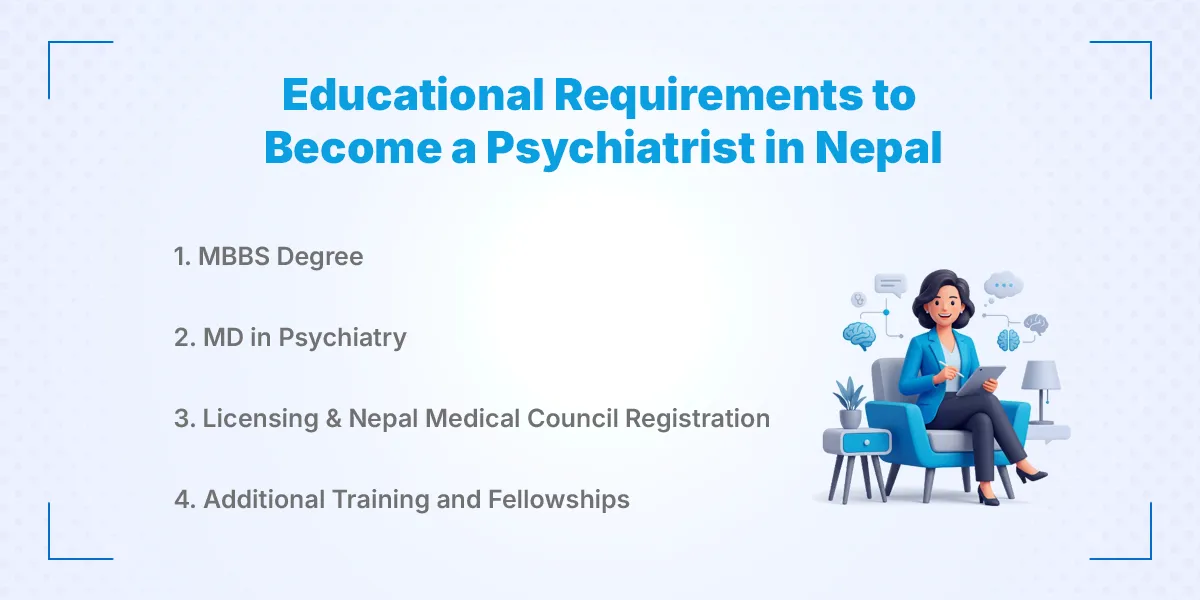
Becoming a psychiatrist in Nepal requires advanced medical education, clinical training, and professional licensing. Students must complete an MBBS degree, specialize in psychiatry through postgraduate study, and obtain official registration to practice legally as a mental health specialist.
1. MBBS Degree
An MBBS degree is the first and most important step to becoming a psychiatrist in Nepal. Students must complete higher secondary education in the science stream with strong academic performance in biology, chemistry, and physics before applying for medical entrance examinations.
The MBBS program usually takes around five and a half years, including internship training. During this period, students learn human anatomy, medicine, surgery, pharmacology, and clinical patient care. A strong medical foundation is necessary before specializing in psychiatry and mental health treatment.
2. MD in Psychiatry
After completing MBBS, students must pursue an MD in Psychiatry to become qualified psychiatrists. This postgraduate specialization focuses on diagnosing, treating, and managing mental health disorders such as depression, anxiety, addiction, schizophrenia, and behavioral conditions.
The MD in Psychiatry program generally takes three years and includes both theoretical and clinical training. Students work directly with patients in hospitals and mental health departments under experienced psychiatrists. Advanced psychiatric education improves clinical expertise, counseling abilities, and treatment planning skills.
3. Licensing and Nepal Medical Council Registration
Psychiatrists in Nepal must obtain official registration from the Nepal Medical Council to practice legally. Medical graduates are required to pass licensing procedures and meet professional standards before working in hospitals, clinics, or private practice.
Nepal Medical Council registration verifies that the psychiatrist has completed approved medical education and clinical training. Without proper licensing, medical professionals cannot legally provide psychiatric treatment or prescribe medications in Nepal. Registration also helps maintain professional ethics and healthcare quality standards.
4. Additional Training and Fellowships
Additional training and fellowships can improve career opportunities and a psychiatrist's salary in Nepal. Many psychiatrists pursue advanced specialization in areas such as child psychiatry, addiction psychiatry, trauma therapy, geriatric psychiatry, or neuropsychiatry.
International fellowships and professional workshops also help psychiatrists learn modern mental healthcare techniques and global treatment practices. Advanced certifications can increase job opportunities in private hospitals, academic institutions, NGOs, and international healthcare organizations. Specialized training often leads to a higher professional reputation and better earning potential.
Career Scope and Job Opportunities for Psychiatrists in Nepal
The career scope for psychiatrists in Nepal is growing rapidly because mental health services are expanding across hospitals, educational institutions, rehabilitation centers, and digital healthcare platforms. Qualified psychiatrists can work in both public and private sectors while building stable, respected, and high-paying medical careers.
1. Hospital-Based Careers
Hospitals are one of the largest employers of psychiatrists in Nepal. Government hospitals, private healthcare institutions, and specialized mental health hospitals regularly hire psychiatrists to diagnose and treat patients with mental health conditions.
Hospital-based careers provide stable salaries, clinical exposure, and long-term professional growth opportunities. Psychiatrists working in hospitals often handle cases related to depression, anxiety, addiction, trauma, and behavioral disorders. Experienced professionals may also move into leadership and consultant positions within healthcare institutions.
2. Academic and Teaching Opportunities
Psychiatrists in Nepal can also build careers in medical colleges and academic institutions. Teaching opportunities are available for professionals interested in training MBBS students, postgraduate psychiatry students, and healthcare workers.
Academic careers combine teaching, clinical practice, and research responsibilities. Senior psychiatrists working in medical colleges often receive additional benefits through research projects, seminars, and academic publications. Teaching roles also help psychiatrists strengthen their professional reputation in the medical field.
3. Research and Mental Health Advocacy
Research and mental health advocacy are becoming important career paths for psychiatrists in Nepal. Many organizations and healthcare institutions are focusing on mental health awareness, suicide prevention, addiction recovery, and community mental wellness programs.
Psychiatrists involved in research contribute to improving psychiatric treatment methods and public healthcare policies. NGOs and international organizations often hire mental health professionals for awareness campaigns and community-based mental health projects. Research careers also create opportunities for international collaboration and professional development.
4. Telemedicine and Online Consultation
Telemedicine has created new job opportunities for psychiatrists in Nepal by making mental healthcare services accessible through digital platforms. Online consultation services allow psychiatrists to treat patients remotely through video calls and virtual counseling sessions.
Many psychiatrists now provide telepsychiatry services alongside hospital jobs or private practice. This career option increases flexibility and allows professionals to reach patients in rural and remote areas. Growing internet access and digital healthcare awareness are expanding online mental health services throughout Nepal.
5. International Career Opportunities
Qualified psychiatrists from Nepal may also pursue international career opportunities in countries facing shortages of mental health professionals. Advanced education, clinical experience, and international certifications can improve chances of working abroad in hospitals, universities, and healthcare organizations.
Countries with strong healthcare systems often seek experienced psychiatrists for mental health treatment and research programs. International careers may offer higher salaries, advanced technology exposure, and professional networking opportunities. Psychiatrists with strong academic records and specialized expertise generally have better global career prospects.
Future Scope of Psychiatry in Nepal
The future scope of psychiatry in Nepal is highly promising because mental health awareness, healthcare investment, and patient demand are increasing every year. As more people seek professional mental health support, psychiatrists will continue to receive strong career opportunities, better salaries, and wider professional recognition across Nepal.
1. Mental Health Industry Growth
Nepal’s mental health industry is expanding through hospitals, counseling centers, rehabilitation clinics, and community healthcare programs. Both government and private sectors are investing more resources into mental health treatment and awareness campaigns.
This growth is creating a higher demand for qualified psychiatrists in urban and rural areas. Healthcare institutions are also improving psychiatric services to address rising cases of anxiety, depression, addiction, and emotional disorders. As the industry grows, psychiatrists can expect better job stability and career advancement opportunities.
2. Demand for Child and Adolescent Psychiatrists
The demand for child and adolescent psychiatrists in Nepal is increasing because more parents and schools are recognizing mental health issues among children and teenagers. Conditions such as anxiety, learning difficulties, behavioral disorders, and social stress are becoming more common among young people.
Specialists trained in child psychiatry are still limited in Nepal, creating excellent career opportunities in this field. Hospitals, schools, and counseling centers increasingly require experts who can support children’s emotional and psychological development. Psychiatrists with this specialization may also earn higher salaries due to the shortage of qualified professionals.
3. Opportunities in Addiction Psychiatry
Addiction psychiatry is becoming an important and growing field in Nepal due to increasing substance abuse and behavioral addiction cases. Rehabilitation centers and mental health clinics regularly seek psychiatrists who can treat alcohol addiction, drug dependency, and related psychological disorders.
Psychiatrists specializing in addiction treatment often work closely with rehabilitation teams, counselors, and healthcare providers. Demand for these professionals is rising as awareness of addiction recovery and mental wellness improves. This specialization also creates opportunities in NGOs, community programs, and private rehabilitation centers.
4. Digital Mental Health and Telepsychiatry Trends
Digital mental health services and telepsychiatry are transforming the future of psychiatric care in Nepal. Online consultation platforms now allow psychiatrists to provide counseling and treatment services remotely through video calls and digital communication tools.
Telepsychiatry is especially helpful for patients living in remote areas with limited access to mental healthcare services. Many psychiatrists are using online platforms to expand their practice and increase income opportunities. As technology adoption continues to grow, digital mental healthcare will become an important part of Nepal’s healthcare system.
Benefits and Challenges of Working as a Psychiatrist in Nepal
Working as a psychiatrist in Nepal offers strong career stability, financial growth, and the opportunity to improve people’s mental well-being. However, the profession also comes with emotional pressure, demanding responsibilities, and challenges related to patient care and mental health treatment.
1. Job Stability and Social Impact
Psychiatry provides good job stability because the demand for mental health professionals in Nepal continues to increase. Hospitals, rehabilitation centers, medical colleges, NGOs, and private clinics regularly seek qualified psychiatrists to support growing mental healthcare needs.
Psychiatrists also make a positive social impact by helping patients manage depression, anxiety, addiction, trauma, and other mental health conditions. Their work improves the quality of life for individuals and families facing emotional and psychological challenges. This meaningful contribution makes psychiatry a respected and rewarding medical career.
2. Career Prestige and Financial Growth
Psychiatrists are highly respected healthcare professionals because they specialize in mental health diagnosis and treatment. With increasing awareness of mental wellness in Nepal, psychiatry is becoming one of the more valued medical specialties in the healthcare sector.
Financial growth opportunities are also strong for experienced psychiatrists. Professionals working in private hospitals, counseling centers, and private practice can earn attractive monthly incomes. Psychiatrists with specialization, teaching experience, or international training may receive even higher-paying opportunities.
3. Emotional and Professional Challenges
Psychiatry can be emotionally demanding because psychiatrists regularly work with patients experiencing severe stress, trauma, addiction, or mental illness. Handling difficult emotional situations requires patience, emotional control, and professional responsibility.
Long working hours, emergency cases, and complex patient conditions can sometimes create mental pressure for psychiatrists themselves. Professionals in this field must maintain emotional resilience while continuing to provide compassionate patient care. Managing emotionally challenging situations is an important part of long-term success in psychiatry careers.
4. Work-Life Balance in Psychiatry Careers
Work-life balance in psychiatry careers depends on the workplace, patient load, and professional responsibilities. Psychiatrists working in hospitals may face busy schedules and emergency consultations, especially in large healthcare institutions.
However, many psychiatrists achieve flexible working conditions through private practice, online consultations, or counseling services. Telepsychiatry and independent clinics allow professionals to manage their schedules more effectively. With proper time management and professional boundaries, psychiatrists can maintain a balanced and stable career lifestyle in Nepal.
Conclusion
Psychiatrist salary in Nepal is steadily increasing as mental health awareness, healthcare investment, and patient demand continue to grow across the country. Fresh psychiatrists can start with stable entry-level salaries, while experienced professionals working in hospitals, private practice, counseling centers, and specialized fields can earn significantly higher incomes.
The future scope of psychiatry in Nepal looks highly promising due to the shortage of qualified mental health professionals and the expansion of mental healthcare services. Career opportunities are growing in hospitals, medical colleges, rehabilitation centers, NGOs, telemedicine platforms, and private clinics.
For students and medical professionals interested in mental healthcare, psychiatry offers a rewarding career with strong job stability, financial growth, and social impact. Building clinical expertise, communication skills, and specialization can help psychiatrists achieve long-term professional success in Nepal’s evolving healthcare industry.
Explore the latest openings and apply for rewarding psychiatric roles today by checking out Kumari Job.
Frequently Asked Questions
Submit your comments

Get Our App On



How to Make a Police Report (Police Clearance Certificate) in Nepal?
VIEW DETAILS
Types of SEO and How They Work: Complete Beginner's Guide
VIEW DETAILS
Government Restricts New Lok Sewa Vacancy Requests 2083/84 — Or Not?
VIEW DETAILS
How to Apply for Tattoo Artist Jobs in Nepal?
VIEW DETAILS


Loading Comments...