

Plumbing is one of the most practical and steadily in-demand trades in Nepal today. Plumbers install and repair water supply, drainage, and gas pipeline systems, and their skills are needed across residential, commercial, and industrial sectors. As construction, hotels, and hydropower projects continue to grow across the country, the demand for trained and reliable plumbers keeps rising.
This guide explains how much plumbers earn in Nepal, broken down by experience, industry, and location. It also covers the key skills and factors that affect salary, common job benefits, and where to find plumber jobs in Nepal today.
In this blog
What Is the Average Plumber Salary in Nepal?
The average plumber salary in Nepal falls between NPR 30,000 and NPR 50,000 per month for skilled tradespeople working in construction, maintenance, and hospitality. This range covers most working plumbers in the country, though pay drops lower for untrained helpers and climbs considerably higher for master plumbers with their own client base. Experience, training, and employer type all play a bigger role in the final number than location does on its own.
- Average monthly salary: NPR 30,000 – 50,000
- Average annual salary: roughly NPR 360,000 – 600,000
- Typical salary range: NPR 15,000 at entry level to over NPR 100,000 for master plumbers and established self-employed tradespeople
- Key factors affecting earnings: experience, technical skills, certifications, employer type, and project complexity (covered in detail below)
Plumber Salary in Nepal by Experience
Experience shapes a plumber's salary in Nepal more than almost any other factor, and the difference between an untrained helper and a master plumber can be five times the monthly pay. The four brackets below reflect typical pay at each stage, based on salary surveys and vocational training placement data.
1. Entry-Level Plumber Salary in Nepal (0–2 Years)
An entry-level plumber in Nepal typically earns between NPR 15,000 and NPR 25,000 per month, according to salary surveys and vocational training placement data. Most beginners work as helpers or apprentices under a licensed plumber, learning pipe fitting, basic repairs, and water supply installation on the job. Pay tends to sit near the lower end for candidates without formal training, while graduates of a recognized vocational plumbing course often start closer to the top of this range. Completing a Council for Technical Education and Vocational Training (CTEVT) plumbing certificate early on speeds up the move into higher-paying skilled roles.
2. Mid-Level Plumber Salary in Nepal (3–5 Years)
A mid-level plumber with three to five years of hands-on experience in Nepal generally earns between NPR 25,000 and NPR 40,000 per month. At this stage, plumbers usually work independently on residential and small commercial jobs, handling installation, leak repair, and drainage system maintenance without close supervision. Those who take on hotel, hospital, or hydropower site work tend to earn more than plumbers doing only household repairs, since these jobs demand stricter safety and quality standards. Picking up welding or pipe-fitting skills at this stage often pushes monthly earnings toward the higher end of the bracket.
3. Senior Plumber Salary in Nepal (6–10 Years)
Senior plumbers with six to ten years of experience in Nepal typically earn between NPR 40,000 and NPR 60,000 per month, especially in construction and hospitality sectors. These professionals usually handle complex installations, train junior staff, and take responsibility for quality checks on completed plumbing work. Large construction firms and hotel chains tend to pay toward the top of this range, particularly for plumbers who can also read blueprints and coordinate with electricians and other trades. A strong reputation and repeat clients at this stage often open the door to higher-paying supervisory or self-employed work.
4. Master Plumber/Supervisor Salary in Nepal (10+ Years)
A Master Plumber or plumbing supervisor with more than ten years of experience in Nepal can earn anywhere from NPR 60,000 to over NPR 100,000 per month, depending on the employer and client base. Professionals at this level manage entire plumbing teams on large construction or hydropower sites, plan full water and drainage systems, and sign off on completed installations. Self-employed master plumbers with an established client network in Kathmandu or Pokhara often earn more than salaried supervisors, since they set their own rates for larger commercial contracts. Reaching this level usually requires a mix of formal vocational training, years of varied project experience, and a track record of reliable, high-quality work.
Plumber Salary by Industry
Not every sector pays plumbers the same rate for the same skill level. Construction, hydropower, and hospitality generally pay more than routine building maintenance or government roles.
| Industry | Typical Monthly Salary (NPR) | Notes |
|---|---|---|
| Construction Companies | 25,000 – 45,000 | Steady demand tied to Nepal's ongoing building boom. |
| Building Maintenance Services | 20,000 – 35,000 | Lower-risk, routine repair and upkeep work. |
| Hotels and Hospitality | 20,000 – 35,000 | Higher-end hotels often pay more for reliable, on-call plumbers. |
| Manufacturing Industries | 25,000 – 40,000 | Factory piping and equipment maintenance. |
| Hydropower and Infrastructure Projects | 30,000 – 55,000 | Field allowances raise total pay above the base salary. |
| Government Organizations | 20,000 – 35,000 | Lower base pay but strong job security and pension benefits. |
| Self-Employed and Freelance Plumbers | 40,000 – 80,000+ | Highly variable; depends on client base and project volume. |
Plumber Salary by Location in Nepal
Where a plumber works affects earning potential almost as much as experience. Kathmandu and Lalitpur consistently pay the most, driven by a larger pool of commercial and hospitality clients.
| Location | Typical Monthly Salary (NPR) |
|---|---|
| Kathmandu | 25,000 – 60,000 |
| Pokhara | 22,000 – 45,000 |
| Lalitpur | 25,000 – 55,000 |
| Bhaktapur | 22,000 – 45,000 |
| Biratnagar | 20,000 – 38,000 |
| Chitwan | 20,000 – 38,000 |
| Other Major Cities | 18,000 – 35,000 |
What Factors Affect a Plumber's Salary in Nepal?
Several factors determine how much a plumber earns in Nepal, and experience alone does not explain the full range. Technical skill level, certifications, and employer type all shift the monthly number just as much as years on the job. Where a plumber works, and how complex the projects are, can add tens of thousands of rupees to monthly earnings.
- Work experience: Pay rises steadily with years on the job, especially once a plumber can work without supervision.
- Technical skills and specialization: Plumbers who can weld, fit pipes, or handle HVAC systems earn more than those doing basic repairs only.
- Certifications and vocational training: A CTEVT certificate or similar credential increases both starting pay and hiring chances.
- Employer type: Hotels, hydropower developers, and large construction firms generally pay more than small maintenance contractors.
- Project complexity: Commercial and industrial plumbing jobs pay more than simple household repairs.
- Location of employment: Kathmandu and Lalitpur offer the highest average rates in the country.
- Overtime and site allowances: Site-based and after-hours work often adds significantly to total monthly income.
Benefits and Perks for Plumbers in Nepal
Base salary is only part of the picture for plumbers working with established employers in Nepal. Site-based and company-employed plumbers often receive several benefits on top of their monthly pay.
- Overtime pay: Extra compensation for work beyond standard hours, common on construction and hydropower sites.
- Festival bonus: A standard practice among Nepali employers, typically paid around Dashain.
- Provident Fund and gratuity: Retirement contributions required by Nepali labor law for eligible employees.
- Health and accident insurance: Increasingly offered by larger construction and hospitality employers.
- Food and accommodation: Common for site-based jobs away from the plumber's home city.
- Transportation allowance: Covers daily commuting or travel between job sites.
- Paid leave and other employee benefits: Standard at formal companies, though less common for informal or freelance work.
Skills That Can Increase a Plumber's Salary
Technical range is what separates a plumber earning NPR 25,000 a month from one earning NPR 60,000 or more. Employers pay a clear premium for plumbers who can handle a wider variety of jobs without bringing in outside help.
- Pipe installation and repair: The core skill every employer expects as a baseline.
- Plumbing system maintenance: Ongoing servicing work that keeps clients coming back.
- Blueprint reading: Essential for larger construction and commercial projects.
- Water supply and drainage systems: A must for residential and municipal-scale work.
- Welding and pipe fitting: Adds significant value on industrial and hydropower projects.
- HVAC plumbing knowledge: Opens the door to higher-paying commercial and hotel contracts.
- Problem-solving skills: Reduces callbacks and builds a reputation for reliable work.
- Customer service and communication: Especially valuable for self-employed plumbers building repeat business.
How to Find Plumber Jobs in Nepal
The fastest way to find plumber jobs in Nepal is through job portals such as Kumari Job, which lists current openings from construction firms, hotels, and maintenance service companies. Company career pages and LinkedIn job listings offer additional options, particularly for roles with larger hospitality and construction employers. Trade and vocational institutes, along with recruitment agencies, often connect graduates directly with employers looking for certified plumbers.
- Kumari Job: A leading Nepali job portal with regularly updated construction, maintenance, and hospitality listings.
- Company career pages: Direct postings from hotels, construction firms, and facility management companies.
- LinkedIn Jobs: Useful for spotting supervisory or larger commercial plumbing roles.
- Trade and vocational institutes: Many CTEVT-affiliated institutes help place graduates directly with employers.
- Recruitment agencies: Some agencies specialize in placing skilled tradespeople, including for overseas employment.
- Professional networking and referrals: Word-of-mouth remains a major source of work, especially for self-employed plumbers.
Is Plumbing a Good Career in Nepal?
Plumbing is a good career choice in Nepal for anyone willing to build real technical skill, given steady demand from construction, hospitality, and infrastructure growth. Nepal's ongoing building boom in cities like Kathmandu and Pokhara keeps demand for trained plumbers consistently high. Self-employment and overseas opportunities add further upside for plumbers who build a strong reputation and formal certification.
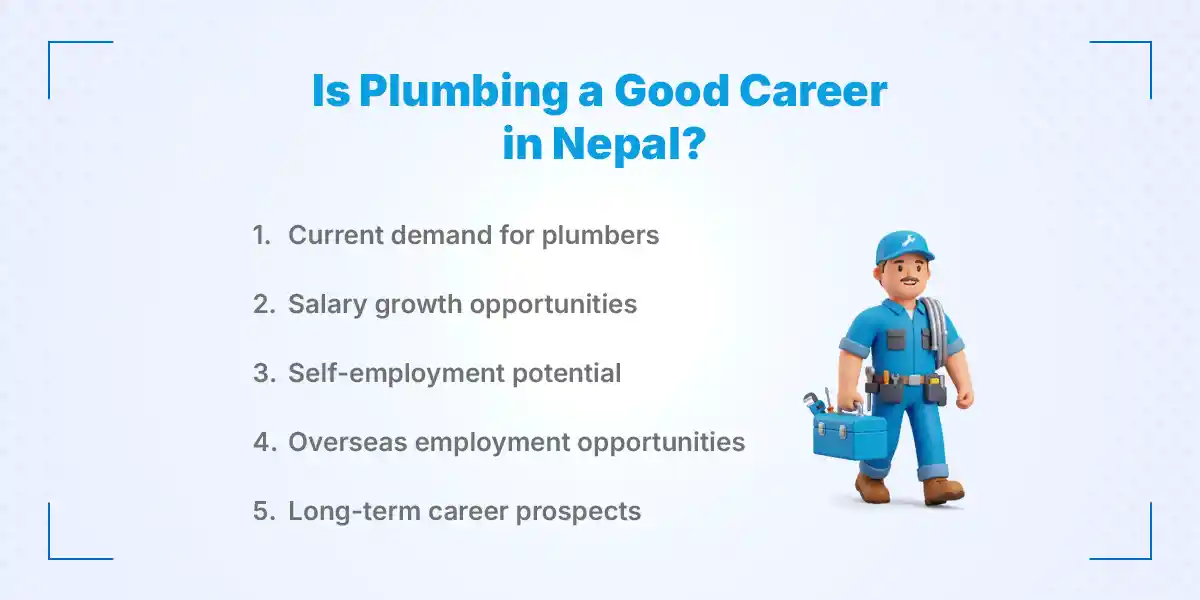
- Current demand for plumbers: Strong across residential construction, hotels, and commercial buildings.
- Salary growth opportunities: Significant between entry-level and master plumber brackets, especially for certified tradespeople.
- Self-employment potential: High in cities with a large base of residential and commercial clients.
- Overseas employment opportunities: Skilled plumbers can find higher-paying contract work abroad, particularly in the Gulf and Malaysia.
- Long-term career prospects: Positive, tied to continued urban construction and infrastructure investment
Conclusion
The biggest difference in plumber salaries in Nepal is not simply the city where you work; it is the skills you bring to the job. Plumbers who expand beyond basic repair work by learning welding, blueprint reading, advanced pipe fitting, or earning a CTEVT certification often qualify for higher-paying positions. With experience and specialized skills, many also move into supervisory roles or start their own plumbing businesses, significantly increasing their earning potential.
If you're looking to turn these skills into better career opportunities, Kumari Job is one of Nepal's leading job portals for skilled trades. It regularly features plumber vacancies from construction companies, hotels, manufacturing industries, and facility management employers across Nepal. By combining the right qualifications with the latest job openings on Kumari Job, you can take the next step toward securing a higher-paying plumbing career
Frequently Asked Questions
Submit your comments

Get Our App On



What Is the Average Blockchain Developer Salary in Nepal?
VIEW DETAILS
Increased Government Salary 2083/84: New Pay Scale for Government Employees
VIEW DETAILS
What Is the Average Geologist Salary in Nepal?
VIEW DETAILS
UK Seasonal Worker Visa 2026 from Nepal: Authorized Agencies and Application
VIEW DETAILS


Loading Comments...