

Many people interested in factory jobs in Nepal often struggle to find reliable information about salaries, benefits, and long-term career opportunities. Whether you are entering the workforce for the first time or looking for a better-paying manufacturing job, understanding factory worker salaries in Nepal can help you make informed career decisions.
Factory work remains one of the largest sources of employment in Nepal's manufacturing sector. Salary levels vary based on experience, industry, location, skills, and company size. This guide explains average factory worker earnings, salary structures, benefits, career growth opportunities, and the factors that influence wages across Nepal
In this blog
What Is the Average Factory Worker Salary in Nepal?
The average factory worker salary in Nepal typically ranges from NPR 15,000 to NPR 35,000 per month, depending on experience, industry, and job responsibilities. Skilled workers and machine operators often earn more than entry-level laborers. Additional benefits such as overtime pay, bonuses, and Social Security Fund contributions can significantly increase total compensation.
1. Average Monthly Factory Worker Salary in Nepal
Factory workers in Nepal generally earn monthly salaries that fall between NPR 15,000 and NPR 35,000. Entry-level positions usually start near the minimum wage threshold established by labor regulations. Mid-level workers often receive additional allowances and overtime compensation. Total earnings vary depending on industry demand and company policies.
2. Entry-Level Factory Worker Salary
Entry-level factory workers typically earn between NPR 15,000 and NPR 20,000 per month. Most beginners perform basic production, packaging, assembly, or support tasks. Employers often provide on-the-job training to help workers develop technical skills. Salary growth becomes possible as workers gain experience and productivity improves.
3. Experienced Factory Worker Earnings
Experienced factory workers can earn between NPR 25,000 and NPR 40,000 or more per month. Their higher salaries reflect specialized skills, efficiency, and operational knowledge. Workers with machine operation or supervisory experience generally receive better compensation packages. Many companies also reward experienced employees with bonuses and incentives.
4. Salary Comparison by Skill Level
Skill level plays a major role in determining factory worker earnings in Nepal. Unskilled workers usually earn the lowest salaries due to limited technical responsibilities. Semi-skilled workers receive higher wages because they operate equipment or perform specialized tasks. Highly skilled workers and supervisors often command the highest salaries within factory environments.
Factory Worker Salary in Nepal by Industry
Different industries offer different salary ranges based on production complexity, profitability, and labor demand. Technical industries generally pay more than labor-intensive sectors. Employees with specialized expertise often receive additional benefits and incentives.
1. Manufacturing Factory Worker Salary
Manufacturing factories represent one of the largest employers of industrial workers in Nepal. Salaries generally range from NPR 18,000 to NPR 35,000 per month depending on responsibilities. Workers involved in machine operation and quality control often receive higher pay. Large manufacturing facilities frequently provide structured benefits and performance incentives.
2. Food Processing Factory Worker Salary
Food processing factories employ workers for packaging, production, quality assurance, and logistics functions. Salaries typically range from NPR 15,000 to NPR 30,000 per month. Seasonal production cycles may influence earning opportunities throughout the year. Overtime work can significantly increase monthly income.
3. Garment and Textile Factory Worker Salary
Garment and textile factories provide employment opportunities across various skill levels. Workers often earn between NPR 15,000 and NPR 28,000 per month depending on productivity. Skilled sewing machine operators generally receive higher compensation. Export-oriented factories may offer bonuses tied to production targets.
4. Cement and Construction Materials Industry Pay
Cement and construction material factories often offer competitive wages because of demanding working conditions. Monthly earnings generally range from NPR 20,000 to NPR 40,000. Technical roles related to machinery and maintenance usually receive premium salaries. Safety compliance and specialized skills further improve earning potential.
5. Pharmaceutical Factory Worker Salary
Pharmaceutical manufacturing facilities generally provide some of the highest factory salaries in Nepal. Workers frequently earn between NPR 20,000 and NPR 45,000 depending on qualifications. Quality control and laboratory-related positions often attract higher compensation. Strict production standards increase demand for trained personnel.
Factors Affecting Factory Worker Salary in Nepal
Several factors directly influence factory worker salaries across Nepal. Understanding these variables helps workers identify opportunities for higher earnings.
- Work experience increases productivity and earning potential.
- Educational qualifications may improve access to technical positions.
- Technical and vocational training can lead to higher-paying roles.
- Factory location influences salary due to regional economic conditions.
- Industry type affects compensation levels and benefits.
- Shift schedules and overtime opportunities increase total income.
- Company size often determines salary structures and bonuses.
- Productivity and performance influence incentives and promotions.
Factory Worker Salary in Nepal by Location
Factory worker salaries vary across Nepal due to differences in industrial development and labor demand. Urban areas generally offer better compensation opportunities than rural locations. Workers often relocate to industrial hubs for improved career prospects.
- Kathmandu typically offers some of the highest factory salaries due to industrial concentration.
- Pokhara provides stable employment opportunities in manufacturing and processing industries.
- Biratnagar remains a major industrial city with strong demand for factory workers.
- Butwal continues to attract manufacturing investment and employment growth.
- Hetauda offers opportunities through industrial estates and manufacturing facilities.
- Rural areas may provide lower salaries but often feature low
Salary Structure of Factory Workers in Nepal
Factory worker compensation in Nepal includes more than just a basic monthly salary. Depending on the company, industry, and employee experience, workers may receive overtime pay, allowances, bonuses, and social security benefits. Understanding these salary components helps job seekers evaluate the true value of a factory job offer.
1. Basic Salary
Basic salary forms the foundation of a factory worker's compensation package. Most factory workers in Nepal earn a basic salary ranging from NPR 15,000 to NPR 25,000 per month, while skilled workers and technicians may receive NPR 30,000 or more. Employers calculate various benefits and allowances based on the basic salary amount. Salary levels vary according to experience, technical skills, and job responsibilities.
2. Overtime Pay
Overtime pay compensates workers for hours worked beyond standard working schedules. Factory employees can earn an additional NPR 2,000 to NPR 10,000+ per month through overtime, depending on the number of extra hours worked. Nepal's labor regulations generally require overtime to be paid at a higher rate than regular working hours. Production demand and seasonal workloads often determine overtime opportunities.
3. Attendance Allowance
Attendance allowances reward employees who maintain consistent workplace attendance. Many factories provide attendance bonuses ranging from NPR 500 to NPR 3,000 per month. These incentives help improve workforce reliability and reduce absenteeism. The exact allowance amount varies according to company policies and attendance records.
4. Festival and Dashain Bonus
Festival bonuses provide financial support during major celebrations such as Dashain and Tihar. Many factories offer a bonus equivalent to one month's basic salary or a fixed amount based on company performance. These payments help workers manage holiday expenses and family obligations. Bonus amounts differ across industries and organizations.
5. Incentives and Performance Bonuses
Performance-based incentives encourage higher productivity and quality output. Factory workers may earn NPR 1,000 to NPR 10,000 or more per month in incentives when production targets are achieved. Some companies also offer quarterly or annual performance bonuses. Consistent high performance can significantly increase total annual earnings.
6. Provident Fund and Social Security Fund Benefits
Provident Fund (PF) and Social Security Fund (SSF) contributions enhance long-term financial security. Employers and employees contribute a percentage of monthly earnings according to Nepal's labor regulations. While these contributions are not received as direct monthly cash, they provide retirement, insurance, and social protection benefits. These benefits increase the overall value of a factory worker's compensation package beyond the monthly salary.
How Is Factory Worker Salary Calculated in Nepal?
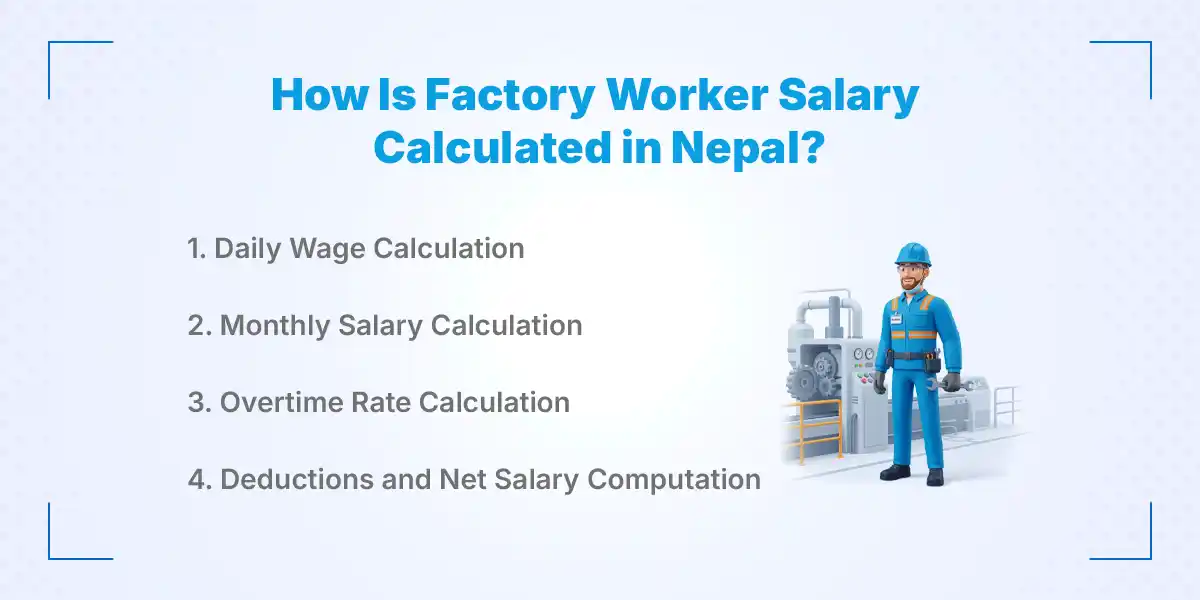
Factory worker salary is calculated using a combination of basic wages, working hours, overtime earnings, and deductions. Employers follow labor regulations while applying company-specific compensation policies. Understanding the calculation process helps workers verify their earnings accurately.
1. Daily Wage Calculation
Daily wages are calculated based on working hours and applicable wage rates. Employers may use monthly salary figures to determine equivalent daily earnings. Attendance directly affects total wage calculations. Accurate time tracking remains essential for fair compensation.
2. Monthly Salary Calculation
Monthly salary calculations combine basic pay with applicable allowances and incentives. Attendance records influence final earnings in many organizations. Overtime compensation may substantially increase monthly income. Payroll departments process salary calculations according to company policies.
3. Overtime Rate Calculation
Overtime rates are generally higher than regular hourly wages. Labor regulations establish guidelines for overtime compensation. Factories calculate overtime based on approved extra working hours. Workers should review payroll records to ensure accurate payment.
4. Deductions and Net Salary Computation
Net salary reflects total earnings after applicable deductions. Deductions may include Social Security Fund contributions and other authorized payments. Employers provide salary statements detailing earnings and deductions. Understanding deductions helps workers manage their finances effectively.
What Benefits and Perks Do Factory Workers Receive in Nepal?
Factory workers in Nepal often receive additional benefits beyond their basic salary, including social security contributions, insurance coverage, paid leave, and workplace allowances. These benefits improve financial security, employee well-being, and long-term career stability. The exact benefits offered vary depending on the employer, industry, and employment contract.
1. Social Security Fund (SSF) Contributions
Many factories enrolled in Nepal's Social Security Fund system contribute on behalf of their employees. These contributions provide social protection benefits, including retirement savings and insurance coverage. SSF participation helps workers build long-term financial security. It also ensures compliance with labor regulations.
2. Provident Fund Facilities
Some factories offer Provident Fund benefits to help employees save for the future. Both employers and employees may contribute a percentage of the worker's salary. These savings accumulate over time and can provide financial support after retirement. Provident Fund schemes increase the overall value of compensation packages.
3. Health and Accident Insurance
Health and accident insurance protects workers from unexpected medical expenses and workplace incidents. Many employers provide insurance coverage as part of their employee welfare programs. This benefit reduces financial risks associated with illness or injury. Insurance coverage is particularly important in industrial work environments.
4. Paid Leave and Public Holidays
Factory workers are generally entitled to paid leave and public holidays according to labor regulations and company policies. Paid leave allows employees to take time off without losing income. This benefit supports work-life balance and employee well-being. Annual, sick, and festival leave are commonly provided.
5. Transportation Support
Some factories offer transportation services or travel allowances to employees. This support helps reduce daily commuting expenses and improves workplace accessibility. Transportation benefits are especially valuable for workers living far from industrial areas. Employers use these programs to improve employee convenience and attendance.
6. Meals and Accommodation Benefits
Certain factories provide subsidized meals, meal allowances, or accommodation facilities for workers. These benefits help reduce living expenses and improve employee welfare. Accommodation support is more common in remote industrial locations. Such perks can significantly increase the overall value of employment.
7. Uniforms and Safety Equipment
Employers often provide uniforms, protective clothing, and safety equipment to factory workers. These resources help maintain workplace safety and comply with occupational health standards. Proper safety gear reduces the risk of accidents and injuries. Workers benefit from a safer and more professional work environment.
8. Training and Skill Development Opportunities
Many factories invest in employee training programs to improve productivity and technical expertise. Workers gain valuable skills through workshops, vocational training, and on-the-job learning. These opportunities support career growth and higher earning potential. Continuous skill development increases long-term employability within the manufacturing sector.
Factory Worker Salary vs Other Blue-Collar Jobs in Nepal
Factory worker salaries are generally competitive within Nepal's blue-collar employment sector. Compensation depends on skill requirements, working conditions, and industry demand. Workers should compare opportunities carefully when evaluating career options.
| Job Role | Typical Salary Range (NPR/Month) |
|---|---|
| Factory Worker | 15,000 – 35,000 |
| Construction Worker | 15,000 – 30,000 |
| Warehouse Worker | 15,000 – 28,000 |
| Machine Operator | 20,000 – 40,000 |
| Production Assistant | 18,000 – 35,000 |
| Helper | 15,000 – 25,000 |
Why Do Factory Worker Salaries Differ Across Companies?
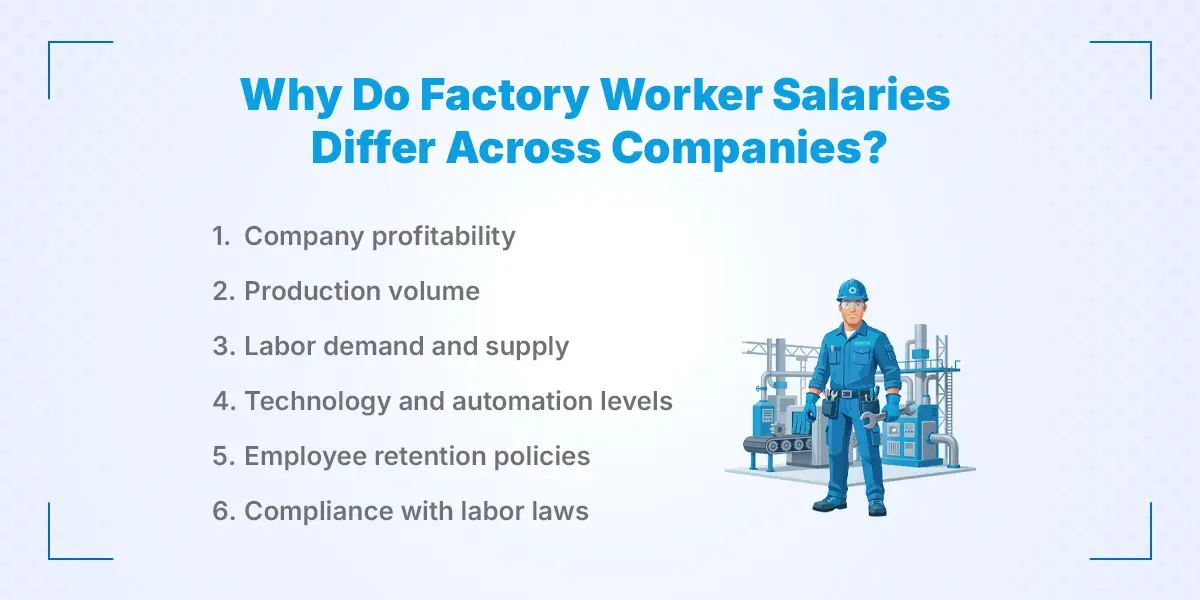
Factory worker salaries differ across companies because each employer has different financial resources, production requirements, workforce demands, and compensation policies. Factors such as profitability, industry type, location, and employee benefits significantly influence how much workers earn. As a result, two factory workers performing similar tasks may receive different salaries depending on their employer.
1. Company Profitability
Profitable companies generally have larger budgets available for employee compensation. Higher revenue and stronger financial performance allow employers to offer competitive salaries, bonuses, and benefits. Businesses with consistent profits often invest more in workforce retention. This results in better earning opportunities for factory workers.
2. Production Volume and Business Demand
Factories with high production volumes typically require a larger workforce and extended operating hours. Increased demand often leads to better wages and overtime opportunities for employees. Companies experiencing rapid growth may offer attractive compensation packages to attract skilled workers. Production targets can also influence incentive programs.
3. Labor Supply and Demand
The availability of skilled workers affects salary levels across industries. When demand for factory workers exceeds supply, employers often increase wages to attract qualified candidates. Industries facing labor shortages usually offer better compensation and benefits. Competitive hiring markets can drive salaries upward.
4. Technology and Automation Levels
Factories that use advanced machinery and automated production systems often require technically skilled employees. Workers who can operate, maintain, or troubleshoot equipment typically earn higher salaries. Automation increases the value of specialized knowledge and technical expertise. As a result, technology-driven factories may offer higher compensation packages.
5. Employee Retention Policies
Companies that prioritize employee retention often provide competitive salaries and benefits. Higher wages help reduce staff turnover and improve workforce stability. Many employers also offer bonuses, allowances, and career development opportunities. Strong retention strategies contribute to overall employee satisfaction.
6. Compliance With Labor Laws and Benefits
Employers that fully comply with labor regulations often provide structured salary packages and employee benefits. These may include overtime pay, Social Security Fund contributions, provident funds, and paid leave. Compliance increases the total value of compensation beyond basic salary. Workers in compliant organizations generally enjoy better financial security and workplace protections.
Skills That Can Increase Factory Worker Salary
Workers who develop valuable skills often earn higher salaries and access better career opportunities. Technical expertise increases employability and workplace productivity. Continuous learning remains important in modern manufacturing environments.
- Machine operation and equipment handling skills.
- Quality control and inspection knowledge.
- Equipment maintenance and troubleshooting abilities.
- Safety and compliance training certifications.
- Technical and vocational education credentials.
- Leadership and supervisory capabilities.
Future Outlook for Factory Worker Salary in Nepal
Factory worker salaries in Nepal are expected to improve as industrial development continues. Increased investment in manufacturing creates additional employment opportunities. Demand for skilled workers continues to rise across multiple industries.
- Manufacturing sector expansion may increase wage levels.
- Industrial investments can create higher-paying positions.
- Skilled workers are likely to remain in strong demand.
- Automation may increase the value of technical expertise.
- Salary growth opportunities are expected in specialized roles.
Conclusion
Factory worker salaries in Nepal depend on a combination of experience, skills, industry, location, and employer policies. Workers who develop technical expertise, pursue vocational training, and gain industry experience generally enjoy better earning potential and career advancement opportunities.
For job seekers looking to explore the latest factory worker vacancies, manufacturing jobs, and industrial career opportunities across Nepal, Kumarijob provides access to verified job listings, career resources, and employment opportunities that can help you find the right role for your skills and experience.
Frequently Asked Questions
Submit your comments

Get Our App On



How to Make a Police Report (Police Clearance Certificate) in Nepal?
VIEW DETAILS
Types of SEO and How They Work: Complete Beginner's Guide
VIEW DETAILS
Government Restricts New Lok Sewa Vacancy Requests 2083/84 — Or Not?
VIEW DETAILS
How to Apply for Tattoo Artist Jobs in Nepal?
VIEW DETAILS


Loading Comments...