
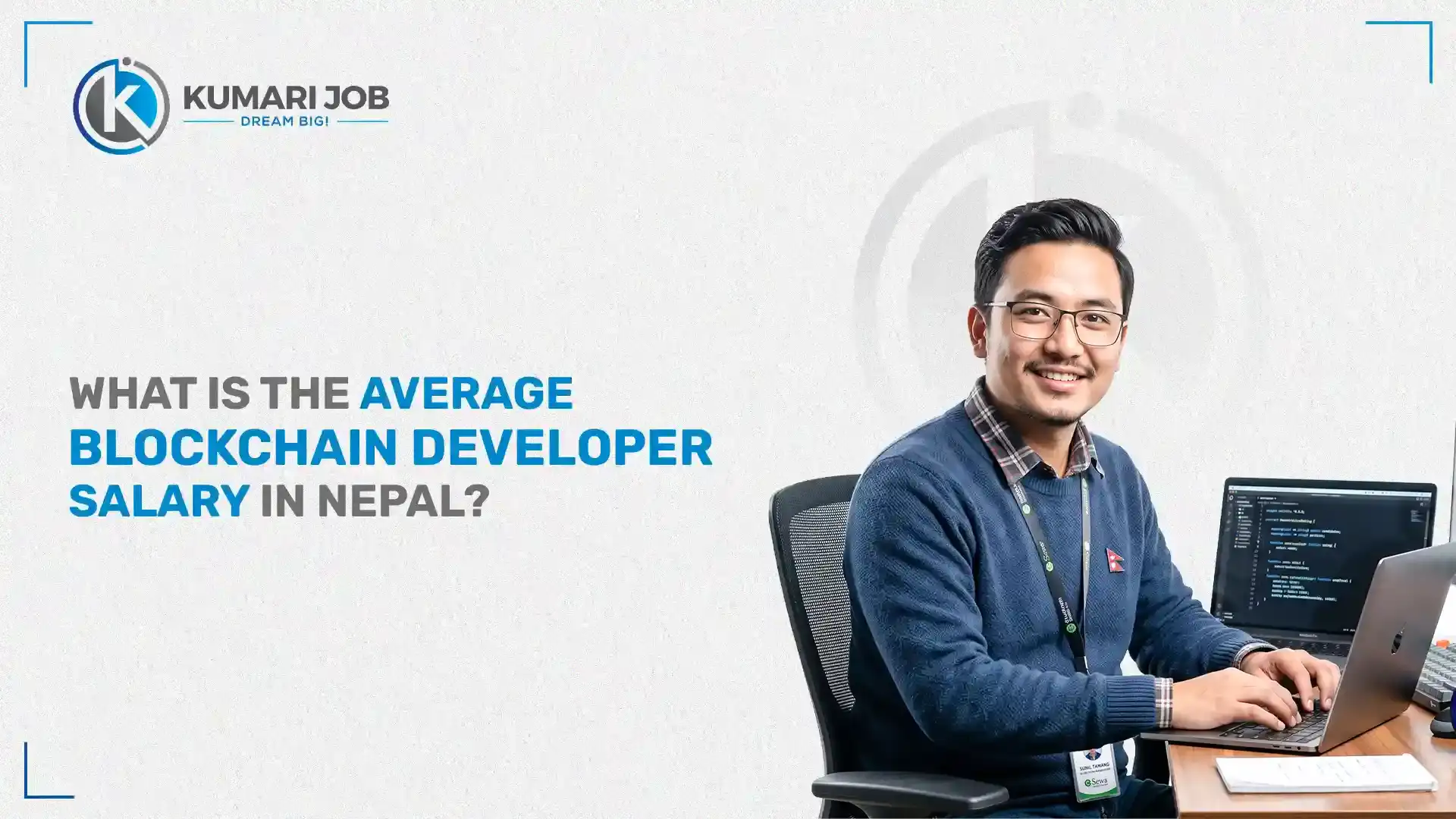

Blockchain development is becoming one of the fastest-growing careers in Nepal as more companies adopt digital technologies, fintech solutions, and Web3 applications. Businesses are looking for skilled blockchain developers who can build secure, decentralized systems, making this a promising career with strong salary potential.
In this guide, you'll learn about the average blockchain developer salary in Nepal, salary ranges by experience and industry, the factors that influence earnings, essential skills to boost your income, and where to find blockchain developer jobs in Nepal. Whether you're a student, fresher, or experienced software developer, this guide will help you understand the career and salary opportunities available in 2026.
In this blog
What Is the Average Blockchain Developer Salary in Nepal?
The average blockchain developer salary in Nepal is around NPR 75,000 per month, with most professionals earning somewhere between NPR 60,000 and NPR 120,000 depending on experience and employer. This figure covers developers working at local fintech firms, software companies, and Web3 startups, and it climbs sharply for senior developers and those working with international clients. Local demand is high relative to the number of trained blockchain developers, which keeps salaries growing faster than in most other tech roles in Nepal.
- Average monthly salary: NPR 75,000 (typical range: NPR 60,000 – 120,000)
- Average annual salary: roughly NPR 900,000 – 1,440,000
- Typical salary range: NPR 35,000 at entry level to over NPR 300,000 for architect-level roles, with remote international roles often paying significantly more
- Factors influencing earnings: experience, technical expertise, employer type, and remote versus on-site work (covered in detail below)
Blockchain Developer Salary in Nepal by Experience
Experience level has an outsized effect on blockchain developer pay in Nepal, more than in most traditional tech roles, since the skill gap between a junior and senior developer is unusually wide. The four brackets below reflect what employers are actually paying, based on job listings and salary data from Nepali software and fintech companies.
1. Entry-Level Blockchain Developer Salary in Nepal (0–2 Years)
An entry-level blockchain developer in Nepal typically earns between NPR 35,000 and NPR 60,000 per month, based on job listings from local software firms and blockchain startups. Most beginners start as junior developers writing smart contracts, testing decentralized applications, or supporting a senior developer on client projects. Pay tends to sit near the lower end for candidates who only know basic Solidity or JavaScript, while those with a working GitHub portfolio or a completed Web3 project often start closer to the top of this range. Building even one functional decentralized application before applying for a first job noticeably improves both starting salary and offer quality.
2. Mid-Level Blockchain Developer Salary in Nepal (3–5 Years)
A mid-level blockchain developer with three to five years of experience in Nepal generally earns between NPR 60,000 and NPR 100,000 per month. At this stage, developers usually design and deploy smart contracts independently, integrate blockchain back ends with existing applications, and take ownership of specific product features. Developers working with fintech or Web3 startups tend to earn more than those in general software companies, since blockchain-specific skills remain scarce relative to demand. Picking up a second blockchain ecosystem, such as Solana or Polygon alongside Ethereum, often pushes pay toward the top of this bracket.
3. Senior Blockchain Developer Salary in Nepal (6–10 Years)
Senior blockchain developers with six to ten years of experience in Nepal typically earn between NPR 100,000 and NPR 180,000 per month, especially at fintech and Web3 companies. These professionals usually lead smart contract architecture decisions, conduct code audits, and mentor junior developers on secure coding practices. Companies serving international clients or operating in the cryptocurrency space tend to pay toward the top of this range, often adding performance bonuses tied to product launches. A strong open-source contribution history or a track record of shipping secure, audited contracts usually accelerates the move into architect-level roles.
4. Lead Blockchain Developer/Blockchain Architect Salary in Nepal (10+ Years)
A Lead Blockchain Developer or Blockchain Architect with more than ten years of experience in Nepal can earn anywhere from NPR 180,000 to over NPR 300,000 per month at local and international firms. Professionals at this level design entire blockchain system architectures, set security and auditing standards, and make the final call on which platforms and frameworks a company adopts. Those who take on remote roles with international blockchain companies often earn substantially more than this range, since many such employers pay in US dollars regardless of the developer's location. Reaching this level usually requires deep expertise across multiple blockchain ecosystems combined with a public track record of secure, production-grade projects
Blockchain Developer Salary by Industry
Not every employer pays blockchain developers the same rate for the same skill level. Fintech, Web3 startups, and international remote employers consistently pay more than general software or IT consulting firms.
| Industry | Typical Monthly Salary (NPR) | Notes |
|---|---|---|
| FinTech Companies | 70,000 – 150,000 | Strong demand for developers who understand both finance and blockchain. |
| Blockchain and Web3 Startups | 60,000 – 150,000+ | Base pay varies; some offer token or equity incentives in addition to salary. |
| Software Development Companies | 50,000 – 120,000 | Blockchain is often one of several technologies used in development projects. |
| IT Consulting Firms | 55,000 – 130,000 | Salary depends heavily on client contracts and project complexity. |
| Cryptocurrency and Digital Asset Companies | 70,000 – 160,000 | Higher pay reflects security-critical and high-stakes blockchain work. |
| Enterprise Technology Companies | 80,000 – 180,000 | Larger organizations integrating blockchain into enterprise systems. |
| International Remote Employers | 200,000 – 800,000+ | Often paid in US dollars; compensation reflects global market rates rather than local salaries. |
Blockchain Developer Salary by Location in Nepal
Location matters less for blockchain developers than for many other trades, since much of the work happens remotely. Even so, Kathmandu and Lalitpur host the highest concentration of fintech and Web3 employers, which keeps local pay higher there.
| Location | Typical Monthly Salary (NPR) | Notes |
|---|---|---|
| Kathmandu | 60,000 – 200,000+ | Highest concentration of blockchain companies, fintech firms, and startups. |
| Lalitpur | 60,000 – 180,000 | Growing technology hub with many software development companies. |
| Bhaktapur | 50,000 – 120,000 | Limited opportunities, mostly through software and IT firms. |
| Pokhara | 45,000 – 100,000 | Growing startup ecosystem with increasing blockchain opportunities. |
| Biratnagar | 40,000 – 90,000 | Primarily IT service companies and regional software firms. |
| Chitwan | 40,000 – 85,000 | Fewer local employers, with many professionals working remotely. |
| Remote Jobs from Nepal | 150,000 – 500,000+ (client-dependent) | International remote roles typically offer the highest earning potential. |
What Factors Affect a Blockchain Developer's Salary in Nepal?
Several factors shape how much a blockchain developer earns in Nepal, and technical depth matters as much as years of experience. Employers pay a clear premium for developers who know multiple blockchain platforms, hold relevant certifications, and can work independently on production systems. Whether a developer works on-site for a local company or remotely for an international client often has the single biggest effect on take-home pay.
- Years of experience: Salary bands widen sharply after the three-year mark, once a developer can design systems independently.
- Technical expertise: Depth in smart contract security, gas optimization, and system architecture drives higher offers.
- Programming languages: Strong Solidity, Rust, or Go skills open the door to higher-paying roles.
- Blockchain platforms and frameworks: Experience across Ethereum, Solana, Polygon, or Hyperledger increases versatility and pay.
- Industry and employer: Fintech, Web3, and crypto-native companies generally pay more than general software firms.
- Certifications: Recognized blockchain certifications support faster promotion into senior roles.
- Remote vs on-site employment: Remote roles with international clients frequently pay several times local on-site rates.
Benefits and Perks for Blockchain Developers
Base salary is only part of total compensation for many blockchain developers in Nepal. Companies competing for scarce blockchain talent often add extra benefits to stand out.
- Performance bonuses: Common at fintech and Web3 companies tied to product milestones.
- Health insurance: Increasingly standard at established software and fintech employers.
- Provident Fund and gratuity: Retirement contributions required by Nepali labor law for eligible employees.
- Flexible working hours: Widely offered, especially at startups and remote-first teams.
- Remote and hybrid work: Common across the industry, given the global nature of blockchain projects.
- Stock options or token incentives: Offered by some Web3 startups in place of or alongside higher base pay.
- Learning and certification support: Many employers cover the cost of blockchain courses or conference attendance.
How Can You Increase Your Salary as a Blockchain Developer?
The clearest way to increase a blockchain developer's salary in Nepal is to build depth in smart contract development and back it up with real, shippable projects rather than tutorial-level work. Employers consistently pay more for developers who can prove their skills through a public portfolio than for those relying on certificates alone.
- Master smart contract development: Focus on writing secure, gas-efficient contracts rather than just functional ones.
- Earn blockchain certifications: Credentials from recognized providers add weight to a resume, especially early in a career.
- Build real-world Web3 projects: A working decentralized application matters more to employers than a list of completed courses.
- Contribute to open-source blockchain projects: Visible contributions on GitHub build credibility with both local and international employers.
- Learn multiple blockchain ecosystems: Versatility across Ethereum, Solana, and other platforms increases the range of roles available.
- Work with international clients: Remote contracts with foreign companies often pay several times local salary rates.
- Strengthen cybersecurity and auditing skills: Smart contract auditing is a high-demand, high-pay specialization within blockchain development.
How to Find Blockchain Developer Jobs in Nepal
The fastest way to find blockchain developer jobs in Nepal is through job portals such as Kumari Job, which lists current openings from fintech firms, software companies, and Web3 startups. LinkedIn Jobs and individual company career pages offer additional listings, particularly for roles with international or remote-first employers. GitHub and open-source communities often surface freelance or contract work before it reaches traditional job boards.
- Kumari Job: A leading Nepali job portal with regularly updated tech and fintech listings.
- LinkedIn Jobs: Strong for spotting remote roles and connecting directly with hiring managers.
- Company career pages: Direct postings from fintech firms, Web3 startups, and enterprise tech companies.
- Remote job platforms: Useful for finding international clients paying in US dollars.
- GitHub and open-source communities: A common source of freelance and contract opportunities for active contributors.
- Professional networking events: Blockchain and fintech meetups in Kathmandu are a reliable source of referrals.
Is Blockchain Development a Good Career in Nepal?
Blockchain development is a good career choice in Nepal for developers willing to build deep technical skill, given strong demand and a limited local talent pool. Nepal's growing fintech sector, combined with global access to remote Web3 work, gives blockchain developers more earning flexibility than most other local tech roles. Salary growth is realistic for developers who move beyond basic smart contract work into architecture, security, or international freelance projects.

- Current market demand: High relative to the number of trained blockchain developers in Nepal.
- Salary growth potential: Among the fastest-growing in Nepal's tech sector, particularly for senior and specialized roles.
- Remote work opportunities: Extensive, given the global and largely location-independent nature of blockchain work.
- Global career prospects: Strong, since blockchain skills transfer directly to international markets.
- Future of blockchain technology in Nepal: Positive, tied to growing fintech adoption and regional Web3 investment.
Conclusion
The real difference in blockchain developer pay in Nepal is not between one company and another; it is between developers who can show working, secure code and those who can only talk about the technology. A junior developer with one solid decentralized application in a portfolio consistently out-earns a peer with more coursework but nothing shipped, and that gap only widens once remote international clients enter the picture.
For developers ready to act on that, finding the right first opportunity matters as much as building the right skills. Kumari Job lists current blockchain developer vacancies across Nepal's fintech, software, and Web3 employers, making it a practical place to start turning this salary data into an actual job offer.
Frequently Asked Questions
Submit your comments

Get Our App On



What Is the Average Plumber Salary in Nepal?
VIEW DETAILS
Increased Government Salary 2083/84: New Pay Scale for Government Employees
VIEW DETAILS
What Is the Average Geologist Salary in Nepal?
VIEW DETAILS
UK Seasonal Worker Visa 2026 from Nepal: Authorized Agencies and Application
VIEW DETAILS


Loading Comments...