


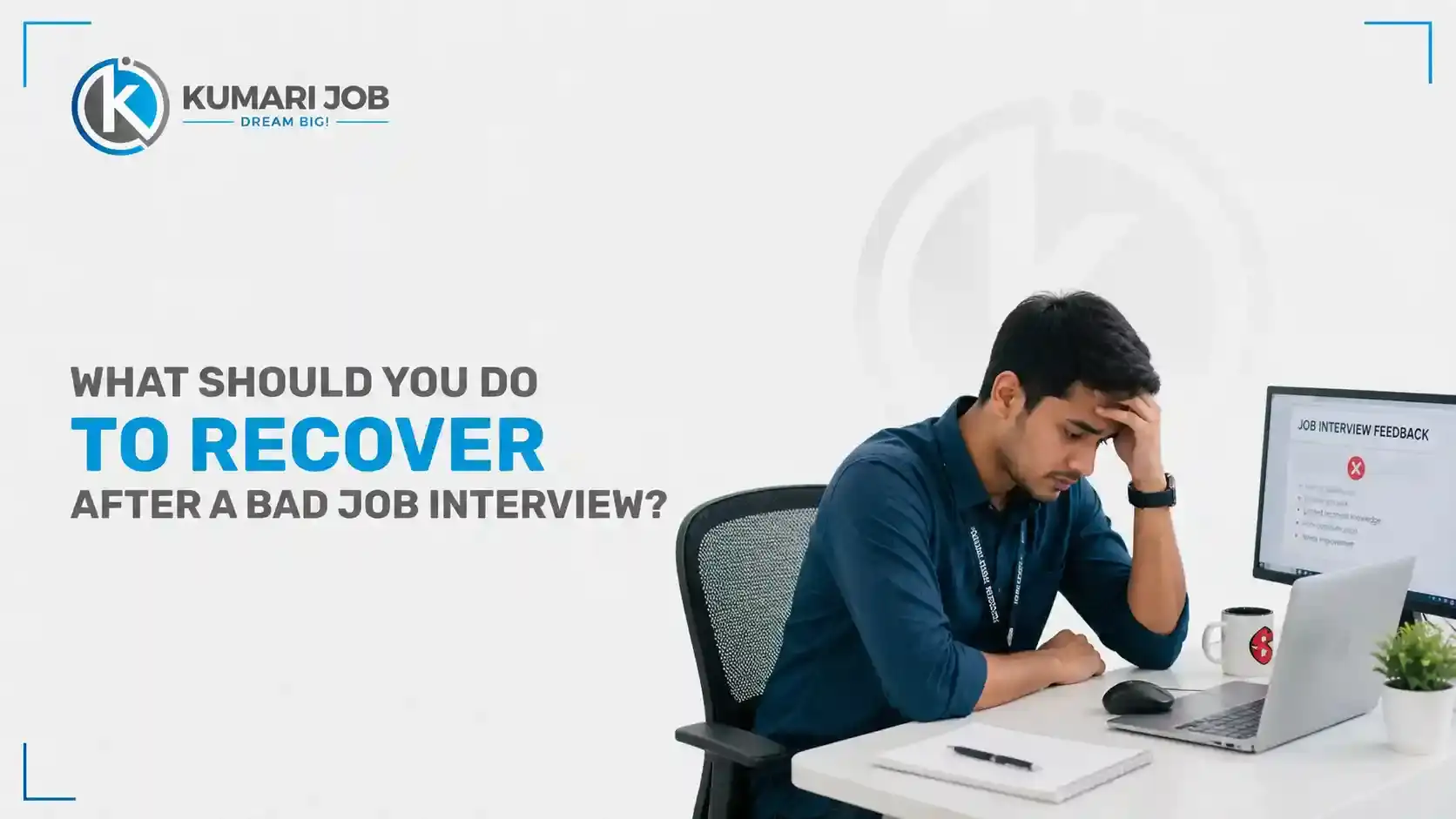

Walking out of an interview room and immediately replaying every wrong answer is one of the most common experiences in a job search. Maybe the explanation of a key project came out jumbled, a simple question about strengths drew a blank, or a technical glitch derailed a virtual call at the worst possible moment. That sinking feeling convinces many candidates the opportunity is already gone, even before the interviewer has finished evaluating anyone else.
One rough interview does not define a career or close every door with that employer. This guide breaks down what actually counts as a bad interview, why it happens, and the exact steps to take in the hours and days afterward, from reviewing mistakes and sending the right follow-up to preparing more effectively for the next opportunity. Candidates who want to keep their options open while they process one tough interview can continue browsing current openings on KumariJob.
In this blog
What Is a Bad Job Interview?
A bad job interview is one where a candidate gives unclear or incomplete answers, struggles to explain their skills and experience, or feels underprepared for questions they should have anticipated. It often includes visible nervousness, poor time management, or technical failures during a virtual call that break the flow of the conversation. The candidate typically leaves with a strong sense that the conversation did not represent their actual abilities.
This feeling is common and rarely as final as it seems at the moment. A single uncomfortable exchange does not automatically translate into a rejection, since interviewers weigh the entire conversation rather than one weak answer.
Common signs of a bad interview include:
- Giving unclear or incomplete answers to direct questions
- Arriving late or appearing visibly unprepared
- Struggling with standard interview questions like "tell me about yourself"
- Showing nervous or unprofessional body language
- Failing to clearly connect skills and experience to the role
- Experiencing technical problems during a virtual interview
- Realizing afterward that important qualifications were never mentioned
Why Does a Bad Interview Happen?
A bad interview usually happens because of insufficient preparation, not a lack of ability. Nerves, unclear communication, and gaps in company research are the most frequent triggers, and each one compounds the others once a candidate starts to feel rattled. Recognizing the specific cause makes it far easier to fix before the next conversation.
The most common causes include:
- Lack of structured interview preparation
- Not researching the company beforehand
- Misunderstanding the job description or role expectations
- Nervousness that affects clarity and confidence
- Giving answers that ramble instead of staying focused
- Not preparing concrete examples from past work
- Poor time management during the conversation
- Being caught off guard by an unexpected question
- Handling salary or availability discussions awkwardly
- Technical issues during an online interview
What Should You Do Immediately After a Bad Interview?
Immediately after a bad interview, the priority is to stay calm, document what went wrong while it is still fresh, and decide whether a follow-up message is appropriate. Reacting emotionally in the first few hours tends to distort how badly the interview actually went. A structured, unemotional review turns a stressful experience into useful preparation.
1. Stay Calm and Avoid Overthinking
The first step is to resist the urge to replay every second of the conversation on a loop. Overthinking amplifies small mistakes until they feel far larger than they actually were to the interviewer. Instead, candidates should give themselves a short window even just an hour to process the disappointment before analyzing anything. A clear head produces a far more accurate assessment than a panicked one.
2. Identify the Specific Mistakes
Once calm, write down the exact questions that felt difficult rather than labeling the whole interview as a failure. Vague self-criticism like "I did terrible" offers nothing to work with, while a specific note like "I couldn't explain the budget management example clearly" is actionable. This distinction turns a bad experience into a list of fixable problems. Treating mistakes individually also prevents one weak moment from overshadowing the parts of the interview that went well.
3. Review the Job Description Again
Rereading the job posting after the interview often reveals gaps between what the employer asked for and what actually got mentioned in conversation. Candidates frequently discover a relevant skill or achievement that never came up simply because the conversation moved quickly. This review clarifies whether a follow-up message is worth sending to fill that gap. It also sharpens preparation for similar roles at other companies.
4. Send a Professional Follow-Up
If the interview left an important qualification unmentioned or ended on an unclear note, a short, professional follow-up email can help. The message should thank the interviewer for their time, reaffirm interest in the role, and briefly add any missing detail without over-explaining or apologizing repeatedly. Keeping it concise signals confidence rather than anxiety. This step is optional, not mandatory, and should only be used when there is a genuine gap to close.
How Can You Learn From a Bad Interview?
A bad interview becomes useful the moment it gets treated as feedback instead of failure. Reviewing specific weak points, communication gaps, unclear examples, or knowledge gaps about the company builds a concrete improvement plan for the next opportunity. This shift in framing is what separates candidates who improve quickly from those who stay stuck on the same mistakes.
To extract the most value from the experience, review:
- The specific questions that were difficult to answer
- Any communication problems, such as rambling or unclear phrasing
- Whether skills and experience were explained clearly enough
- Body language and overall confidence during the conversation
- How well the company and role were actually researched beforehand
- How closely the answers given matched the job requirements
- Whether achievements were framed using the STAR method
- Which difficult questions deserve dedicated practice before the next interview
Should You Send a Follow-Up Email After a Bad Interview?
Yes, candidates should generally send a short follow-up email after a bad interview, particularly to thank the interviewer and reaffirm interest in the position. This is especially useful when an important qualification was left out, or a specific answer needs a brief clarification. The email should stay professional, concise, and forward-looking rather than apologetic.
An effective follow-up should:
- Be sent within 24 to 48 hours of the interview
- Thank the interviewer for their time and consideration
- Clearly restate interest in the role and the company
- Briefly clarify one important point, if genuinely necessary
- Avoid lengthy explanations, excuses, or repeated apologies
- Stay short; a few sentences are enough
How Can You Fix Common Interview Mistakes?
Most interview mistakes have a direct, practical fix once they are identified clearly. Vague answers need specific examples, weak body language needs deliberate practice, and thin company research needs a dedicated prep session before the next conversation. Matching each mistake to its fix turns a discouraging list into a short action plan.
| Interview Mistake | How to Improve |
|---|---|
| Giving vague answers | Use specific, measurable examples |
| Talking too much | Keep answers focused and time-boxed |
| Not knowing the company | Research the company before the interview |
| Showing low confidence | Practice answers aloud beforehand |
| Forgetting achievements | Prepare a short list of key examples |
| Poor body language | Practice professional posture and eye contact |
| Not asking questions | Prepare two to three thoughtful questions |
| Focusing only on salary | Balance salary talk with role and growth interest |
How Can You Prepare for Your Next Interview?
Preparing for the next interview means combining research, rehearsal, and logistics so nothing is left to chance on interview day. Candidates who prepare across all three areas walk in with far more confidence than those who only review their resume the night before. The three areas below cover the preparation that matters most.
1. Research the Role and Company
Start by reading the complete job description line by line instead of skimming it. This reveals exactly which skills and experiences the interviewer is likely to ask about, which allows preparation to target the right examples instead of generic ones. Researching the company's recent work, products, or industry position also signals genuine interest during the conversation. Candidates who skip this step often struggle with the exact "why do you want to work here" question that almost every interview includes.
2. Practice Your Answers and Structure
Prepare a short, clear self-introduction along with answers to the most common interview questions in the target field. Structuring achievement stories with the STAR method Situation, Task, Action, Result keeps answers focused and prevents rambling. Job-specific technical questions deserve separate practice, since general behavioral prep alone will not cover them. Reviewing the resume beforehand also ensures every listed achievement can be explained clearly and confidently on demand.
3. Prepare Your Logistics and Technology
Test internet connection, camera, and microphone well before any virtual interview to avoid last-minute technical failures. For in-person interviews, planning the route and building in extra travel time removes the stress of arriving late. Choosing professional attire in advance, rather than the morning of, removes one more variable from an already stressful day. Preparing two to three thoughtful questions for the interviewer closes the loop and leaves a strong final impression.
What Should You Avoid After a Bad Interview?
The biggest mistake after a bad interview is reacting emotionally instead of strategically. Repeated contact with the interviewer, excessive self-criticism, and pausing the job search entirely all make the situation worse rather than better. Avoiding these reactions keeps the door open and protects momentum in the broader job search.
Candidates should avoid:
- Repeatedly contacting the interviewer after the interview
- Sending an emotional or lengthy apology
- Blaming the interviewer for how the conversation went
- Assuming rejection before receiving any official communication
- Criticizing themselves excessively over one conversation
- Pausing applications to other roles while waiting for a response
- Repeating the same mistakes in the very next interview
- Exaggerating or inventing qualifications to compensate for a weak answer
Can You Still Get the Job After a Bad Interview?
Yes, candidates can still receive a job offer even after an interview that felt disappointing, because recruiters evaluate the full application rather than a single conversation. Qualifications, communication throughout the hiring process, and overall fit for the role all factor into the final decision. Nervousness in the moment is also interpreted differently by different interviewers, and it rarely outweighs strong underlying experience.
Keep these points in mind before assuming the worst:
- Interview performance is only one part of the overall hiring decision
- Strong qualifications and experience can offset a rough conversation
- Interviewers often factor in nerves rather than penalizing them heavily
- A professional follow-up can reinforce genuine interest in the role
- Rejection should never be assumed before official communication arrives
When Should You Move On and Apply for Other Jobs?
Candidates should keep applying to other relevant roles immediately after any interview, regardless of how it went. Waiting indefinitely for a single employer's response stalls the entire job search and adds unnecessary pressure to one outcome. Continuing to apply elsewhere also creates more opportunities to apply the lessons from the last interview right away.
To keep momentum going:
- Do not wait indefinitely for a response from one employer
- Continue applying to roles that match your skills and experience
- Apply lessons from the recent interview to upcoming ones
- Track applications and any feedback received along the way
- Explore new and relevant openings through KumariJob
Expert Tips to Recover From a Bad Interview
A few habits consistently separate candidates who bounce back quickly from those who stay discouraged for weeks.
- Focus only on what is controllable: preparation, tone, and follow-up
- Turn every difficult question into a practice question for next time
- Build a personal question bank from every interview experience
- Record practice answers to review tone, pacing, and clarity
- Keep every answer relevant to the specific role being discussed
- Use measurable, specific examples when describing achievements
- Practice confidence without memorizing scripted answers word for word
- Treat interviews as an ongoing skill to build, not a single pass-or-fail test
Conclusion
The single biggest factor in recovering from a bad interview is separating the feeling of failure from the actual outcome. A rough conversation is rarely as damaging as it feels in the moment, and the candidates who recover fastest are the ones who turn specific mistakes into a concrete preparation plan rather than a reason to lose confidence. Reviewing what went wrong, sending a measured follow-up when appropriate, and continuing to apply elsewhere keeps momentum going no matter how one interview turns out.
Every interview, good or bad, adds to the experience needed to perform better in the next one. Explore current openings and keep building toward the right opportunity on KumariJob.
Frequently Asked Questions
Submit your comments

Get Our App On


What Is the Average Audiologist Salary in Nepal in 2026?
VIEW DETAILS
What Is the Voice Over Artist Salary in Nepal?
VIEW DETAILS
What Are the 6 Life Skills You Need to Succeed at Work?
VIEW DETAILS
How to Use ChatGPT for Job Applications in Nepal?
VIEW DETAILS


Loading Comments...