

Many Nepali job seekers want to work in Japan but often struggle to understand the Japan Specified Skilled Worker (SSW) Visa process, including eligibility requirements, skill tests, language exams, and application procedures. Without accurate information, it is easy to miss important deadlines, prepare for the wrong examination, or submit incomplete documents that can delay the application process.
This guide explains everything you need to know about the Japan SSW Working Visa, including the latest skill test information, Japanese language requirements, eligibility criteria, required documents, salary and benefits, job categories, and the step-by-step application process for Nepali workers in 2026. By the end, you will have a clear roadmap to prepare for the SSW program and improve your chances of securing employment in Japan.
In this blog
What Is the Japan SSW Working Visa?
The Japan Specified Skilled Worker (SSW) Visa is a work visa that allows qualified foreign workers, including Nepali citizens, to work legally in Japan in industries experiencing labor shortages. Applicants generally need to pass a designated skill test and a Japanese language test, secure a job offer from a registered employer, and meet Japan's immigration requirements.
The SSW program includes Type 1 for workers with industry-specific skills and Type 2 for certain highly skilled workers in eligible sectors. It offers competitive salaries, employee benefits, valuable international work experience, and opportunities to build a long-term career in Japan for eligible applicants.
Why Choose the Japan SSW Visa in 2026?
The Japan SSW Visa is a great opportunity for Nepali workers because it offers legal employment, competitive salaries, employee benefits, and long-term career prospects in industries facing labor shortages. Japan continues to recruit skilled foreign workers across multiple sectors, creating more job opportunities for qualified applicants in 2026.
The SSW program also provides fair wages, overtime pay, health insurance, pension benefits, and paid leave while allowing workers to gain valuable international experience and technical skills. These benefits make the Japan SSW Visa an attractive option for Nepali job seekers looking for stable employment and career growth.
Eligibility Requirements for Japan SSW Visa from Nepal
To qualify for the Japan SSW Visa from Nepal, applicants must meet the eligibility requirements set by the Japanese government for the Specified Skilled Worker (SSW) program. These requirements ensure that candidates have the necessary skills, language ability, and documents to work legally in Japan.
- Minimum Age Requirement: Applicants must generally be at least 18 years old.
- Educational Qualifications: There is no fixed higher education requirement, but applicants must meet the qualifications specified for their chosen SSW industry.
- Valid Passport and Required Documents: A valid passport and all supporting documents, including academic and identification records, are required.
- Health and Character Requirements: Applicants must be medically fit for employment and provide a police clearance certificate if requested.
- Skill Test and Language Test Requirements: Most applicants must pass the relevant SSW Skill Test and a recognized Japanese language test, such as JFT-Basic or JLPT N4 (or an equivalent accepted qualification), depending on the industry and current program requirements.
How to Apply for a Japan SSW Working Visa from Nepal
Applying for a Japan SSW Working Visa from Nepal involves passing the required skill and Japanese language tests, securing a job offer from a registered employer, and completing Japan's immigration and visa procedures. Following the correct application process improves your chances of obtaining an SSW visa and starting your career in Japan.
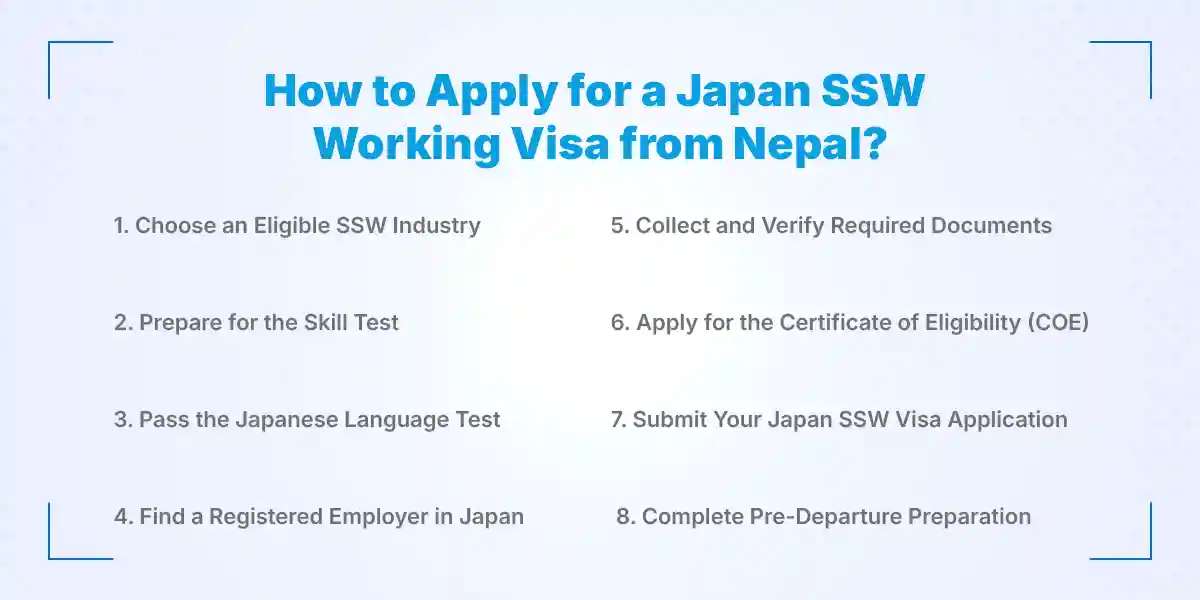
1. Choose an Eligible SSW Industry
Select an SSW industry that matches your skills, qualifications, or work experience. Japan currently offers SSW jobs in sectors such as construction, nursing care, agriculture, food service, manufacturing, hospitality, and fisheries. Understanding the requirements of your chosen industry helps you prepare for the correct examinations. Choosing the right sector also improves your employment opportunities.
2. Prepare for the Skill Test
Study the syllabus for your selected industry's SSW Skill Test. Many candidates prepare through technical training centers, online resources, and practice materials. Passing the skill test proves you have the practical knowledge required for the job. Good preparation increases your chances of success.
3. Pass the Japanese Language Test
Most applicants must pass JFT-Basic or JLPT N4 (or another accepted equivalent). The language test measures your ability to communicate in everyday Japanese at the workplace. Regular practice in reading, listening, and speaking improves your performance. Passing the language test is a key requirement for most SSW applicants.
4. Find a Registered Employer in Japan
Apply for jobs with employers approved to hire workers under the SSW program. You can find opportunities through registered recruitment agencies, official job portals, and trusted employment websites. A valid job offer is required before moving forward with the visa process. Always verify that the employer is authorized under the SSW program.
5. Collect and Verify Required Documents
Prepare all required documents before submitting your application. These typically include your passport, academic certificates, skill test certificate, Japanese language certificate, police clearance, medical report, employment contract, and photographs. Ensure every document is accurate and up to date. Incomplete documentation can delay the application process.
6. Apply for the Certificate of Eligibility (COE)
After receiving a job offer, your employer in Japan will usually apply for your Certificate of Eligibility (COE). The COE confirms that you meet Japan's immigration requirements for the SSW program. Japanese immigration authorities review the application before issuing the certificate. The approved COE is required for your visa application.
7. Submit Your Japan SSW Visa Application
Once your COE is issued, submit your visa application with all required documents to the Japanese Embassy or Visa Application Centre following the applicable procedures. The authorities will review your application and supporting documents before making a decision. Processing times may vary depending on the application and document verification. Make sure all information is accurate to avoid unnecessary delays.
8. Complete Pre-Departure Preparation
After receiving your visa, prepare for your journey to Japan. Attend any required orientation, arrange travel, and learn about Japanese workplace culture and living conditions. Review your employment contract and accommodation details before departure. Proper preparation helps you adapt smoothly to your new job and life in Japan.
Japan SSW Skill Test Dates for Nepal 2026
Japan SSW skill test dates for Nepal in 2026 are announced by the official SSW examination authorities and testing organizations throughout the year. Since schedules may change depending on the industry and test center, applicants should regularly check official announcements and register as soon as applications open.
To stay updated, visit the official SSW examination websites for your selected job category and follow announcements from authorized testing organizations. Complete your registration within the application period, prepare the required documents, and avoid missing important deadlines, as late registrations are generally not accepted.
Documents Required for Japan SSW Visa Application
To apply for a Japan SSW Visa from Nepal, you must submit all required documents to prove your identity, qualifications, and eligibility for employment in Japan. Preparing complete and accurate documents helps avoid delays and improves the chances of a successful visa application.
- Valid Passport – A passport with sufficient validity for your visa application.
- Academic Certificates – Copies of your educational certificates and transcripts, if required.
- SSW Skill Test Certificate – Proof that you have passed the required skill examination for your chosen industry.
- Japanese Language Certificate – A valid JFT-Basic or JLPT N4 (or other accepted equivalent) certificate.
- Police Clearance Certificate – A certificate confirming you have no criminal record.
- Medical Examination Report – A medical fitness certificate from an approved healthcare provider.
- Employment Contract – A signed job offer or employment contract from a registered employer in Japan.
- Passport-Sized Photographs – Recent passport-size photos that meet the Japanese visa application requirements.
SSW Job Categories Available for Nepali Workers
The Japan SSW Visa allows Nepali workers to apply for jobs in several industries facing labor shortages. Each sector requires applicants to meet the relevant skill and Japanese language requirements before they can work legally in Japan.
- Nursing Care – Assist elderly people with daily care and support services.
- Building Cleaning – Perform cleaning and maintenance work in commercial buildings and facilities.
- Construction – Work on building, road, bridge, and infrastructure projects.
- Agriculture – Support crop farming, vegetable cultivation, and livestock production.
- Food Service Industry – Work in restaurants, hotels, cafeterias, and food preparation businesses.
- Manufacturing – Operate machinery and assist in factory production processes.
- Industrial Machinery – Install, operate, and maintain industrial equipment and machines.
- Hospitality – Provide customer service in hotels, resorts, and tourism businesses.
- Shipbuilding – Participate in ship construction, repair, and maintenance work.
- Automotive Maintenance – Inspect, repair, and maintain motor vehicles.
- Aviation – Support airport ground operations and aircraft-related services.
- Fisheries – Work in fish farming, seafood processing, and commercial fishing operations.
Salary and Benefits of Japan SSW Jobs
Japan SSW jobs offer competitive salaries, legal employment, and attractive employee benefits for qualified foreign workers, including Nepali citizens. The exact salary depends on the industry, job role, employer, and location, but SSW workers receive the same pay and working conditions as Japanese employees performing similar work.
- Average Monthly Salary: Most SSW workers earn approximately ¥180,000–¥300,000+ per month, depending on the industry, experience, and employer.
- Overtime Pay: Employees receive overtime wages according to Japanese labor laws when working beyond regular hours.
- Accommodation Support: Many employers provide company housing or help workers find affordable accommodation.
- Health Insurance: SSW workers are enrolled in Japan's national health insurance system, reducing medical expenses.
- Pension and Social Security: Eligible workers contribute to Japan's pension and social security programs as required by law.
- Paid Leave and Other Benefits: Most employers provide paid annual leave, public holidays, workplace safety benefits, and other employment benefits in accordance with Japanese labor regulations.
Best Ways to Find Japan SSW Jobs from Nepal
Finding a Japan SSW job from Nepal is easier when you use trusted job portals, authorized recruitment agencies, and official employer recruitment channels. Applying through reliable sources helps you avoid scams and increases your chances of getting a genuine job offer under the Specified Skilled Worker (SSW) program.
- Kumari Job – Search for the latest Japan SSW job vacancies, compare opportunities, and apply for suitable positions through a trusted Nepali job portal.
- Registered Recruitment Agencies – Apply through recruitment agencies licensed by the Government of Nepal that recruit workers for Japan under legal employment programs.
- Japanese Employer Recruitment Programs – Some Japanese companies directly recruit foreign workers through approved hiring programs and recruitment partners.
- Official SSW Job Portals – Check official SSW employment websites and authorized organizations for verified job openings, skill test updates, and application information.
- Networking and Job Fairs – Attend Japan employment fairs, career events, and networking programs to connect with employers, recruitment agencies, and industry professionals.
What Are the Japanese Language Requirements for the SSW Visa?
To qualify for the Japan SSW Visa, most applicants must demonstrate basic Japanese language proficiency by passing an approved language examination, such as JLPT N4 or JFT-Basic. These tests confirm that candidates can understand and communicate in everyday Japanese, which is essential for working and living in Japan.
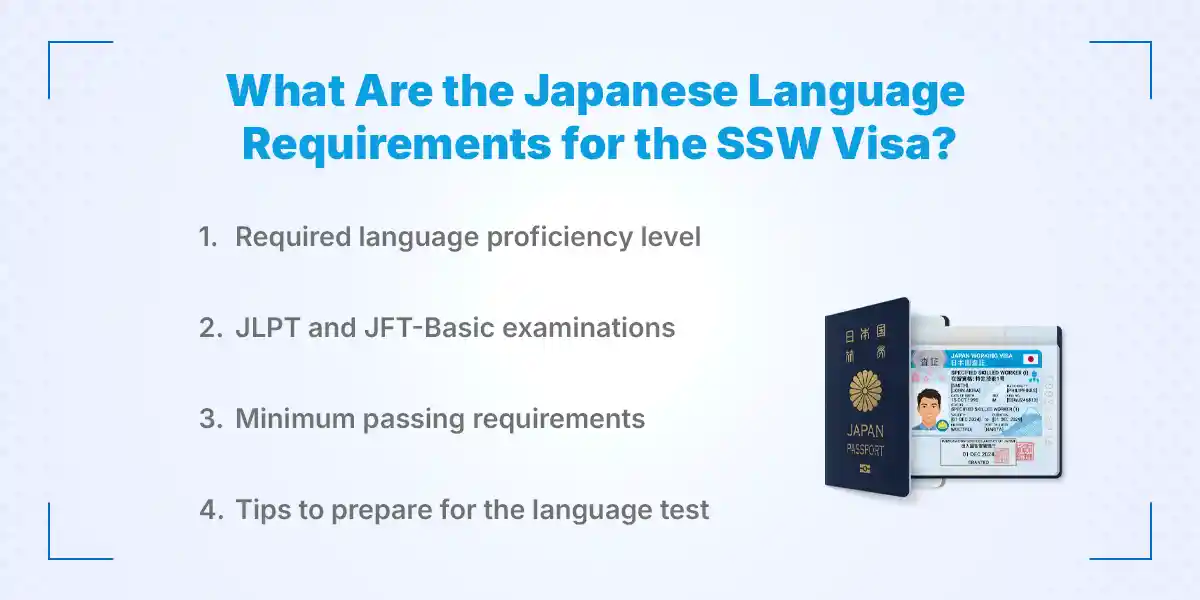
1. Required Language Proficiency Level
Most SSW applicants are expected to have a basic level of Japanese language ability. The required level is generally equivalent to JLPT N4 or an accepted equivalent. This level allows workers to understand simple conversations and workplace instructions. Language requirements may vary slightly depending on the industry.
2. JLPT and JFT-Basic Examinations
The Japanese Language Proficiency Test (JLPT) and the Japan Foundation Test for Basic Japanese (JFT-Basic) are the two main language tests accepted for the SSW program. Both exams assess reading, listening, and basic communication skills. Passing either accepted examination satisfies the language requirement for most SSW applicants. Candidates should confirm which test is accepted for their chosen industry.
3. Minimum Passing Requirements
Applicants must achieve the minimum passing score set by the examination authority. A passing result confirms that the candidate has the basic Japanese skills required for daily work and communication. Test results are valid according to the rules of the issuing organization. Always check the latest requirements before applying.
4. Tips to Prepare for the Language Test
Start preparing several months before the examination using official study materials and practice tests. Improve your vocabulary, listening, reading, and speaking skills through regular study and conversation practice. Joining a Japanese language course can also improve your chances of passing the exam. Consistent preparation is the key to success.
Conclusion
The Japan Specified Skilled Worker (SSW) Visa offers an excellent opportunity for Nepali workers to build a stable career in Japan while earning competitive salaries and receiving attractive employment benefits. By meeting the eligibility requirements, passing the required skill and Japanese language tests, and applying through authorized employers, you can improve your chances of securing legal employment under the SSW program.
If you are planning to work in Japan, start preparing early by improving your technical skills, learning Japanese, and keeping track of the latest SSW skill test dates and recruitment updates. You can also explore the latest Japan SSW job opportunities on Kumari Job to find suitable vacancies and begin your application process.
Frequently Asked Questions
Submit your comments

Get Our App On



How to Become a Fiber Optic Technician in Nepal
VIEW DETAILS
Top 10 Highest Paying NGO & INGO Jobs in Nepal (With Salary)
VIEW DETAILS
What Is the Salary of a Flight Dispatcher in Nepal?
VIEW DETAILS
What Is the Salary of a Solar Technician in Nepal?
VIEW DETAILS


Loading Comments...